

Choose plants according to ecological conditions.
An Giang is the province with the largest agricultural production scale in the Mekong Delta region, boasting a diverse agricultural ecosystem stretching from the key rice-growing areas of the Long Xuyen Quadrangle and the West of Hau River to the U Minh Thuong ecological sub-region. In the context of increasingly severe climate change, pressure to reduce emissions, and growing market demands, the province has identified crop diversification combined with modern farming practices as an essential direction.
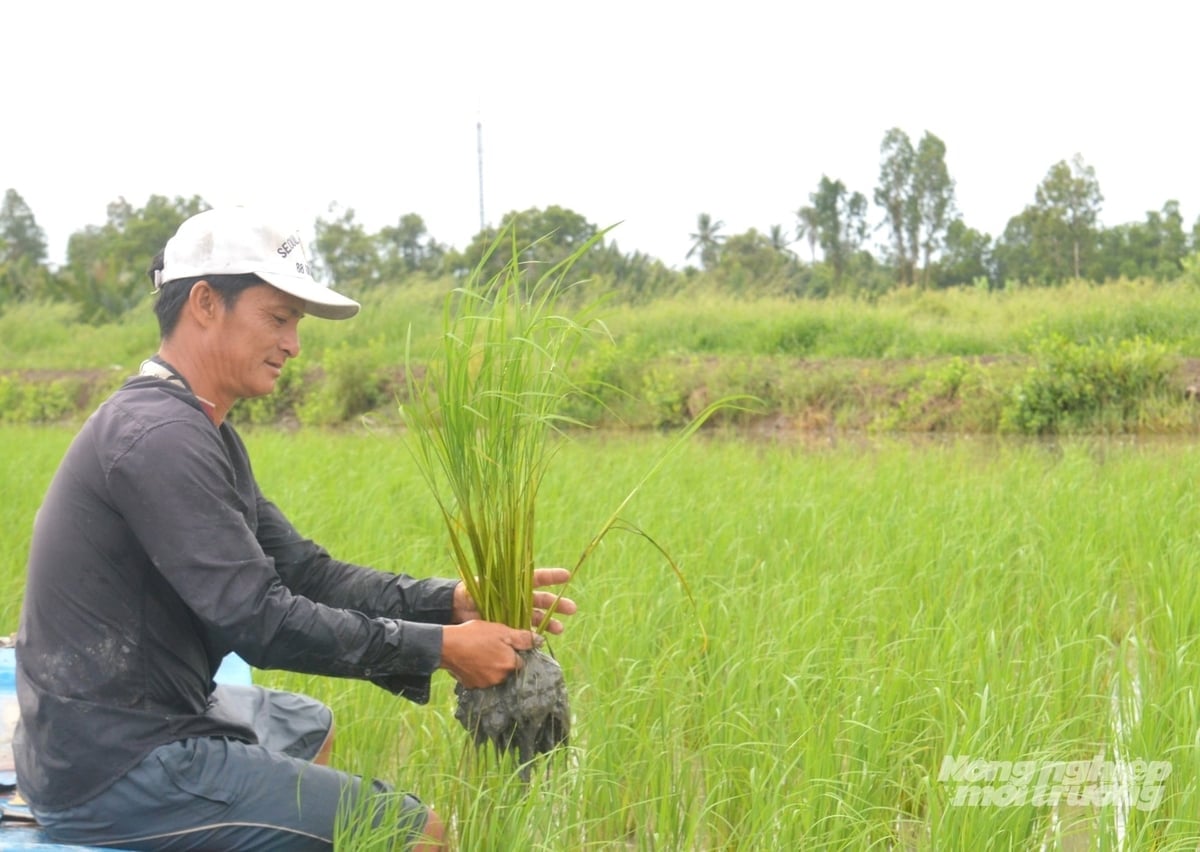
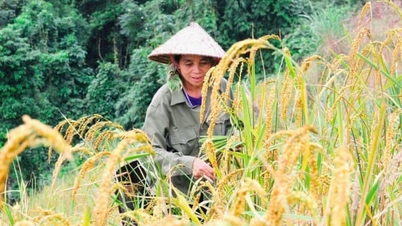
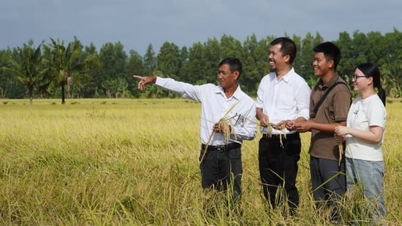
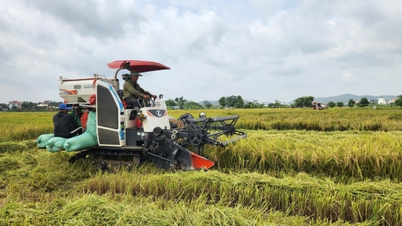
Modern rice cultivation techniques and integrated plant health management result in larger, healthier plants, reduced pest infestations, and better environmental protection. Photo: Trung Chánh.
According to the production and consumption linkage plan in the crop sector for 2026, An Giang will continue to play a pivotal role in the rice industry, while proactively and flexibly transforming the crop structure on less efficient areas, gradually forming a green, sustainable, and climate-adaptive agriculture.
Specifically, in 2026, the entire province will allocate over 1.35 million hectares for rice cultivation, with an expected yield of nearly 8.9 million tons. The highlight lies not only in the scale but also in the quality of production, with over 90% of the area planted with high-quality rice varieties, combined with advanced technical packages such as "3 reductions - 3 increases," "1 must - 5 reductions," and production through integrated supply chains. This is a crucial foundation for reducing input costs, saving water, fertilizers, and pesticides, thereby cutting greenhouse gas emissions right from the fields.
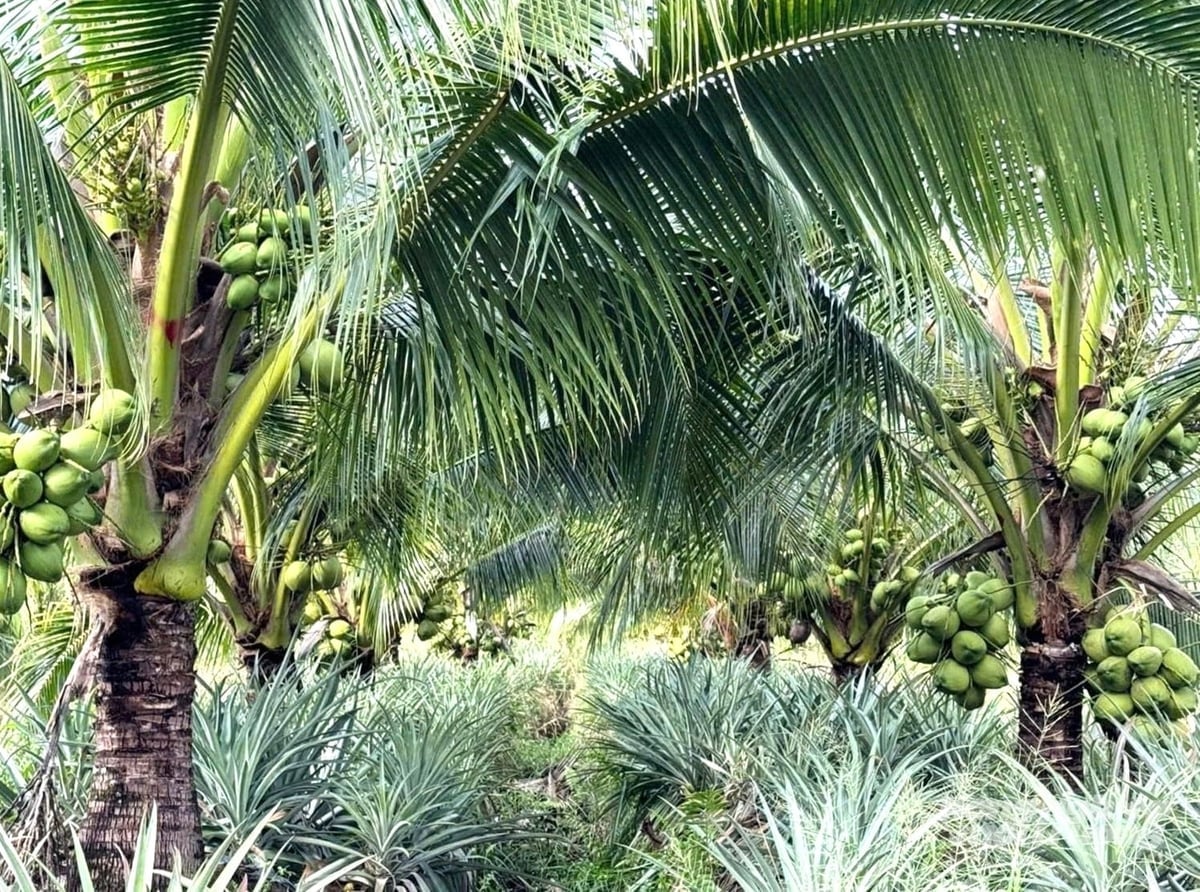
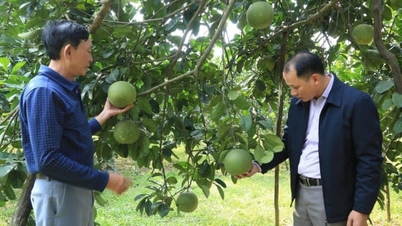
An Giang's agricultural sector is developing diverse crops suitable for each ecological sub-region, applying modern farming processes to improve efficiency and reduce emissions. Photo: Trung Chánh.
Alongside rice cultivation, An Giang province is promoting the development of vegetables and other crops, covering nearly 69,700 hectares and producing approximately 1.46 million tons. Specialized vegetable and crop farming areas are flexibly arranged according to seasons, linked with cooperatives and consuming businesses, gradually shifting the mindset from "producing what we have" to "producing according to market demand." Fruit trees and industrial crops are also stably planned, covering over 42,900 hectares, focusing on areas with ecological advantages, aiming for safe production, traceability, and quality standardization.
Applying modern farming techniques.
A key focus throughout An Giang's 2026 agricultural plan is leveraging science and technology and value chain linkages to enhance production efficiency and reduce emissions. Advanced farming practices will be expanded on a large scale, ranging from integrated pest management (IPM), integrated plant health management (IPHM), sustainable rice cultivation according to SRP, to synchronized mechanization and the application of digital transformation in production management.
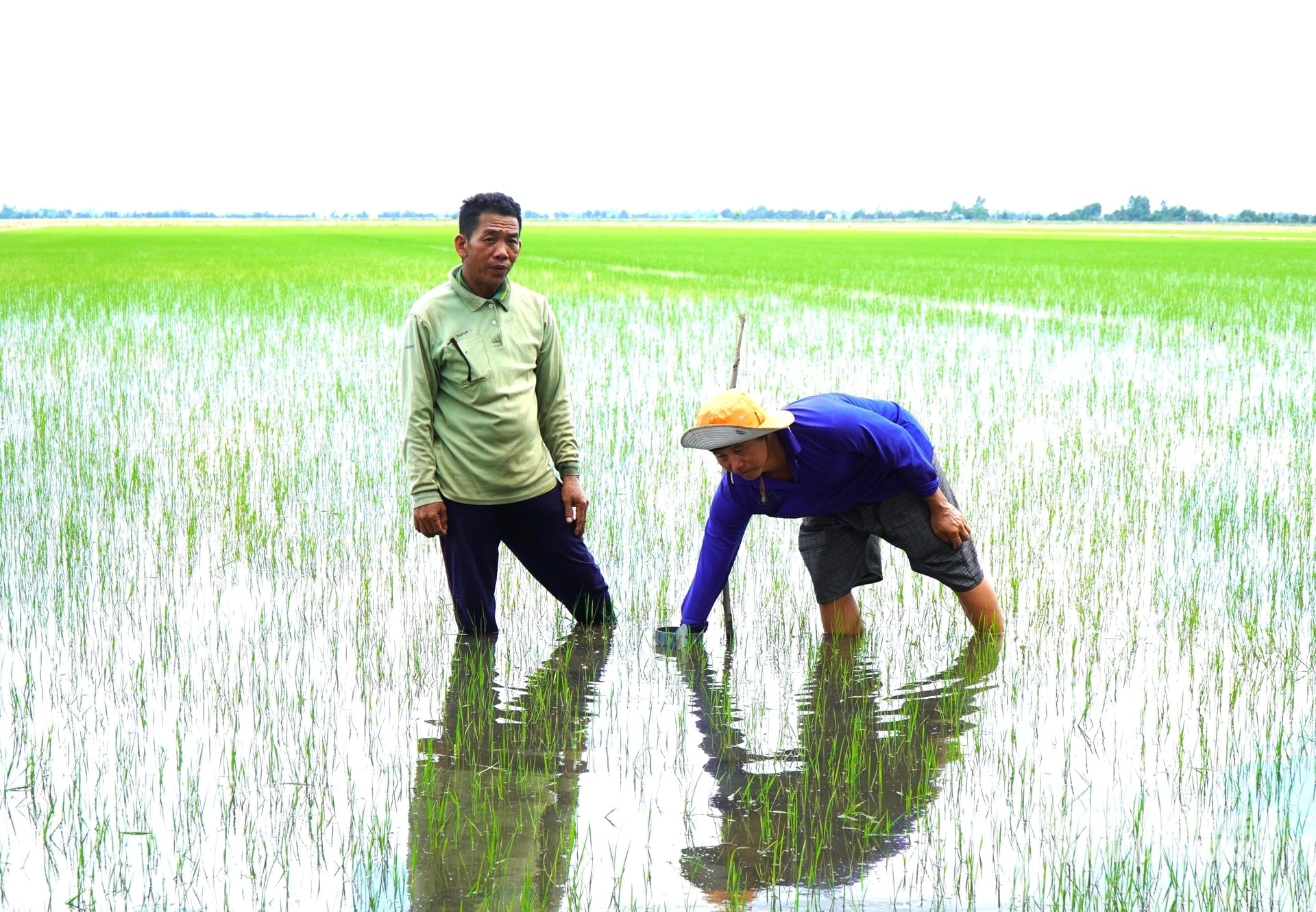
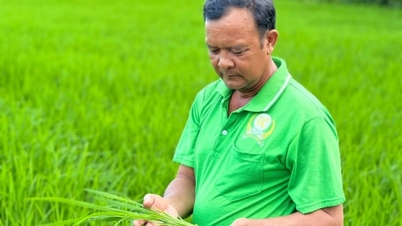
Farmers are practicing the installation of water management devices for the alternating wetting and drying (AWD) irrigation method, a solution that directly reduces methane emissions, one of the largest sources of emissions in rice cultivation. Photo: Trung Chánh.
Specifically for rice, the area applying the "3 reductions - 3 increases" approach in 2026 will reach over 1.15 million hectares, and the "1 must - 5 reductions" approach will reach over 700,000 hectares. These are technical packages that have been proven effective in practice, helping to reduce the amount of seeds sown, nitrogen fertilizer, and pesticides, while increasing yield, quality, and profit. More importantly, reducing chemical inputs and managing water properly is a direct solution to cut methane emissions, one of the largest sources of emissions in rice cultivation.
An Giang province has also allocated nearly 184,000 hectares of rice fields to participate in the "Sustainable Development of One Million Hectares of High-Quality, Low-Emission Rice Specialization Linked to Green Growth in the Mekong Delta by 2030" project. This is not only a policy commitment but also a concrete step for the province to gradually access carbon market mechanisms and increase the value of rice in the international market.
According to Le Van Dung, Deputy Director of the An Giang Agricultural Extension Center, to expand the project of cultivating 1 million hectares of high-quality, low-emission rice, the unit has organized training conferences for technical staff, cooperatives, and community agricultural extension workers in the area. The training focused on advanced rice cultivation processes, such as alternating wetting and drying (AWD) water management, burying fertilizers, applying IPM, prioritizing the use of biological pesticides, and circular straw management. In addition, guidance was provided on the process of measuring, reporting, and assessing emissions (MRV), using digital tools to collect data and calculate emission reduction results.
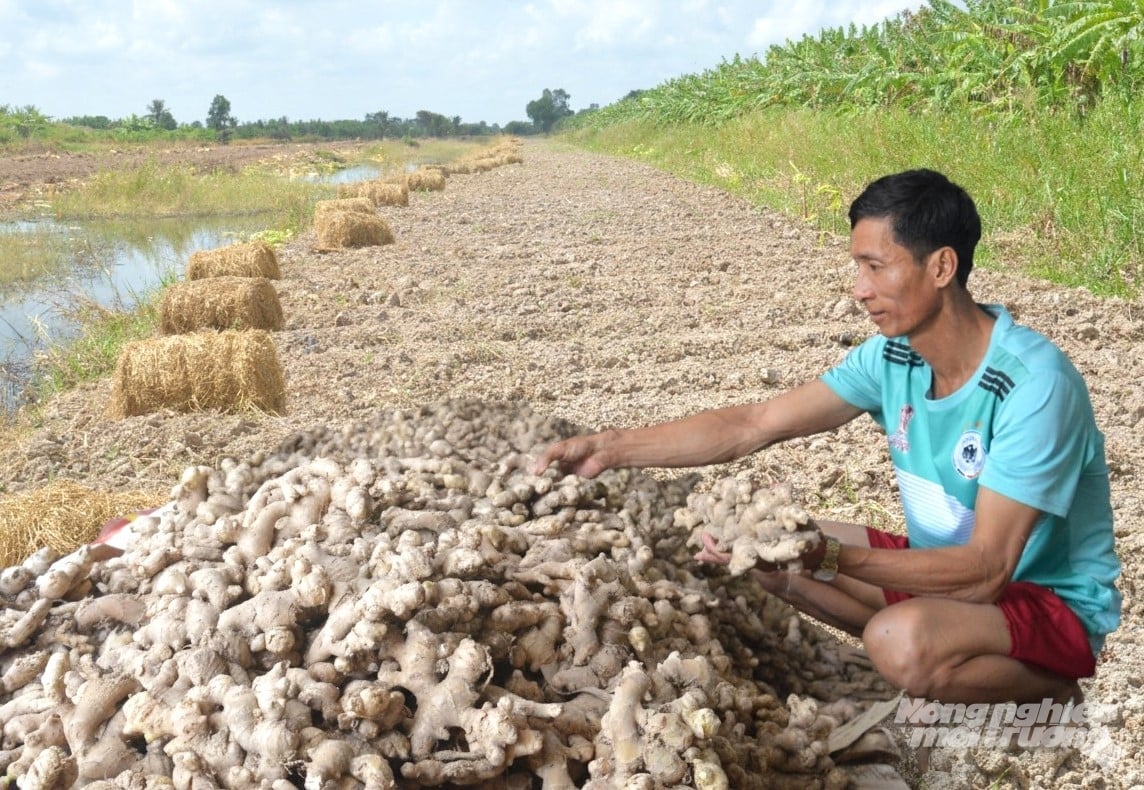
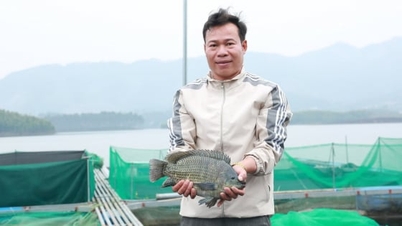
In vegetable farming, farmers in An Giang apply a circular economy process, utilizing agricultural by-products to create mulch and organic fertilizer, contributing to reducing emissions and protecting the rural ecological environment. Photo: Trung Chánh.
In the field of vegetables and fruit trees, the province encourages the application of VietGAP, GlobalGAP, organic farming, and circular agriculture. Agricultural by-products are utilized as organic fertilizer, animal feed, or input materials for new production models, contributing to reducing emissions and protecting the rural ecological environment.
In particular, the linkage between production and consumption is identified as the "backbone" of the transformation process. By 2026, An Giang aims to have at least 25% of its rice cultivation area and 15% of its vegetable and fruit cultivation area produced through supply chain linkages with businesses. Through guaranteed purchase contracts, farmers not only have peace of mind regarding their output but also receive support from businesses in terms of seeds, supplies, technology, and a synchronized, transparent production process.
Alongside this, digital transformation has been strongly promoted in agriculture, from electronic logbooks and traceability to agricultural product trading platforms. These tools not only enhance production management capabilities but also help An Giang's agricultural products meet the increasingly stringent requirements of both domestic and export markets.
Crop diversification with modern processes not only helps reduce the pressure of monoculture rice farming, but also contributes to dispersing risks from natural disasters and diseases, reducing emissions in agricultural cultivation, and creating more livelihood opportunities for farmers.
Source: https://nongnghiepmoitruong.vn/canh-tac-da-dang-cay-trong-voi-quy-trinh-hien-dai-de-giam-phat-thai-d789796.html
![[Photo] Prime Minister Pham Minh Chinh receives Lao Minister of Education and Sports Thongsalith Mangnormek](/_next/image?url=https%3A%2F%2Fvphoto.vietnam.vn%2Fthumb%2F1200x675%2Fvietnam%2Fresource%2FIMAGE%2F2025%2F12%2F16%2F1765876834721_dsc-7519-jpg.webp&w=3840&q=75)
![[Image] Leaked images ahead of the 2025 Community Action Awards gala.](/_next/image?url=https%3A%2F%2Fvphoto.vietnam.vn%2Fthumb%2F1200x675%2Fvietnam%2Fresource%2FIMAGE%2F2025%2F12%2F16%2F1765882828720_ndo_br_thiet-ke-chua-co-ten-45-png.webp&w=3840&q=75)
![[Photo] Prime Minister Pham Minh Chinh receives the Governor of Tochigi Province (Japan)](/_next/image?url=https%3A%2F%2Fvphoto.vietnam.vn%2Fthumb%2F1200x675%2Fvietnam%2Fresource%2FIMAGE%2F2025%2F12%2F16%2F1765892133176_dsc-8082-6425-jpg.webp&w=3840&q=75)

![[Image] The tenacious fighting spirit of Vietnamese women's football](/_next/image?url=https%3A%2F%2Fvphoto.vietnam.vn%2Fthumb%2F1200x675%2Fvietnam%2Fresource%2FIMAGE%2F2025%2F12%2F17%2F1765990260956_ndo_br_4224760955870434771-copy-jpg.webp&w=3840&q=75)
![[Live] 2025 Community Action Awards Gala](/_next/image?url=https%3A%2F%2Fvphoto.vietnam.vn%2Fthumb%2F1200x675%2Fvietnam%2Fresource%2FIMAGE%2F2025%2F12%2F16%2F1765899631650_ndo_tr_z7334013144784-9f9fe10a6d63584c85aff40f2957c250-jpg.webp&w=3840&q=75)
































![[Live] Closing Ceremony and Award Presentation for the "Impressive Vietnam Tourism" Video/Clip Creation Contest 2025](https://vphoto.vietnam.vn/thumb/402x226/vietnam/resource/IMAGE/2025/12/17/1765974650260_z7273498850699-00d2fd6b0972cb39494cfa2559bf85ac-1765959338756946072104-627-0-1338-1138-crop-1765959347256801551121.jpeg)












Comment (0)