The previous volume, "Fading Dream" (2024), depicted the landscape of the Northern Delta region associated with soldiers, while "Falling Bang Nang Flowers" presents paintings of the highlands today, connected to the working life, customs, and thoughts and concerns of the people there, still retaining their precious simplicity and genuineness.
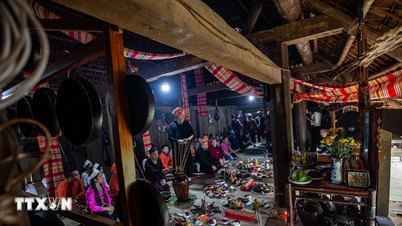
"Pằng nang," as people in the lowlands call it, is a common motif in the folk tales of many ethnic groups in the northern highlands: the pằng nang flower is the embodiment of a girl waiting for her lover. The story goes that in a certain village, there was a poor but kind, strong young man who fell in love with a charming and beautiful mountain girl.
The wedding preparations were complete when a torrential rain and a great flood swept everything away. The villagers discussed planting a ceremonial pole so the young man could ascend to heaven to inquire about the situation. On his departure, he tied a red cloth band around his lover's hand, each end adorned with five tassels, promising to return. The ceremonial pole transformed into a pằng nàng tree, but the young man never returned. From then on, the tree became a symbol of unfulfilled love. The pằng nàng flowers continue to fall mournfully, their vibrant red color unchanging, like the girl's heart aching with longing and waiting...
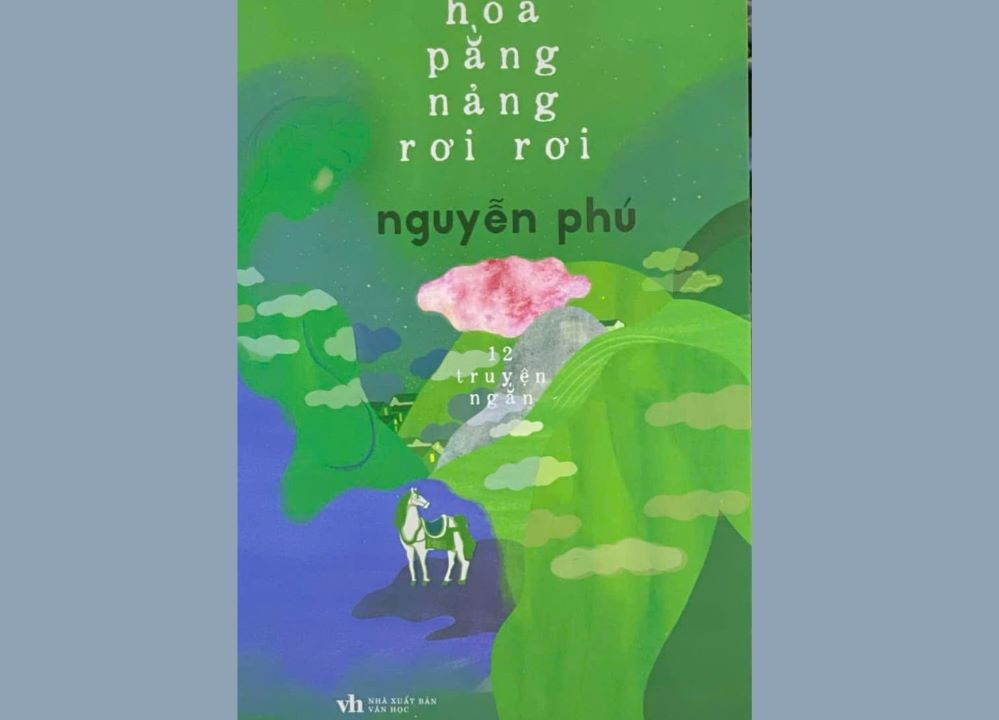
Cover of the short story collection "Falling Bang Nang Flowers". You may also like  A video of a husband pulling his shirt over his wife's motorcycle seat to protect her from the heat has melted netizens' hearts.Small but thoughtful gestures that show a man's care and love for his wife make many women with inattentive husbands wish their husbands would do the same.  Expanding opportunities for gender equalityWith the implementation of the national strategy on gender equality for the period 2026-2030, An Giang aims to create a strong transformation from awareness to action, building an environment where women and men have equal opportunities to participate, contribute, and enjoy the fruits of development.  Leaving the city to start a business in the countryside.Leaving the city, many young people are choosing to start with local produce. Some make chocolate from Vietnamese cocoa, others upgrade traditional rice wine using local rice, glutinous rice, and fruits. These young people are finding ways to increase the value of agricultural products, create additional livelihoods, and bring local products further afield. |
Throughout the collection of stories, although describing pear trees, teak trees, cypress trees, etc., the reader still perceives them as variations of the pằng nàng tree, as if seeing the pằng nàng flowers dyeing the space of the story red or the poignant, sorrowful, and regretful falling blossoms... Nguyễn Phú skillfully draws upon cultural archetypes to write stories that sometimes lack a plot, creating imagery of nature and portraying the psychology of characters unique to the highlands of Northwest Vietnam. This serves as a foundation for the ethereal poetic quality that permeates the space, settling into beautiful, cinematic prose, creating vivid imagery and color.
This book demonstrates a principle: writers must immerse themselves deeply in life to grasp its rhythm, understand the landscape, and empathize with the thoughts and desires of those who live there, in order to write truly soulful prose. Only by truly understanding the Northwest region can a writer have the resources to describe the poetic moonlit nights—but only the surface reveals the intense competition among countless creatures hidden beneath the fields, forests, and foothills. And within the stilt houses lie hearts filled with longing, nostalgia, or sorrowful pain...
Good writing should create a haunting effect. In this collection of stories, the images that evoke anguish and compassion in the reader are those of the female characters. They are Si—"Red Chao Leaf," Cho—"The House on the Windy Slope," Soa—"The Last Market," May—"The Last Bang Nang Flower of Spring"... embodying the yearning for love, freedom, and happiness, yet unable to escape the web of outdated customs and traditions. Will they accept being "prisoners" of backward old customs and the selfishness of men? This poignant question resonates throughout the book, inviting and awaiting the reader's answer through empathy for human nature and the realities of life. To enhance the imagery and bring the stories closer to reality, the collection uses many vivid, interesting similes and metaphors, close to the psychological thinking of the people, especially the Hmong.
One contribution to the narrative style is the semi-direct structure of the text, blurring the lines between the character's voice and the narrator's, creating the illusion that the character is both near and far, real yet illusory, as in: "Spring rain falls softly outside the eaves. Warm breezes sweep in... This morning, only May is home. May has to watch the New Year's wine pot for her father" in the short story "The Crescent Moon Hanging on the Mountaintop". May's perspective and viewpoint intrude into the narrator's words, as if claiming the right to express, lament, reproach, and resentment... The writing thus becomes soulful, vibrant, and lively.

Source: https://baoangiang.com.vn/mot-giong-van-tru-tinh-tinh-te-a422748.html

![[Image] Overview of the construction site for the underground station of metro line 5 at the Hanoi Ring Road 1 intersection.](https://vphoto.vietnam.vn/thumb/1200x675/vietnam/resource/IMAGE/2026/07/03/1783065595682_ndo_br_z7974930852369-100ca093c306e72675f1d3700966a86b-jpg.webp)