

Many parents believe it's better to keep children at home with grandparents or nannies until they are 4-5 years old and more robust, before sending them to preschool to reduce the risk of illness. What advice do doctors and educators offer?
Seeing that her 23-month-old child was still staying home with the nanny, the neighbors asked Ms. Thuong why she didn't send her child to preschool. Ms. Thuong laughed and said, "I'm waiting until she's a little stronger. I'm afraid it's too early now; she'll easily get sick at school."
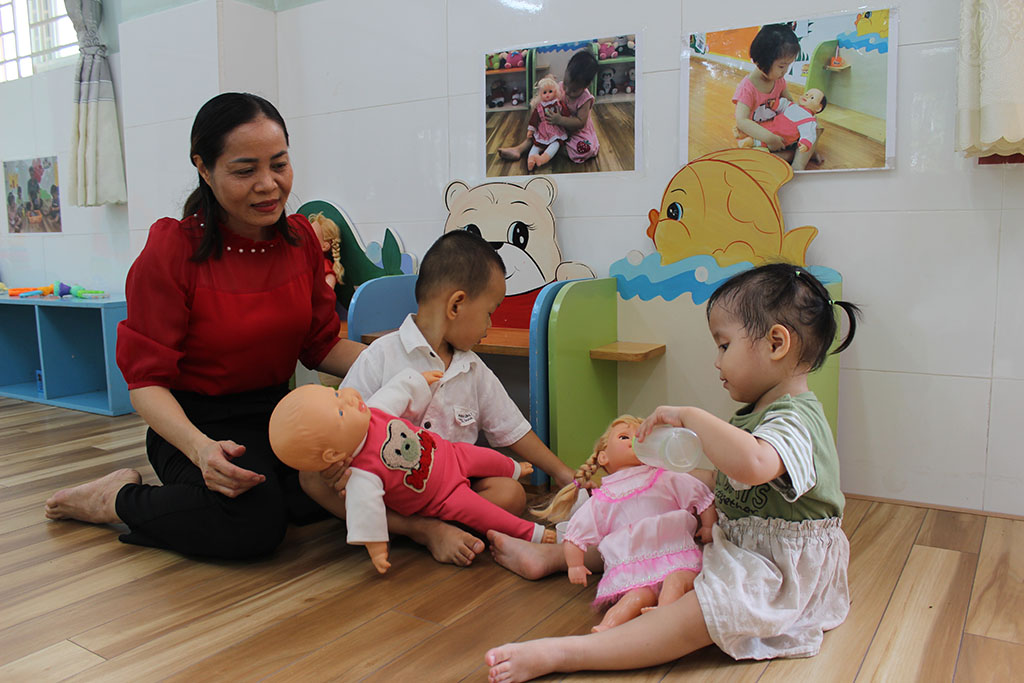
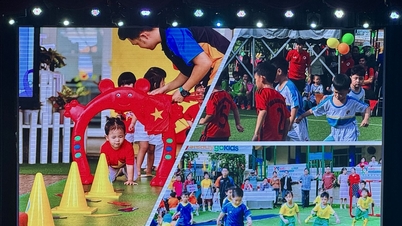
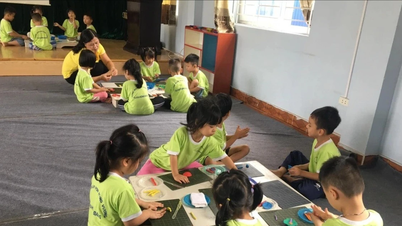
Children of preschool age (under 36 months old) are cared for and play at the preschool.
CHILDREN ARE DISADVANTAGED WHEN SCHOOLS CLOSE DUE TO THE COVID -19 PANDEMIC
Dr. Truong Huu Khanh, an epidemiologist and former Head of the Infectious Diseases and Neurology Department at Children's Hospital 1 in Ho Chi Minh City, advises: "Parents shouldn't keep their children cooped up at home all the time. That's not sustainable. Children need to go to school eventually. Going to school isn't just about nutrition; it's about children interacting with the community and their age group. During the Covid-19 pandemic, with quarantines, social distancing, and school closures, everyone has seen how disadvantaged children were."
Therefore, according to Dr. Truong Huu Khanh, parents need to change their mindset, feel reassured about sending their children to school, and at the same time, ensure that children receive adequate nutrition, vaccinations, sufficient sleep, and sufficient water intake. "Children often experience minor illnesses for 3-6 months after starting school. When picking children up from school, don't let them wear their school clothes to play; instead, change their clothes, wipe their faces, and use nasal drops. When sending children to preschool, choose a school with good ventilation, free from dust and smoke, and ensure they don't sleep in overly cold conditions," Dr. Truong Huu Khanh advised.
In Ho Chi Minh City, many qualified preschools are permitted to care for children from 6 months old, giving many mothers peace of mind when sending their children to school after their maternity leave ends. Some people also rely on grandparents to care for their children until they are 2-3 years old, depending on their family circumstances. Dr. Truong Huu Khanh said that the common age for children to attend preschool is from 18 months old.
GOING TO SCHOOL HAS MANY BENEFITS
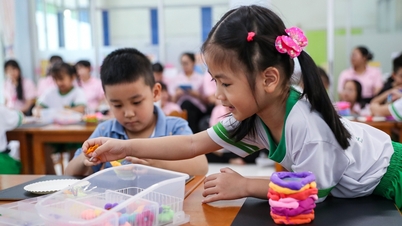
Dr. Phan Thi Thanh Ha, Head of the Pediatrics and Infectious Diseases Department at District 8 Hospital, Ho Chi Minh City, affirmed that "even with the support of relatives and grandparents at home, children still need to go to preschool." According to Dr. Thanh Ha, children benefit greatly from attending preschool. They receive adequate nutrition and sleep at regular times. They learn independence; teachers employ methods to care for and educate them, teaching them basic skills like feeding themselves and fetching toys. Teachers introduce them to letters and numbers, tell stories, teach them to sing and dance, and develop their thinking skills.
In addition, children in preschools with full legal basis receive annual initial health check-ups. This allows for health screening, identifying overweight, obese, or malnourished children, and detecting certain disabilities and diseases early.
"We see a common situation in many modern urban families where several adults care for and serve one child. If the child cries out, someone picks them up; if they cry out, someone feeds them; if they just want to turn on the TV, someone turns it on for them… Gradually, the child loses their independence and becomes overly reliant," said Dr. Thanh Ha.
In particular, according to Dr. Thanh Ha, the school environment provides children with friends, teachers, and opportunities for connection and communication. Children who are in the speech development stage will develop language skills rapidly. "Recently, many parents with children born between 2019 and 2021 – a time of the pandemic, social distancing, and school closures – have come to the hospital, met with doctors, and asked why their children are experiencing speech delays or tend to avoid playing with other children, and how to overcome this… This further confirms the important role of school. Children need to attend preschool early, not wait until they are 4-5 years old, preparing to enter first grade, before being sent to school," Dr. Thanh Ha emphasized.
Dr. Thanh Ha also noted: "It's normal for preschool-aged children to have minor illnesses like coughs, runny noses, fevers, and teething fevers. Parents must ensure their children receive all necessary vaccinations against diseases such as measles, diphtheria, rubella, etc., following the vaccination schedule according to their age and the doctor's instructions. Furthermore, parents need to ensure their children eat a balanced diet, drink enough water, go to bed early to get enough sleep, and monitor their health. If a child has a fever, is tired, or shows unusual skin conditions (hands, feet, mouth, etc.), they should stay home from school and be taken to a medical facility for examination and prescription. Absolutely do not self-medicate your child by buying medicine from a pharmacy."
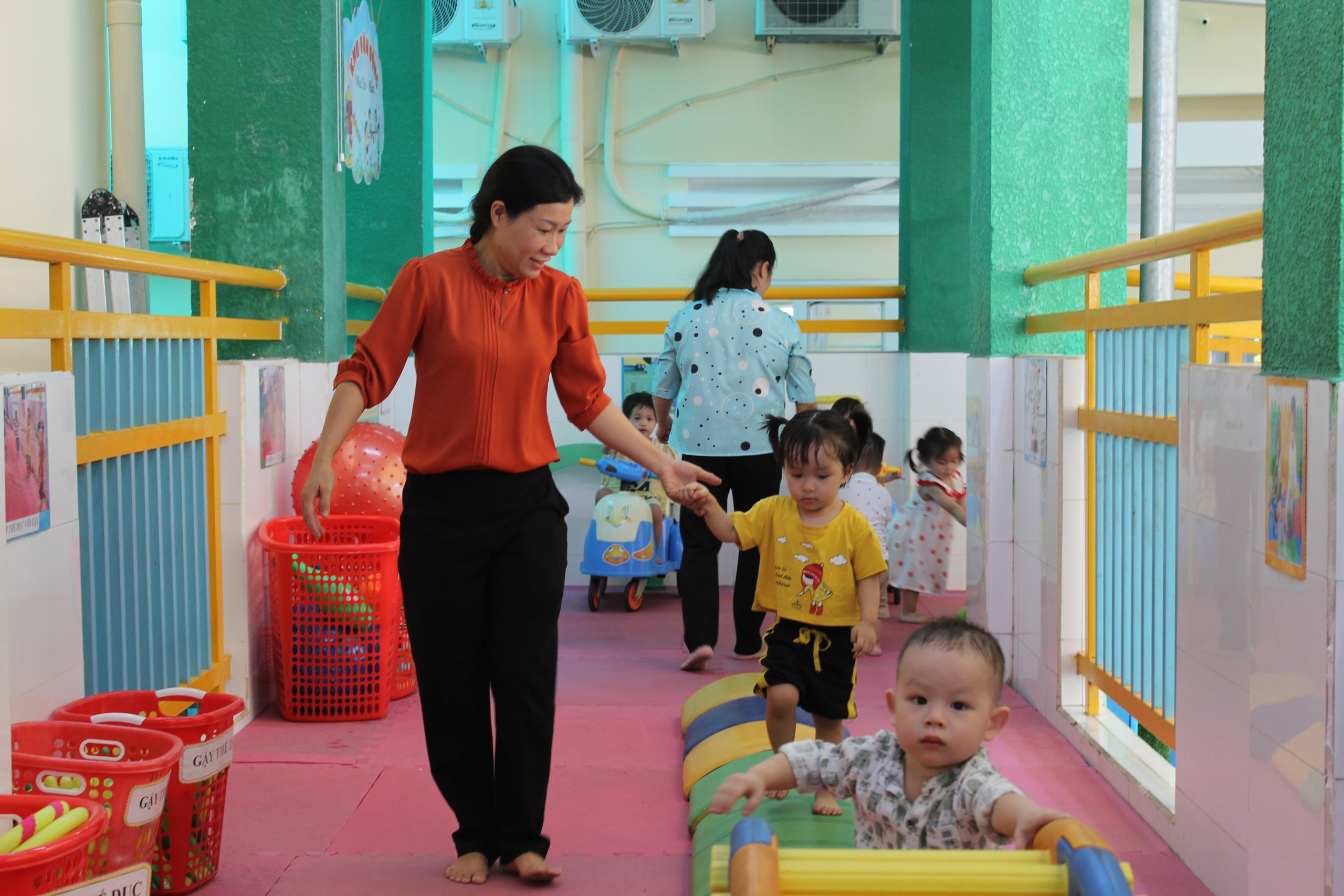
At school, children learn independence and self-care skills, starting with basic things like feeding themselves and getting their own toys.
PARENTS ARE THE ONES WHO NEED TO BE PSYCHOLOGICALLY STRONG.
Ms. Nguyen Thi Minh Huong, Principal of Mi Mon Kindergarten, Ward 1, Tan Binh District, Ho Chi Minh City, recounted several examples. Children who are used to being at home with their parents and grandparents will inevitably cry for the first few days when they are taken to an unfamiliar environment like school. Changes in environment can also cause minor illnesses, so parents shouldn't worry too much. "Many people feel sorry for their children or grandchildren when they see them crying, and they spend all day monitoring the cameras or standing guard at the school gate to see what the teacher is doing to the child. Some even keep their children home as soon as they cry. Children are very clever; they think crying means they can stay home from school, so they believe that crying will automatically get them to stay home. This is not advisable. Parents need to be strong-willed," Ms. Minh Huong advised.
"When children stay at home with grandparents, parents, or nannies for extended periods, they have less contact, connection, and communication with peers, but instead spend a lot of time watching TV, iPads, and using phones... In many cases, Vietnamese children are shown English videos on YouTube all day by their grandparents or nannies, resulting in many children having delayed speech, or being very proficient in English but very slow to speak Vietnamese," the principal said.
According to Ms. Minh Huong, before enrolling their children in preschool, parents need to thoroughly research the preschool they will be sending their children to. They must find preschools that are legally compliant, reputable, have adequate facilities, and a qualified teaching staff (publicly listed in the Ho Chi Minh City education sector database, https://pgdmamnon.hcm.edu.vn/congkhaicosogiaoduc ). Afterward, they should consult with other parents and teachers, and consider letting their child attend a trial period of 1-2 days to observe and monitor their adaptation. Ms. Minh Huong also advises that if the family hires a nanny or caregiver for 12 or 24 hours a day, they should carefully observe how these individuals care for and educate the child, ensuring the child's healthy and safe development.
Many options for parents
In Ho Chi Minh City, the project for caring for and nurturing children aged 6-18 months has been implemented across all 21 district and county education departments, including Thu Duc City. Each district and county, including Thu Duc City, has a pre-planned system of public and private preschools, as well as independent preschool classes, adhering to Circular 49 of the Ministry of Education and Training, providing childcare for children aged 6-12 months and 13-18 months (facilities may combine these two age groups, as the number of children aged 6-12 months is not large). At these facilities, teachers receive ongoing training to improve their skills and knowledge for childcare, and are trained in coordinating with health services and relevant agencies. Preschool teachers caring for and nurturing children aged 6-18 months face more demanding tasks, and therefore receive special benefits and policies specific to Ho Chi Minh City.
Ms. Luong Thi Hong Diep, Head of the Preschool Education Department, Ho Chi Minh City Department of Education and Training, said that schools and classes for children aged 6-12 months and 13-18 months require greater investment in facilities than regular classes, ensuring the safety of children… For this age group, each teacher is responsible for fewer children, such as one teacher caring for 3-4 children, or one teacher caring for 5-6 children.
Source: https://thanhnien.vn/ngai-cho-con-di-hoc-mam-non-vi-so-de-benh-185241112191511704.htm


![[Photo] Prime Minister Pham Minh Chinh receives Lao Minister of Education and Sports Thongsalith Mangnormek](/_next/image?url=https%3A%2F%2Fvphoto.vietnam.vn%2Fthumb%2F1200x675%2Fvietnam%2Fresource%2FIMAGE%2F2025%2F12%2F16%2F1765876834721_dsc-7519-jpg.webp&w=3840&q=75)
![[Image] Leaked images ahead of the 2025 Community Action Awards gala.](/_next/image?url=https%3A%2F%2Fvphoto.vietnam.vn%2Fthumb%2F1200x675%2Fvietnam%2Fresource%2FIMAGE%2F2025%2F12%2F16%2F1765882828720_ndo_br_thiet-ke-chua-co-ten-45-png.webp&w=3840&q=75)
![[Live] 2025 Community Action Awards Gala](/_next/image?url=https%3A%2F%2Fvphoto.vietnam.vn%2Fthumb%2F1200x675%2Fvietnam%2Fresource%2FIMAGE%2F2025%2F12%2F16%2F1765899631650_ndo_tr_z7334013144784-9f9fe10a6d63584c85aff40f2957c250-jpg.webp&w=3840&q=75)
![[Photo] Prime Minister Pham Minh Chinh receives the Governor of Tochigi Province (Japan)](/_next/image?url=https%3A%2F%2Fvphoto.vietnam.vn%2Fthumb%2F1200x675%2Fvietnam%2Fresource%2FIMAGE%2F2025%2F12%2F16%2F1765892133176_dsc-8082-6425-jpg.webp&w=3840&q=75)




















































![[Live] Closing Ceremony and Award Presentation for the "Impressive Vietnam Tourism" Video/Clip Creation Contest 2025](https://vphoto.vietnam.vn/thumb/402x226/vietnam/resource/IMAGE/2025/12/17/1765974650260_z7273498850699-00d2fd6b0972cb39494cfa2559bf85ac-1765959338756946072104-627-0-1338-1138-crop-1765959347256801551121.jpeg)




















Comment (0)