

People with cardiovascular disease are more likely to encounter problems during the Lunar New Year.
According to Dr. Truong Hong Son, Director of the Vietnam Institute of Applied Medicine and Deputy Secretary General of the Vietnam Medical Association, there are many reasons why people with heart disease experience problems during the Tet holiday, including:
Due to weather factors: In cold weather, blood pressure is often about 5mmHg higher than in summer. The risk of stroke in people with cardiovascular disease often increases by up to 30% when the weather changes. During the Lunar New Year, the weather is often mildly to very cold, sometimes with drizzle, which further affects health by causing the blood vessels to constrict and dilate suddenly, dislodging atherosclerotic plaques from the vessel walls, creating a risk of cerebral vascular occlusion.
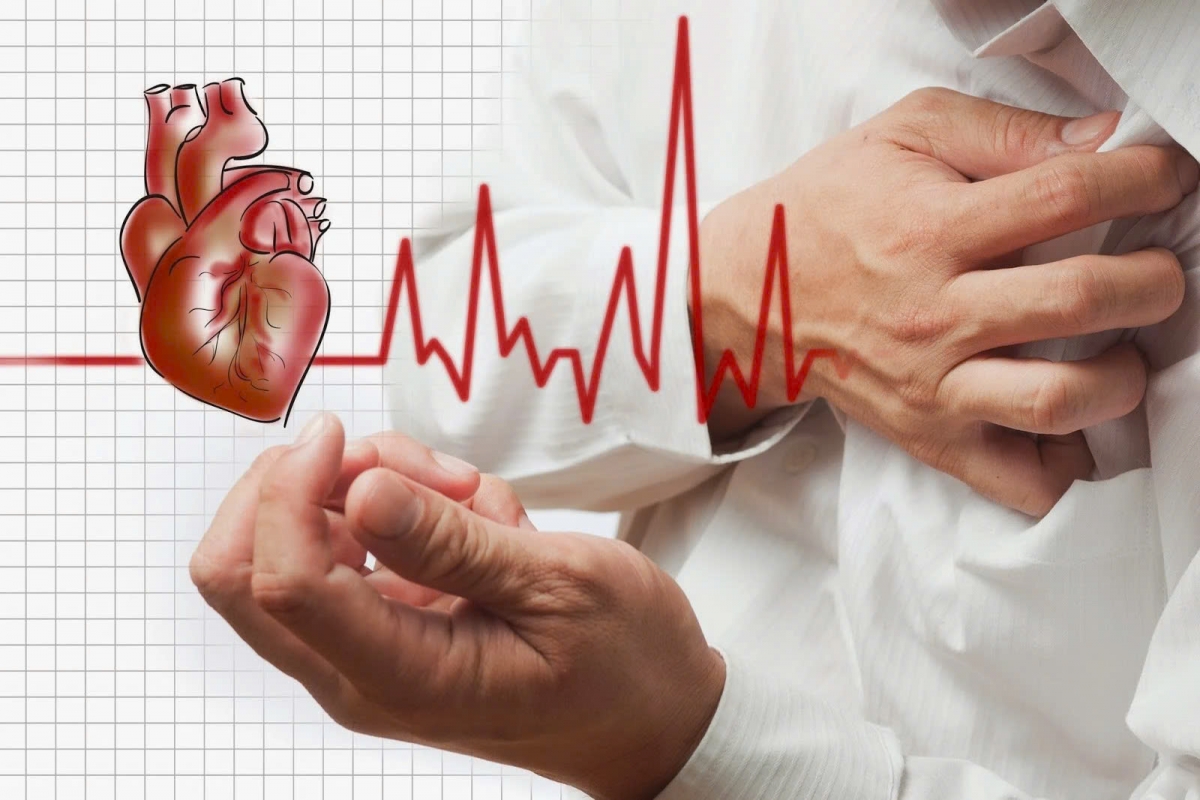
Poor cerebral blood circulation also increases peripheral pressure, leading to high blood pressure and a risk of cerebral hemorrhage. Cold weather also increases the levels of red blood cells and platelets in the blood, increasing blood viscosity and clotting, making it easier for blood clots to form and block cerebral blood vessels.
Because alcohol and tobacco contain many harmful stimulants, their use is not recommended for people with high blood pressure or cardiovascular disease.
Forgetting to take medication: When people are busy having fun and going on spring outings, they may forget to take their medication, leading to dangerous complications.
Cardiovascular warning signs require early examination.
Therefore, if you experience the following symptoms, you should seek medical attention early to ensure a peaceful Lunar New Year.
Excessive fatigue: Feeling exhausted can be a sign of a serious health problem such as cardiovascular disease. When fatigue is related to heart disease, you feel unable to perform normal daily activities.
Angina: A feeling of pressure, heaviness, tightness, or pain in the chest, as if a heavy mass is pressing down on it. This occurs due to reduced blood flow to the heart and is a symptom of coronary artery disease.
Rapid heartbeat: This symptom can occur when you are nervous, anxious, or engaging in strenuous activity... but it can also be a sign of a serious health problem, such as an arrhythmia.
Shortness of breath: Your heart and lungs work together to deliver oxygen to your blood and tissues and remove carbon dioxide. If either of these organs isn't functioning properly, you'll have to breathe harder to take in more oxygen or expel more carbon dioxide. Heart conditions that can cause shortness of breath include heart failure, cardiomyopathy, arrhythmias, endocarditis, pericarditis, or myocarditis.
Dizziness: This can also be a warning sign of cardiovascular disease, such as atrial fibrillation – which causes an irregular heartbeat, heart attack, cardiac neurosis, or a sudden drop in blood pressure...
Source: https://kinhtedothi.vn/nguoi-bi-benh-tim-mach-can-chu-y-gi-trong-dip-tet.html
![[Image] Leaked images ahead of the 2025 Community Action Awards gala.](/_next/image?url=https%3A%2F%2Fvphoto.vietnam.vn%2Fthumb%2F1200x675%2Fvietnam%2Fresource%2FIMAGE%2F2025%2F12%2F16%2F1765882828720_ndo_br_thiet-ke-chua-co-ten-45-png.webp&w=3840&q=75)
![[Image] The tenacious fighting spirit of Vietnamese women's football](/_next/image?url=https%3A%2F%2Fvphoto.vietnam.vn%2Fthumb%2F1200x675%2Fvietnam%2Fresource%2FIMAGE%2F2025%2F12%2F17%2F1765990260956_ndo_br_4224760955870434771-copy-jpg.webp&w=3840&q=75)
![[Photo] Prime Minister Pham Minh Chinh receives the Governor of Tochigi Province (Japan)](/_next/image?url=https%3A%2F%2Fvphoto.vietnam.vn%2Fthumb%2F1200x675%2Fvietnam%2Fresource%2FIMAGE%2F2025%2F12%2F16%2F1765892133176_dsc-8082-6425-jpg.webp&w=3840&q=75)
![[Photo] Prime Minister Pham Minh Chinh receives Lao Minister of Education and Sports Thongsalith Mangnormek](/_next/image?url=https%3A%2F%2Fvphoto.vietnam.vn%2Fthumb%2F1200x675%2Fvietnam%2Fresource%2FIMAGE%2F2025%2F12%2F16%2F1765876834721_dsc-7519-jpg.webp&w=3840&q=75)

![[Live] 2025 Community Action Awards Gala](/_next/image?url=https%3A%2F%2Fvphoto.vietnam.vn%2Fthumb%2F1200x675%2Fvietnam%2Fresource%2FIMAGE%2F2025%2F12%2F16%2F1765899631650_ndo_tr_z7334013144784-9f9fe10a6d63584c85aff40f2957c250-jpg.webp&w=3840&q=75)











































![[Live] Closing Ceremony and Award Presentation for the "Impressive Vietnam Tourism" Video/Clip Creation Contest 2025](https://vphoto.vietnam.vn/thumb/402x226/vietnam/resource/IMAGE/2025/12/17/1765974650260_z7273498850699-00d2fd6b0972cb39494cfa2559bf85ac-1765959338756946072104-627-0-1338-1138-crop-1765959347256801551121.jpeg)















Comment (0)