

Ten years of preparation for the new surgical technique.
In March 2019, Associate Professor Dr. Dong Van He, Deputy Director of Viet Duc Friendship Hospital, received a special case of a brain tumor. The man, born in 1965 and from Quang Binh province, frequently experienced headaches, numbness, and weakness in his arms. Upon examination, a brain tumor measuring 2x3 cm was discovered, located in a position affecting motor function.
At this point, after hearing Associate Professor Hệ discuss the new surgical method – awake brain surgery – the man agreed to place his full trust in the expertise of Vietnamese doctors and medical professionals. Awake brain surgery is a procedure performed on the brain while the patient is awake and conscious. This technique allows doctors to monitor vital functions during surgery, control surgical maneuvers, avoid damaging nerve fibers and healthy brain tissue surrounding the lesion, and maximize the preservation of neurological function for the patient.
The surgery lasted three hours, and the doctors successfully removed the entire brain tumor from the patient. Remarkably, during the operation, the patient conversed and moved his arms and legs as requested by the medical staff. He even sang the song "Quang Binh, My Homeland" for the doctors. After the surgery, the patient was alert, in stable condition, and without any lasting effects; notably, the numbness in his hands had completely disappeared.
This is not the first time; Associate Professor Dr. Dong Van He and his colleagues have successfully performed many awake brain surgeries. To achieve this, he and his colleagues spent 10 years researching and preparing, from expertise to technical equipment. He is also the person who "paved the way" to bring awake brain surgery techniques to Vietnam, giving many patients a chance to live.
Associate Professor Dr. Dong Van He (born in 1966, from Lien Hoa commune, Kim Thanh district, Hai Duong province). His childhood was haunted by witnessing his mother's daily battle with chronic lung disease. After finishing high school, encouraged by his family, he applied to Hanoi Medical University. In 1989-1990, he topped the residency exam and became a name frequently mentioned by many lecturers at the university as a shining example for generations of students to follow.
After graduating, he went to France to study. During his time abroad, he learned about awake brain surgery. Upon returning to Vietnam to work at Viet Duc Friendship Hospital, he carried with him the dream of performing awake brain surgery for patients in his country.
"I have always harbored the dream of being able to perform awake brain surgery on patients in my country, both to develop the technique and to bring them a better life," Associate Professor Hệ said.
Throughout his years working at Viet Duc Friendship Hospital, Dr. Hệ repeatedly contacted experts in Europe to invite them for demonstration surgeries. However, both attempts failed. During an Asian Neurosurgery Conference, he met a Japanese professor who presented a lecture on awake brain surgery. Finding the technique perfectly suited to his own aspirations, he listened attentively to gain a deeper understanding.
After that, Associate Professor Dr. Hệ and the doctors and medical staff of Viet Duc Friendship Hospital packed their bags and went to Japan to learn. Japanese experts also visited Vietnam three times. The first time, a Japanese expert came and only visited the hospital facilities, equipment, and operating room instruments. The second time, the expert team continued to survey the operating room facilities. It was only on their third visit to Vietnam that they began conducting demonstration surgeries.
To date, starting from a new and difficult technique, Associate Professor Dr. Dong Van He and the doctors at Viet Duc Friendship Hospital have mastered the technique, successfully performing surgery on over 40 cases of complex brain tumors. All patients have recovered well with no sequelae. This is an impressive result, opening up great prospects and contributing to the overall success in the field of neurosurgery at Viet Duc Friendship Hospital.
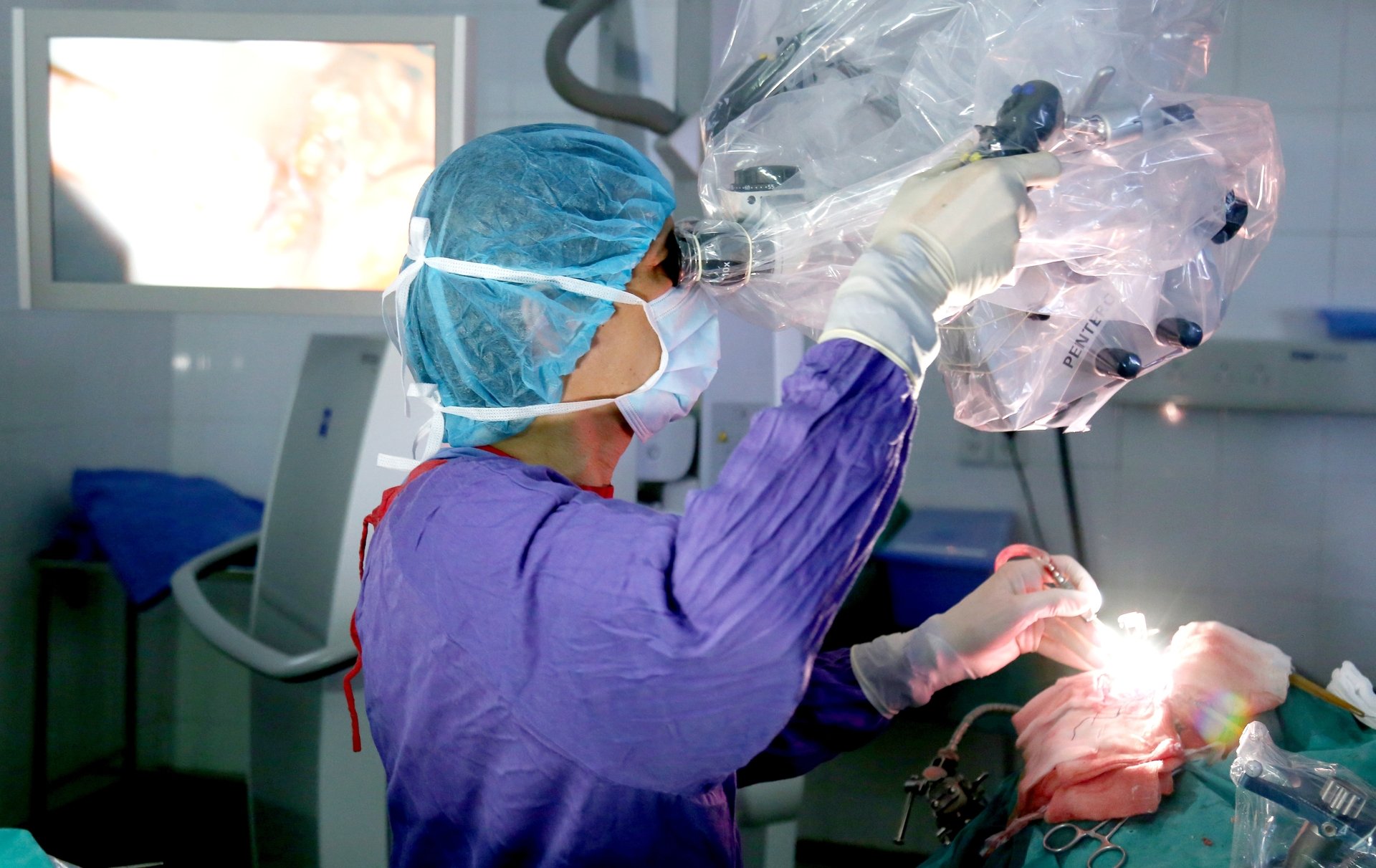
Associate Professor Dr. Dong Van He during a brain tumor surgery. (Photo: Provided by the doctor)
The surgery lasted 19 hours.
Three years ago, during a neurosurgery operation, Associate Professor Dr. Dong Van He and his team stood continuously for 19 hours to remove a brain tumor from a 36-year-old female patient from Thai Binh province. This was also the longest surgery of his career.
A female patient suffering from headaches and impaired mobility was found to have a meningioma at the base of her skull upon examination. Without surgery, the patient would die or suffer lifelong disabilities.
"Imagine the nerves as bamboo roots, and the tumor as a lump of earth in the middle of the roots. To remove the lump of earth while preserving the roots requires meticulous attention to detail. Not to mention, the skull bones are very thick; doctors have to drill and grind for two hours just to access the tumor," Dr. Hệ explained. Carelessness could lead to death and lifelong disability.
Having traveled extensively and made many acquaintances around the world, Associate Professor Dr. Hệ often invites foreign experts to Vietnam to participate in difficult surgeries. These sessions are broadcast live outside the operating room so that other doctors and medical professionals can learn from them.
He was most impressed by the surgery he performed on a child admitted to the hospital on June 3, 2017, who had an internal carotid artery aneurysm measuring 10 x 12 cm, where over 1.5 cm is considered large, and over 2.5 cm is considered gigantic.
This is a rare case in medicine. To save the child, Associate Professor Hệ invited Professor Kasumi Takizawa, Director of the Neurosurgery Center at Red Cross Asakikawa Hospital (Japan), a leading expert in neurovascular surgery, to perform the surgery.
On June 8, 2017, a surgical team of six, led by Associate Professor Dr. Dong Van He and Professor Kasumi Takizawa, performed the complex surgery, which lasted over 12 hours.
"Because the surgery was long, the doctors often took turns going out for light meals and changing into surgical gowns to ensure sterility. By the end of the surgery, almost everyone was exhausted," Associate Professor Hệ said. The surgery was successful. The patient's health is progressing well.
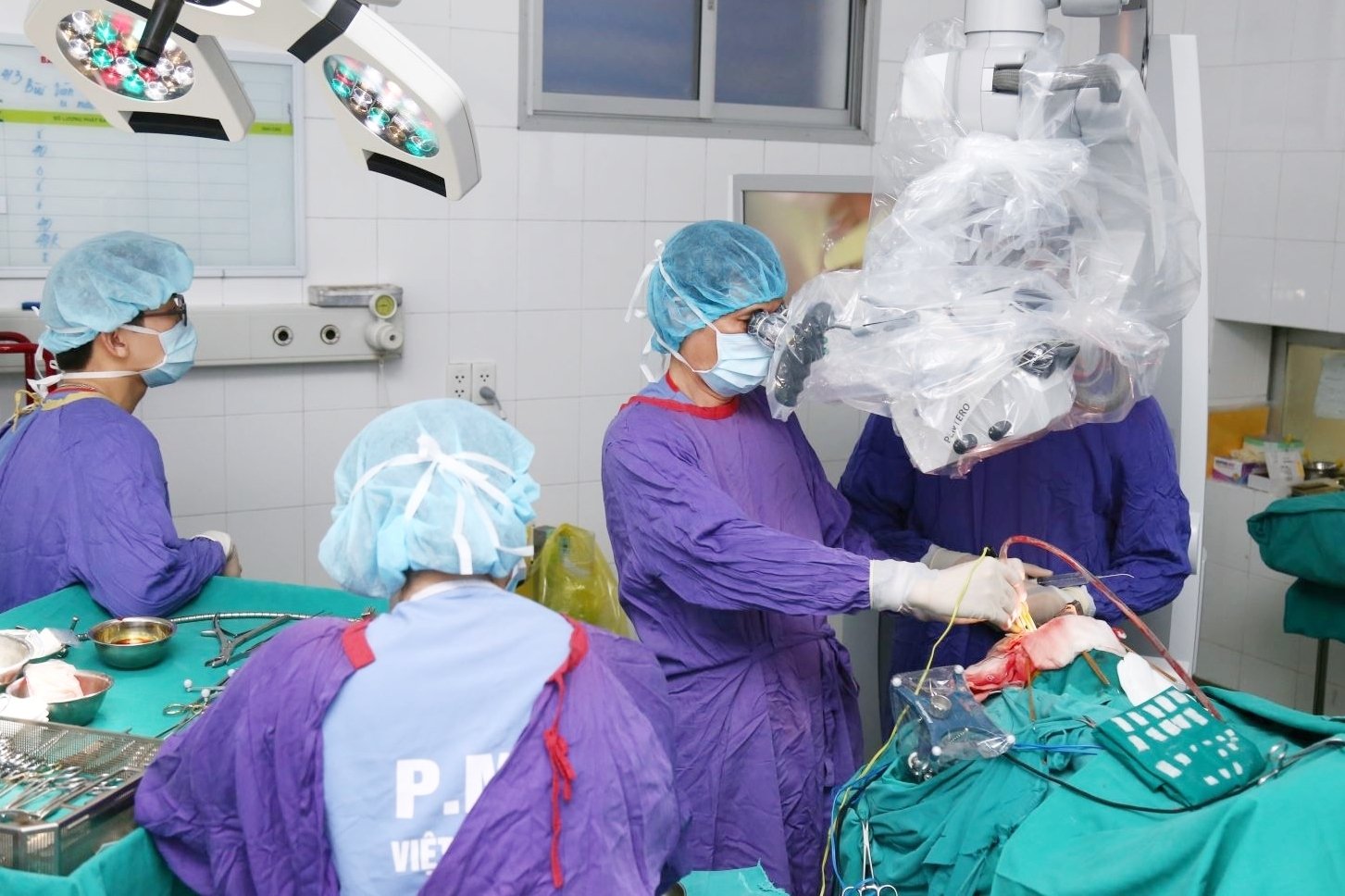
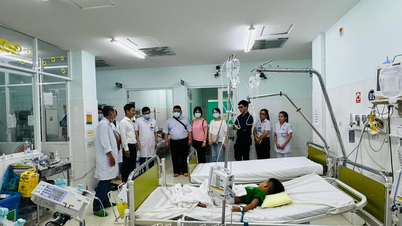
To date, Associate Professor Hệ and his colleagues have successfully performed awake brain surgery on over 40 cases. (Photo: Provided by the doctor)
Vietnamese doctors are on par with world-class standards.
According to Associate Professor Dr. Dong Van He, Vietnamese healthcare is not inferior to that of other countries and can perform many difficult techniques; in fact, other countries have something to learn from it. However, some people still lack confidence in domestic medicine, as evidenced by the fact that tens of thousands of patients still seek treatment abroad every year.
This not only deprives the country of a significant source of foreign currency, but also costs it the opportunity to improve the skills and reputation of Vietnam's healthcare sector. "At our center, we record dozens of cases each year where patients who received treatment abroad return here seeking help," Associate Professor Hệ said.
Not all patients who go abroad for treatment receive positive results. Many return home with their treatment worse than they were.
Associate Professor Hệ recounted a case where a patient was diagnosed with a brain tumor in March 2023, sought treatment at a private clinic, and was subsequently taken abroad for treatment by their family. The result was radiosurgery costing 500 million VND. "This is a ridiculous treatment method, both expensive and inappropriate," Associate Professor Hệ stated.
Several other cases involved patients with brain diseases who underwent surgery abroad using traditional methods, not endoscopic ones like at Viet Duc Hospital. These patients experienced hearing loss and facial paralysis after surgery abroad, costing approximately 2 billion VND.
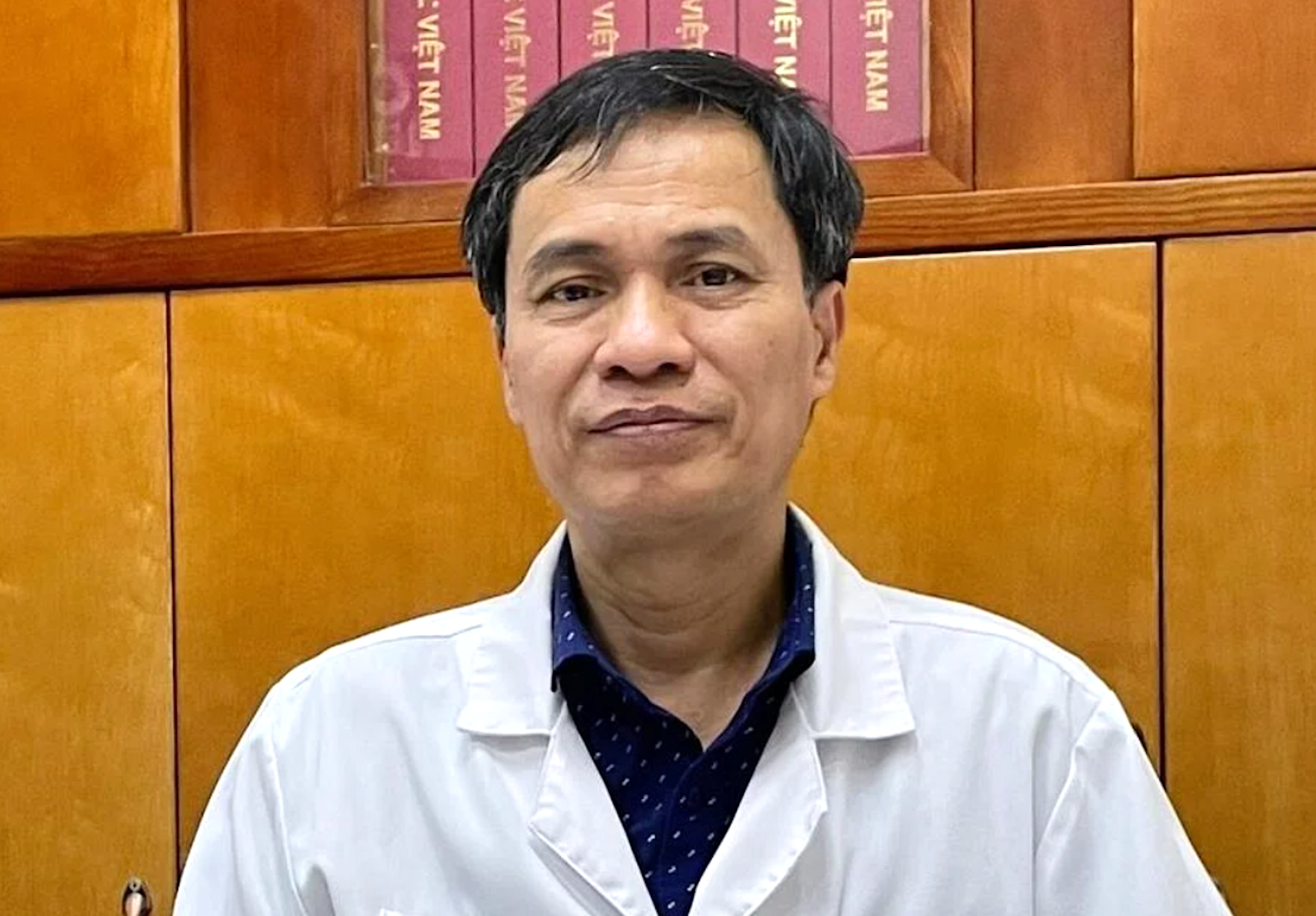
In terms of expertise and surgical techniques, Vietnamese doctors are not inferior to anyone, in any country; we only lack the material resources.
Assoc. Prof. Dr. Dong Van He
Vietnamese doctors are in no way inferior to their counterparts in Thailand and Singapore; in fact, many of our doctors are even more experienced and talented than their foreign counterparts. This is evidenced by the increasing number of foreign patients coming to Vietnam for medical examinations, and the growing number of foreign doctors and medical staff coming to Vietnam for professional development and to learn from their expertise.
"Perhaps the only problem is that the healthcare sector hasn't communicated effectively, hasn't done a good job of guiding patients to the right facilities, asking the right doctors, and getting to where they need to go," Associate Professor Hệ expressed.
To retain Vietnamese people in the country for medical treatment and attract foreigners to seek medical care from doctors, more solutions are needed, with improving professional quality and medical ethics being the most important. Medical facilities need to organize their reception and care services professionally, implement reforms in attitude and behavior, and strive for patient satisfaction.
Healthcare facilities need to continuously update regulations so that new diagnostic protocols, medications, and modern biochemicals can be incorporated into patients' treatment regimens as soon as possible. If we do a good job of improving services, building procedures, and communicating patient care, people in need will naturally seek out domestic healthcare facilities for examination and treatment, and our healthcare system will become increasingly strong.
In addition, training the next generation to continue and develop modern techniques is also something that medical facilities need to focus on promoting. The associate professor hopes that future generations will be more skilled than his own, and will produce groundbreaking scientific research to contribute to the development of the country's medicine.
NHU LOAN - Vtcnews.vn


![[Photo] Two flights successfully landed and took off at Long Thanh Airport.](/_next/image?url=https%3A%2F%2Fvphoto.vietnam.vn%2Fthumb%2F1200x675%2Fvietnam%2Fresource%2FIMAGE%2F2025%2F12%2F15%2F1765808718882_ndo_br_img-8897-resize-5807-jpg.webp&w=3840&q=75)











































































Comment (0)