

A Japanese town has agreed to conduct a geological study to determine the suitability of a site for the temporary storage of spent nuclear fuel.
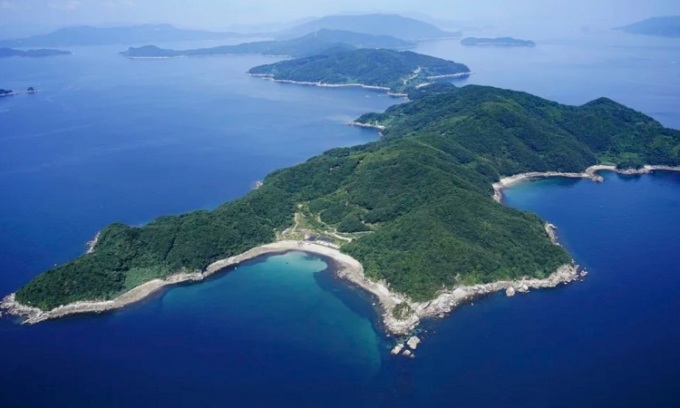
Nagashima Island belongs to Kaminoseki town. Photo: AP
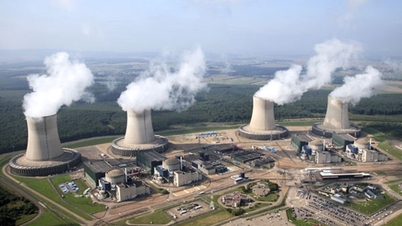
Kaminoseki, a small town in Yamaguchi Prefecture in southwestern Japan, accepted a survey request from Chugoku Electric Power Company, one of the two major power providers in the country along with Kansai Electric Power Company. The two companies' spent fuel storage tanks are nearly full. The Japanese government is encouraging the use of nuclear power as a low-carbon electricity source, but its nuclear power plants are running out of space to store spent fuel, AP reported on August 18.
The problem stems from Japan's nuclear fuel reprocessing program to recycle and reuse plutonium from spent fuel. The government continued to pursue this program despite major technical setbacks. A plutonium reactor at the Monju plant malfunctioned and had to be shut down. Meanwhile, the commissioning of the Rokkasho reprocessing plant in northern Japan has been delayed for nearly 30 years.
Following the Fukushima Daiichi nuclear power plant meltdown in 2011, many reactors were shut down and restarts were delayed, contributing to a reduction in fuel consumption. However, Prime Minister Fumio Kishida's administration decided to maximize nuclear power as a clean energy source, raising concerns about a shortage of storage space for spent fuel.
In early August, Chugoku Electric Power submitted a proposal to build a storage facility in conjunction with Kansai Electric Power, but the plan faced strong opposition from residents. Chugoku Electric Power's plan to build a nuclear power plant in Kaminoseki has been delayed for more than a decade following the Fukushima Daiichi disaster, leading to delays in subsidies for the remote town with its aging and increasingly sparse population.
Kansai Electric, the operator of Japan's largest nuclear power plant, is urgently seeking additional storage for spent fuel. Cooling pools at its plant are already more than 80% full. The company has pledged to find a temporary storage location by the end of this year.
Approximately 19,000 tons of spent fuel, a byproduct of nuclear power generation, are stored at power plants across Japan, accounting for about 80% of storage capacity, according to the Ministry of Economy , Trade and Industry. Continuing the spent fuel reprocessing program adds further pressure to Japan's already large plutonium reserves, raising international concerns that the country is running out of space to store nuclear waste.
An intermediate facility is designed to store spent nuclear fuel in dry drums for decades until it is reprocessed or transferred to its final storage location. Experts believe this is a safer option than storing it in cooling pools at the plant. If the proposal at Kaminoseki is approved, it would be the second such facility in Japan. The only current storage facility is located in Mutsu, near Rokkasho, and is exclusively for Tokyo Electric Power Company.
An Khang (According to AP )
Source link
















































































Comment (0)