

Leveraging strengths in new areas
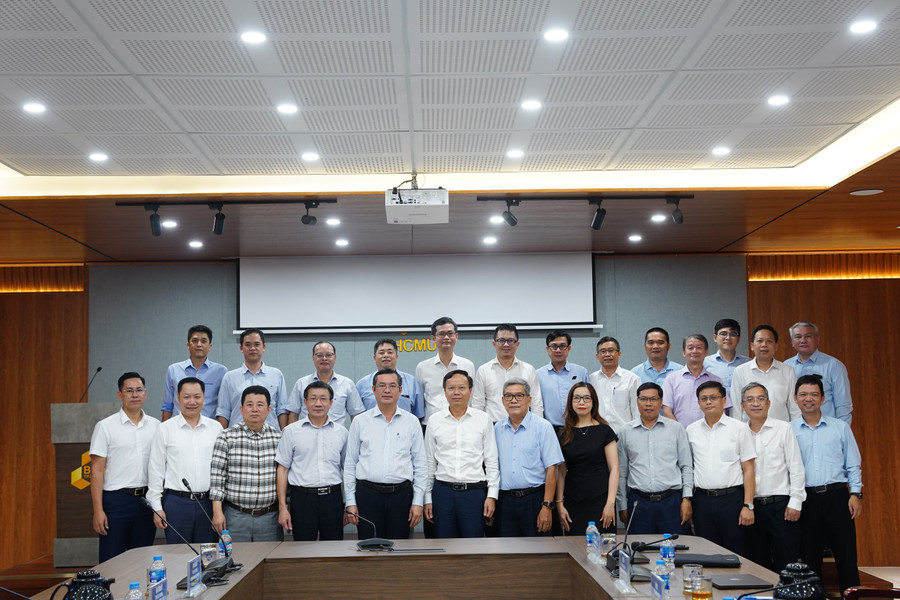
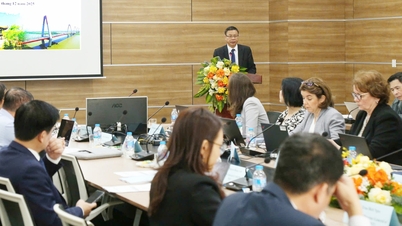
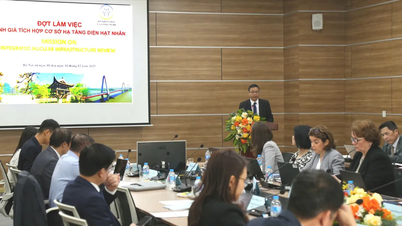
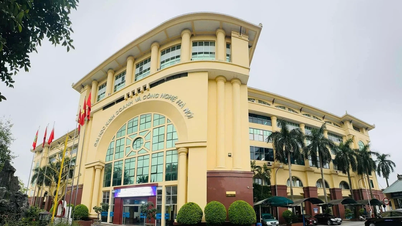
During a working session on the afternoon of October 24th with the Ho Chi Minh City University of Technology (Vietnam National University Ho Chi Minh City), Deputy Minister of Education and Training Nguyen Van Phuc stated that Decision 1012/QD-TTg dated May 10, 2025, approving the Project on Human Resource Development in the Nuclear Power Sector for the period 2025-2035, is an important basis for the Ministry and higher education institutions to prepare lecturers, experts, and engineers to serve the restart phase of the national nuclear power program.
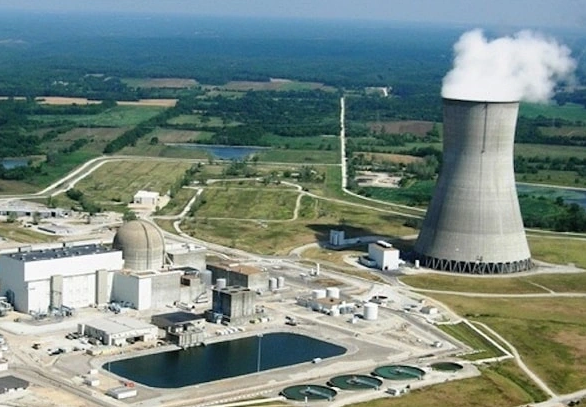
The project aims to meet the human resource needs of Ninh Thuan 1 and Ninh Thuan 2 nuclear power plants (Khanh Hoa province) by 2030.
The University of Technology has been identified by the Ministry of Education and Training as one of the units participating in training and meeting the human resource needs of two nuclear power plants, a total of 3,900 people.
Professor Mai Thanh Phong, Rector of Ho Chi Minh City University of Technology, said that the university has proactively developed reports and reviewed training programs and research capabilities in related fields such as electrical engineering, mechanical engineering, materials science, automation, and applied nuclear science .
According to Professor Phong, this is an opportunity for the school to promote its traditional strengths, while contributing to a field of strategic significance to national energy security.
Professor Phong also shared that the university has recently announced an excellent research network in artificial intelligence and semiconductor technology, demonstrating the strong capabilities of its faculty and researchers in high-tech fields.
This is a favorable premise for expanding into training and research in nuclear technology in the future.
Deputy Minister Nguyen Van Phuc highly appreciated the efforts of the University of Technology and suggested that the school soon develop a detailed plan for training lecturers and nuclear experts, and invest in a system of specialized laboratories.
Moving towards the goal of human resource training.
Associate Professor Dr. Nguyen Duy Anh - Deputy Head of the Training Department, Ho Chi Minh City University of Technology, said that the university has developed a plan to recruit approximately 60 students per year for the Nuclear Engineering major, starting in 2026.
Along with that are bachelor, engineer, master and doctoral training programs in related fields, aiming to meet the demand of about 4,000 human resources to serve the two nuclear power plants Ninh Thuan 1 and Ninh Thuan 2 by 2030.
The school also proposed investing in a system of 7 modern, interconnected laboratories to serve nuclear power engineering training, including the following areas: radiation measurement and radiation safety, nuclear electronics and sensors, plant control systems, reactor simulation, nuclear power plant operation simulation, hydrothermal and heat transfer in reactors, materials and fuel cycles; the total estimated investment is 328 billion VND.
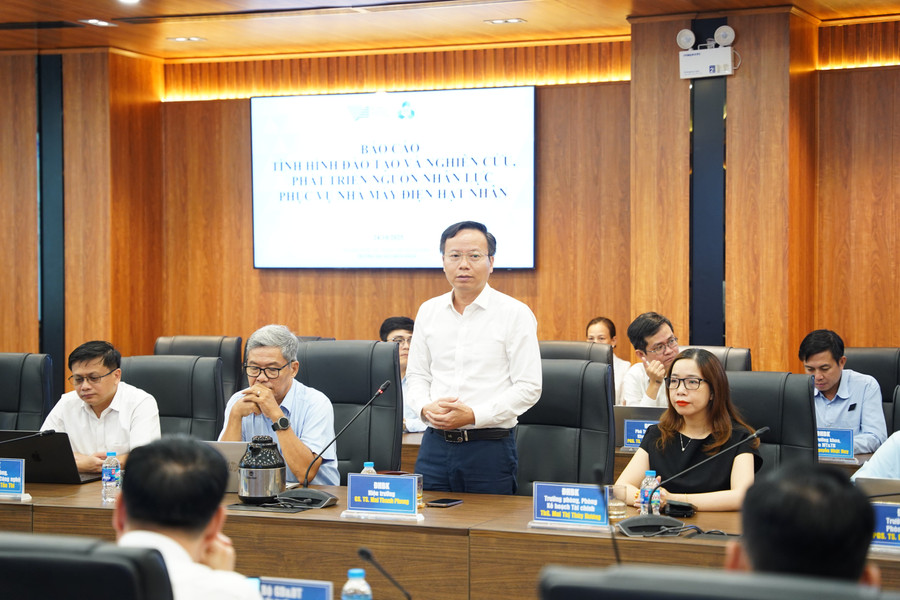
According to Associate Professor Dr. Duy Anh, the University of Technology is expanding its training facilities in Khanh Hoa province, contributing to the formation of local human resources to serve nuclear power plants in the South Central region.
At the same time, the school also aims to build a cooperation network between the School - Nuclear Research Institute - Enterprises, linking training, research and application of nuclear technology with the practical needs of society.
Regarding the University of Technology Branch in Khanh Hoa province, the school has had a policy since 2014, and the branch has been promoted again in recent years.
This facility plays an important role in expanding research, testing and human resource training in the Central region.
A training strategy and a broad network of collaborations are needed.
Deputy Minister Nguyen Van Phuc emphasized that current nuclear technology tends to be more compact and safer, modern reactors are confined within a very narrow range, requiring engineers to be well-trained and updated with new knowledge.
According to the Deputy Minister, the human resource of nuclear training lecturers at the University of Technology is still thin, so there needs to be a solution to train and send young lecturers for training at home and abroad, especially with experienced countries such as Japan, Russia or Korea.
The Deputy Minister suggested that the school should survey and coordinate with Dalat University - a unit with a tradition of training in physics and nuclear energy, to learn about the organizational model, build programs, and connect research; forming cooperation networks between universities, research institutes and businesses in the nuclear field is very necessary.
Deputy Minister Nguyen Van Phuc stated that, in order to meet the technological requirements of various partners, training institutions need to prepare early on a compatible research and training foundation, aiming to form a network of cooperation between universities in the field of nuclear power.
According to the project, the human resource demand for Ninh Thuan 1 and Ninh Thuan 2 nuclear power plants is as follows:
Ninh Thuan 1 Nuclear Power Plant: Total number of about 1,920 people, of which university level (engineer, bachelor) is 1,020 people, college level is 900 people. The number of university level human resources newly trained abroad is 320 people.
Ninh Thuan 2 Nuclear Power Plant: Total number of about 1,980 people, of which 1,050 are university and postgraduate level, 930 are college level. The number of university and postgraduate level human resources newly trained abroad is 350 people.
Source: https://giaoducthoidai.vn/chuan-bi-nhan-luc-ky-thuat-cao-cho-ky-nguyen-dien-hat-nhan-post753906.html






























![[Video] The craft of making Dong Ho folk paintings has been inscribed by UNESCO on the List of Crafts in Need of Urgent Safeguarding.](https://vphoto.vietnam.vn/thumb/402x226/vietnam/resource/IMAGE/2025/12/10/1765350246533_tranh-dong-ho-734-jpg.webp)





















































Comment (0)