

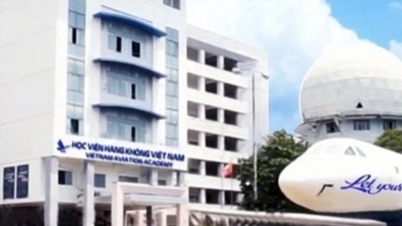
The 3rd International Conference on the Future of Aviation (AFCS 2025), hosted by the Vietnam Aviation Academy, took place in Ho Chi Minh City on December 10-11 with the theme “Aviation Future: Challenges and Solutions”. The conference served as a technology forum, addressing the pressing issue of the “software” of the aviation industry, with a focus on education and human development.
The "hardware" and "software" paradox in the digital age.
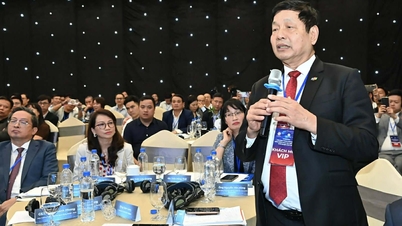
At the conference, Mr. Ho Minh Tan, Deputy Director of the Vietnam Civil Aviation Authority, presented a paper on the topic "Beyond the Horizon." According to Mr. Tan, the aviation industry is facing a paradox: aircraft can be purchased immediately, technology can be installed quickly, but human capacity, the core "valuable asset" of the future, cannot be acquired overnight.
Analyzing the educational landscape in depth, Mr. Tan pointed out that the biggest challenge lies not in a shortage of resources but in a global talent shortage. The experienced workforce is gradually retiring, while the training process for new pilots, engineers, or air traffic controllers requires many years of rigorous training.
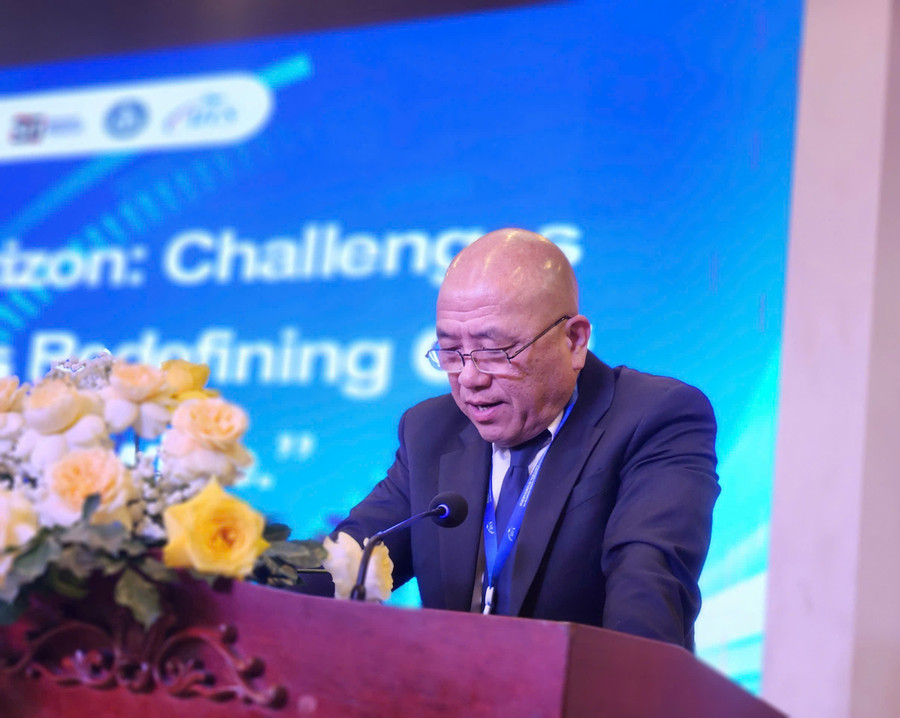
Notably, the requirements for human resource capabilities have completely changed. Today's aviation personnel are not just machine operators but must become "system managers." With the rise of digital transformation and AI, aviation education is forced to shift from static knowledge transmission to a lifelong learning mindset.
"Students and personnel in the industry need not only technical skills but also proficiency in digital skills, the ability to make decisions in a high-pressure environment, and especially mental health, an aspect of education that has often been neglected in the past," Mr. Tan observed.
Universities are a launching pad for innovation and integration.
Sharing the same view on the importance of education, Dr. Nguyen Thi Hai Hang – Director of the Vietnam Aviation Academy, Honorary Chair of AFCS 2025, affirmed the crucial role of training institutions in shaping the future of the industry.
According to Ms. Hang, the conference demonstrates the school's commitment to connecting Vietnam with the global academic and aviation industry network. It is not only a place for sharing knowledge but also a bridge to promote cooperation in research, training, and technology transfer.
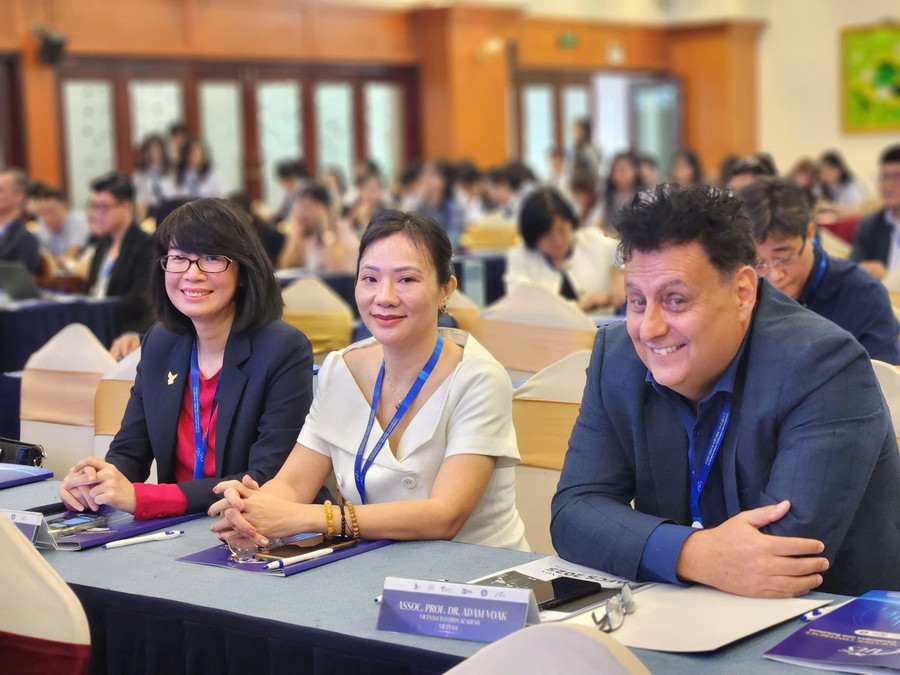
From the perspective of the host institution, Ms. Hang believes that modern higher education cannot be separated from international practices. The presence of co-organizing partners such as Worms University of Applied Sciences (Germany), Singapore Institute of Technology (SIT), and Piri Reis University (Türkiye) at AFCS 2025 is proof of the internationalization strategy in education that the Vietnam Aviation Academy is pursuing.
Dr. Hang believes that current aviation education must address a dual challenge: ensuring a standard technical foundation while also equipping students with innovative thinking to adapt to trends such as sustainable fuels and artificial intelligence.
“AFCS 2025 brought together more than 120 scientific papers, many of which focused on the application of AI in training and maintenance, demonstrating that universities are proactively leading the trend instead of just following market demands,” Dr. Hang said.
From the lecture hall to the virtual reality cockpit.
The emphasis on education at AFCS 2025 was clearly demonstrated through the in-depth discussion sessions. The presentations went beyond theory and delved into modern pedagogical methods. A prime example was the session on "AI, Learning, and Sustainable Innovation," which featured research on the use of Virtual Reality (VR) in aircraft maintenance training, aiming to enhance student engagement and learning effectiveness.
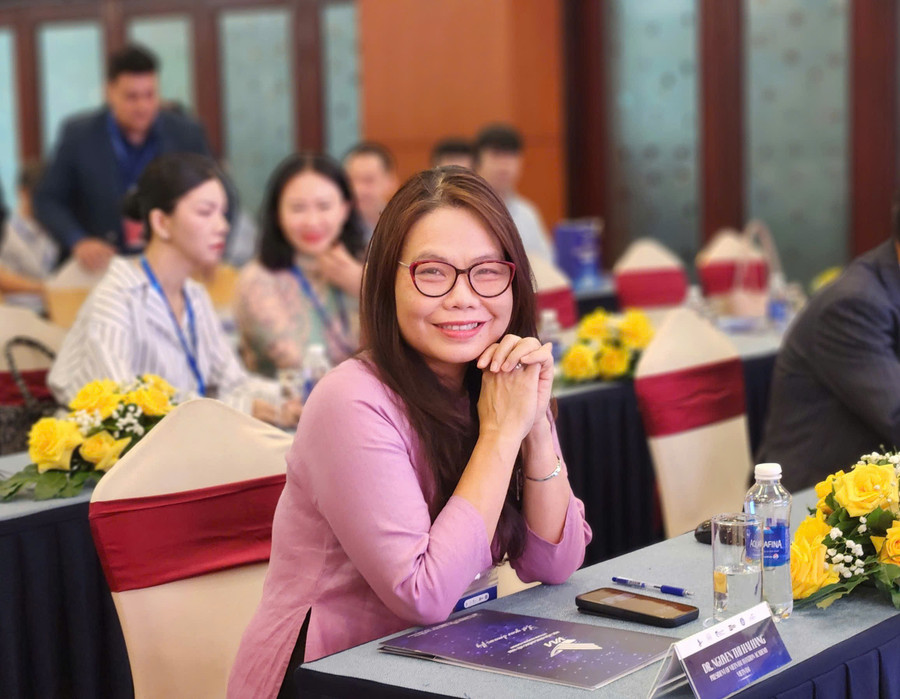
In addition, human resource management issues were also thoroughly analyzed. Reports at the conference analyzed the career perceptions of Generation Z (Gen Z), the role of safety culture, and the impact of technological pressure on aviation personnel. This highlights the need for educational institutions to innovate their programs: not only teaching how to fly or perform maintenance, but also teaching emotional management, teamwork, and cultural adaptation in a multinational environment.
"To realize the dream of a green and smart aviation industry, Vietnam needs a revolution in education and training. Investing in human capital today is the guaranteed ticket to the prosperity of the aviation industry in the future," Dr. Hang emphasized.
Source: https://giaoducthoidai.vn/go-kho-nhan-luc-hang-khong-toan-cau-giai-phap-ben-vung-den-tu-dau-post759989.html

![[Photo] The captivating scenery of the fragrant maple forest in Quang Tri](/_next/image?url=https%3A%2F%2Fvphoto.vietnam.vn%2Fthumb%2F1200x675%2Fvietnam%2Fresource%2FIMAGE%2F2025%2F12%2F10%2F1765353233198_lan09046-jpg.webp&w=3840&q=75)


![[Photo] Explore the US Navy's USS Robert Smalls warship](/_next/image?url=https%3A%2F%2Fvphoto.vietnam.vn%2Fthumb%2F1200x675%2Fvietnam%2Fresource%2FIMAGE%2F2025%2F12%2F10%2F1765341533272_11212121-8303-jpg.webp&w=3840&q=75)

















![[Video] The craft of making Dong Ho folk paintings has been inscribed by UNESCO on the List of Crafts in Need of Urgent Safeguarding.](https://vphoto.vietnam.vn/thumb/402x226/vietnam/resource/IMAGE/2025/12/10/1765350246533_tranh-dong-ho-734-jpg.webp)





















































Comment (0)