

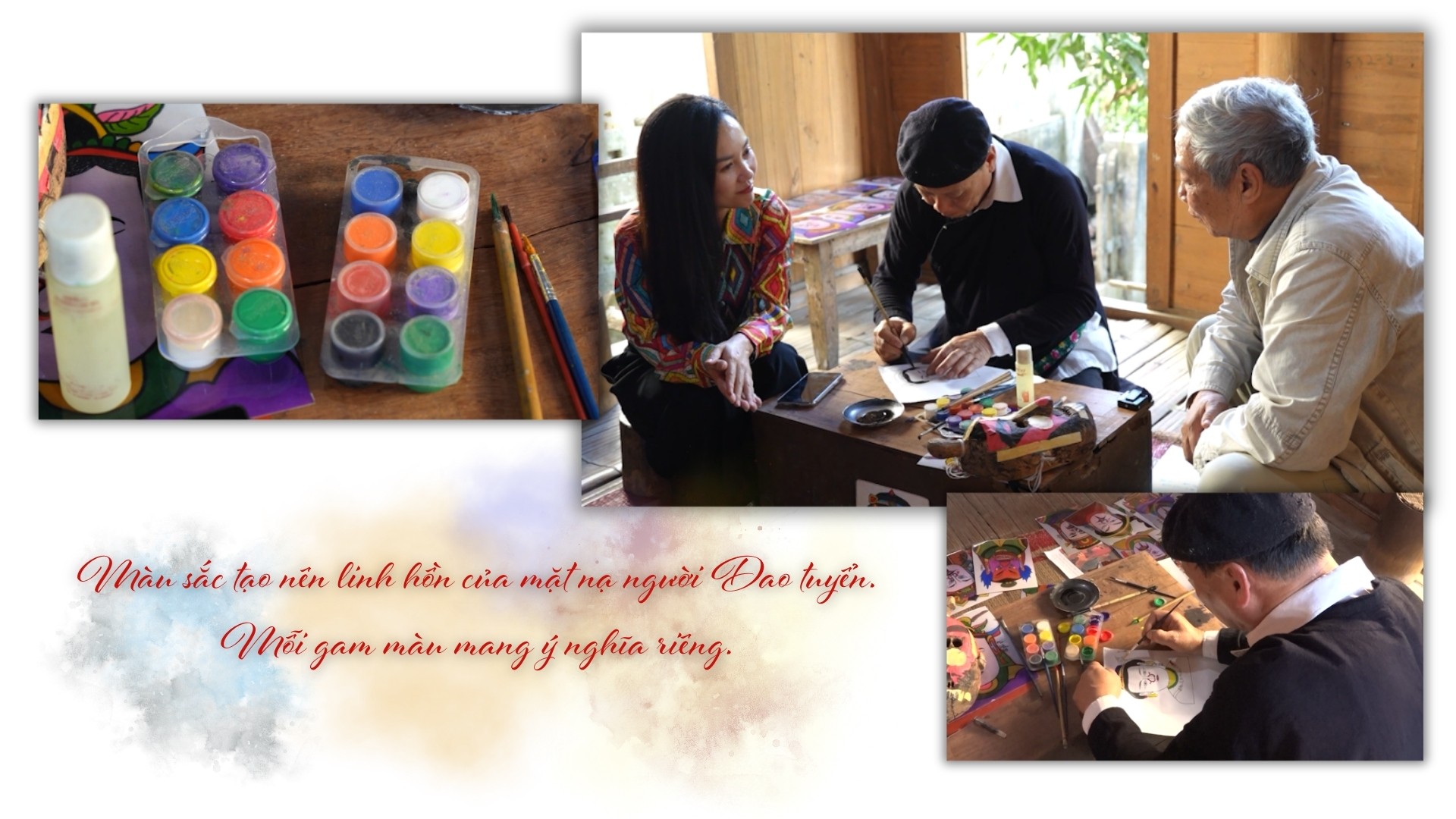
I arrived in Phuc Khanh commune, Lao Cai province, on a late autumn day… The last rays of sunlight gently fell on the grass, trees, and stilt houses in the small village of Na Khem. We met Mr. Ly Xuan Dinh, who always carries within him the pride and responsibility of preserving and passing on the mask-making techniques of the Dao Tuyen people, passed down through five generations of the Ly family. Mr. Dinh greeted us with a warm smile at his table, adorned with countless colors and drawings of sacred masks in the religious life of the Dao Tuyen people here.
Watching Mr. Ly Xuan Dinh's hands, calloused by years, gently touch each carving, each grain of wood, each brushstroke, each color, as if awakening the dormant soul within. These sacred and mysterious masks of the Dao ethnic group have been intertwined with generations in this Phuc Khanh region.
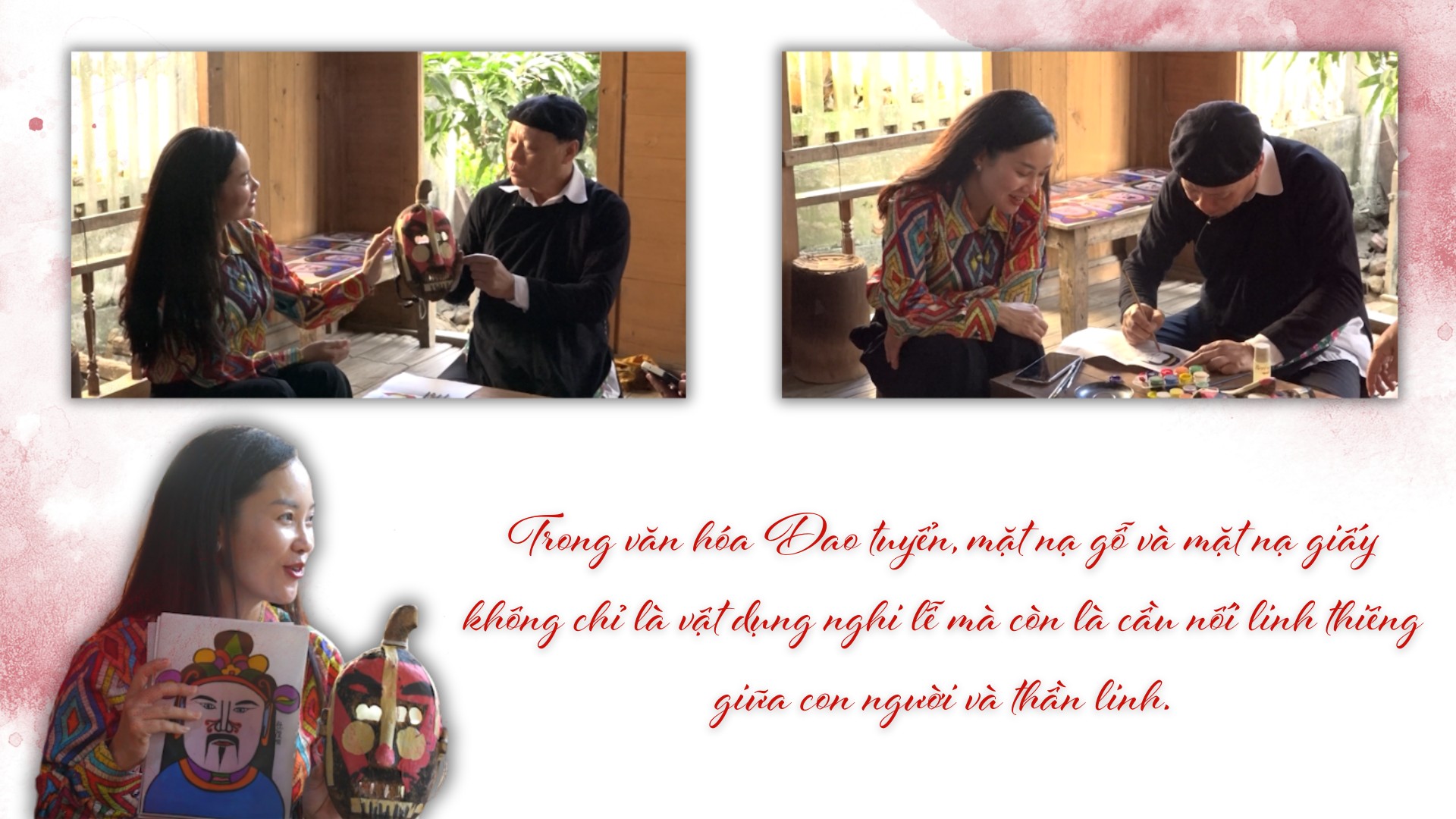
In the culture of the Dao Tuyen people, wooden and paper masks are not merely decorative objects or ceremonial props, but also embody the soul and serve as a bridge between humans and deities, between the visible and invisible worlds . Especially in the coming-of-age ceremony – a ritual recognizing a Dao Tuyen man as qualified to be a shaman – or in the funeral ceremony – a ceremony to send the souls of the deceased back to their ancestors, these masks are indispensable.
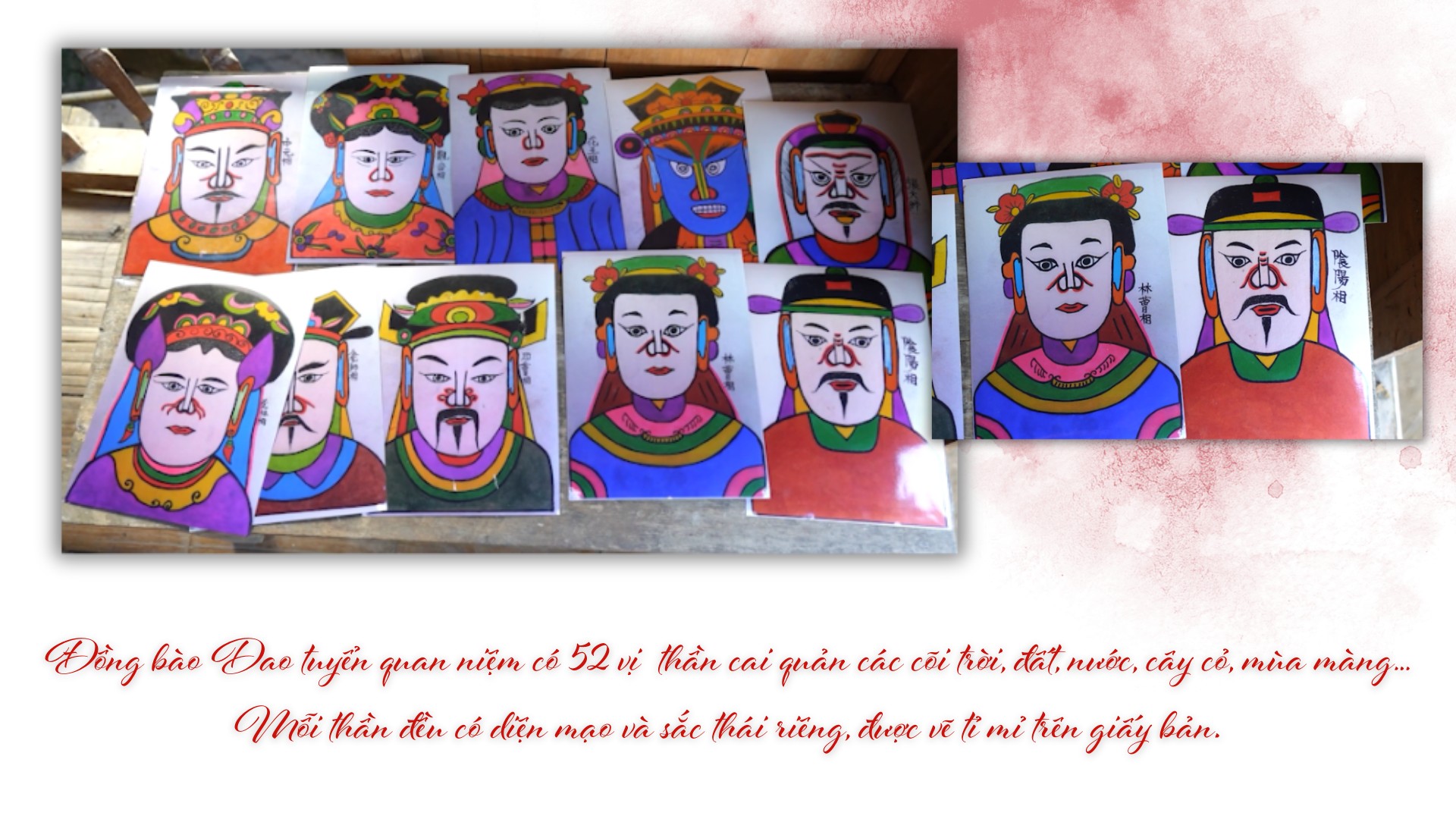
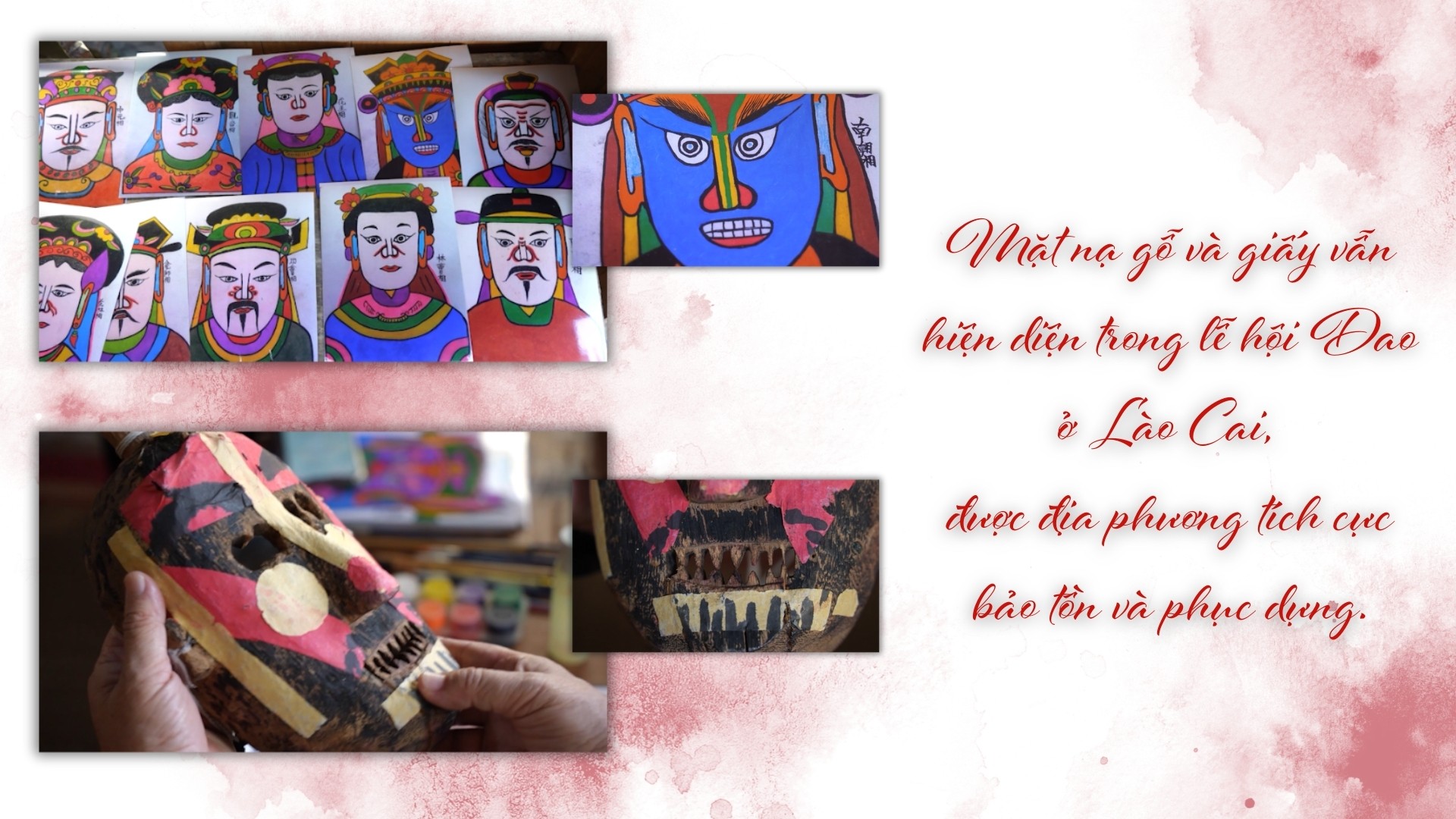
Each mask embodies a guardian deity of the village. According to ancient beliefs, the Dao people have up to 52 deities, governing the realms of heaven, earth, water, trees, grass, and crops… Each deity has its own unique face and expression, meticulously painted on handmade paper – also known as bamboo paper or dó paper (a type of paper handcrafted by the Dao people from bamboo or dó tree trunks). From the silent earth god, the majestic water god, to the benevolent midwife or the fierce forest lord – all emerge from the skillful hands and reverent hearts of artisans like Mr. Dinh.
Wood, paper, and ink are the chosen colors of heaven and earth… In the traditional wooden house of the Dao Tuyen people, the scent of fig wood, paper, and ink blends with the smoke from the kitchen, creating a warm and intimate atmosphere.
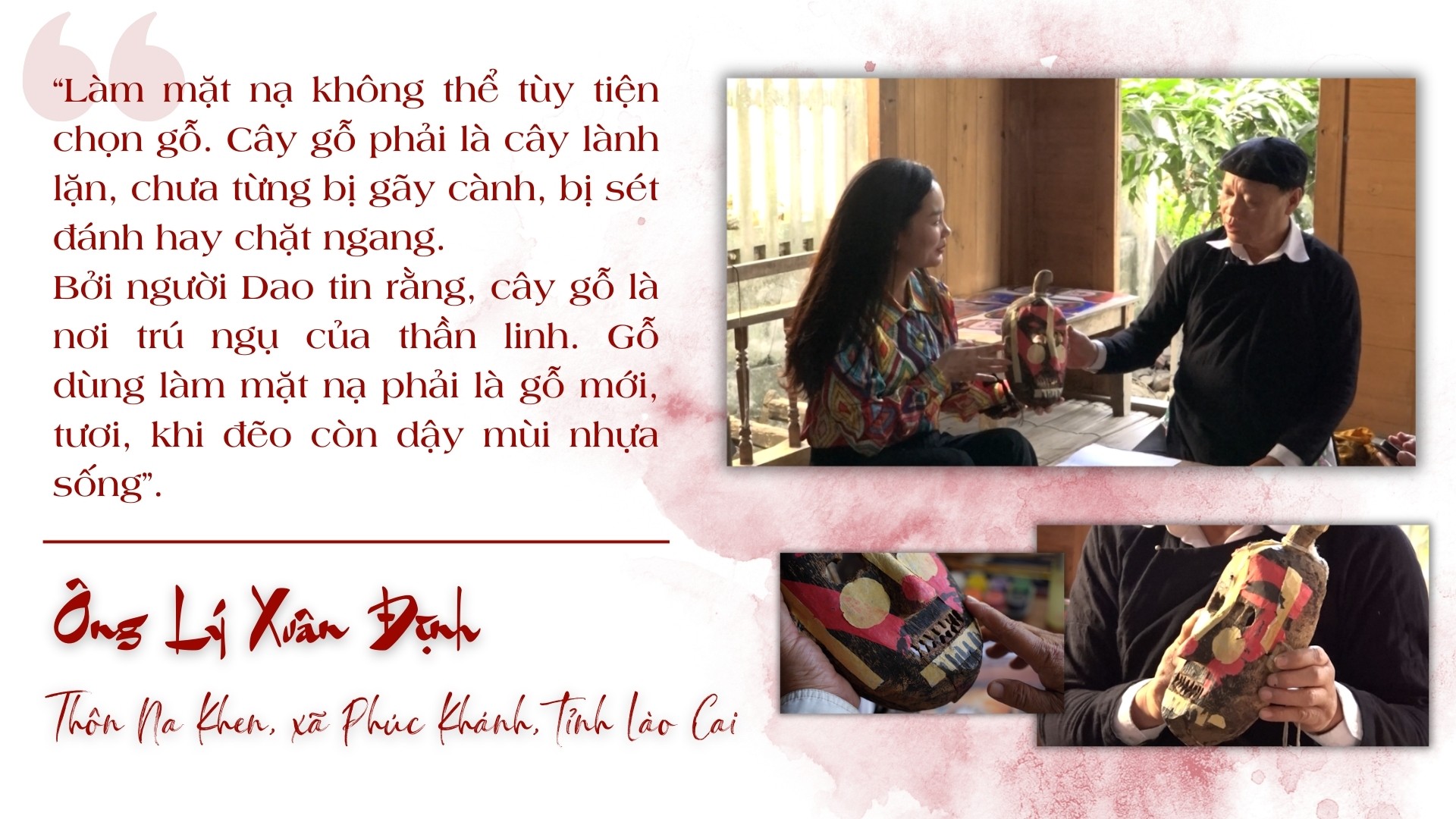
Mr. Ly Xuan Dinh slowly recounted: “You can’t just choose wood arbitrarily when making masks. The wood must be intact, never broken, struck by lightning, or cut down. Because the Dao people believe that trees are the dwelling places of spirits. The wood used for masks must be new, fresh wood, still smelling of sap when carved.” Fig wood is the most popular choice – it’s light, porous, and easy to carve. The fig tree also symbolizes fertility and prosperity, representing good fortune.
After shaping, the masks are air-dried naturally, awaiting an auspicious day to be "consecrated"—that is, to "breathe life" into the wood, officially transforming it into a sacred object. This is usually done during vegetarian feasts or initiation ceremonies, when the shaman recites incantations, beats drums, and invites the spirits to enter the mask.
Besides shape, color is the element that gives soul to the masks of the Dao Tuyen people. Each color carries its own symbolism: red represents power and bloodshed, yellow represents light and prosperity, green represents forests and life, and white represents the underworld and purity.
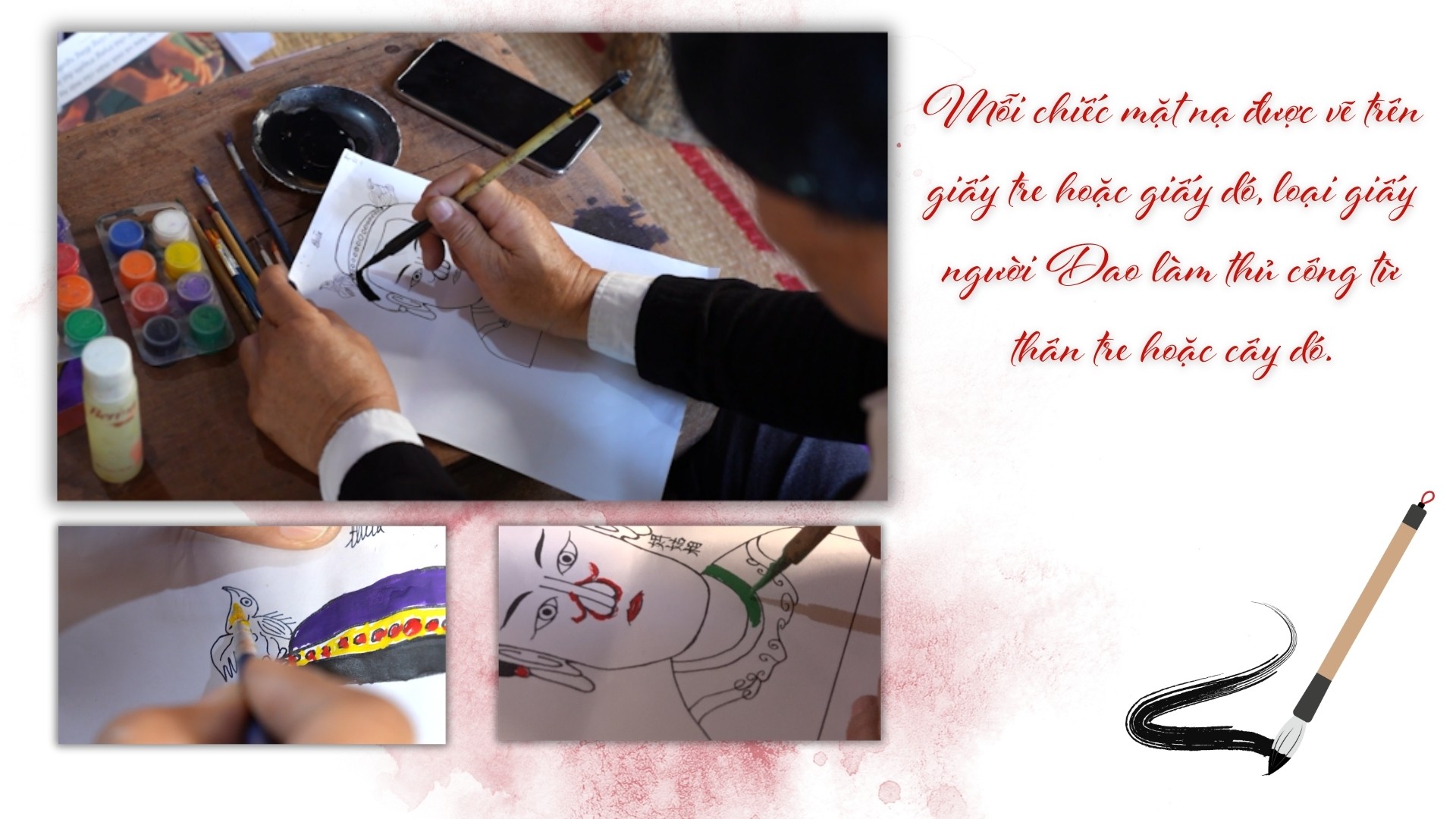
Mr. Dinh said that when shamans paint masks, they must understand each layer of meaning. A single wrong stroke of color can distort the sacredness of the ritual. The finished masks often have a fierce appearance – wide-open eyes, bared teeth, gaping mouths, and hair flowing down like a black stream. But hidden beneath that "terrifying" appearance is a powerful belief: the ferocity is to ward off evil spirits, to protect the villagers and ensure peace, a bountiful harvest, and the liberation of the souls of the deceased.
Now over sixty years old, Mr. Ly Xuan Dinh still keeps the flame of cultural preservation alive – working as a shaman in the Dao Tuyen ethnic minority village… Because of this, Mr. Dinh is one of the few Dao Tuyen people in Phuc Khanh who knows how to craft wooden masks and paint paper masks, a tradition passed down from father to son, with Mr. Dinh being the fifth generation.
Currently, Mr. Dinh still possesses the wooden mask used in the initiation ceremony of the Dao Tuyen people – passed down from his great-grandfather. Every time he touches the cracked, time-worn wooden mask, he feels as if he hears the whispers of the mountains and forests, and the teachings of his ancestors echoing back.
“I maintain the craft of painting and making masks not to sell them. I do it to preserve the traditions of the Dao people, so that future generations will know how to perform the rituals correctly. Masks are not just objects, but stories of our family lineage and our beliefs,” – as he spoke, Mr. Dinh’s eyes lit up in the hazy kitchen smoke.
Now, Mr. Dinh's son and grandson are also learning the craft – continuing their father's tradition of making wooden masks and painting paper masks of the Dao ethnic group. Young people in the village, and even from other communes like Bac Ha, Sa Pa, and Bao Thang, often come to his house, not only to watch him paint masks, but also to listen to him tell stories about the gods, the songs and dances in ancient rituals…
During our trip to Phuc Khanh, we met artist Khuc Quoc An - a son of Hanoi , who has spent nearly 20 years researching the culture of ethnic groups in the highlands, especially the Dao people in Lao Cai, and he seems to have found the "soul" in masks made of wood, bamboo bones, and papier-mâché.
Artist Khuc Quoc An, a native of Hanoi, who has spent nearly 20 years researching the culture of ethnic groups in the highlands, especially the Dao people in Lao Cai, said that when he first saw a Dao mask, he was overwhelmed by the powerful energy emanating from those seemingly rough lines.
“It is a pristine work of art, imbued with profound philosophy. Every block of wood, every shade of color, every carving contains the worldview and philosophy of life of the Dao people. The beauty here is not about perfection, but about the soul, the vitality of their beliefs.”
Over the years, artist Khuc Quoc An has traveled to several ethnic minority areas in Lao Cai province to study ancient masks and traditional color combinations, aiming to incorporate cultural heritage into modern painting. For him, these masks are not only the heritage of an ethnic group but also a source of inspiration for contemporary Vietnamese art.
The techniques of making wooden masks and painting paper masks still exist in the cultural life of the Dao ethnic group in Lao Cai through festivals, through the echoing sounds of drums and trumpets in the mountains. In particular, in recent years, the local government and the Lao Cai cultural sector have made many efforts in collecting, preserving, and restoring Dao rituals. The initiation ceremony and the Then ritual have been organized with the participation of artisans and local people.
Cultural and tourism programs are gradually incorporating the wooden and paper masks of the Dao people as a highlight in cultural exploration programs, helping tourists better understand the spiritual world of the highland people.
Interestingly, some artisans and artists have incorporated mask imagery into their artworks, from paintings and sculptures to decorative designs, creating a "new language" between tradition and modernity.
Artist Khuc Quoc An believes that: "Dao masks should not be considered merely objects for rituals, but rather as aesthetic heritage and cultural symbols. When properly appreciated, these masks can enter contemporary life without losing their essence."
For Mr. Ly Xuan Dinh, this is even more meaningful. Because for him, young people coming to learn a trade, or tourists coming to hear stories about the gods, is also a way to pass on the flame.
"I just hope my descendants know that behind these wooden faces and paper masks lies the story of our ancestors, of the forest, and of our Dao people. If we don't pass this knowledge down, the masks will only remain in display cases in museums," Mr. Dinh lamented.
On a late autumn afternoon, the pale golden sunlight bathed the roof of Mr. Ly Xuan Dinh's house. A wooden mask, passed down through five generations, hung silently on the wall, alongside 52 paper masks of various colors and expressions... In this space, the "keeper of the flame" of the Dao ethnic group's culture diligently researched and passed on mask-making techniques, softly humming an ancient melody: "Oh forest, please preserve my soul. Preserve the sound of drums and gongs, preserve the masks of our ancestors..." as if affirming that - no matter how much time passes - the masks of the Dao people will continue to tell the story of their origins and the enduring vitality of a people who know how to carve their "soul" into every piece of wood, every sacred brushstroke.
Presented by: Bich Hue
Source: https://baolaocai.vn/nhung-chiec-mat-na-ke-chuyen-di-san-post887470.html
















![[Photo] Reception to welcome General Secretary and President To Lam and his wife on their State visit to the Philippines](https://vphoto.vietnam.vn/thumb/1200x675/vietnam/resource/IMAGE/2026/06/01/1780295488620_vna-potal-chieu-dai-chao-mung-tong-bi-thu-chu-tich-nuoc-to-lam-va-phu-nhan-tham-cap-nha-nuoc-toi-philippines-8798060-7855-jpg.webp)

















































Comment (0)