


1. Those were the days of riding my motorbike from home all over the city to write articles for the Saigon - Ho Chi Minh City special section published every Saturday in Thanh Nien Newspaper. Starting in September 2019, the presence of this special section in the newspaper added a significant mark, defining the past and present existence of Gia Dinh city over the centuries, spanning the ups and downs until the name Saigon, and then Ho Chi Minh City today. It must be said that, along with colleagues from other newspapers, Thanh Nien has "added" a highlight to the country's largest city with many special section articles, contributing meticulously and in-depth constructive suggestions over the past nearly six years, starting from the past, present, and aspirations for the future.
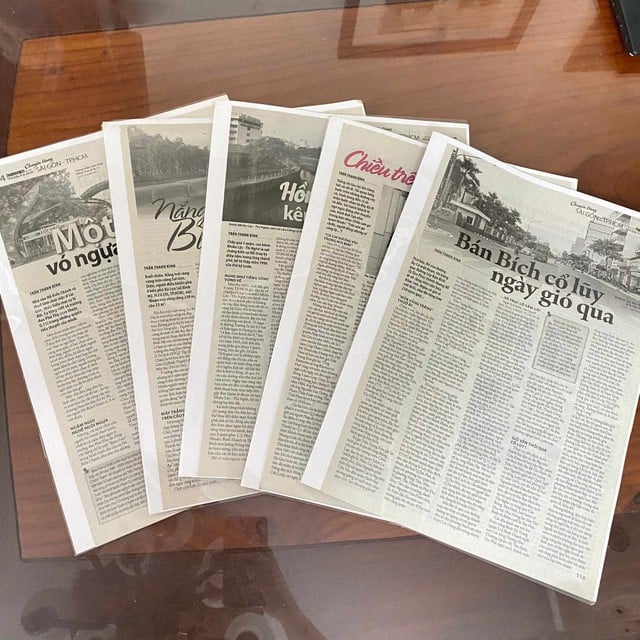
Some of the more than 50 articles published this weekend on the Saigon - Ho Chi Minh City special page.
PHOTO: TTB
I worked with colleagues at the editorial office for over a year (from 2019 to 2021), producing more than 50 articles each weekend. The special section was published on Saturday mornings, and articles had to be submitted by Thursday. These articles focused on the history and culture of each location, requiring extensive research and a detailed outline before each trip. After gathering materials, I would select relevant information from my bookshelves, process it, and refine it to create the final article. For example, with the first article published on September 21, 2019, titled "From a suburban intersection writing about Go Vap District," it's impossible not to thoroughly research the traditional flower cultivation and horse breeding industries of this region, including the famous bronze incense burner making village of An Hoi, which is recorded as An Hoi village on page 304 of Trinh Hoai Duc's Gia Dinh Thanh Thong Chi , compiled in the early 19th century and meticulously reprinted by the Ho Chi Minh City General Publishing House in 2018.
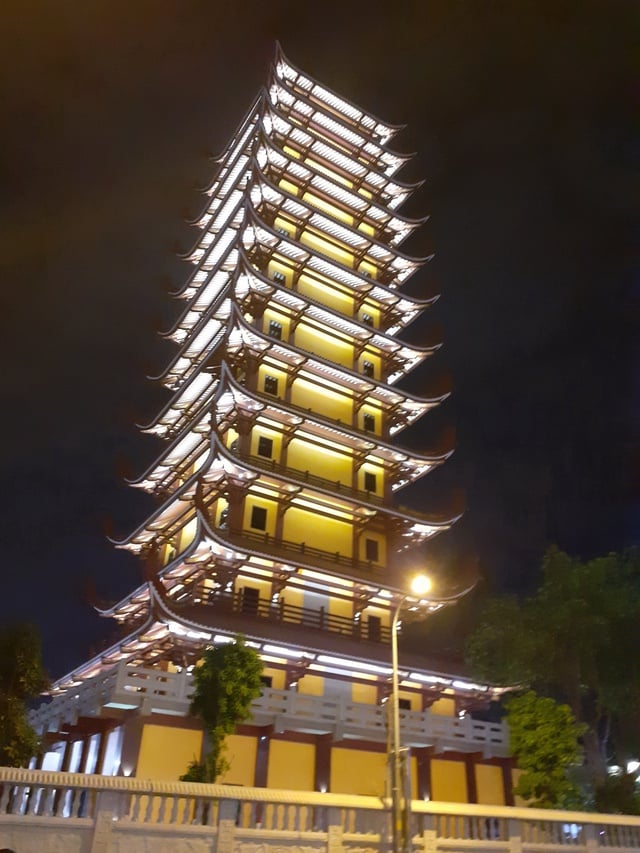
The pagoda at Vietnam National Pagoda (Ho Chi Minh City) shines brightly at night, as mentioned in the article "The Bells of Bygone Years Resound," published in the Saigon - Ho Chi Minh City special section on May 23, 2020.
PHOTO: TTB
I remember those days wandering through Saigon, which taught me so many lessons from each person and each place that bore the sweat and blood of our ancestors who pioneered this land. From each stelae, each aspiration still buried in the tombs of renowned scholars and brave generals from various dynasties over the centuries. From these experiences, I reflected on the present and firmly believed that in every detail, every story, was the boundless desire for life of the Vietnamese people, then and now!
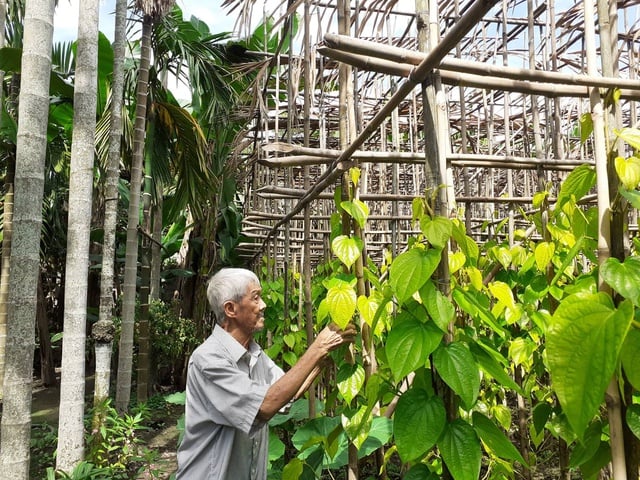
The betel gardens in Ba Diem commune (Hoc Mon district, Ho Chi Minh City) were mentioned in the article "Who Returns to the Eighteen Villages of Betel Gardens…", published in the Saigon - Ho Chi Minh City special section on January 18, 2020.
PHOTO: TTB
Each article is a story, and each has its own origin, whether conceived by oneself or spontaneously sparked during casual conversations with friends over tea or drinks. For example, the article "Journalism Village: Then and Now ," about the unique village of journalists in Saigon, originated from a morning tea with four colleagues who shared accommodation there 20 years ago. Similarly, the articles "The Royal Edict of the Can Vuong Movement" and "The Names of Streets That Were Once Epic" came about during a visit to Hue, coinciding with the ceremony where the government and the Nguyen Phuoc clan's governing council were bringing the royal effigy of King Ham Nghi to the Tan So citadel historical site ( Quang Tri ). Or, while reflecting on the glorious resistance against the French by the people and army of Southern Vietnam in the mid-20th century, I set off on my motorbike and wrote " Returning to Nga Ba Giong ," a famous historical landmark in Hoc Mon District that remains etched in the hearts of generations to this day…
2. Looking back 30 years, I still fondly remember my more than a month-long trip in 1995 to the flood season in the Mekong Delta. Amidst the raging waves surging from the Tonle Sap Lake in Cambodia, amidst the pain of losing lives swept away by the floods, and amidst the display of a bountiful harvest of shrimp and fish by fishermen on the Tien and Hau rivers, I suddenly reflected on many aspects of human strength and resilience in the struggle against nature for survival. From then on, the classic philosophy of the two sides of life—left and right, good and bad—gradually instilled in the spirit of a young journalist like myself. And I dare to think that a single perspective certainly cannot and will never fully comprehend everything, but through each passing day, it will train and refine the writer, gradually eliminating the superficiality and impulsiveness sometimes driven by momentary inspiration, allowing them to become a little more mature.

The locomotive of the Thong Nhat train and the number of the first train that departed from North to South (in 1975) are mentioned in the article "Afternoon at Saigon Station," in the Saigon - Ho Chi Minh City special section on October 10, 2020.
PHOTO: TTB
And I suddenly thought of the many upheavals in life over the decades that led Vietnamese expatriates from Cambodia to settle in floating villages on the La Nga River, a branch of the Dong Nai River, to establish fish farms and live a hard life in peaceful solitude. I once wrote my first feature article about this in Thanh Nien newspaper in the summer of 1993. They were hundreds of families who returned to their homeland, Vietnam, with the hope of survival from the Tonle Sap Lake, with a nomadic livelihood model on the water, sowing seeds of hope that one day their children and grandchildren would be able to attend schools on the shore, learning to read and write alongside their friends and fellow countrymen.
These two stories—the floods from across the Mekong River in neighboring countries and the migration and struggle for survival along the Dong Nai River—naturally linked together like an intersection without any prior identification, as they returned to the place from which they departed many years ago!
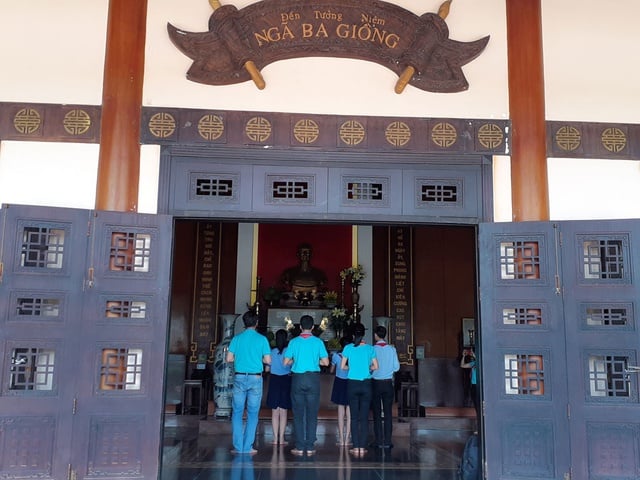
The Giồng Crossroads Memorial Area (Hóc Môn District, Ho Chi Minh City) was mentioned in the article "Returning to Giồng Crossroads ," published in the Saigon - Ho Chi Minh City special section on July 4, 2020.
PHOTO: TTB
It was also from that floating village of La Nga that I met an elderly man who used to make a living catching crocodiles on the Mekong River. His name was Nguyen Van Song (often called Ut Song, or locally nicknamed Ut the Crocodile). When I met him in September 1995, Mr. Ut Song was 64 years old, originally from Tay Ninh but born and raised in Cambodia. The newspaper article I still have quotes him as saying that "since 1959, he had been catching crocodiles in many places in Cambodia and raising them in cages. After many years of catching, taming, and raising crocodiles, in 1990, the Forestry Department of Minh Hai province invited 'expert' Ut Song to sign a contract to hatch and breed crocodile eggs at the 19.5 Forest Park." He then nurtured a dream and worked hard to realize it: he went to the floating village of La Nga to buy a piece of land bordering the river to establish a crocodile egg hatching farm. What was particularly special was that, after meeting him and listening to his stories, I understood even more about the lives of many residents of the floating village, not only their own but also the struggles of those who had returned to their homeland to make a living and get rich.
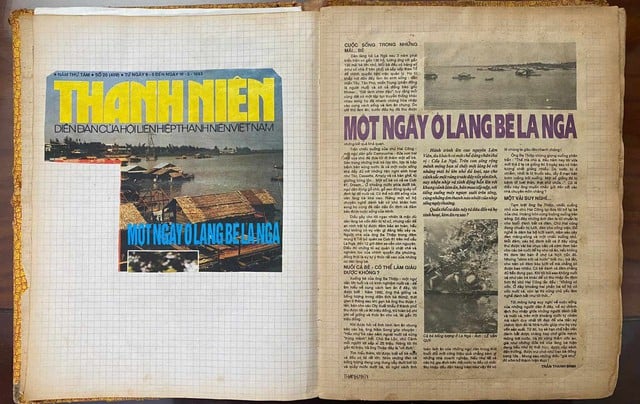
The author still keeps the report about La Ngà floating village in the summer of 1993.
PHOTO: TTB
My feature article, titled "Crocodile Farming on the La Ngà River ," was printed quite extensively in the Tuesday, September 5, 1995 issue of Thanh Niên newspaper!
3. From around the late 1990s, when online newspapers began to emerge, and then the internet advanced like a storm, it became easier to copy and save articles that interested me. However, reading articles preserved in print newspapers perhaps evokes a different feeling. That feeling is that the words present before my eyes sometimes seem to… “whisper,” making me recall the paths I’ve traveled, the faces I’ve met, the stories of each person’s life… And most importantly, the passionate dedication to their dreams, shining in their eyes, was what motivated me when I returned home at night and put pen to paper to write those words back then.
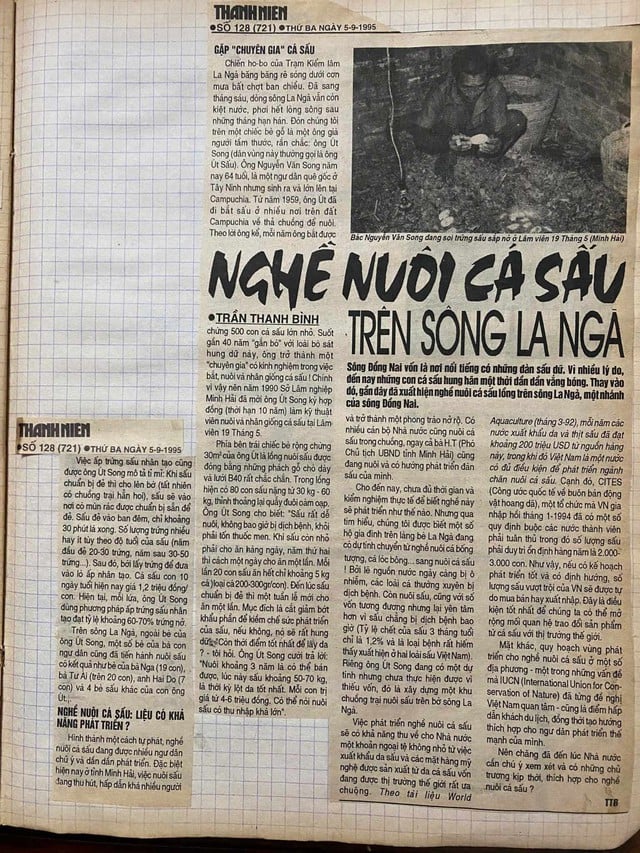
An article about how Mr. Ut Song incubated crocodile eggs and raised them in 1995.
PHOTO: TTB
For example, over the years, and especially in the early days of this summer, the story of counterfeit goods has become a nationwide sensation, sparking outrage. The actions of those involved in the fraud are condemned, and officials are prosecuted for complicity, appearing frequently in the media. Then, one day, flipping through an old notebook, I came across an article I had written in the "Notebook" section of Thanh Nien Newspaper on June 25, 1996, still lying there silently, titled "Genuine Goods, Counterfeit Goods, and the Quality Corridor ," about the tricks used to produce and sell counterfeit goods on the market, with the following concluding paragraph: "Perhaps the issue of counterfeit and substandard goods (for many reasons) is still a long story. How long it will last is something only the competent authorities can decide. As for consumers, please 'wait and see!'"
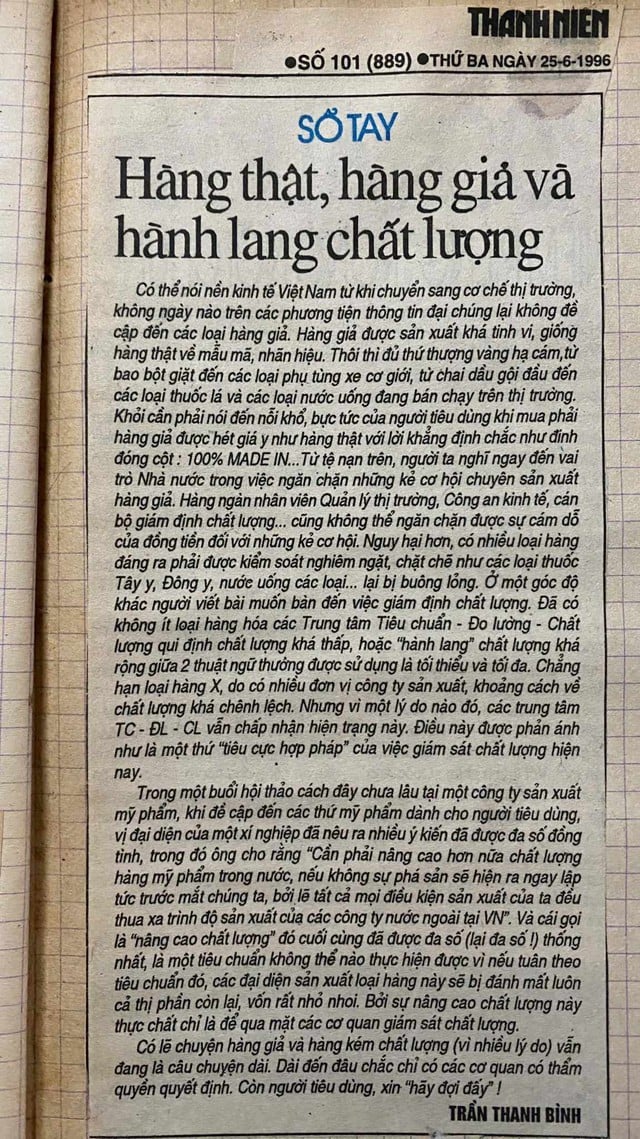
An article about counterfeit goods was published in the "Handbook" section of the Economics page of Thanh Nien Newspaper, June 1996.
PHOTO: TTB
The presence of the old article indicates that this situation has lasted for an extremely long time, nearly 30 years!
Source: https://thanhnien.vn/nhung-trang-bao-ky-uc-185250617192751204.htm
































































![[Photo] Coc Ly market bustling on the eve of Tet](https://vphoto.vietnam.vn/thumb/402x226/vietnam/resource/IMAGE/2026/02/14/1771062261424_baolaocai-br_img-6457-jpg.webp)





Comment (0)