


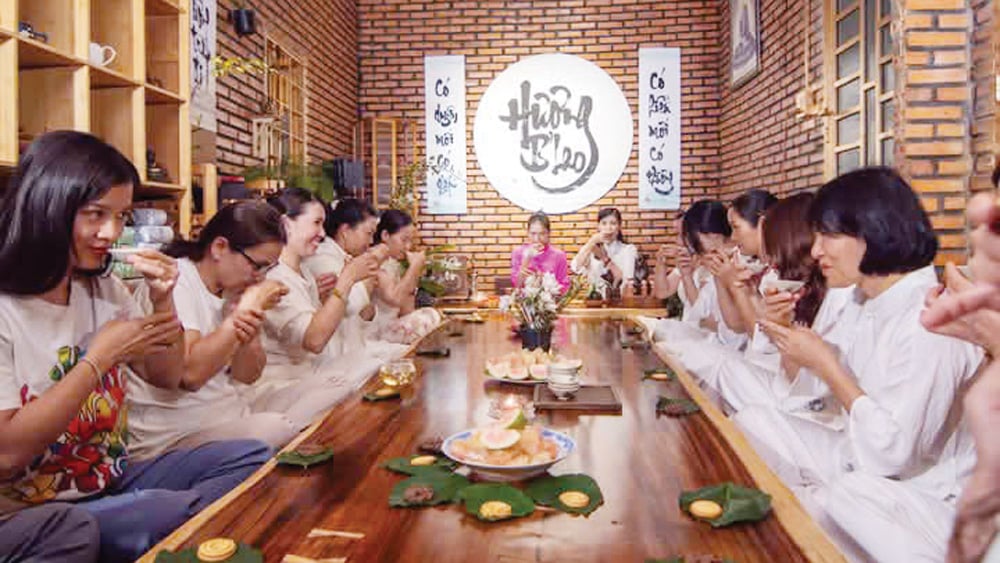
 |
| Huong B'Lao Tea Room |
In the mountainous Bảo Lộc region, known for its fragrant tea and silk, almost every elderly household has a tea table on the porch, both for solitary enjoyment and reminiscing about the past, and for entertaining friends according to the local custom of "offering tea or wine to guests." However, sitting down to share a cup of tea with someone who shares the same mindset is not easy, as conversations at the tea table involve cultural and social stories, filled with sincere, gentle, and profound insights gained from youth. At some tea tables, tea enthusiasts watch the host's actions, from preparing the teapot and cups, to awakening the spirit of the tea, and ultimately, the heart. Afterwards, they respectfully invite each other to enjoy the tea in silence, without the stories that embody the essence of the land and its people. It's like watching a dramatic national or international football match on screen without lively commentators; the atmosphere of the game is brought into the minds of the fans, and the viewers, in silence, like moving chess pieces, become bored and uninteresting.
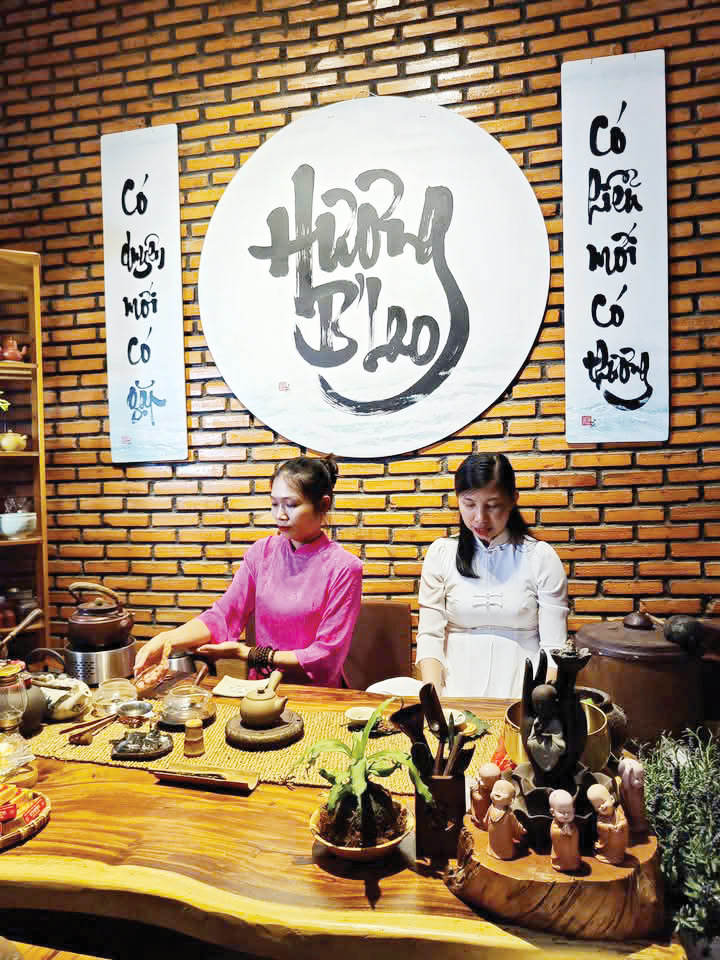 |
| Ms. Do Son (in white shirt) |
Recently, I was invited to a tea house at the foot of Dai Binh mountain called Huong B'Lao. The owner is Ms. Do Son, 43 years old, a yoga instructor. Besides her work as a yoga instructor, Ms. Son is also passionate about tea-infused tea, cherishing it like her ideal lover. She explained that B'Lao tea, infused with natural flowers and leaves, comes in five varieties: lotus, jasmine, wolfberry, fairy tea, and pineapple tea, each with its own unique flavor according to regional preferences. In Bao Loc, there are gardens specializing in growing these infused flowers; only lotus flowers are missing, requiring them to be ordered from the Mekong Delta. Huong B'Lao tea house is located in a quiet area, with only gentle breezes blowing from all directions. Outside the tea house windows, the vast green tea hills stretch as far as the eye can see. Enjoying tea here is not only about getting acquainted with the natural flavors but also about learning about the ups and downs of the tea-making history of B'Lao, the largest tea-producing region in Southern Vietnam, where the French brought Sam tea seeds from India and planted them in 1927. And from the tea room, one can experience the culture of communication and etiquette through the imagery of the space and the lingering aroma of the tea in the cup.
Last month, I happened to meet a French sociologist named Laurent at a lakeside café during his trip to the mountain town known for its "fragrance of tea and silk." In our casual conversations, he always mentioned the tea culture of the local Vietnamese people, so the next day I invited him to the Huong B'Lao tea room to hear a firsthand explanation of the region's culture. Because we had arranged it beforehand, Ms. Do Son, dressed in a green ao dai and purple scarf, welcomed me warmly with a constant hospitable smile and a heartfelt explanation. After listening to the tea house owner introduce Vietnamese tea culture, brewing techniques, and lessons on educating children through the local tea-drinking style, Mr. Laurent happily shook hands with Ms. Do Son: “The French only drink small, ready-to-drink instant tea bags before rushing off to work, so we only see tea as an ordinary beverage. Coming here this time, learning about the cultural layers of the Vietnamese people is truly fascinating. Therefore, I have this impression of Vietnamese tea: Firstly, before drinking tea, one should awaken the tea set, awaken the soul of the tea, and then awaken the heart before engaging in tea conversation. Secondly, I learned that the ancient Vietnamese taught their children through the skill of brewing and drinking tea, starting with the aroma of the teacup, then through the flavor and imagery, remembering the ancestors who, barefooted and wielding swords, pioneered and defended the land so that we can now sit together peacefully. Finally, during tea conversation, one must carefully consider their words to foster a sense of camaraderie with their tea-drinking companion, like the lingering aftertaste of the tea. The Vietnamese have a habit of…” "Wine and tea, clasped tongues," the act of clasping tongues expresses appreciation for the flavor and gratitude to the host, remembering ancestors, and furthermore, the lesson from tea is the deep connection between people, meaning that the strong, medium, or weak tea suits one's preferences and respects the wise stories that embody the essence of tea culture, so that when parting, one still remembers the similarities and flavors of life..."
As we parted, he patted my shoulder and whispered, "It's wonderful! A country where just looking at a steaming cup of tea is enough to recognize the rich culture and patriotic spirit of the entire nation. Thank you, Mrs. Do Son, thank you to the land and people of B'Lao for opening my eyes to a people who consider tea a drink that embodies the soul of the nation."
Source: https://baolamdong.vn/xa-hoi/202505/noi-lan-toa-khong-gian-van-hoa-tra-276065e/
![[Photo] Prime Minister Pham Minh Chinh visits and extends New Year greetings to former Party and State leaders and offers incense to the esteemed predecessors.](https://vphoto.vietnam.vn/thumb/1200x675/vietnam/resource/IMAGE/2026/02/14/1771078465521_dsc-2411-jpg.webp)



![[Photo Gallery] Admire the horse mascots celebrating the Year of the Horse in Dong Nai](https://vphoto.vietnam.vn/thumb/402x226/vietnam/resource/IMAGE/2026/02/14/1771076665798_nhan_-_ngua_manh_me_20260214160322_20260214170656.jpeg)






































Comment (0)