Goats forage for food on their own and find their way back to their pens.
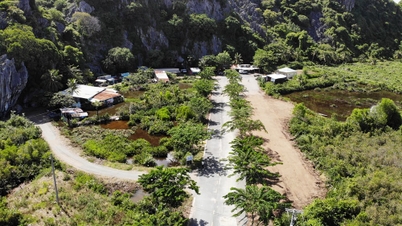
Late in the afternoon in Trung Son ward ( Ninh Binh province), Ms. Nguyen Thi Diu, Deputy Director of the Ninh Binh Provincial Agricultural Extension and Trade Promotion Center, led us along a secluded road, crossing a range of limestone mountains. The car stopped at the end of the valley – surrounded on all sides by limestone mountains, with a wide meadow and a calm lake reflecting the afternoon sky in the middle. Amidst this peaceful setting was Mr. Dam's goat farm, a household chosen by the Center as a model farm.
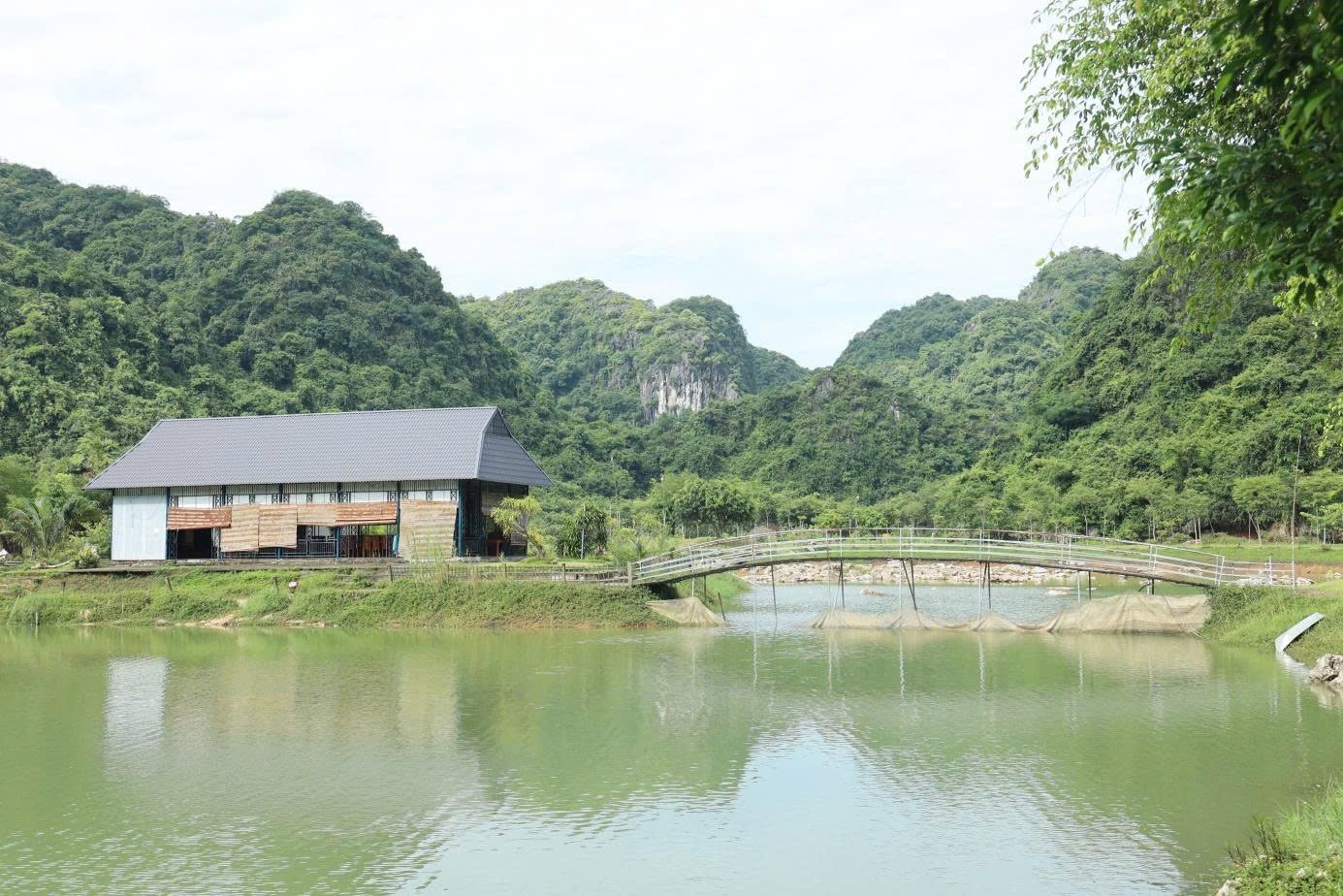
Mr. Trinh Van Dam's experiential tourism area combines a goat farming model: Photo: Ha Trang.
The first sounds we heard were the calls of the goats returning home, echoing down from the mountainside. In the midst of this, Mr. Dam was adding more salt stones to the pen. He said jokingly, "I let them up the mountain in the morning, and they come back to the pen to lick the salt by themselves in the evening. That way, I don't have to herd them, and they're all healthy, with shiny coats and firm meat."
Mr. Dam raises goats using traditional grazing methods. In the morning, the goats go up the mountain to graze on their own, only returning to the barn at night to rest. Their diet mainly consists of forest leaves, fig leaves, wild grass, pine needles, and various herbs such as Sài đất (a type of medicinal plant) and Bách bộ (a type of medicinal plant). Thanks to this, the goats receive a natural source of nutrition that helps balance their bodies, aids digestion, and reduces inflammation. Goats love salt, so they will definitely return to the barn. Every day, the goats graze on the mountain and find their way back to the barn on their own.
Ms. Nguyen Thi Diu stated that this is the herd management method guided by the Center in the model of goat breeding combined with ecotourism. A small change, but it helps breeders save labor, reduce disease risks, and significantly increase efficiency.
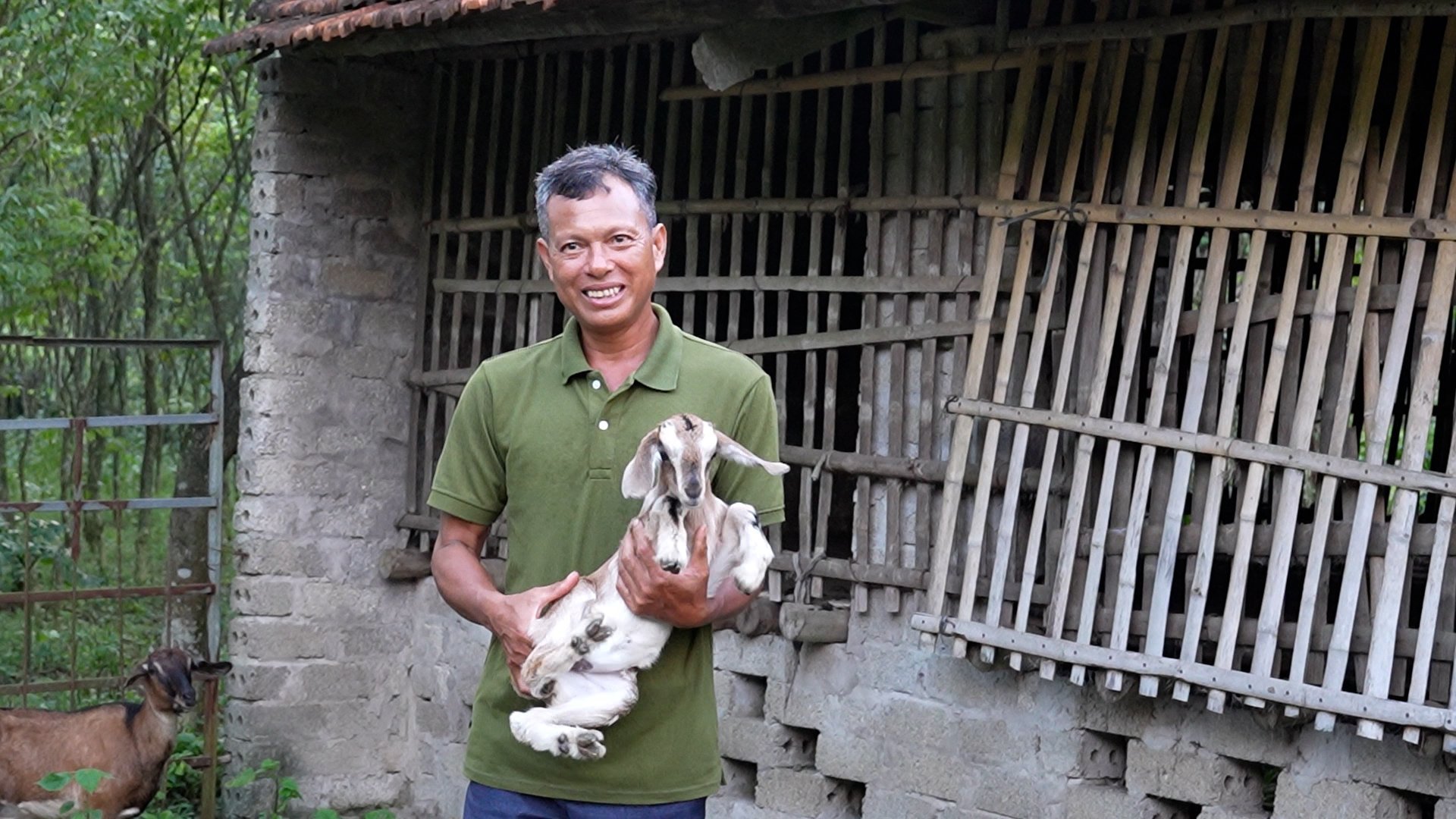
Mr. Trinh Van Dam shares the process of raising goats at his farm. Photo: Ha Trang.

Previously, Mr. Dam raised goats on a small scale, letting them roam freely in the mountains. The goats were easily lost, many were sickly, and productivity was low. In 2023, when the Ninh Binh Provincial Center for Agricultural Extension and Trade Promotion implemented the project "Breeding goats in conjunction with ecotourism development," he was selected to implement the pilot model.
His family received support in the form of breeding stock, supplies, vaccines, and training in breeding techniques, care, and disease prevention. Mr. Dam said: "Now, every six months, the Center provides vaccines and guidance on regular vaccination. Thanks to this, the goat herd is developing steadily, is healthy, and the survival rate after birth is over 90%."
Currently, the farm maintains nearly 200 goats, generating hundreds of millions of dong in revenue each year. Not only have techniques changed, but the mindset of the farmers has also shifted – they proactively manage the herd, monitor health, keep records of reproduction, and rotate breeds to avoid inbreeding.
According to Ms. Dịu, the project's goal is to help farmers transition from traditional farming to commercial farming, forming concentrated farming areas: "Previously, people here raised livestock according to habit, resulting in low efficiency. With technical support, they learned to select breeds, prevent diseases, and analyze the market. Mr. Đàm's model shows a more than 20% increase in productivity and income compared to traditional farming methods."
The farm has become an attractive tourist destination.
Not content with just raising goats, Mr. Dam has leveraged the scenic beauty of Quen Tho to develop experiential tourism. On a plot of land exceeding 20 hectares, he built an experiential area, a culinary center , and a check-in point amidst the grassy hills – where visitors can feed the goats, observe how they are cared for, and enjoy local specialties prepared on the spot.
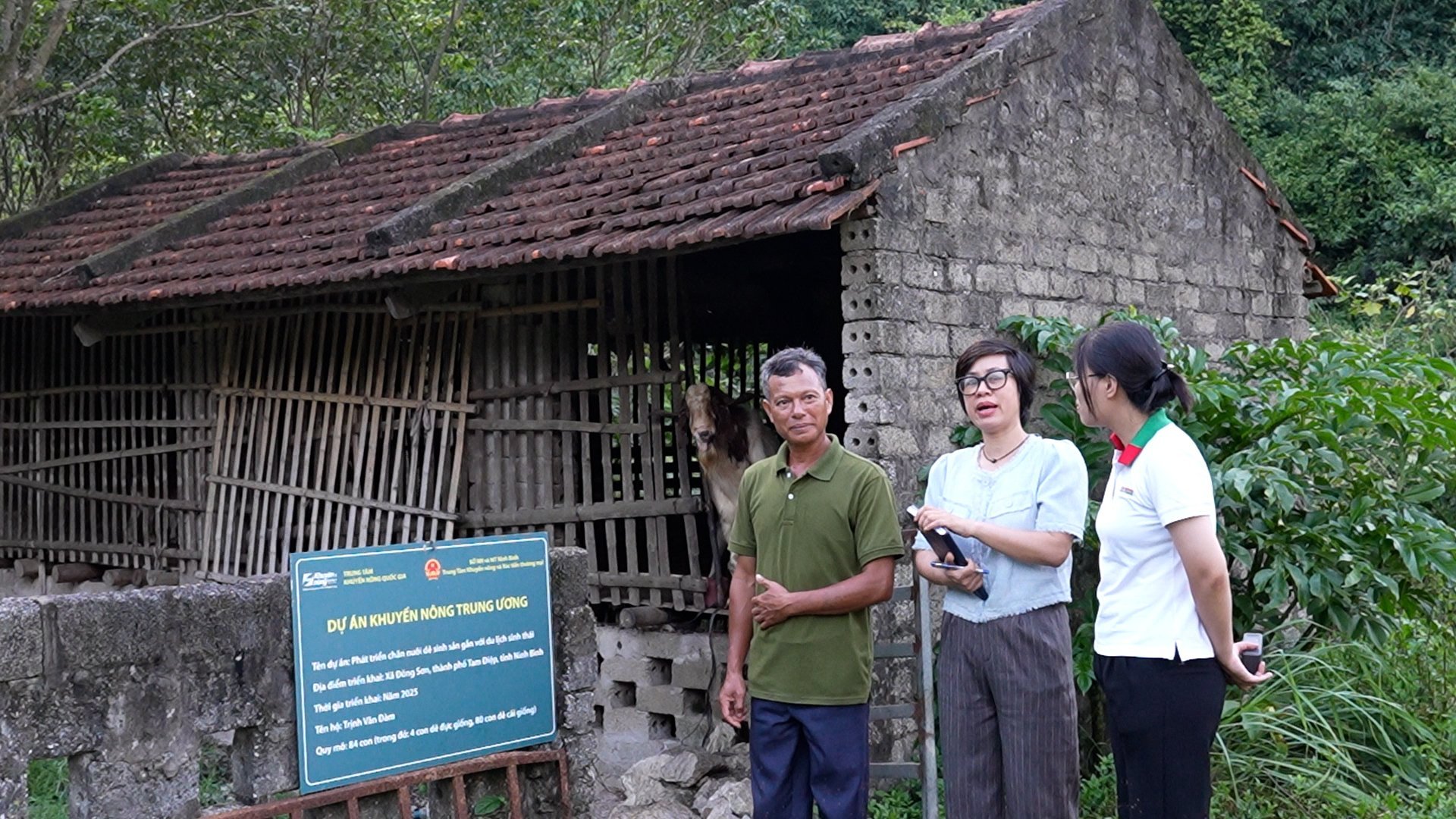
Ms. Nguyen Thi Diu (center) - Deputy Director of the Ninh Binh Provincial Agricultural Extension and Trade Promotion Center, visits Mr. Dam's goat farming model. Photo: Ha Trang.
Since opening, the number of tourists visiting the area has increased by about 30%, mostly families and students seeking hands-on experiences. Each visitor brings in additional income for his family.
According to Ms. Dịu, linking livestock farming with tourism is a step in line with the trend of developing ecological agriculture in Ninh Bình province: "We not only provide technical support but also guide people to look further ahead - from production to consumption, from farm to table. When tourists can enjoy the products on-site, the value of agricultural products is significantly increased."


As the goats slowly made their way back to their pens, Mr. Dam said, "Nowadays, raising goats isn't just about selling meat; it's also about serving tourists. Every day when visitors come, we can sell our products and promote the local livestock farming industry."
From a small-scale livestock farmer, Mr. Dam has become a model for transforming production thinking. His goat farming model combined with tourism not only generates two sources of income but also opens up a new way of doing agriculture – considering the value of services as an extension of agricultural production.
In Quèn Thờ today, the calls of goats echo through the valley, a reminder of a new way of farming – where farmers know how to leverage their advantages to turn livestock farming into a sustainable livelihood.
Source: https://nongnghiepmoitruong.vn/nuoi-de-ket-hop-lam-du-lich-noi-dai-chuoi-gia-tri-d783461.html




![[Photo] Prime Minister Le Minh Hung presides over the thematic session on promoting science and technology development and innovation.](https://vphoto.vietnam.vn/thumb/1200x675/vietnam/resource/IMAGE/2026/06/23/1782207872934_ndo_br_dsc-1724-jpg.webp)



























![The Essence of the Viet Bac Villages: [Part 3] The Precious Fragrance of Nghinh Tuong](https://vphoto.vietnam.vn/thumb/402x226/vietnam/resource/IMAGE/2026/05/29/1780020600366_5237-tinh-tuy-ban-lang-viet-bac-bai-3-chuyen-o-nghinh-tuong-050626_700.jpeg)
![The Quintessence of Northern Vietnam's Villages: [Part 2] The Famous Cassava Noodles of Kunming](https://vphoto.vietnam.vn/thumb/402x226/vietnam/resource/IMAGE/2026/05/28/1779937455892_3929-3144-mien-dong-15-nongnghiep-023138.jpeg)
![The Essence of the Village: [Part 1] Wine on the mountain, tea in the clouds - Bang Phuc](https://vphoto.vietnam.vn/thumb/402x226/vietnam/resource/IMAGE/2026/05/27/1779841729178_3821-1jpg-nongnghiep-103814.jpeg)