

Abuse of power: Not refunding taxes to businesses.
Lawyer Tran Xoa (Minh Dang Quang Law Firm) affirmed that the Value Added Tax (VAT) law enacted in 2008, the Tax Administration law from 2006, and subsequent amendments to date are all consistent regarding the issue of tax refunds for businesses.
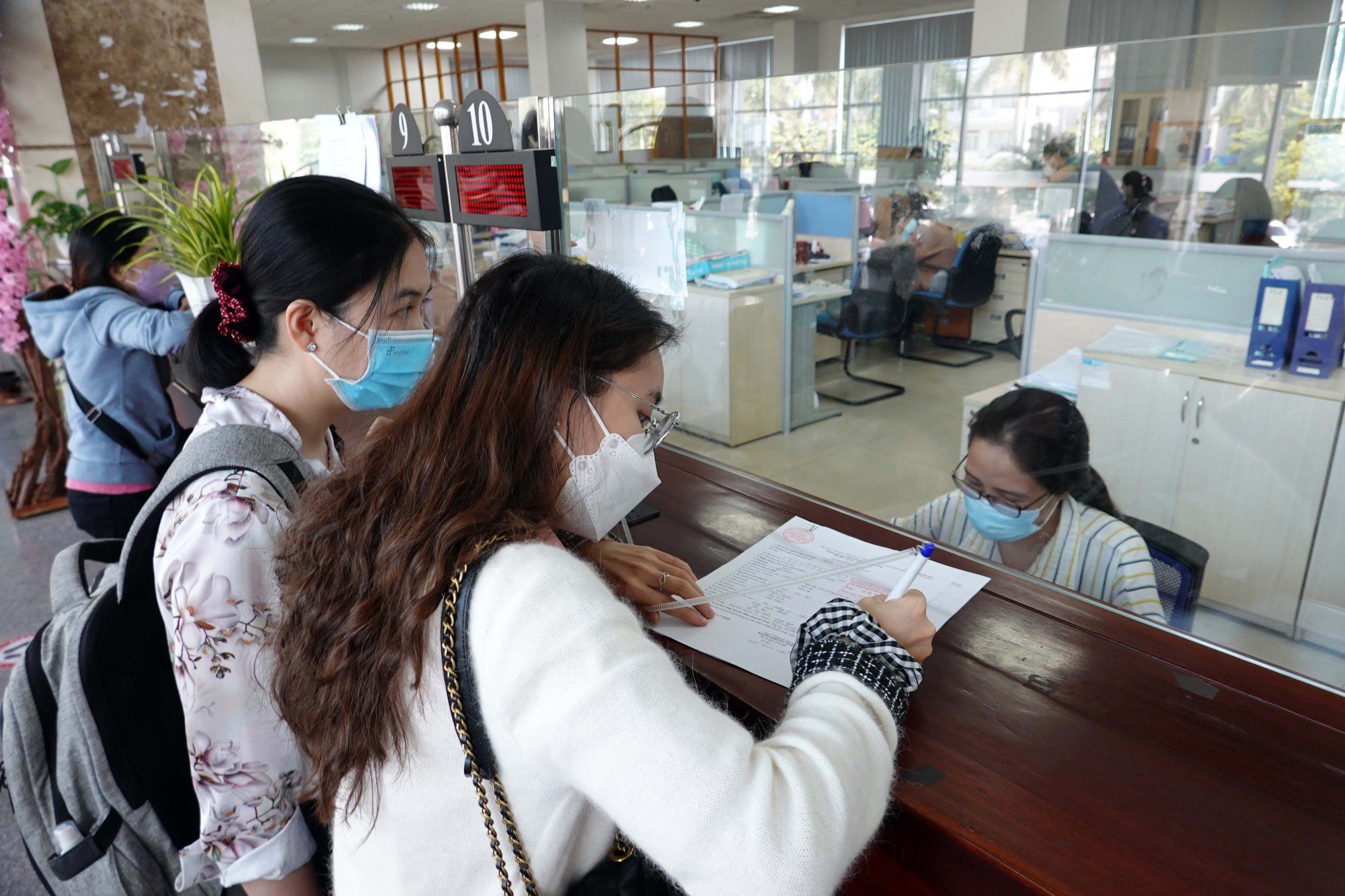
Business tax refund applications need to be processed quickly.
Accordingly, businesses eligible for tax refunds must meet three conditions: possess invoices for the purchase of goods and services or VAT payment documents at the import stage; have bank payment documents; and have a signed export contract and customs declaration for exported goods. The law also clearly stipulates the time frame for checking and verifying complete documents. For businesses that receive refunds first and then undergo verification, the process will be completed within 6 working days after receiving all valid documents.
In cases where businesses are subject to pre-audit, post-refund procedures, the maximum time for the tax authority to conduct an audit is 40 consecutive days from the date of receiving a valid application. After this period, the tax authority still has the right to re-audit if there are any doubts or issues discovered and to demand a tax refund. If the business's application is complete and valid, it must be processed within the legally stipulated timeframe. Any employee who delays processing applications should also be held accountable.
"Since these two laws were enacted, businesses have been able to receive VAT refunds normally, without too many problems arising. However, in recent years, the tax authorities have started issuing some new regulations. This has made it very difficult for many businesses to complete VAT refund procedures," Mr. Xoa commented. At the same time, according to tax management principles, each VAT refund application is separate. Businesses have the right to apply for a VAT refund when the amount of tax paid is 300 million VND or more. Therefore, even if the previously submitted application is incomplete or requires verification, only that application will be delayed. Other applications submitted by businesses must be accepted and processed normally by the tax authorities.
Lawyer Tran Xoa (Minh Dang Quang Law Firm)
"The tax authorities cannot assume that businesses are not allowed to submit subsequent applications until the previous one is processed. Tax refunds are a legitimate and legal right and interest of taxpayers as stipulated by law. No one is allowed to take away the rights of taxpayers. State management agencies in general, and tax authorities in particular, are obligated to comply with the law. Acting according to internal industry documents when there is no law is hindering the operations of businesses. This leads to businesses becoming stuck, potentially going bankrupt, which will slow down the national economy and reduce budget revenue, and the responsibility for this needs to be reconsidered," said lawyer Tran Xoa.
While assisting businesses in suing tax authorities for delayed tax refunds, Mr. Truong Thanh Duc, Director of Anvi Law Firm, stated that the tax authorities' guidance documents on tax refunds include additional requirements that are not in accordance with the law. Businesses that meet the legal requirements for tax refunds but still haven't received their refunds after 1-2 years are being accused of abusing their power by refusing to refund the taxes owed by the businesses.
Priority: Return first, then check.
"The quickest way to resolve current tax refund issues is to refund businesses first, and then investigate those who are under suspicion. Simultaneously, we should implement a policy where businesses are paid interest for every delay in processing tax refund applications. Furthermore, we should impose penalties for excessively long processing times. Only then will tax officials and tax authorities be able to expedite the process. Otherwise, shouting until our throats are hoarse won't solve the problem," Mr. Truong Thanh Duc proposed.
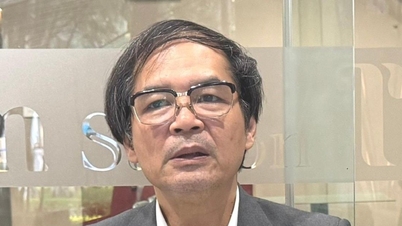
Dr. Nguyen Ngoc Tu, a lecturer at Hanoi University of Business and Technology, stated: "To quickly resolve the bottleneck in VAT refunds, the Ministry of Finance and the General Department of Taxation need to remove obstacles and alleviate the avoidance and exploitation of tax officials."
The Prime Minister requests that tax refund applications be processed quickly.
Following the Prime Minister's Directive 470, which requested ministries and agencies to remove obstacles to production and business for enterprises and people, the Ministry of Finance issued Notice 5427 to the General Department of Taxation, instructing units to immediately provide guidance and implement VAT refund for eligible applications.
For cases that do not qualify for tax refunds, timely explanations and public, transparent notifications should be provided to taxpayers. Simultaneously, the General Department of Taxation has issued a directive to provincial and city tax departments to expedite the processing of VAT refund applications for businesses and individuals. For VAT refund applications that have been inspected and determined to be eligible, tax refund decisions should be issued promptly, ensuring compliance with regulations and deadlines. For applications under inspection, the processing deadline should be announced. For VAT refund applications with outstanding issues or feedback from associations and businesses, dialogues should be held with these associations and businesses during the week of May 29th - June 2nd to clarify the issues; proactively address and resolve these issues and process refunds in accordance with regulations and within the proper authority, avoiding prolonged delays that cause frustration for individuals and businesses.
According to Dr. Tú, in many countries, transactions are conducted through bank accounts, making tax refunds quite public and transparent. Vietnam still uses cash for payments, and tax refunds are primarily based on invoices and supporting documents, making control difficult due to the large volume of invoices. Each year, tax refunds account for approximately 10-15% of total budget revenue. In recent years, while total budget revenue has been around 1.5 trillion VND, the amount requested for refunds has reached approximately 150,000 billion VND. This is a very large amount of tax money, creating significant challenges for the tax authorities. Many cases of tax refund fraud have occurred, some involving officials.
This shows that the tax refund policy still has loopholes. Because tax refunds are primarily based on invoices, and businesses purchase goods nationwide, invoices are provided by various localities, making it difficult for tax authorities to control. This confusion in management leads to situations where legitimate businesses suffer losses due to the strict tax refund policy. The previous tax refund process prioritized refunds first, then audits; in high-risk cases, audits first, then refunds. However, in reality, some tax refund fraud has occurred, leading tax authorities to issue vague directives. This has resulted in tax officials being afraid to sign, fearing imprisonment if the refund application is found to be fraudulent, while refusing to sign means businesses will have their tax money withheld.
Therefore, according to Mr. Tu, regulations on tax refunds need to be improved. In particular, a single domestic VAT rate should be established to eliminate the need for domestic refund applications due to differences between 5% and 10% rates. If this is achieved, the number of domestic refund applications will decrease, and tax authorities can focus more on refunds for exporting businesses.
"The Ministry of Finance needs to issue specific directives to remove obstacles and difficulties for businesses while also ensuring that the budget does not suffer losses. With regulations like those in the recent official document, no one dares to comply. Don't let a few cases of VAT refund fraud create difficulties for all other businesses," Mr. Tú said.
Source link
![[Photo] Solemn bathing ceremony and Buddha procession in Hue](https://vphoto.vietnam.vn/thumb/1200x675/vietnam/resource/IMAGE/2026/05/31/1780228263543_1-jpg.webp)


![[Photo] The General Secretary, President and his wife begin their state visit to the Philippines.](https://vphoto.vietnam.vn/thumb/1200x675/vietnam/resource/IMAGE/2026/05/31/1780230559452_anh-man-hinh-2026-05-31-luc-19-28-11.png)
![[Photo] Admire the coral "masterpiece" amidst the million-year-old heritage of Dak Lak province.](https://vphoto.vietnam.vn/thumb/1200x675/vietnam/resource/IMAGE/2026/05/31/1780221235105_anh-man-hinh-2026-05-31-luc-16-53-27.png)




















![[Video] Sunset at Lap An Lagoon – Where the sun sets over the fishing nets](https://vphoto.vietnam.vn/thumb/340x192/vietnam/resource/IMAGE/2026/05/31/1780192137701_beach-landscape-sea-water-nature-grass-745871-pxhere-com.jpeg)





































![[Photo] Admire the coral "masterpiece" amidst the million-year-old heritage of Dak Lak province.](https://vphoto.vietnam.vn/thumb/402x226/vietnam/resource/IMAGE/2026/05/31/1780221235105_anh-man-hinh-2026-05-31-luc-16-53-27.png)
































Comment (0)