

The first 3D printed titanium chest reconstruction surgery in Southeast Asia
Doctors at Vinmec Times City International General Hospital have just performed the first 3D-printed Titanium chest reconstruction surgery in Southeast Asia.
On September 18, 2024, doctors at Vinmec Times City International General Hospital and engineers from the Center for 3D Technology in Medicine, VinUni University announced that they had successfully performed radical surgery to remove a mediastinal tumor measuring 11.5 cm and reconstructed the patient's chest using Titanium material.
 |
| Doctors at Vinmec Times City International General Hospital have just performed the first 3D-printed Titanium chest reconstruction surgery in Southeast Asia. |
A 55-year-old female patient ( Ha Nam ) had severe pain in her left chest for many weeks, the pain was constant, especially increased when breathing, causing difficulty in daily activities.
The patient went to the provincial hospital for examination and discovered a chest tumor (anterior mediastinal tumor). The patient was transferred to Vinmec for multidisciplinary consultation and treatment plan.
The results showed that the large mediastinal tumor, up to 11.5 cm in size, had complicatedly invaded the left chest wall, ribs 2, 3, 4, the upper lobe of the left lung and part of the sternum, causing serious compression on the heart, lungs and surrounding organs.
The case was diagnosed at a late stage, chemotherapy and radiotherapy were no longer effective, and could only be resolved by wide surgical excision of the tumor along with the sternum and adjacent ribs.
In addition to eradicating the tumor, the case also poses a major challenge in reconstructing the chest wall to protect the heart and lung function after surgery. If not properly reconstructed, the risk of respiratory failure and internal organ injury will increase significantly.
Previously in Vietnam in particular and Southeast Asia in general, large thoracic defects after cancer surgery were often covered by using muscle-skin flaps from other locations, creating a large scar and causing psychological trauma to the patient.
The artificial materials used in the past were only for covering the shape, not protecting the heart and lungs inside the chest in the correct position and normal function, and against external impacts. Therefore, traditional surgical options are still not considered the optimal solution.
The thoracic cage is not a static structure but is constantly expanding and contracting with breathing and the activity of the heart and lungs. Therefore, a large defect in the anterior chest wall is a major challenge in the anatomical reconstruction of this location.
According to previous medical literature, some studies in the world have proposed some graft designs using 3D technology. However, each design still has certain disadvantages such as complexity, difficulty in operation leading to prolonged surgery time.
To solve this problem, the design team, including Vinmec cardiothoracic and orthopedic trauma experts and the engineering team of the 3D Technology Center in Medicine, VinUni University, spent nearly three weeks tirelessly researching and improving to overcome the limitations of previous designs, testing dozens of simulation situations to achieve meticulous and sophisticated designs, ensuring thinness and accuracy according to the highest standards.
The product is not only a breakthrough in design but also integrates an anti-lung hernia mesh, surpassing surgeries in the world that require printing many separate pieces to protect the lungs and heart. This innovation helps to minimize the risk of separate pieces being displaced in the body after surgery.
The entire process from design to production is approved by the Professional Council and Ethics Council of Vinmec Healthcare System, in close coordination with VinUni Institute of Health Sciences, ensuring that it meets the highest international standards.
This process is also supported by experts from SLM - Germany's leading company in 3D printers and medical engineer training, contributing to ensuring the surgery is successful with optimal quality.
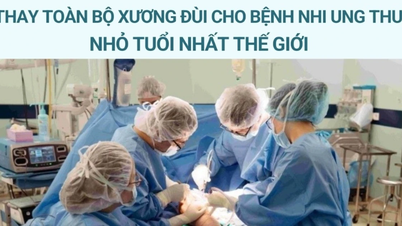
On September 11, 2024, under the direction of Dr. Dang Quang Huy (Deputy Director of Cardiovascular Center, Vinmec Times City) and Prof. Dr. Tran Trung Dung (Director of Orthopedic Trauma & Musculoskeletal Department, Vinmec Healthcare System), the surgery to reconstruct almost the entire left chest for the patient was successful after nearly 3 hours. Before that, the patient had undergone the first surgery to completely remove the mediastinal tumor invading the chest area.
In this second surgery, doctors focused on restoring the anatomical structure of the chest area, ensuring respiratory function and necessary protection for important internal organs.
During the surgery, the implant was tested for functionality. The fit was 99% and the patient was able to breathe normally.
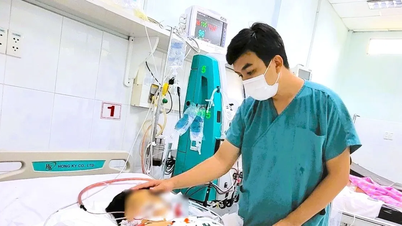
Just one day after surgery, the patient was able to sit up and talk normally, recovered well and was discharged from the hospital after only five days. The precision of the surgery thanks to 3D technology, along with advanced ESP pain relief techniques, shortened the surgery time and helped the patient recover quickly, with the hospital stay reduced by only half compared to normal.
According to published scientific reports, in the past 10 years, there have been about 50 cases of 3D thoracic defect reconstruction using titanium alloy materials in the US, Europe, Korea, and China.
Notably, the patient at Vinmec is the first case in Southeast Asia and Vietnam is the fourth country in Asia to use all artificial bones and anti-hernia mesh for the heart and lungs that are completely designed and 3D printed from Titanium material, without integrating or mixing other materials.
The success of the surgery not only created a turning point in the field of large chest defect restoration in Vietnam but also opened up great opportunities in other fields, such as maxillofacial defect reconstruction, soft tissue reconstruction, and precise stent intervention, contributing to improving treatment effectiveness and shortening recovery time for patients.
Source: https://baodautu.vn/phau-thuat-tai-tao-long-nguc-bang-titan-cong-nghe-in-3d-dau-tien-o-dong-nam-a-d225246.html





























































































Comment (0)