

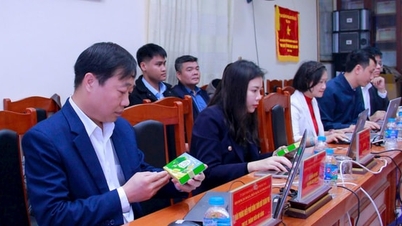
On the afternoon of September 23, the Ministry of Agriculture and Rural Development held a meeting to finalize the preparation for the pilot implementation of payments for greenhouse gas emission reductions from the Transitional Carbon Finance Fund (TCAF) to support the project "Developing 1 million hectares of high-quality, low-emission rice-growing areas associated with green growth in the Mekong Delta by 2030".
At the meeting, the Department of International Cooperation (Ministry of Agriculture and Rural Development) announced that on September 12, the Management Board of the Transitional Carbon Finance Fund (TCAF) sent a letter confirming Vietnam's proposal (PIN) to support the implementation of the 1 million hectare rice project.
To prepare for the next steps in the cooperation, the World Bank (WB) proposed organizing a working group to meet with agencies of the Ministry of Agriculture and Rural Development and related ministries and sectors from September 23 to October 2.
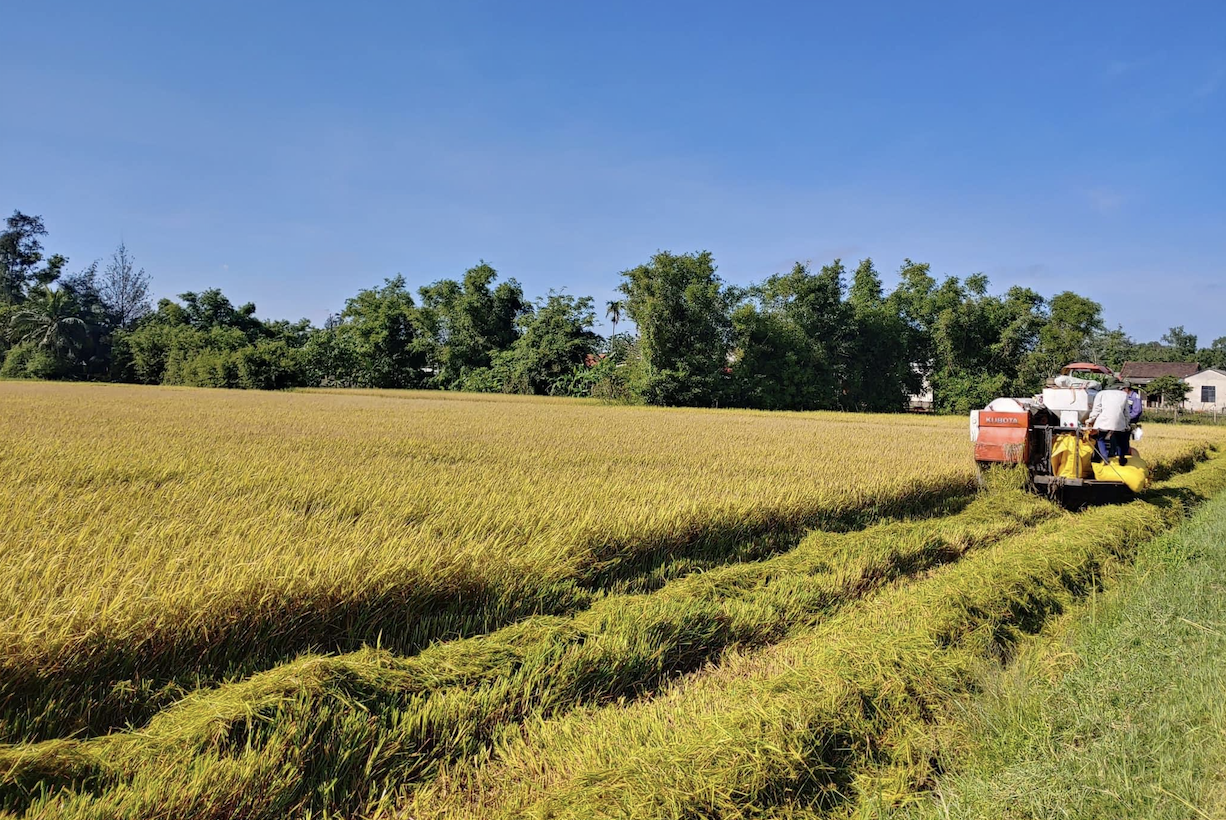
In addition, the Transitional Carbon Finance Fund (TCAF) approved a total budget of $33.3 million, which could increase to $40 million (approximately VND 826-992 billion), to be disbursed based on results and in two phases of the project.
The commitment to fund the TCAF Fund will be valid for 12 months, and at the end of this period, the World Bank expects to approve the funding by signing an Emission Reduction Payment Agreement (ERPA).
Specifically, Phase 1 will disburse $15 million (potentially increasing to $18 million). Negotiations on the ERPA with the TCAF Fund are expected to begin in May 2025.
In phase 2, the payout amount is $18.3 million, which could increase to $22 million.
In addition, the TCAF Fund will provide $2 million in technical assistance (directly managed by the World Bank) to implement capacity-building activities to help implement Article 6 of the Paris Agreement, the MRV system, and other proposals.
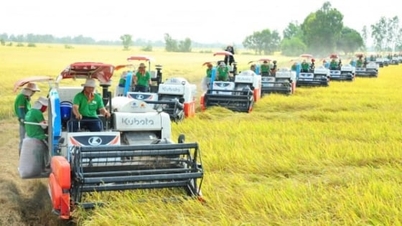
Sharing information about the project "Developing 1 million hectares of high-quality, low-emission rice cultivation areas associated with green growth in the Mekong Delta by 2030," Deputy Minister of Agriculture and Rural Development Tran Thanh Nam announced the good news that, after piloting 7 models in 5 provinces and cities in the Mekong Delta region, the first season has yielded very positive results.
Specifically, in the pilot models, input costs decreased, rice prices increased, and farmers' incomes rose. Rice produced using high-quality, low-emission methods in these models was purchased by businesses at prices higher than market prices.
The models also measured the initial emission reduction coefficients. Deputy Minister Nam said that the pilot models, covering an area of about 300 hectares in different regions, have now finished harvesting and are continuing with the Winter-Spring crop. By the Summer-Autumn crop of the following year, the Ministry of Agriculture and Rural Development may issue emission reduction coefficients for rice crops.
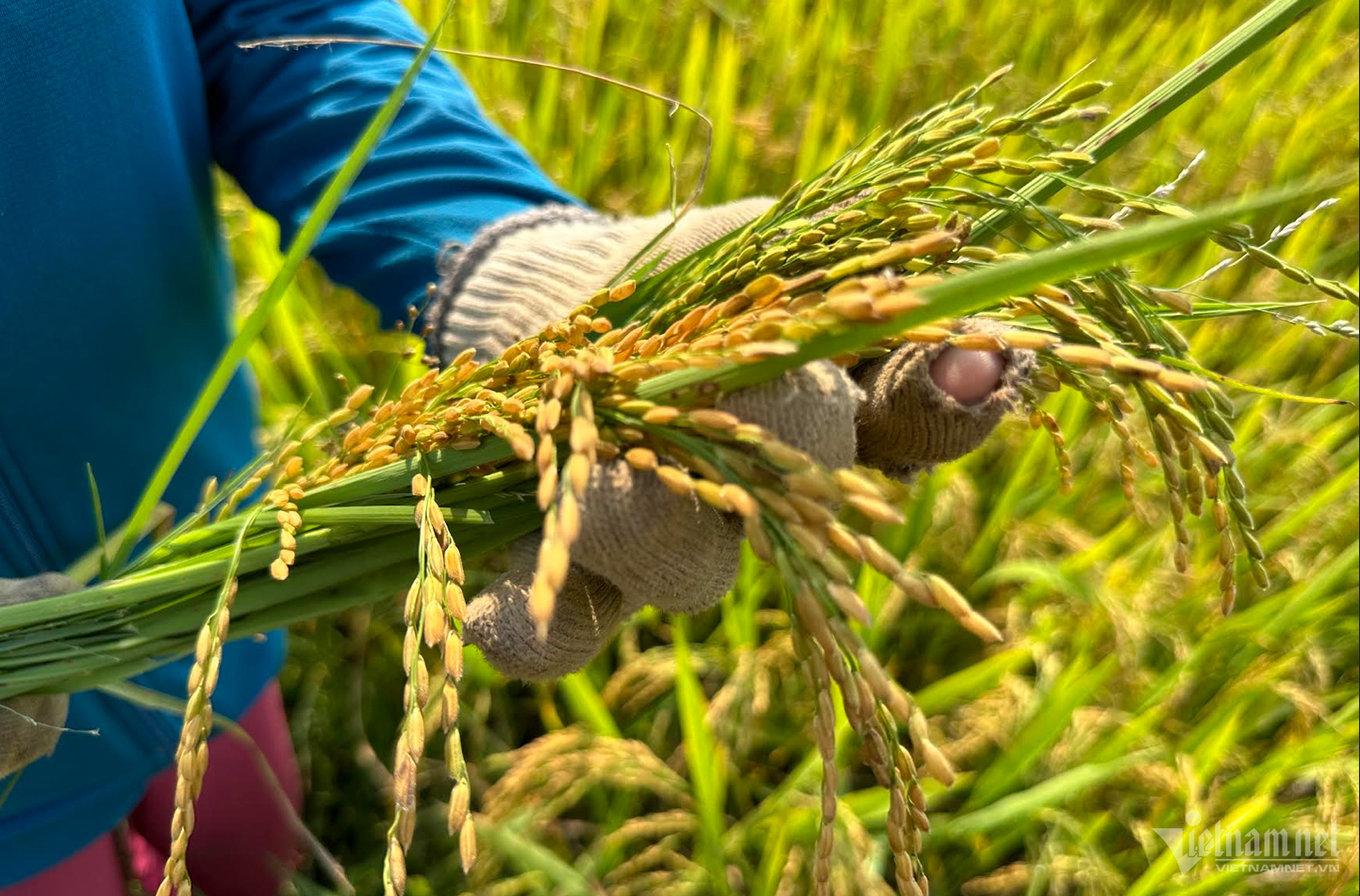
"The most encouraging thing is the farmers' awareness. They have great confidence in the project, and everyone is excited about the successful cultivation of low-emission rice. We can now confidently say that the farming process is excellent, and many farmers have registered to participate," he shared.
Deputy Minister Tran Thanh Nam also emphasized that the purpose of this project is to enhance the sustainable value of Vietnamese rice, help people increase their income, and ensure environmental protection in accordance with commitments.
At this time, the Ministry of Agriculture and Rural Development has not yet considered selling carbon credits for rice. However, the carbon credit payment support from the TCAF Fund is very significant for farmers in the pilot production phase. Therefore, he also hopes that the TCAF Fund can support the payment of $20 million in phase 1. This would be an incentive for farmers to continue producing high-quality, low-emission rice.
Representatives from the World Bank group stated that they would address the issues raised by Deputy Minister Tran Thanh Nam at the upcoming meeting.
Representatives from the World Bank also emphasized their readiness to support Vietnam in its program to cultivate 1 million hectares of high-quality, low-emission rice. Based on this cooperation, the World Bank hopes to successfully implement the project, contributing to a net emission reduction to zero by 2050, as committed by the Government .
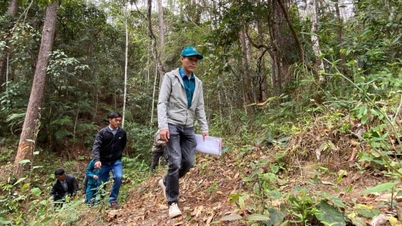
This week, experts from the TCAF Foundation will conduct field trips to the pilot production area to review the implementation of technical measures. Simultaneously, they will discuss and agree on a methodology for measuring, reporting, and verifying (MRV) greenhouse gas emissions from rice production to generate carbon emission reduction credits transferable/exchangeable with the TCAF Foundation and used for Nationally Determined Contributions (NDCs)...
Deputy Minister Tran Thanh Nam informed that 12 provinces in the Mekong Delta have planned to produce 1 million hectares of rice. The area of rice production achieving carbon credits will increase very rapidly in the coming time. This is because pilot models with standardized production processes that have achieved good results will be expanded to other provinces. By 2025, the area of rice with reduced emissions will increase to 200,000 hectares.
He hopes that TCAF experts will work further with relevant agencies of the Ministry of Agriculture and Rural Development to reach a consensus on issues related to the project.
"We want to receive pilot payments for carbon credits soon so that farmers will be encouraged to expand production," he said. Regarding the sale of carbon credits for rice, Deputy Minister Nam affirmed that, once permitted, the Ministry of Agriculture and Rural Development will propose to the Government to sell them to the TCAF Fund first, as it is a partner in this project.
Source: https://vietnamnet.vn/se-co-gan-1-000-ty-dong-chi-tra-tien-tin-chi-carbon-lua-cho-nong-dan-o-dbscl-2325152.html
![[Image] Leaked images ahead of the 2025 Community Action Awards gala.](/_next/image?url=https%3A%2F%2Fvphoto.vietnam.vn%2Fthumb%2F1200x675%2Fvietnam%2Fresource%2FIMAGE%2F2025%2F12%2F16%2F1765882828720_ndo_br_thiet-ke-chua-co-ten-45-png.webp&w=3840&q=75)
![[Photo] Prime Minister Pham Minh Chinh receives the Governor of Tochigi Province (Japan)](/_next/image?url=https%3A%2F%2Fvphoto.vietnam.vn%2Fthumb%2F1200x675%2Fvietnam%2Fresource%2FIMAGE%2F2025%2F12%2F16%2F1765892133176_dsc-8082-6425-jpg.webp&w=3840&q=75)
![[Live] 2025 Community Action Awards Gala](/_next/image?url=https%3A%2F%2Fvphoto.vietnam.vn%2Fthumb%2F1200x675%2Fvietnam%2Fresource%2FIMAGE%2F2025%2F12%2F16%2F1765899631650_ndo_tr_z7334013144784-9f9fe10a6d63584c85aff40f2957c250-jpg.webp&w=3840&q=75)
![[Photo] Prime Minister Pham Minh Chinh receives Lao Minister of Education and Sports Thongsalith Mangnormek](/_next/image?url=https%3A%2F%2Fvphoto.vietnam.vn%2Fthumb%2F1200x675%2Fvietnam%2Fresource%2FIMAGE%2F2025%2F12%2F16%2F1765876834721_dsc-7519-jpg.webp&w=3840&q=75)













































![[Live] Closing Ceremony and Award Presentation for the "Impressive Vietnam Tourism" Video/Clip Creation Contest 2025](https://vphoto.vietnam.vn/thumb/402x226/vietnam/resource/IMAGE/2025/12/17/1765974650260_z7273498850699-00d2fd6b0972cb39494cfa2559bf85ac-1765959338756946072104-627-0-1338-1138-crop-1765959347256801551121.jpeg)















Comment (0)