

At the recent Vietnam Sustainable Agriculture Partnership 2025 (PSAV) plenary conference held in Ho Chi Minh City, an alarming fact was highlighted: Among the eight key product groups participating in PSAV (including rice, coffee, pepper and spices, fruits and vegetables, tea, agricultural chemicals, livestock, and aquaculture), aquaculture is the least prominent name.
This delay is creating existential risks to Vietnam's position on the global food supply map, despite impressive growth figures in export value.
The red flag behind the $11 billion figure.
According to data from the Vietnam Association of Seafood Processing and Export (VASEP), the export picture for 2025 is looking very promising. In the first 11 months of the year, the total export value of the entire industry reached over US$10.5 billion, an impressive growth of 14.6% compared to the same period last year. Experts believe that the record milestone of US$11.2-11.3 billion for the whole year of 2025 is entirely within reach. This would be the highest export value in the industry's history, affirming the seafood sector's pivotal position in the national agriculture.
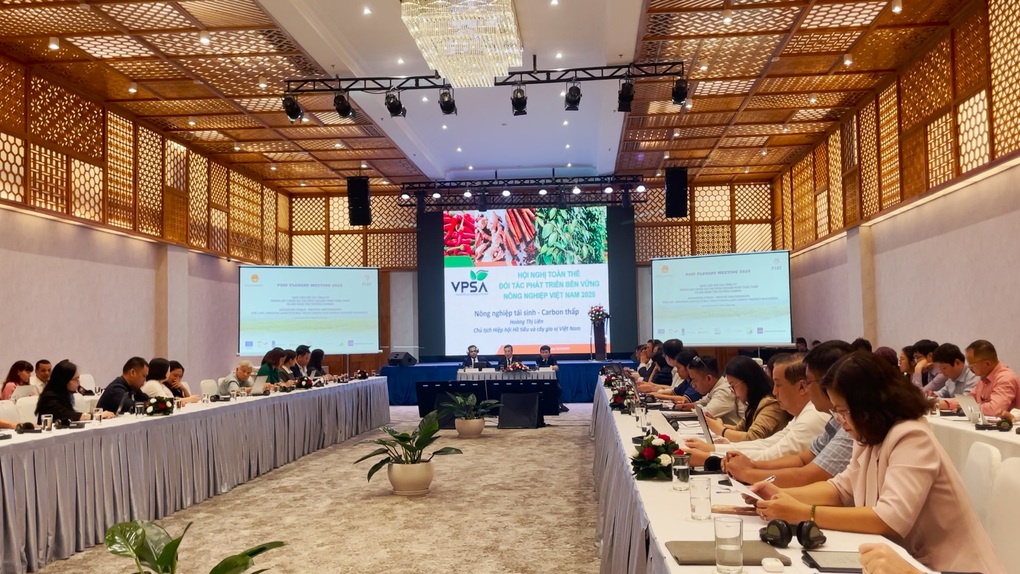
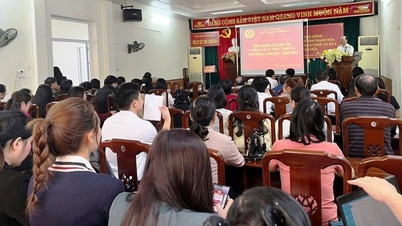
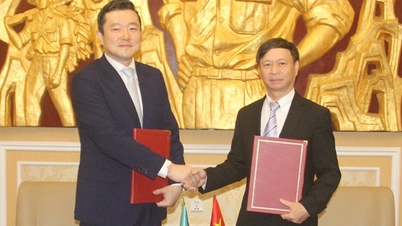
The PSAV 2025 General Conference was held in Ho Chi Minh City (Photo: Huan Tran).
However, this joy seems incomplete when considering the "green" criteria. A representative from VASEP acknowledged that the seafood industry is facing unprecedented pressure from demanding import markets. Although there are no official state-level legal documents requiring imported products to meet low-emission criteria immediately, the "rules of the game" have already changed.
Mr. Nguyen Hoai Nam, General Secretary of VASEP, analyzed: “Currently, major importers are not waiting for regulations. They have proactively incorporated emission reduction and environmental protection criteria into prestigious international certification standards such as ASC, BAP, or GlobalGAP. This is no longer just an encouragement, but is gradually becoming a mandatory ‘passport.’ If Vietnamese businesses do not meet these requirements, we will exclude ourselves from high-value supply chains.”
The paradox lies in the fact that, despite recognizing the risks, the fisheries sector's actions have not been commensurate. Compared to the dynamism of the rice or coffee sectors within the PSAV group, the fisheries sector is considered a "latecomer" and lacks practical models.
Over the years, no well-structured and scalable low-emission seafood value chain model has been implemented. Recent efforts such as circular economy and transforming by-products into value-added products, while commendable, have only been spontaneous and self-reliant initiatives by a few large enterprises, failing to create a widespread movement across the entire industry.
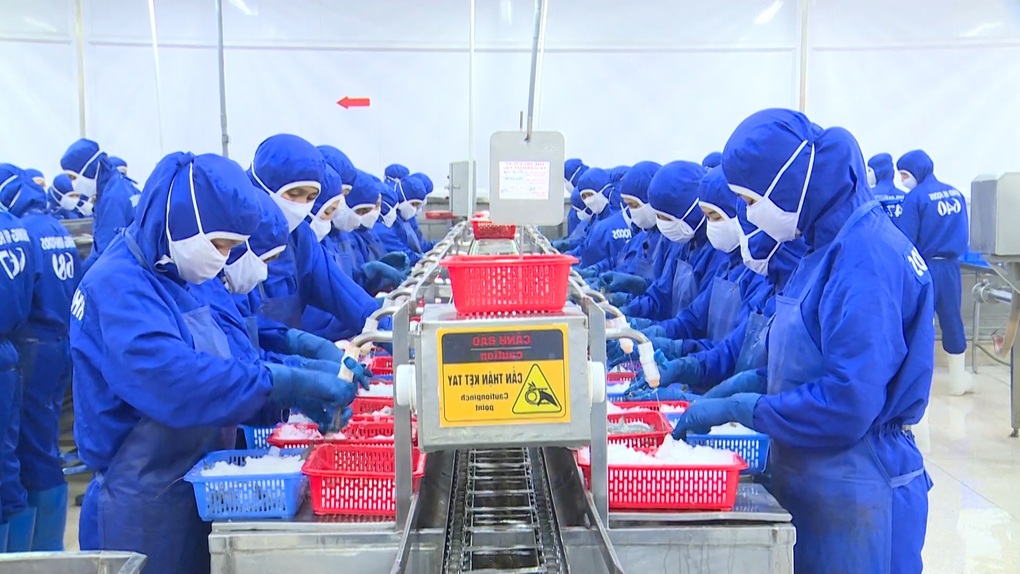
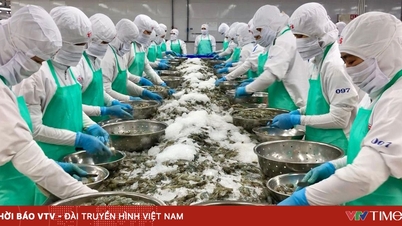
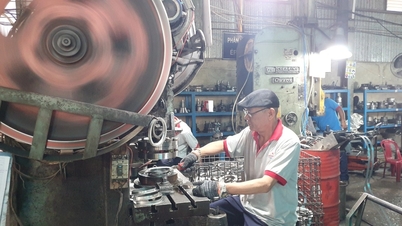
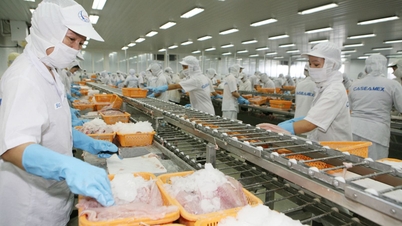
Shrimp processing workers at a factory in the Mekong Delta (Photo: Huan Tran).
Acknowledging this delay, Deputy Minister of Agriculture and Environment Hoang Trung affirmed that part of the responsibility lies with the management agency for not yet creating an effective connection mechanism.
“A multi-billion dollar industry with huge growth potential but lacking concrete sustainability activities is something that needs to be rectified immediately in 2026. In the near future, the Department of International Cooperation, along with the Fisheries and Fisheries Inspection Department, will have to work closely with VASEP to restructure the PPP (public-private partnership) working group, ensuring that the fisheries sector is not left alone and lagging behind on this path,” Mr. Trung emphasized.
Not only the aquaculture industry, but the livestock industry is also in a similar "red alert" situation. With emissions of approximately 18 million tons of CO2 per year (accounting for 19% of total agricultural emissions), this sector has yet to show significant transformation results, posing a major challenge to Vietnam's Net Zero target.
"Thirst" for investment capital and bottlenecks in the carbon credit market.
While the fisheries sector is struggling to find its footing, the pepper and spice industry has emerged as a bright spot thanks to its effective use of the PPP mechanism. The Vietnam Pepper and Spice Association (VPSA) announced that it has proactively partnered with leading enterprises (Top 20 exporters) to develop four models of landscape pepper production: safe, free of chemical residues, and with reduced CO2 emissions in key areas such as Dak Lak, Lam Dong, and Dong Nai.
Ms. Hoang Thi Lien, Chairwoman of VPSA, shared her hard-won experience: “To succeed in the long run, a company's internal strength alone is not enough. Support from international organizations and multinational corporations is extremely important. They not only provide capital, but more importantly, long-term strategic thinking and standardized practical experience in line with the global market.”
However, the financial outlook for sustainable development in the 2025-2026 period is less optimistic. Experts warn that ODA funding and non-governmental projects are tending to withdraw or scale down investment in Vietnam. Currently, only a few "big players" like Bayer, Nestlé, CropLife, etc., have the financial capacity to sit down at the negotiating table with the Government for long-term commitments.

Pepper plantation in Ho Chi Minh City (Photo: Huan Tran).
So what is the way out for green investment capital? Ms. Hoang My Lan, Senior Officer at GIZ (Germany), believes that opportunities are abundant if Vietnam knows how to facilitate them. “In fact, investors from Finland, Switzerland, the Netherlands, and green finance funds are still very interested in Vietnam. They are ready to invest, even to acquire emission reduction results. However, their hesitation stems from a major bottleneck: Vietnam lacks a complete legal framework for the carbon market.”
According to Ms. Lan, technically, the carbon credit counting (MRV) method already exists. There is huge international demand for purchases and equally high demand from Vietnamese businesses for sales. The only thing missing is a formal, legally protected marketplace where both sides can meet. If this legal barrier is not removed soon, Vietnam will miss the opportunity to attract billions of dollars from green finance, while also slowing down the transformation process of agricultural sectors, including fisheries.
Faced with this challenge, the leaders of the Ministry of Agriculture and Environment stated that the top priority now is to build a standardized Measurement, Reporting, and Verification (MRV) system. The goal is to complete the pilot and operation of a domestic carbon credit exchange by 2028, creating a foundation for connection with the global carbon market.
This is considered the key to solving the investment capital problem, helping industries like seafood have sufficient resources to break through and overcome the perception of being "unremarkable" in sustainable development.
On September 29th, the Ministry of Agriculture and Environment approved the Crop Production Emission Reduction Plan for the period 2025-2035. The main objectives are to reduce greenhouse gas emissions by at least 15% by 2035, establish a "Low Emission" label, and pilot 15 internationally standardized carbon credit models.
In addition, the project will implement standardized farming techniques, digitize emission data, and train 3,000 personnel nationwide.
Source: https://dantri.com.vn/kinh-doanh/nganh-thuy-san-ty-usd-nguoi-khong-lo-hut-hoi-tren-duong-dua-xanh-20251213143028556.htm

















































































Comment (0)