
Even more concerning, these dangerous chemicals, which pose a risk to people's health, are being openly sold on e-commerce platforms and social media, creating an urgent need to tighten management...
Tighten control over chemicals used to "magically" enhance food.
Recently, a series of incidents have been exposed involving the use of toxic chemicals in food processing, especially in bean sprout production.
 Báo Tuyên Quang•09/06/2025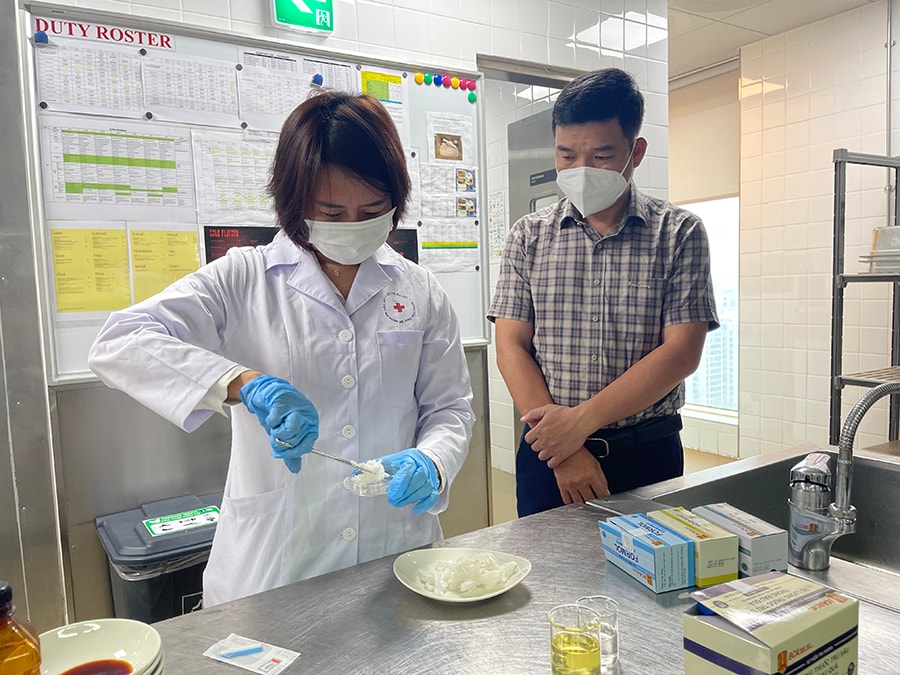
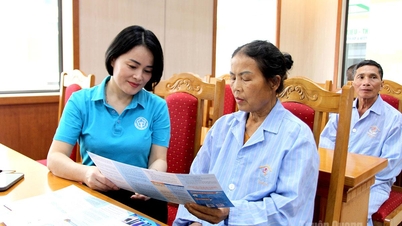
Officials from the Hanoi Food Safety and Hygiene Department conduct rapid quality tests on rice noodle samples available on the market.
The situation is alarming.
In just the past two months, authorities have repeatedly uncovered cases of bean sprout production using banned substances. Most recently, at the end of May 2025, in Lao Cai province, authorities inspected and discovered two production facilities using 6-Benzylaminopurine (6-BAP), a chemical banned in food processing, to produce hundreds of tons of bean sprouts for the market.
Previously, in April 2025, the Nghe An Provincial Police prosecuted and detained four individuals for producing up to 3,500 tons of bean sprouts soaked in similar toxic chemicals. In Dak Lak province, six establishments were also penalized for this offense.
You may also like
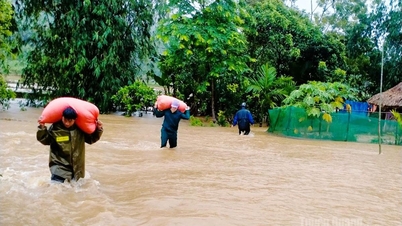
Tuyen Quang: Warning of showers, with localized heavy to very heavy rain and thunderstorms over a wide area.According to the Tuyen Quang Provincial Meteorological and Hydrological Station, satellite imagery, lightning location data, and weather radar indicate that many convective cloud systems are developing strongly, causing showers, with localized heavy to very heavy rain and thunderstorms in many communes and wards throughout the province. Simultaneously, convective cloud systems from Cao Bang and Lao Cai provinces are continuing to move towards Tuyen Quang, increasing the likelihood of thunderstorms in the coming hours.
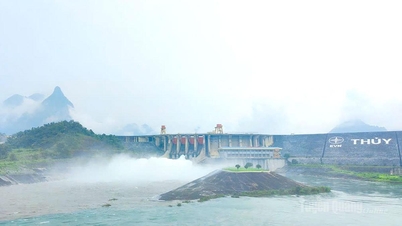
Tuyen Quang Hydropower Plant opened one bottom sluice gate at 4:00 PM this afternoon.According to information from Tuyen Quang Hydropower Company, as of 9:00 AM on July 1, 2026, the upstream water level of the reservoir had reached 106.99m (downstream 50.30m). While the inflow into the reservoir reached 2,530 m³/s, the total outflow to the downstream area was only 699 m³/s.
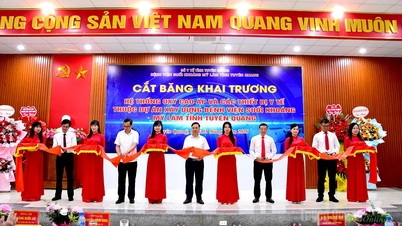
Modern Hyperbaric Oxygen Therapy System Inaugurated at My Lam Mineral Spring HospitalOn the afternoon of July 1st, My Lam Mineral Spring Hospital held a ribbon-cutting ceremony to inaugurate the Hyperbaric Oxygen System and other medical equipment as part of the My Lam Mineral Spring Hospital construction project.
The common thread in these cases is the use of 6-BAP, a chemical commonly used in agriculture to stimulate growth but banned in food due to its potential health risks to humans.
According to Dr. Nguyen Trung Nguyen, Director of the Poison Control Center (Bach Mai Hospital), using bean sprouts treated with the chemical 6-BAP is extremely dangerous. Unlike pesticides that have a waiting period before harvesting, bean sprouts soaked in chemicals are sold after only 24 hours. Consumers eat them almost immediately, allowing the toxin to directly enter the body, causing acute poisoning and long-term cell damage.
Alarmingly, banned chemicals such as 6-BAP, borax, and other toxic chemicals of unknown origin used for bleaching, crisping, and preventing mold in food are still being openly sold on e-commerce platforms and social media.
According to a survey by reporters from Hanoi Moi Newspaper, the chemical 6-BAP is being sold on the e-commerce platform Tiki for 1.1 million VND per 25g bottle. Prohibited substances in food, such as borax, are also widely sold on e-commerce platforms Shopee and Lazada at prices ranging from 50,000 to 100,000 VND per kilogram. Furthermore, some chemicals are advertised as both water treatment and fabric bleaching agents, and are also promoted as making food look whiter, brighter, and last longer…
Ms. Pham Khanh Phong Lan, Director of the Ho Chi Minh City Department of Food Safety, frankly stated that in recent times, the buying and selling of chemicals, even toxic substances like cyanide and acid, has been rampant. Many chemicals are imported for one purpose, but in reality, when released onto the market, they serve other purposes. Therefore, there must be clear sanctions against those who sell and use them for improper purposes. Ms. Pham Khanh Phong Lan cited the Salbutamol case that once caused a public uproar. This is a pharmaceutical substance used in some respiratory medications, but in very small quantities. Meanwhile, the actual amount of this substance imported into the country increased dozens or hundreds of times without control. As a result, authorities later discovered that Salbutamol was being used as a growth stimulant in livestock farming.
There must be strong laws, and strict enforcement.
Currently, chemical management in Vietnam faces many shortcomings. A single chemical may be used in multiple fields, under the management of various ministries, leading to overlapping responsibilities and a lack of uniformity. Businesses may also make false declarations regarding the intended use of a chemical in order to opt for a more lenient management system.
At the recent 46th session of the National Assembly Standing Committee, many delegates strongly advocated for stricter management of chemical business activities and the assignment of management authority to a single agency, through their comments on the draft amended Chemical Law.

Vietnam encourages US businesses to expand investment in high technology.On the morning of June 26th, at the Government Headquarters, Deputy Prime Minister Ho Quoc Dung received Mr. Jeff Place, Supply Chain Director of Coherent Group (USA). During the meeting, the Deputy Prime Minister affirmed that Vietnam encourages US businesses to expand investment, especially in high-tech, innovation, and semiconductor industries.

Encourage U.S. businesses to expand investment in high-tech sectors.Deputy Prime Minister Ho Quoc Dung said that Vietnam welcomes US businesses to continue expanding their operations in Vietnam, especially in high-tech industries and sectors with high added value.

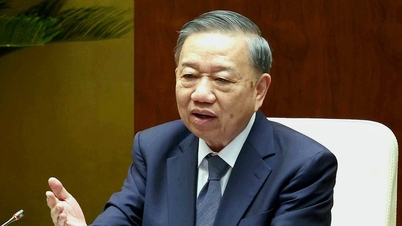
Vietnam and the United States strengthen cooperation in addressing the consequences of war.VTV.vn - On June 22, General Secretary and President To Lam received Acting Secretary of the US Navy Hung Cao.
To enhance the management of hazardous chemicals and control safety and security risks from chemicals, the draft law has been amended to regulate the management of chemicals throughout their entire lifecycle, from their creation or introduction into Vietnam, with a strict level of control and consistency appropriate to each chemical category.
The draft also strengthens inspection measures for the import of chemicals requiring special control and the storage services of chemicals requiring special control. Based on this, the draft adds regulations on the application of technology in controlling the purchase and sale of these chemicals. Furthermore, the draft proposes additional regulations requiring organizations and individuals using chemicals requiring special control to register the purpose and need for their use in a database to minimize the misuse of these chemicals…
The draft amended Chemical Law is expected to patch a series of "deadly loopholes" in chemical management. Chemical management is no longer an internal matter of the Ministry of Industry and Trade, the Ministry of Health, or the Ministry of Agriculture, but a public health security issue that needs to be placed at the national level. This requires strong laws, strict enforcement, and clear accountability to manage and control the production and trading of chemicals.
Source: https://baotuyenquang.com.vn/siet-kiem-soat-hoa-chat-phu-phep-thuc-pham-213163.html


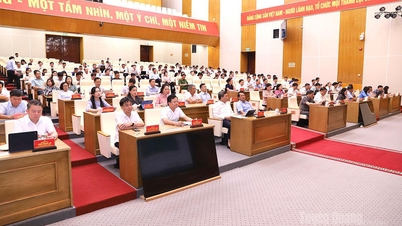
![[Image] National conference summarizing one year of operation of the overall organizational model of the political system, the three-tiered government model.](https://vphoto.vietnam.vn/thumb/1200x675/vietnam/resource/IMAGE/2026/07/01/1782882811691_ndo_br_1-jpg.webp)











































































Updating digital technology on the VNeID application.

Victory
