


It's raining today. A kind of spring rain. Perhaps the wind chased the clouds together too quickly, so "Mr. Dự on TV" couldn't "predict" it in time, because last night he said it would be sunny, but since we had already made plans, we just went ahead.
This time, we will visit Dong Dang Cave, Nui Boc Cave, and Dia Thau Cave – mostly located in Son Duong commune, where the Quang Ninh Provincial General Hospital, Hoanh Bo District Hospital (now part of Ha Long City), and the Naval Military Hospital were previously evacuated. Mr. Vuong Binh, a long-time commune official and local resident, was entrusted with guiding us.
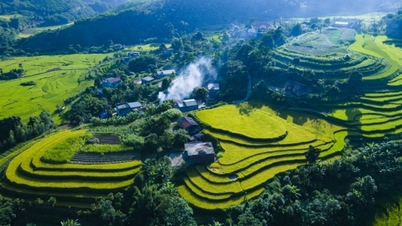
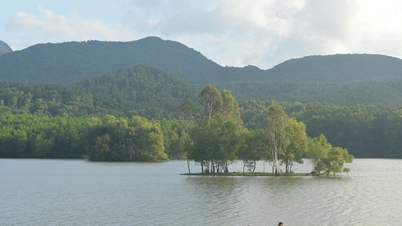
Son Duong is a mountainous commune located northwest of Ha Long City, about 20km from the city center. The terrain of Son Duong is characterized by hills, mountains, caves, and valleys interspersed with lush vegetation. According to the history of the Son Duong Commune Party Committee, during the period of 1964-1968, a time of resistance against the destructive war waged by the US imperialists against North Vietnam, Son Duong commune served as a safe evacuation site for the Provincial Party Committee, several provincial departments and agencies, Hoanh Bo district, and the Naval Command (Northeast Military Region). Some units remained until 1972 and only withdrew after 1972.
Back then, the provincial hospital was evacuated to Dong Dang Cave, Dong Dang village, Son Duong commune, Hoanh Bo district (formerly). It was commonly known as Dang Cave. Dang Cave has the Dang stream flowing through the mountain from the territory of Dan Chu commune. There are two fairly wide entrances to the cave. Before the 1990s, Dang Cave was entirely within the administrative boundaries of Son Duong commune. Later, for reasons unknown, it was transferred to the management of Dan Chu commune (adjacent to Son Duong commune), even though the fields and gardens surrounding the Dong Dang mountain range still belonged to Son Duong commune. Therefore, Dong Dang mountain did not belong to Dong Dang village, just as Van Phong Pagoda today is not located in Vuon Cau village, which was formerly Van Phong village, in the old Son Duong commune.
The Dong Dang rocky mountain range was surrounded by an earthen mountain range, and on the other side was the Khe Dung dam, which provided irrigation water for Dong Dang village (Son Duong commune). When the provincial hospital took over this location, it had a rather advantageous position, relatively convenient for setting up camps, treating patients, eating, sleeping, and sheltering from American aircraft.
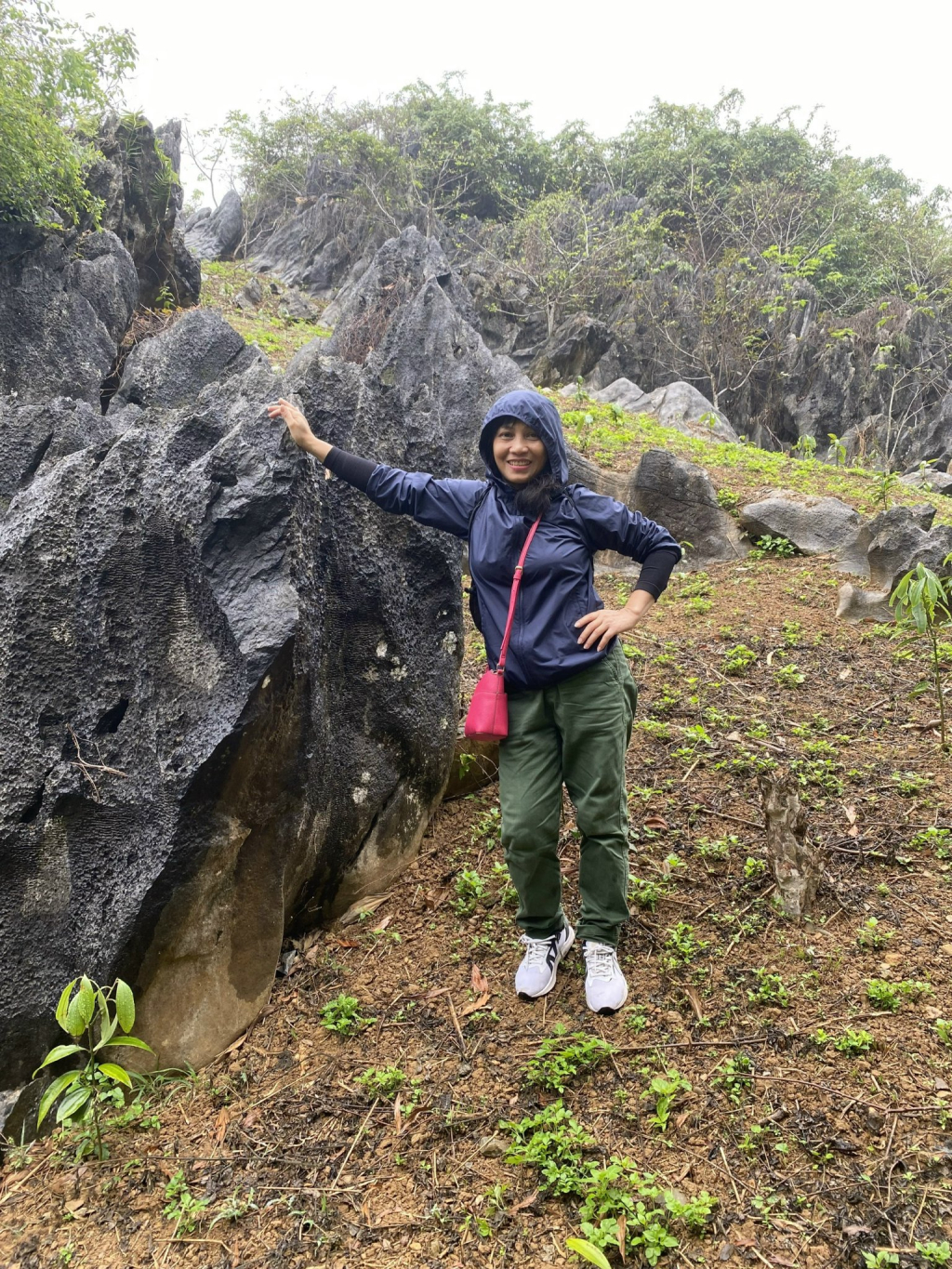
Unfortunately, some of the rocky mountains in Son Duong commune, including Dang Cave, have been allocated to private companies for limestone mining. When we revisited the area, the two cave entrances were still there, with white reeds swaying in the breeze. The Dang stream still murmured as it flowed between the smooth, worn rocks. Above, jagged, sharp rocks awaited the day they would be "destroyed" by dynamite, crushed into gravel and boulders for construction projects. Mr. Binh pointed to the mountaintop and recounted how he and his colleagues used to climb there to gather medicinal plants like the mountain bird's foot plant and the rat dung plant – valuable traditional Vietnamese herbs used to treat various ailments such as hepatitis, bone pain, and to boost vitality. It's quite possible that the doctors at the provincial hospital at that time also applied these valuable medicinal resources from the local people to prevent and treat patients during that period.
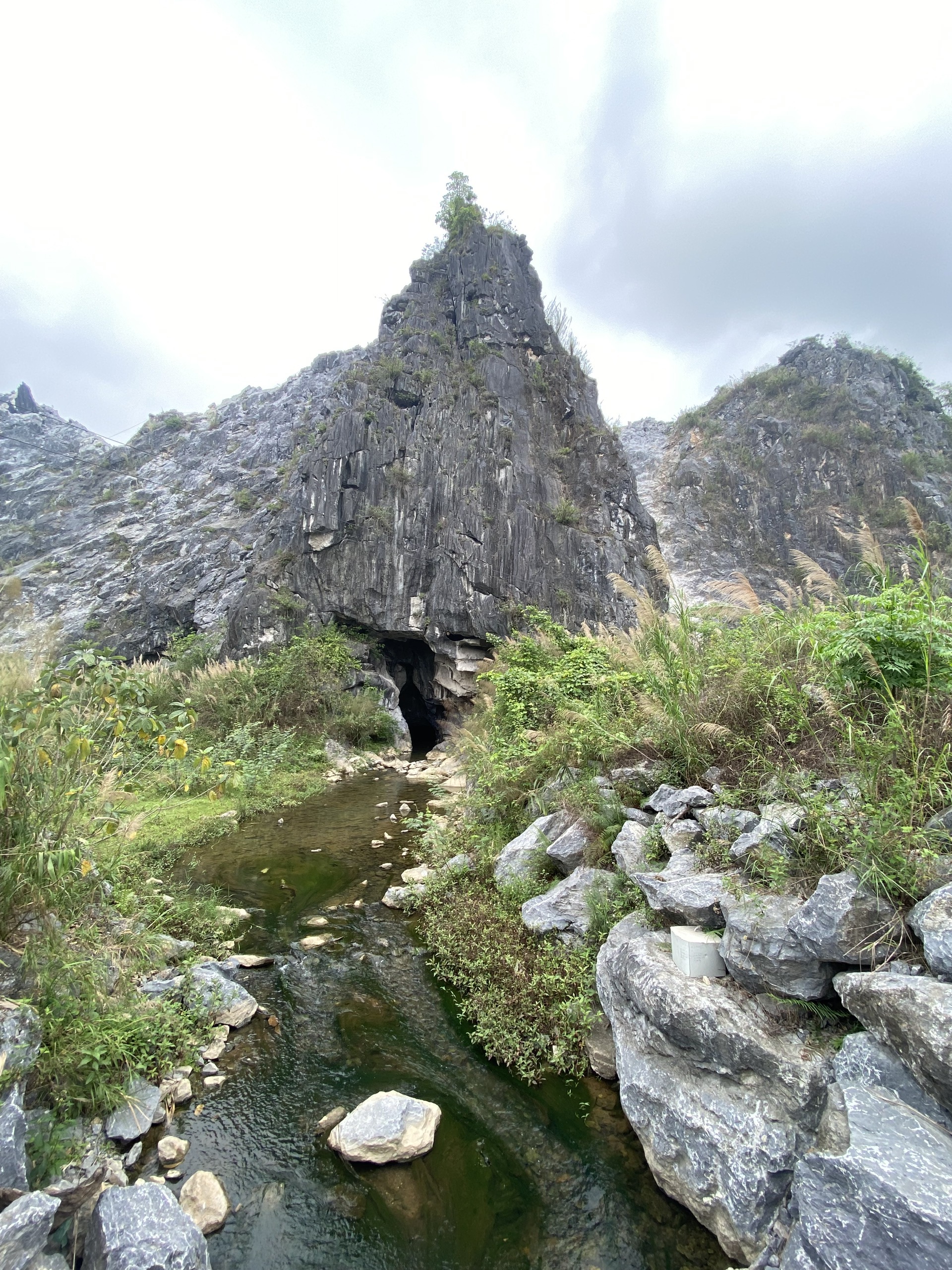
Anyone who has ever been here, especially during the evacuation period in Dang Mountain, will surely never forget the beautiful scenery. The majestic rocky mountain range with its crystal-clear stream flowing through its heart. Convenient and picturesque cave entrances welcome and shelter people from the sun and rain. The mountain's interior also protected living beings from bombs and bullets. Now, the Dang Mountain range is not "dead" because of war, but rather "sacrificed" itself in peacetime .
Fortunately, the 5-8 Hospital of the Naval Corps located in the Dia Thau cave (now Vuon Ram village) is still in relatively good condition. The cave is quite large and has been preserved almost intact. During the war, civilians took a shortcut from the northwest along a dirt road at the foot of the mountain to reach the cave. The cave entrance is full of jagged rocks, and inside, the ground is rough and uneven. The highest point of the cave's vault is about a dozen meters high, and the widest area is approximately 200 square meters.
Adjacent to Vuon Ram village is Vuon Cau village. Initially, the provincial and district hospitals were evacuated around the edge of Boc Mountain. It's a limestone mountain, probably dating back to ancient times, contemporaneous with Bai Tho Mountain, standing silently at the entrance to Vuon Cau village. Boc Mountain also has a cave with two entrances connecting from southeast to northwest. The northwest entrance is called the Betel Gate, and the other is the Chap Gate. To the southwest of Boc Mountain lies Da Ban Mountain (Mo Dong village), providing discreet shelter for the evacuation area. Hospital camps were set up around the cave. Whenever the air raid siren sounded, everyone would take cover inside. The locals still remember the benevolent protection of Saint Tan for this region. During the hospital evacuation period, no deaths from American bombs or bullets were recorded here.
Like the surrounding mountain range, Đá Bàn Mountain is also a limestone mountain. It gets its name from a legend about King Đồng Quánh, who said that in those days, this vast area was under his rule. One day, while the king was inspecting the area, his soldiers were exhausted. The surrounding forests and mountains offered no place to rest. The king pointed his sword towards the mountaintop, and a huge rock rolled down, providing enough space for him and his soldiers to rest. Even today, the remnants of that rock, as large as several mats, still remain in Mỏ Đông village, next to the inter-village road.
The elderly people in the village still vividly remember the time when the hospitals were evacuated here. Initially, both the provincial and district hospitals set up temporary shelters around Mount Boc. The entrance to the Trau cave, about a hundred square meters in size, was used as an operating room. The provincial hospital had doctors Ngo Lan, Mai Lan, Kha, Nguu, Thinh… The district hospital had doctors Dam, Ms. Mien, Ms. Mieu, Ms. Giang, Ms. Van specializing in childbirth… Some doctors and nurses stayed in people's homes. Many villagers still remember the wedding of doctors Khue and My. Doctor Ay played the guitar and sang the song "I'm Digging Trenches Again" at the wedding, which was very joyful. Later, the provincial hospital moved to the larger Dong Dang cave.
Now, only the Dia Thau cave, where the military hospital was located, has a concrete road leading directly to its entrance. The winding concrete road clings to the mountainside to avoid the steep slope. The inside and outside of the cave entrance have been leveled, and the entire entrance is now paved with concrete. Along the way up, cinnamon and acacia trees are sprouting new shoots among the pristine green rocks.
The entrance to the Boc mountain cave remains shrouded in dark, gloomy trees. Even the most skilled would not dare to venture the entire length of the cave in the past. Some houses near the Trau entrance still stand. They and the ancient cave arches are like low, resonant notes, echoing a heroic anthem, reminding us of a time when the Party's loyalty and the people's affection warmly protected and united them, overcoming countless difficulties and hardships to achieve the complete victory of the people and the Party Committee of Quang Ninh province in those days.
Source

















































































Comment (0)