

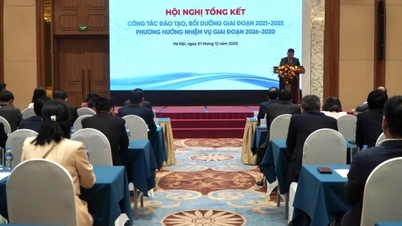
At the Conference to summarize the training and fostering work in the period of 2021 - 2025 and the direction and tasks for the period of 2026 - 2030 held on the afternoon of December 1, Mr. Nguyen Quang Hong, Deputy Director of the Department of Organization and Personnel, Ministry of Industry and Trade, gave a summary report on the training work in the period of 2021 - 2025 of the Ministry of Industry and Trade, as well as the direction and tasks for the period of 2026 - 2030.
Outstanding achievements in leadership, autonomy and research
According to Mr. Nguyen Quang Hong, the first breakthrough in the training work of the Ministry of Industry and Trade during this period lies in the method of directing, operating and restructuring the network of educational institutions.
“With the consistent orientation of “maintaining stability in universities and reducing the number of colleges”, the Ministry has developed and implemented 5 merger and streamlining projects to create interdisciplinary and multi-disciplinary school clusters and improve the efficiency of resource use” , Mr. Nguyen Quang Hong stated.
In addition, another reform focus of the Ministry in the 5 years is to promote financial autonomy in training institutions. With Decision 3335/QD-BCT, the Ministry has granted financial autonomy for the period 2023 - 2025 to 32 schools in the field of education - training and vocational training.
Mr. Nguyen Quang Hong's report pointed out that the mechanism for autonomous grouping is clearly established to create motivation and a framework for independent development for each block. Of which, 05 universities and 01 college are classified into the fully autonomous group (self-guaranteed regular expenses and investment expenses), 02 colleges belong to the group of self-guaranteed regular expenses, and the remaining 04 universities and 20 colleges are in the group of partially self-guaranteed regular expenses. This is a practical and constructive decentralization method, helping schools have both a mechanism and the motivation to reinvest and develop stably.
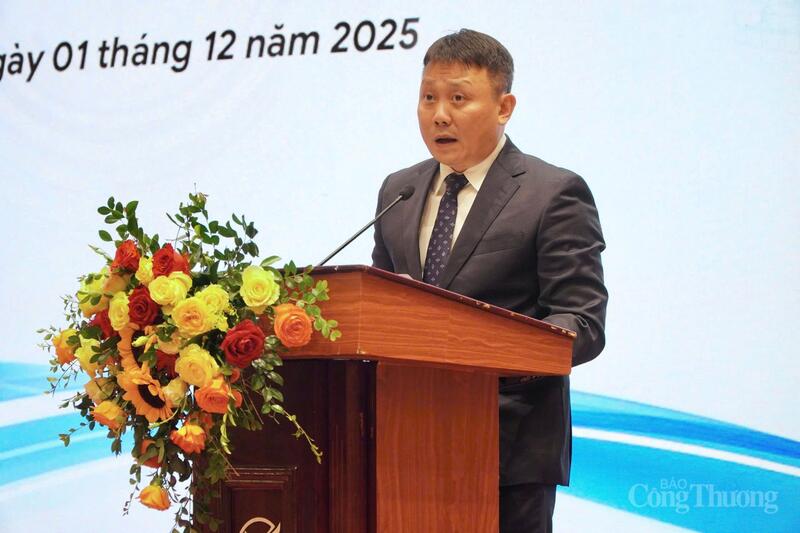
Mr. Nguyen Quang Hong, Deputy Director of the Department of Personnel Organization, Ministry of Industry and Trade, reported on the summary of the training work in the period of 2021 - 2025 of the Ministry of Industry and Trade, as well as the direction and tasks for the period of 2026 - 2030. Photo: Minh Trang
Thanks to the autonomy mechanism and efforts to diversify revenue sources, the total revenue of training institutions under the Ministry from the state budget has increased from 824 billion VND in 2021 to approximately 6,355 billion VND in 2025. In particular, career revenue recorded an impressive breakthrough: increasing from 3,432 billion VND in 2021 to 5,828 billion VND in 2025, accounting for more than 80% of the total revenue of schools in the system. The large scale of career revenue has helped the system create an accumulation exceeding the threshold of 2,000 billion VND to reinvest in facilities and training and research activities.
In the public investment sector, the Ministry of Industry and Trade has allocated nearly VND 800 billion for 22 public investment projects in the education and training sector, including 20 infrastructure construction projects and 02 science and technology projects. With the progress and implementation efficiency, by 2025, the Ministry has completed 21/22 projects, ensuring essential facilities for the teaching and research ecosystem.
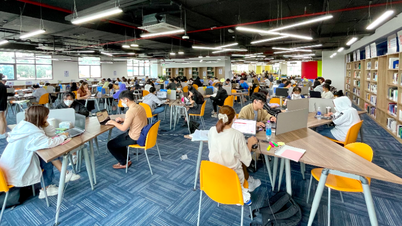
Along with system reform and financial autonomy, the training scale of the school system under the Ministry has also grown strongly. From 156,000 students in 2021, the total number of learners reached nearly 199,000 students in 2025, reflecting the attractiveness of enrollment and labor market demand for human resources trained in the Industry - Trade sector. Every year, the school system under the Ministry maintains a stable enrollment target of 95,000 to 110,000 students. In particular, 05 financially autonomous universities and 03 financially autonomous colleges have all achieved 95 - 100% of enrollment targets, showing that the flexible enrollment model and the link with market demand have clearly demonstrated effectiveness.
In the field of learning materials, more than 800 training programs have been developed and adjusted, including 134 new programs, focusing on automation, industrial robots, artificial intelligence (AI), data science, logistics and renewable energy. Schools in the system have compiled or purchased nearly 9,300 textbooks and teaching materials, of which 1,540 new textbooks were compiled by lecturers in the system.
Along with the growth of the number of learners and training programs, the number of lecturers in the Ministry's training system has also increased in quantity and quality. According to Mr. Nguyen Quang Hong, the total number of staff and lecturers reached 10,156 people, an increase of 9% compared to 2021. Notably, the number of lecturers with PhD degrees increased by 104%, from 775 people (in 2021) to 1,583 people (in 2025), raising the proportion of lecturers with PhD degrees to 23%.
“However, the Ministry also clearly identified the differentiation of resources when 100% of professors, associate professors and most of the PhDs are concentrated in 09 universities - a structure that concentrates research resources but at the same time creates a gap in academic capacity and titles between universities and colleges” , the Deputy Head of the Department of Organization and Personnel emphasized.
The most prominent highlight in the Ministry's training work in the period of 2021 - 2025 is the breakthrough in scientific research, business cooperation and international standards of training accreditation. In 5 years, schools under the Ministry's training system have created 26,845 scientific research products. The number of ISI/Scopus international articles alone has increased from 1,139 (in 2021) to 1,815 (in 2025), with the university sector playing a key role with 85% of total international publications. Typical units in international publications include Hanoi University of Industry with more than 1,500 international publications and Ho Chi Minh City University of Industry with about 1,200 international publications.
In addition, the quality accreditation work also achieved a milestone when 100% of universities under the Ministry completed the accreditation of educational institutions. At the international level, Ho Chi Minh City University of Industry became the only unit in the system to achieve accreditation according to AUN-QA standards in 2025.
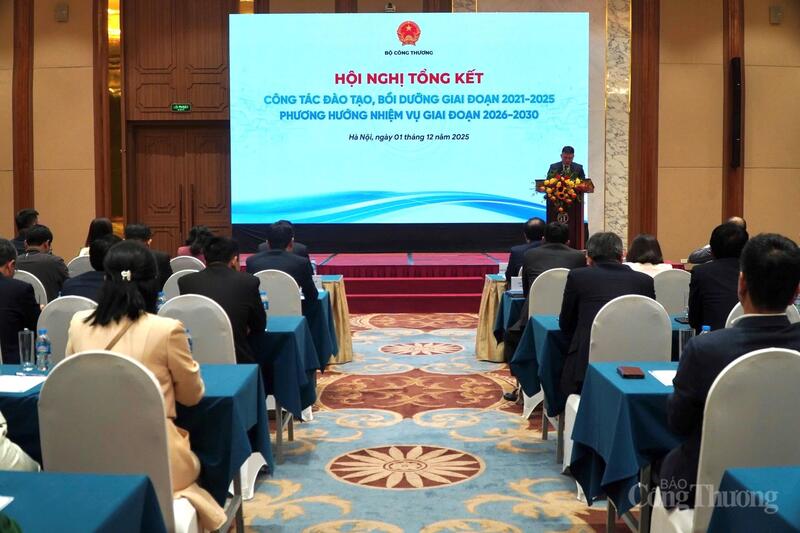
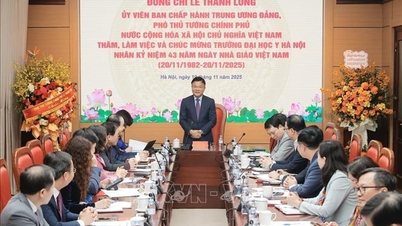
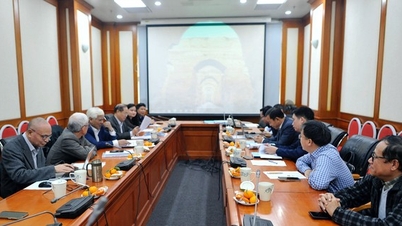
Conference to summarize training and fostering work in the period of 2021 - 2025 and orientation and tasks for the period of 2026 - 2030. Photo: Minh Trang
The business cooperation ecosystem has also accelerated with over 1,200 cooperation agreements signed in 5 years. Universities have implemented paid internship programs and built enterprise-standard laboratories with FDI corporations such as Samsung, Toyota and Foxconn. This result has helped many universities achieve a 90-95% employment rate for students within 6-12 months after graduation. In the college sector, schools have implemented a dual training model (Dual System), with practice time at enterprises accounting for 40-60% of the program, while promoting the model "One program - Two locations", with theory at school and practice at enterprises.
Roadmap for internationalization, digitalization and standardization of training
Entering the new period of 2026 - 2030, the Ministry recognizes that its training system needs to thoroughly overcome the limitations of uneven quality, soft skills, foreign languages and incomplete digital transformation. In particular, 17/20 colleges and 4/9 universities are still not qualified for financial autonomy, and are still partly dependent on the budget due to limited training scale and revenue. In addition, the Ministry also clearly identifies the challenges of asynchronous facilities and untimely forecasting of labor demand and adjustment of training industry structure.
From those achievements and limitations, the Ministry has determined that the effectiveness of reform in training in the coming period will be based on 5 strategic pillars: Innovation in thinking and internal institutions, ensuring the implementation of autonomy associated with accountability; comprehensive education and building a safe and modern school culture; comprehensive digital transformation in administration and training, bringing AI into testing, examinations and evaluation; developing a team of teachers meeting international standards, focusing on STEM and key industries; promoting international bidirectional linkages to attract experts, students, resources and technology transfer.
Mr. Nguyen Quang Hong pointed out that the university sector plays a key role in improving the quality of postgraduate training and developing key human resources in the industry and trade sector. Key tasks include perfecting the autonomy strategy, innovating admissions to ensure fairness and quality, attracting lecturers for the STEM sector, increasing international accreditation standards, promoting research with social impact and proactively communicating to increase trust in the labor market as well as society.
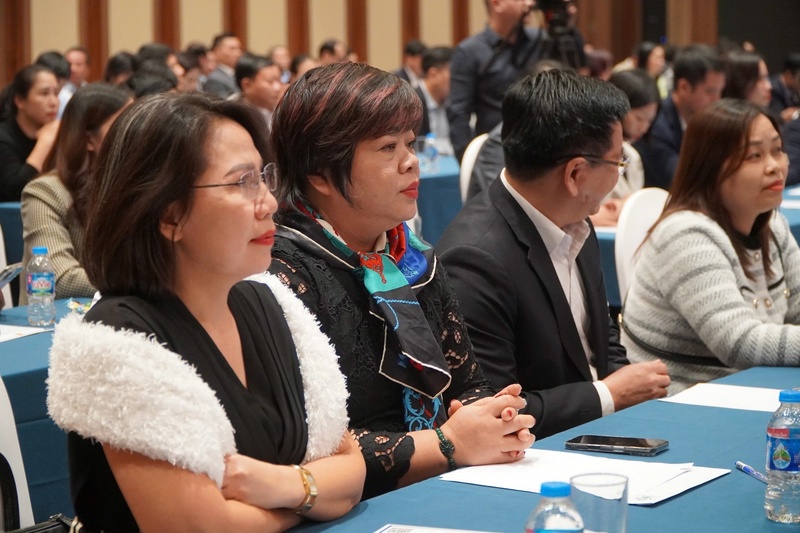
Delegates attending the conference. Photo: Minh Trang
Meanwhile, the college sector prioritizes digital transformation and AI application, deploys digital transcripts and digital diplomas, expands training programs related to logistics infrastructure, green energy, supporting industries and digital economy, and promotes "One program - Two locations", increases practice time at enterprises and integrates green skills - digital skills - entrepreneurship thinking in the entire vocational training program.
“In particular, the Ministry has set the goal of making English the second language in vocational education, expanding the three-party cooperation model and encouraging businesses to participate more deeply in human resource training activities,” Mr. Nguyen Quang Hong affirmed.
The international integration direction in the coming period will focus on the “bidirectional” flow of knowledge - human resources through training and research links with prestigious international systems such as Erasmus+ and vocational training development resources from USAID. The period 2026 - 2030 is expected to be not only a process of expanding the scale of technical human resource training, but also a roadmap to position human resources of Industry and Trade in the global training value chain, creating a sustainable transition for the country's smart manufacturing, logistics, green energy and digital economy in the new era.
In the period of 2021 - 2025, the training institutions of the Ministry of Industry and Trade have seriously implemented major resolutions, directives and policies of the Party and State on education and training such as Resolution No. 29-NQ/TW in 2013 of the 8th Central Conference on fundamental and comprehensive innovation of education and training, Resolution No. 19-NQ/TW of the 12th Central Executive Committee on continuing to innovate the organization and management system, improving the quality and efficiency of public service units, and the Prime Minister's Strategies on developing higher education and vocational education to 2030.
Source: https://congthuong.vn/tai-cau-truc-dao-tao-de-dan-dau-chuyen-dich-nhan-luc-cong-thuong-432845.html


![[Photo] Prime Minister Pham Minh Chinh receives President of Cuba's Latin American News Agency](/_next/image?url=https%3A%2F%2Fvphoto.vietnam.vn%2Fthumb%2F1200x675%2Fvietnam%2Fresource%2FIMAGE%2F2025%2F12%2F01%2F1764569497815_dsc-2890-jpg.webp&w=3840&q=75)





































































Comment (0)