

 |
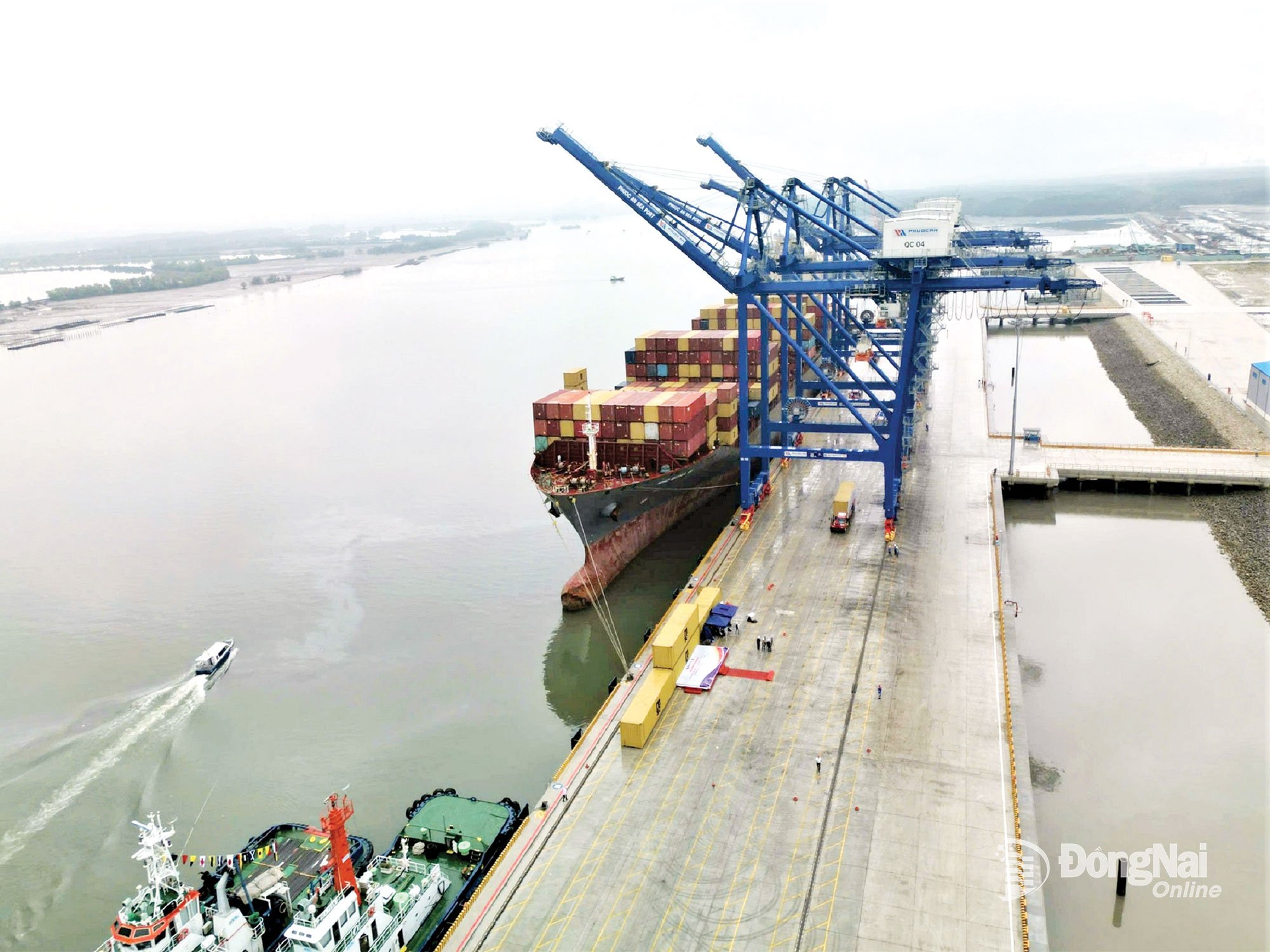
| Unloading goods at Phuoc An Port (in Phuoc An commune), the province's largest seaport. Photo: Pham Tung. |
Despite its great potential, the logistics service sector still faces bottlenecks in infrastructure, supporting services, scale of development, and mechanisms and policies that need to be addressed to help businesses solve the cost problem through cooperation and improving internal capacity.
The spearhead in economic development
According to statistics from the Vietnam Logistics Association, Vietnam currently has over 40,000 businesses operating in the logistics sector, including: small and medium-sized domestic enterprises; international logistics corporations investing in Vietnam; and traditional transport service companies transitioning to providing integrated logistics services. Vietnam is the leading country in ASEAN in terms of the number of logistics service businesses licensed by the US Maritime Administration; and ranks 11th among the top 50 emerging global logistics markets, according to the Agility 2022 ranking.
Logistics is increasingly emerging as a crucial service sector within the overall structure of the national economy. As Vietnam's economy grows in scale, and its production of goods and import-export activities with the world increase, logistics services also develop and make significant contributions. Annually, Vietnam's logistics sector experiences relatively high growth rates, reaching 14-16%, contributing approximately 4-5% to the national GDP.
According to Tran Thanh Hai, Deputy Director of the Import-Export Department ( Ministry of Industry and Trade ), logistics services are the "connecting thread" of the economy. The economy can only develop synchronously and smoothly when the logistics chain operates continuously. Over time, logistics has become an increasingly important part of business operations for almost all types of goods and services.
Despite its high growth rate and significant potential for development, the logistics industry still faces bottlenecks. Locally, the infrastructure supporting logistics activities, as well as the connectivity between commercial, transportation, and information technology infrastructure, remains underdeveloped, resulting in low operational efficiency. This leads to high service costs, limited service quality in some areas, and a reduction in the competitiveness of Vietnamese goods.
According to Nguyen Duy Hung, Vice Chairman of the Dong Nai Import-Export Association and Director of Hung Thinh Phat Co., Ltd. (in Tam Hiep ward), most Vietnamese businesses in this sector are small and medium-sized. Capital, experience, management skills, the ability to apply information technology, and the skill level of human resources in most businesses do not yet meet international operating requirements. Limitations in logistics infrastructure and transportation costs, as well as issues related to mechanisms and policies, are factors that need to be addressed to promote the development of this service sector.
According to the Department of Industry and Trade, Dong Nai strives to establish its logistics sector as a global logistics hub by 2050, with closely interconnected logistics systems and infrastructure creating maximum synergistic value. The sector will develop a multimodal transport system along with high-quality logistics services, based on modern regional and provincial logistics centers.
Dong Nai is stepping up the development of logistics infrastructure.
Nationwide, Dong Nai is among the leading localities in logistics services, boasting a large number of industrial parks and a developing national key transportation infrastructure. In particular, Long Thanh International Airport is considered a "magnet" attracting investment from domestic and foreign businesses and corporations to Dong Nai.
Given its significant advantages, businesses in the logistics industry recognize that Dong Nai has opportunities for development and needs policies to ensure that logistics services play an even greater role in the local economy.
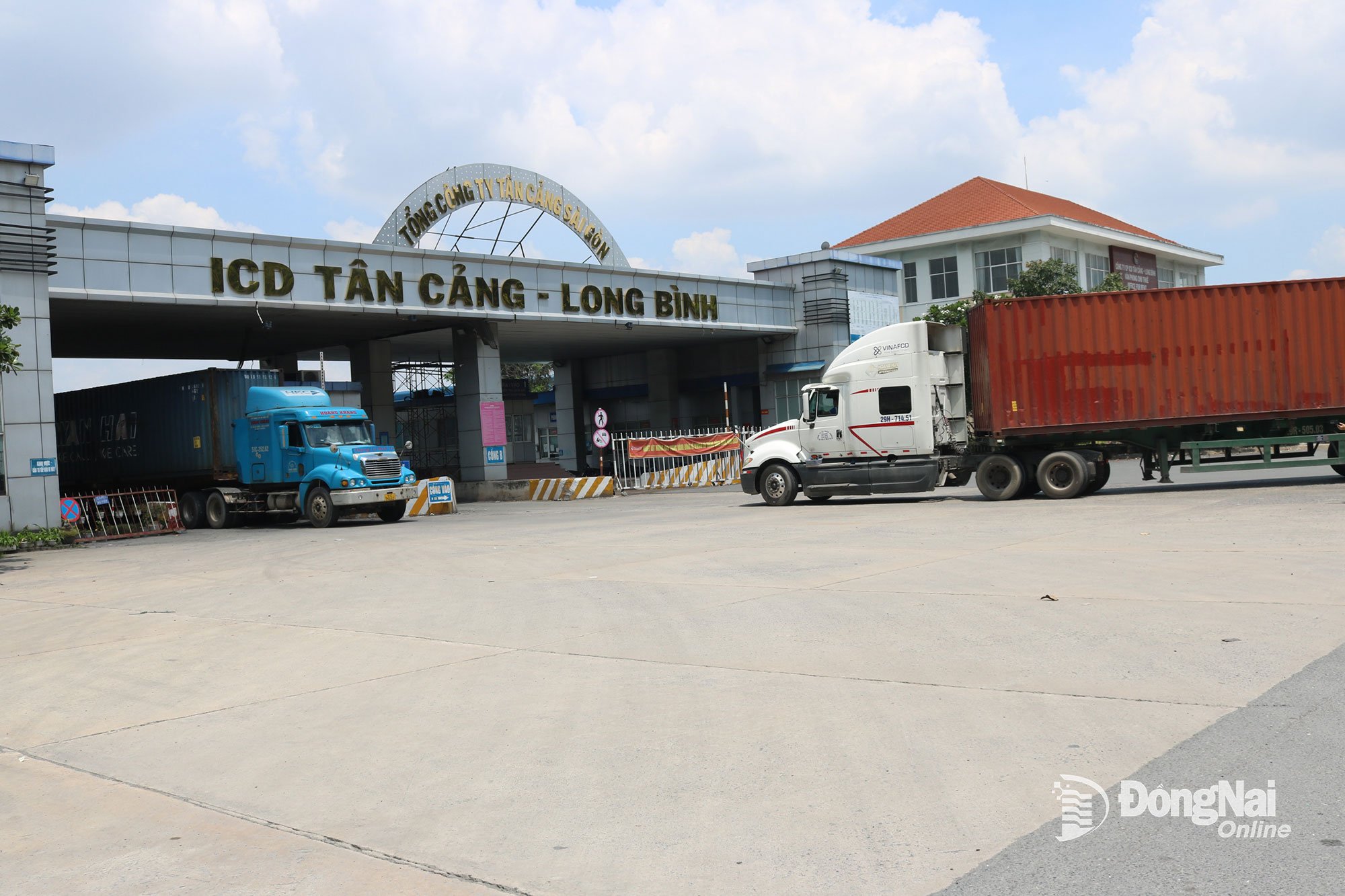 |
| Logistics operations at Tan Cang - Long Binh ICD. |
Mr. Phan Anh Tuan, Director of Tan Cang Long Binh Joint Stock Company, stated that Dong Nai needs to identify logistics services as a crucial and key economic sector in its development strategy from now until 2030, with a vision to 2045. Businesses hope that the State will accelerate administrative reform in the management of logistics activities towards digitalization, intelligence, and compliance with international standards.
In fact, in recent years, Dong Nai has been orienting and planning its logistics service industry towards modernization with concentrated, highly specialized planning areas. It is expected that four logistics centers will be planned in the province, establishing advanced logistics centers to serve leading domestic and international manufacturers, focusing on exploiting the advantages of Long Thanh International Airport and major nearby transportation infrastructure projects.
Recently, the Department of Industry and Trade and logistics businesses held a meeting to prepare for the announcement of the establishment and organization of the first General Assembly of the Dong Nai Logistics Association. The founding assembly is expected to be held in December 2025.
According to Mr. Tran Duong Hung, Deputy Director of the Department of Industry and Trade, the Dong Nai Logistics Infrastructure Development Project is being adjusted to align with the regional planning after the merger of Dong Nai and Binh Phuoc administrative boundaries. To ensure compliance with regional planning and affirm their coordinating role, businesses and the Dong Nai Logistics Association need to develop a development strategy linked to the local strengths; strengthen business-government connections; and provide policy input to the province on developing modern logistics, linked to the regional and national production supply chains.
King
Source: https://baodongnai.com.vn/kinh-te/202511/thao-go-diem-nghen-logistics-cbe22c3/
















![[Photo] Prime Minister Pham Minh Chinh receives the Director of RMIT University Melbourne (Australia)](https://vphoto.vietnam.vn/thumb/1200x675/vietnam/resource/IMAGE/2026/04/02/1775142120087_thiet-ke-chua-co-ten-2026-04-02t214220784-png.webp)





























































Comment (0)