

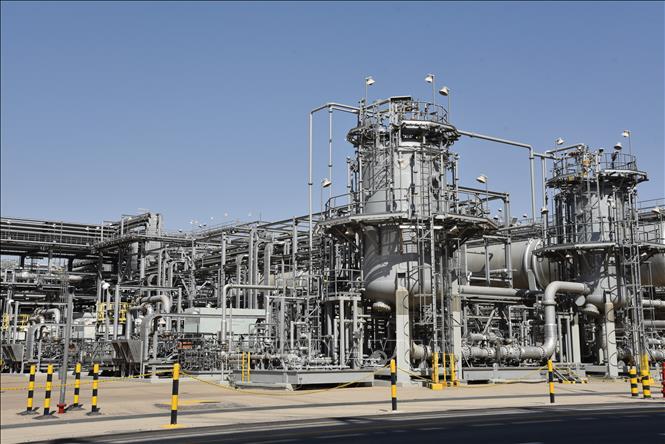
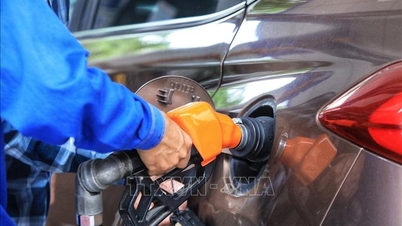
Brent crude futures fell 72 cents, or 1.14 percent, to $62.45 a barrel, while U.S. West Texas Intermediate (WTI) crude futures fell 68 cents, or 1.15 percent, to $58.64 a barrel.
Both crudes rose more than 1% on December 1.
Investors turned their attention to Russia-Ukraine peace talks as Russian President Vladimir Putin met US President Donald Trump's special envoy Steve Witkoff at the Kremlin on December 2.
Oil prices are being pressured by hopes of a breakthrough in Russia-Ukraine peace talks that could lift restrictions on Russian oil supplies, but if those hopes fail to materialize, the market could even face the risk of further disruption, said Clayton Seigle, a senior fellow at the Center for Strategic and International Studies.
Meanwhile, fresh concerns about oversupply, which have weighed on prices, were balanced by attacks on Russian oil infrastructure last weekend and tensions between the US and Venezuela.
On December 1, the Caspian Pipeline Association said it had resumed oil shipments from a mooring point at a Black Sea port after a drone attack.
Also last weekend, US President Donald Trump declared that "the airspace over and around Venezuela" should be considered completely closed, sparking new uncertainty in the oil market, as the South American country is a major producer.
Regarding the production policy of the Organization of the Petroleum Exporting Countries (OPEC) and its allies, the OPEC+ group, the group agreed to keep the production level unchanged in the first quarter of 2026 at a meeting on November 30, amid concerns about the risk of oversupply.
Source: https://baotintuc.vn/thi-truong-tien-te/thoa-thuan-hoa-binh-nga-ukraine-chi-phoi-thi-truong-dau-the-gioi-20251203075203478.htm



![[Photo] Parade to celebrate the 50th anniversary of Laos' National Day](/_next/image?url=https%3A%2F%2Fvphoto.vietnam.vn%2Fthumb%2F1200x675%2Fvietnam%2Fresource%2FIMAGE%2F2025%2F12%2F02%2F1764691918289_ndo_br_0-jpg.webp&w=3840&q=75)
![[Photo] Worshiping the Tuyet Son statue - a nearly 400-year-old treasure at Keo Pagoda](/_next/image?url=https%3A%2F%2Fvphoto.vietnam.vn%2Fthumb%2F1200x675%2Fvietnam%2Fresource%2FIMAGE%2F2025%2F12%2F02%2F1764679323086_ndo_br_tempimageomw0hi-4884-jpg.webp&w=3840&q=75)





























































Comment (0)