

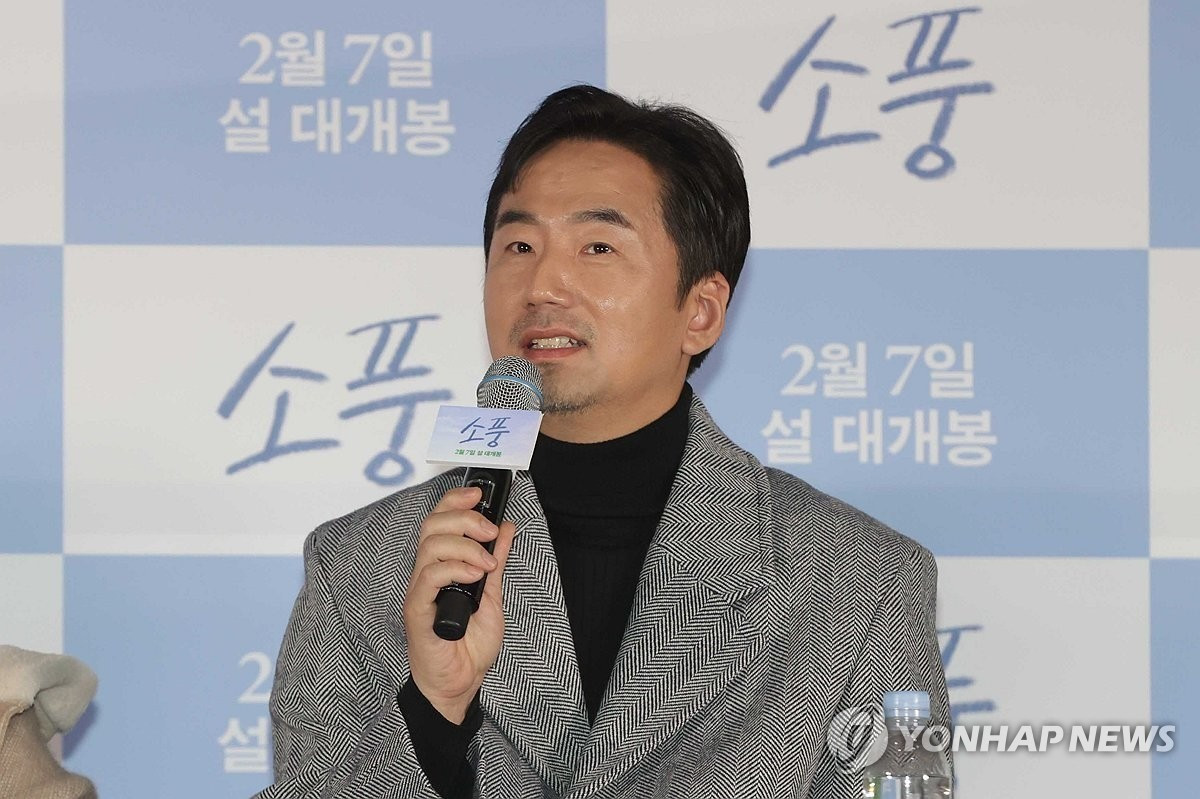
Veteran actor Lim Hyung Joon said the South Korean television industry is on the verge of collapse due to challenges arising from the skyrocketing salaries of top actors.
The number of films is declining due to the excessively high salaries of lead actors.
Appearing on actress Lee Ji Hye's YouTube channel, Gwanjong Un-ni, Lim Hyung Joon shared his views on the challenges facing the industry. Korean TV drama (Kdrama) faces challenges due to rising costs stemming from the high salaries paid to top actors.

When asked about salaries in the industry, the 50-year-old actor replied, "There's a lot of talk about salaries these days. People seem to think the decline in film production is due to high actor fees. Actually, only the lead actors are expensive; my salary is still the same as it was 20 years ago."
Mr. Lim believes that fee The compensation for top actors should be public and transparent, just like it is for athletes. This allows the audience to assess whether the compensation is commensurate with the actor's performance and the value they bring to the show they participate in.
The actor added that some artists deserve to demand high fees, but that shouldn't become the standard in the industry.
“Some leading actors might not like hearing this, but I think their salaries should be made public. Look at athletes like Son Heung-min. Everyone knows his salary. Then people can judge whether they are actually playing at that level, right? The public can judge them: 'Is that all he can do for that salary?' If so, maybe they don’t deserve that salary. I agree that those who are capable of demanding high salaries should receive that amount, but it shouldn’t become the norm just because of a few people,” the familiar supporting actor commented.
Lim Hyung Joon stated that the sudden increase in fees is putting pressure on the budget, thereby impacting the number of programs produced each year.
Before Lim, Ryu Seung Soo also mentioned the issue of the declining number of television dramas over the past few years. April Snow It was pointed out that South Korea used to produce around 120 television dramas per year, but this number has decreased to about 50 currently due to budget constraints.
He shared the supporting actors They are struggling, and some have to take on extra jobs to make ends meet, as their salaries are only a fraction of what the lead actors are paid.
The disparity between the lead and supporting actors is too great.
On October 24, 2023, Lee Sang Heon, Chairman of the Korean Committee on Culture, Sports and Tourism, presented a report submitted by the Korean Broadcasting Actors Federation and the Korean Broadcasting Performers' Rights Association. The report focused on the current income levels and income disparities of actors in South Korea.
Based on financial statistics from 9 South Korean television dramas aired between 2021 and 2023, the largest pay gap between lead and supporting actors reached 2,000 times. That's the amount earned from the drama. Payback of SBS in 2023. The late actor Lee Sun Kyun received 200 million won (approximately $149,000 USD, according to the exchange rate at the time) per episode. Meanwhile, supporting actors were paid at least 100,000 won ($74.50 USD) per episode.
This gap could widen significantly if the highest fees paid in 2024 are included. In March, a South Korean news agency reported. Newsen Citing multiple private sources within the production company, the information was revealed. Kim Soo Hyun They were paid 800 million won (approximately $596,000) per episode. Queen of Tears . Due to the 16-episode series, the actor born in 1988 pocketed a total of 12.8 billion won (approximately 9.54 million USD). This is a shocking salary for everyone, considering the amount spent on the star alone. The moon embraces the sun. It accounted for one-third of the film's total budget of 40 billion won (approximately $29.8 million).
Although the team later Queen of Tears statement with My Daily The figures given are inaccurate; Kim Soo Hyun was paid less, but it certainly wasn't a small amount. In his most recent film, One Ordinary Day (2021), it was reported that the actor was paid 500 million won (approximately $373,000) per episode.

Many believe that the pay gap may be directly proportional to the number of working hours as well as the brand value each actor brings. However, the truly alarming issue is that supporting actors are often underpaid compared to the number of hours they put in.
The report highlights that the typical minimum wage in the entertainment industry hovers around 20,000 won (US$14.40) per episode. However, on average, each episode takes approximately 2.63 days to film, and the average actor's working hours per day, including waiting time, are 9.99 hours. Because Korean drama producers often use per-episode pay contracts that don't specify working hours or conditions, it's highly likely that supporting actors are paid below the minimum wage without accounting for additional costs such as costumes.
Based on factual data, Chairman Lee Sang Heon emphasized the need to establish a minimum threshold for appearance fees to provide actors with a standard and basic level of compensation. He called for institutional discussions to protect the labor rights and livelihoods of supporting actors threatened by inadequate compensation.
Source









































































Comment (0)