

Education and training have always been a top national priority. In line with this spirit, over the years, Quang Ninh province has consistently given special attention to education in ethnic minority areas, mountainous regions, border areas, and islands, with the motto "All for our beloved students," ensuring that every student has the opportunity to learn, excel through knowledge, and contribute to building a more prosperous and beautiful homeland.
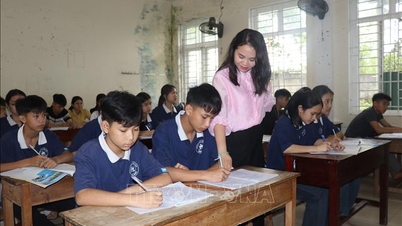
The school buildings are spacious and well-equipped.

With each new school year, the appearance of schools throughout the province, especially in remote, mountainous, border, and island areas, seems to be given a fresh new look. Determined to create the best possible learning environment for students in these areas, the province annually invests in building, repairing, and upgrading schools.
Although the new school year has already begun two weeks ago, the joy among teachers and students at Dam Ha 1 Secondary School (Dam Ha commune) remains undiminished as they are studying in their new, spacious school building with modern equipment and numerous amenities. This is one of four high-quality school projects that have been renovated, rebuilt, and put into use this school year, contributing to ensuring equal opportunities for students to access quality education.

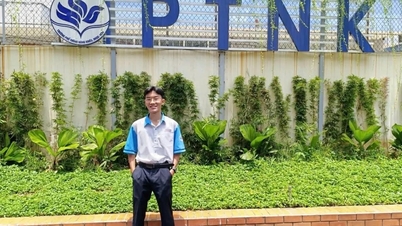
Lau Thu Ha, a student in class 6C at Dam Ha 1 Secondary School in Dam Ha commune, said: "This school year, we are the first cohort to study in the new, spacious school. Therefore, we are extremely happy, honored, and proud. Not only does the school have classrooms with complete smart equipment, but it also has a new, beautiful, and modern library, computer room, and sports field, helping us to develop comprehensively. We will strive to study well, continuously cultivate our morals, and actively train physically to become outstanding students."
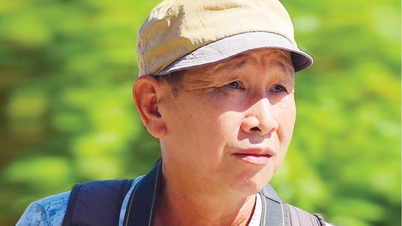
Mr. Nguyen Van Cuong, Principal of Dam Ha 1 Secondary School in Dam Ha commune, shared: "The 2025-2026 school year will be a turning point for the school. Thanks to the attention of the province, the education sector, and the local authorities, the school has been built with a comprehensive infrastructure project costing up to 60 billion VND. The new school building, now operational, meets the educational needs of ethnic minority children in the commune, contributing to improving the quality of education and narrowing the gap between regions. In the future, the school will continue to research and organize diverse experiential activities, STEM programs, etc., to both educate students in knowledge and develop their skills."

With a total investment of nearly 200 billion VND, Quang Ha Secondary School is a modern, comprehensive facility meeting national standard school criteria. Quang Ha Secondary School has a large construction area, including many main components: a 4-story theoretical classroom building with 30 modern classrooms fully equipped with teaching equipment; two subject-specific classroom blocks, each 4 stories high, serving specialized subjects such as Informatics, Foreign Languages, Natural Sciences , Music, and Fine Arts; a 4-story administrative building and library with offices, a traditional room, and a spacious and well-equipped library area; and a multi-purpose hall with an area of over 600m², where physical education, arts, and extracurricular activities take place.

Ms. Ha Hoang Giang, Principal of Quang Ha Secondary School, said: "After many years of use, the old school building had deteriorated, was too small, and could not meet the needs. Therefore, the teachers and students are extremely excited to receive the attention of the province, the education sector, and the local authorities in building a new school. This is also one of the important criteria for the school to complete the criteria for national standard school recognition in 2026. Not only will it serve students in the commune, but the school will also aim to recruit students with outstanding academic achievements from other communes, striving to become a key educational center, training high-quality human resources for the region."

Comprehensive care
In order to provide comprehensive care for education in ethnic minority areas, mountainous regions, border areas, and islands, Quang Ninh province has implemented many solutions in a coordinated manner over the past period.
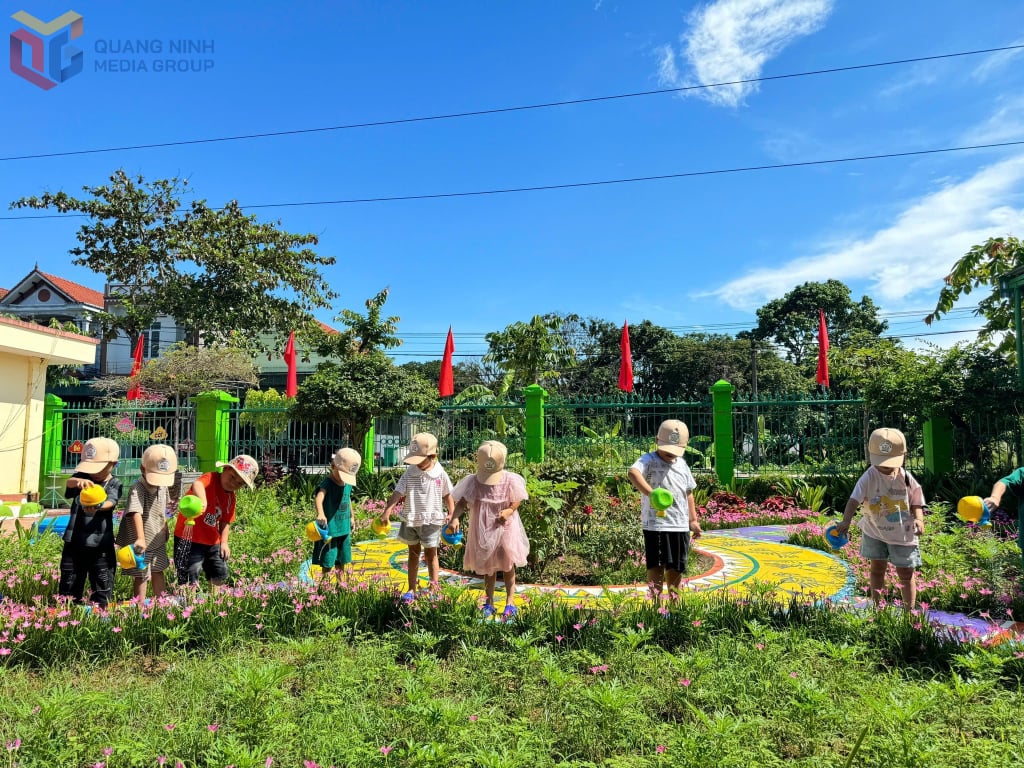
Students at Quang Thinh Kindergarten experience caring for a flower garden.
In particular, providing meals for students in ethnic minority areas is identified by the province as one of the important solutions to improve the physical and intellectual development of the younger generation, contributing to comprehensive education. According to the province's policy, boarding students receive a subsidy of 720,000 VND/month, helping to reduce the financial burden on families.
Quang Ninh also allocates approximately 31.3 billion VND per year to support lunch expenses, summer school funding, and meal preparation for preschool children; and to support meal expenses and childcare costs for boarding students... in ethnic minority areas, mountainous regions, border areas, and islands. This policy has had a positive impact on improving the quality of education in mountainous, border, and island localities.

Since the implementation of this Project, all levels, sectors, and localities have been more actively and synchronously involved in caring for preschool children. The Department of Education and Training has directed preschools to pay attention to providing good nutritional care for children, improving the quality of meals, ensuring they are balanced, reasonable, complete, and hygienically safe, and increasing physical activities for children at school.
Based on this, educational institutions are constantly improving the quality of meals, diversifying menus, strengthening nutritional education, and mobilizing social resources to improve school lunch programs for students. On the other hand, nutritional communication activities, connecting with philanthropists, and encouraging parents to ensure their children attend school regularly are also being implemented in a coordinated manner.
Paying attention to and caring for school lunch programs not only ensures the physical health of ethnic minority children but is also an important solution to narrow the educational gap between mountainous and lowland areas, gradually realizing the province's sustainable development goals in the new phase.
Ms. Nguyen Thi Nguyet, Principal of Quang Thinh Kindergarten in Quang Duc commune, said: "With the support of the province, to improve the quality of care, ensure nutrition, and do a good job in education, the school has maintained the practice of calculating children's meal portions using software, ensuring a balanced intake of nutrients; strictly implemented food processing procedures to ensure food safety and hygiene; and mobilized social resources to improve children's meals. In particular, 100% of children receive regular health check-ups and their health is monitored on growth charts, ensuring comprehensive development."

In particular, to improve the quality of advanced education, as well as to promptly reward, encourage, and motivate students from ethnic minority, mountainous, and border areas with outstanding achievements, the Provincial People's Council issued Resolution 63/2021/NQ-HĐND stipulating the reward and support regime for the training of gifted students in Quang Ninh province and some preferential policies for students in specialized schools from the 2021-2022 school year to the 2025-2026 school year. Specifically, students or groups of students winning awards at the provincial level will receive rewards ranging from 500,000 VND to 2 million VND, at the national level from 20-50 million VND, at the regional/international level from 100-500 million VND, and at the international level from 200-700 million VND. Students who win prizes and are from ethnic minority groups in communes, villages, and hamlets in ethnic minority areas, mountainous regions, border areas, and islands will receive a reward equal to 1.5 times the above-mentioned prize money.
Simultaneously, the staff and teachers in ethnic minority areas, mountainous regions, border areas, and islands are constantly being strengthened in both quantity and quality. Every year, the province issues policies to supplement staffing and labor contracts for public preschool and primary education institutions to gradually address the difficulties in teacher shortages. In addition, professional development courses, foreign language training, and pedagogical skills training are regularly organized, helping teachers in mountainous and island areas keep up with the requirements of the reformed general education curriculum and textbooks.
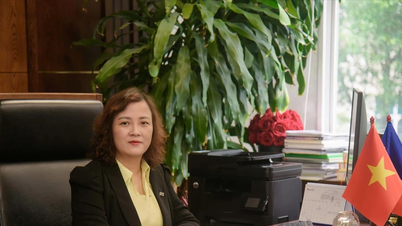
Ms. Vu Thi Mai Anh, Director of the Department of Internal Affairs, stated: To meet the demand for teachers in mountainous, border, and island areas, the Department of Internal Affairs has coordinated with Ha Long University to work with and assess the employment needs of students from the Faculty of Education. Just before the start of the new academic year, nearly 30 new graduates from the Faculty of Education at Ha Long University volunteered to teach at kindergartens, primary schools, and secondary schools in the communes of Ky Thuong, Vinh Thuc, Thong Nhat, Hai Son, and Luong Minh. Based on this, the Department, together with the Department of Education and Training, has played a bridging role between the new graduates and the schools. Implementing policies from the central and provincial governments, each teacher receives a salary, allowances, and support with an average total income of 10 million VND per person per month, and is also provided with accommodation and living arrangements. We hope that in the future, more new graduates will volunteer to teach in ethnic minority, mountainous, and border areas, meeting the demand for teachers in these regions, contributing to improving the quality of mass education, and gradually narrowing the gap between regions. The Department will research and advise the Provincial People's Committee to issue mechanisms and policies to encourage and attract human resources to teach in these areas.
With the determination to "leave no one behind" on the journey of knowledge, Quang Ninh province will continue to allocate significant resources to education, especially in disadvantaged, mountainous, and remote areas, in order to realize the goal of ensuring that students everywhere have equal access to the best possible education.
Ha An - Thai Canh
Source: https://baoquangninh.vn/tiep-suc-cho-giao-duc-vung-kho-3376900.html
































































Comment (0)