

A team of researchers from the University of Tokyo in Japan and other institutions has discovered that a type of asteroid, believed to have contributed to the formation of Earth, may contain twice as much water as previously predicted.
This discovery is the result of analyzing samples brought back from the asteroid Ryugu by Japan's Hayabusa2 spacecraft.
The research findings were published last week in the British scientific journal Nature.
Asteroids that formed in the early stages of the solar system became the building blocks of planets like Earth. Among them, carbonaceous asteroids like Ryugu, rich in water and carbon, are believed to have played a crucial role in the formation of life and water resources on the planet where humans currently live.
According to scientists, water on Earth may have originated from hydrated minerals formed from chemical reactions between water and asteroid rocks. By dating rock samples brought back from Ryugu using metal isotope analysis, the research team discovered that water existed as ice within the asteroid for more than a billion years after its formation, approximately 4.6 billion years ago.
Previously, scientists believed that this water would transform into hydrated minerals or disappear within a few million years.
The long-held belief is that water on Earth originated from asteroids breaking apart during collisions, causing water-bearing minerals to accumulate on the planet during its early formation. But new discoveries suggest that Earth may have been supplied with far more water than previously thought.
Specifically, the research team discovered that the amount of water supplied to Earth in its early stages was equivalent to 60-90 times the volume of today's oceans, enough to cover all landmasses. However, many questions remain unanswered, such as where all that water went.
"We wanted to clarify how this enormous amount of water functioned during the formation and evolution of the Earth," said Associate Professor Tsuyoshi Iizuka of the University of Tokyo, who led the research team.
Source: https://www.vietnamplus.vn/tieu-hanh-tinh-gop-phan-tao-nen-trai-dat-co-the-chua-luong-nuoc-nhieu-gap-doi-post1061317.vnp

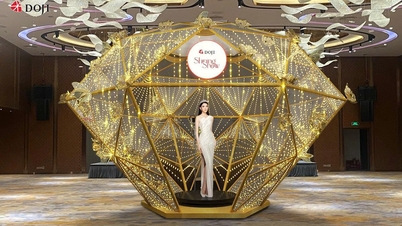
![[Image] Leaked images ahead of the 2025 Community Action Awards gala.](/_next/image?url=https%3A%2F%2Fvphoto.vietnam.vn%2Fthumb%2F1200x675%2Fvietnam%2Fresource%2FIMAGE%2F2025%2F12%2F16%2F1765882828720_ndo_br_thiet-ke-chua-co-ten-45-png.webp&w=3840&q=75)
![[Photo] Prime Minister Pham Minh Chinh receives Lao Minister of Education and Sports Thongsalith Mangnormek](/_next/image?url=https%3A%2F%2Fvphoto.vietnam.vn%2Fthumb%2F1200x675%2Fvietnam%2Fresource%2FIMAGE%2F2025%2F12%2F16%2F1765876834721_dsc-7519-jpg.webp&w=3840&q=75)

![[Photo] Prime Minister Pham Minh Chinh receives the Governor of Tochigi Province (Japan)](/_next/image?url=https%3A%2F%2Fvphoto.vietnam.vn%2Fthumb%2F1200x675%2Fvietnam%2Fresource%2FIMAGE%2F2025%2F12%2F16%2F1765892133176_dsc-8082-6425-jpg.webp&w=3840&q=75)
![[Live] 2025 Community Action Awards Gala](/_next/image?url=https%3A%2F%2Fvphoto.vietnam.vn%2Fthumb%2F1200x675%2Fvietnam%2Fresource%2FIMAGE%2F2025%2F12%2F16%2F1765899631650_ndo_tr_z7334013144784-9f9fe10a6d63584c85aff40f2957c250-jpg.webp&w=3840&q=75)

























































Comment (0)