

Speaking at a group meeting as part of the ninth extraordinary session of the National Assembly, General Secretary To Lam emphasized that technology selection must prioritize modern and advanced technologies, and that we must "take shortcuts and seize opportunities," otherwise we will fall behind the world . If we only choose cheap technologies and machinery (as stipulated by the Bidding Law), we will become a technological waste dump.
Continuing the agenda at the ninth extraordinary session, on the morning of February 15th, The National Assembly held group discussions on the draft Resolution of the National Assembly on piloting a number of policies to remove obstacles in science , technology, innovation and digital transformation activities.
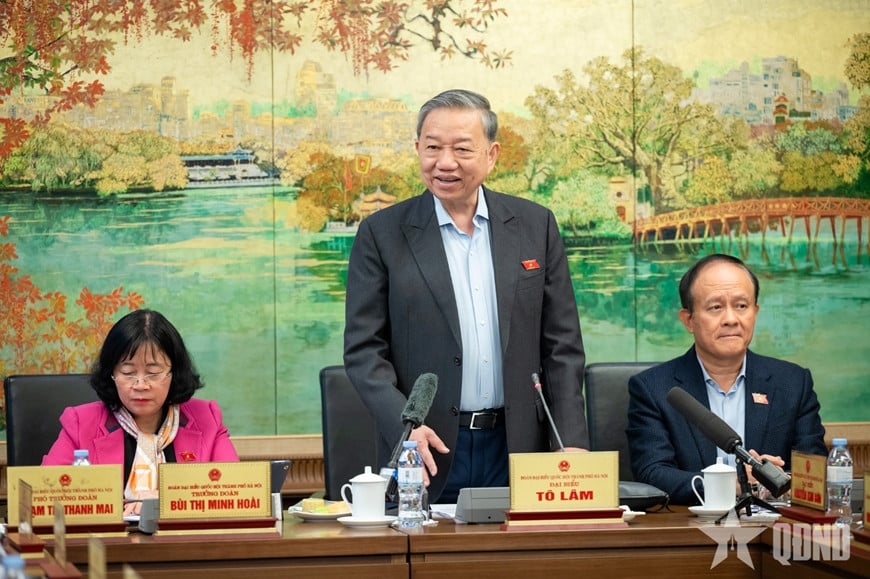
Speaking at the first group discussion session, General Secretary To Lam emphasized that Resolution No. 57-NQ/TW of the Politburo on breakthroughs in the development of science, technology, innovation, and national digital transformation was issued at the end of 2024, but to put it into practice, it cannot wait for amendments to related laws (expected to be completed by the end of 2025), as that would render the spirit of Resolution No. 57 meaningless.
Therefore, the draft Resolution of the National Assembly on piloting a number of policies to remove obstacles in science, technology, innovation and digital transformation activities has been submitted to the National Assembly at this extraordinary session.
General Secretary To Lam analyzed that the scope of this issue is too large, because touching on any aspect of national science, technology, and digital transformation activities presents difficulties due to existing regulations. This is a lesson showing that institutions are a bottleneck; if institutional obstacles are not removed, the Party's guidelines and viewpoints will not be implemented in practice. The pilot resolution issued by the National Assembly also aims to urgently remove obstacles in the legal system.
The draft resolution only outlines three key areas of focus for resolution. It also cannot address all the specific problems currently facing the country. "This reflects a 'wait-and-see' approach," the General Secretary stated.
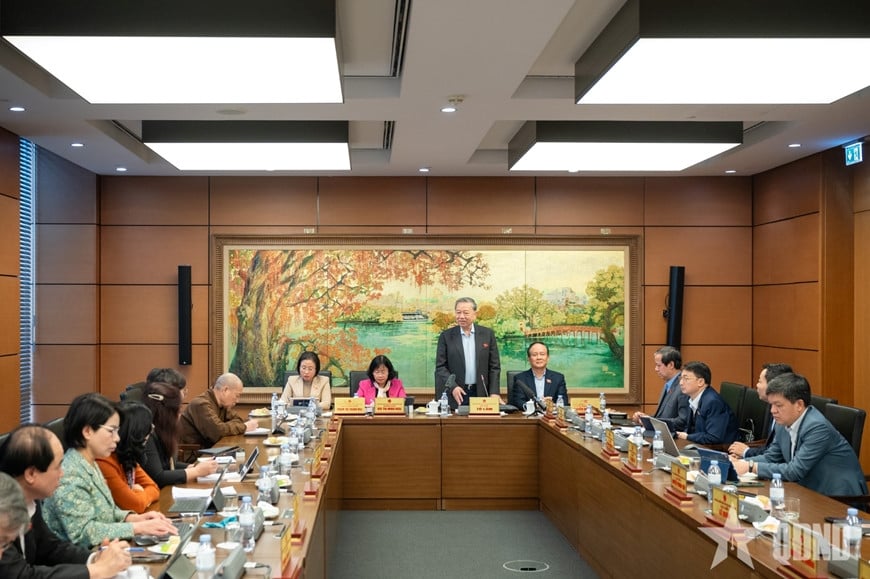
General Secretary To Lam also mentioned the value and necessity of developing science and technology. According to the General Secretary, the lack of development in science and technology in the past was due to obstacles in the legal system, including laws such as the Law on Science and Technology, the Law on Bidding, the Law on Public Investment, the Law on Enterprises, and the Law on Intellectual Property...
The General Secretary stated that the choice of technology must be modern and advanced, and we must "take shortcuts and seize opportunities," otherwise we will fall behind the world. If we only choose cheap technology and machinery (as stipulated by the Bidding Law), we will become a technological dumping ground.
Taking the example of tax exemptions and reductions, which actually generate more tax revenue because they encourage development; and reducing bank lending interest rates, which allows more people to borrow and banks to earn more profit, General Secretary To Lam suggested studying regulations on how to effectively encourage scientific and technological activities, innovation, and digital transformation.
General Secretary To Lam stated that the goal of the draft Resolution is not only to remove obstacles, but also to encourage scientific and technological research, innovation, and digital transformation. The Politburo has recognized this and has issued specific directives in Resolution 57.
According to General Secretary To Lam, the draft Resolution of the National Assembly focuses on fundamental issues and does not prescribe overly complex regulations. The legal system will need further amendment and synchronization, starting with the Law on Science and Technology and related laws.
Source
![[Photo] Prime Minister Pham Minh Chinh receives the Governor of Tochigi Province (Japan)](/_next/image?url=https%3A%2F%2Fvphoto.vietnam.vn%2Fthumb%2F1200x675%2Fvietnam%2Fresource%2FIMAGE%2F2025%2F12%2F16%2F1765892133176_dsc-8082-6425-jpg.webp&w=3840&q=75)


![[Photo] Prime Minister Pham Minh Chinh receives Lao Minister of Education and Sports Thongsalith Mangnormek](/_next/image?url=https%3A%2F%2Fvphoto.vietnam.vn%2Fthumb%2F1200x675%2Fvietnam%2Fresource%2FIMAGE%2F2025%2F12%2F16%2F1765876834721_dsc-7519-jpg.webp&w=3840&q=75)
![[Image] Leaked images ahead of the 2025 Community Action Awards gala.](/_next/image?url=https%3A%2F%2Fvphoto.vietnam.vn%2Fthumb%2F1200x675%2Fvietnam%2Fresource%2FIMAGE%2F2025%2F12%2F16%2F1765882828720_ndo_br_thiet-ke-chua-co-ten-45-png.webp&w=3840&q=75)








































![[Photo] Prime Minister Pham Minh Chinh attends the Vietnam Economic Forum 2025](https://vphoto.vietnam.vn/thumb/402x226/vietnam/resource/IMAGE/2025/12/16/1765893035503_ndo_br_dsc-8043-jpg.webp)



























Comment (0)