

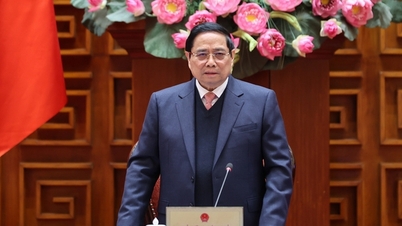
During a discussion at the National Assembly delegation meeting on the morning of February 15th, Prime Minister Pham Minh Chinh emphasized that in order to implement Resolution 57 of the Politburo and remove obstacles in science, technology, and innovation activities, special mechanisms and policies are needed, not just specific ones.
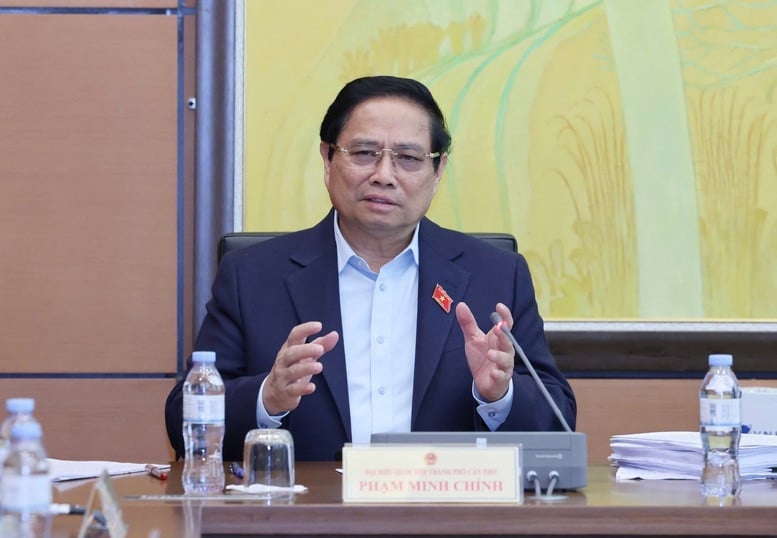
On the morning of February 15th, the National Assembly held group discussions on the draft Resolution of the National Assembly on piloting a number of policies to remove obstacles in science, technology, and innovation activities. Prior to that, the National Assembly convened in the plenary session to hear the presentation and the verification report on this draft Resolution.
According to the Government's submission, the Resolution was drafted and issued to promptly institutionalize Resolution No. 57-NQ/TW of the Politburo on breakthroughs in the development of science, technology, innovation, and national digital transformation. Accordingly, there will be a number of specific mechanisms and policies with outstanding incentives.
During the group discussion, Prime Minister Pham Minh Chinh stated that for the country to develop rapidly and sustainably, it must rely on science, technology, innovation, and digital transformation. This is an objective requirement, a strategic choice, and a top priority.
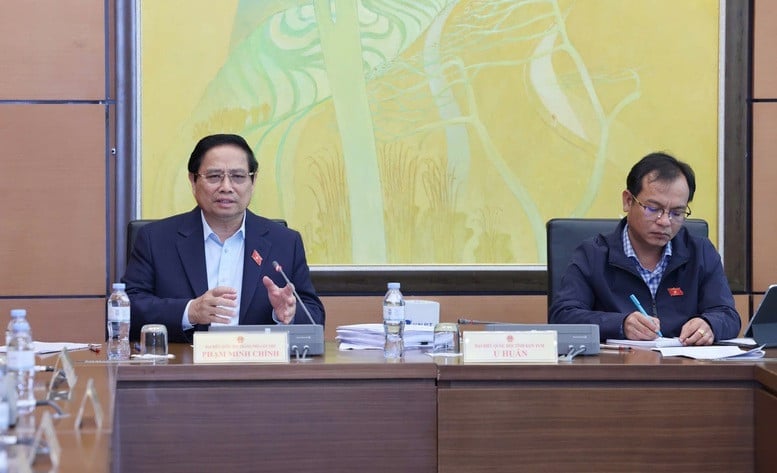
To address related institutional obstacles, the Government has directed a focus on amending a series of laws such as: the State Budget Law, tax laws, the Enterprise Law, the Science and Technology Law, etc.; some laws may be submitted to the National Assembly session this May.
However, in order for Resolution 57 to be implemented immediately, the Government submitted to the National Assembly a draft Resolution on piloting a number of policies to remove obstacles in science, technology, and innovation activities. The draft Resolution focuses on resolving some difficulties and obstacles that are urgently needed to implement Resolution 57, and therefore does not comprehensively cover all issues; consequently, after the issuance of this Resolution, further amendments to other laws are necessary.
Stating that more specific policies are necessary to implement Resolution 57 and truly bring about innovation, the Prime Minister emphasized the need to study and supplement special mechanisms and policies, not just specific ones, which should be at a different level. This specialness is reflected in several points.
First, the Prime Minister mentioned the "special mechanism" in developing science and technology infrastructure, innovation, and digital transformation, because our infrastructure is still very weak. While resources are needed are enormous, in addition to state resources, there must be a mechanism to mobilize public-private partnerships, resources from businesses, society, and the people.
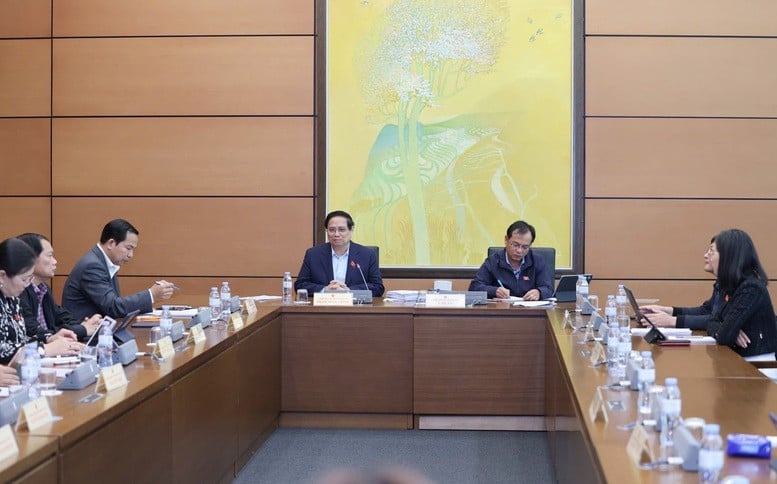
Secondly, a "special mechanism" is needed for the management and governance of science and technology activities, including forms such as: public leadership and private management; public investment and private management; and private investment but using public resources.
"For example, in public investment and private management, we can invest in a state-owned science and technology infrastructure but entrust its management to private entities. That's the special mechanism. Or, public leadership means we design policies, laws, and tools for monitoring and inspection, while the management is left to businesses," the Prime Minister stated.
Thirdly, the Prime Minister also stated that there is a need for "special mechanisms" to enable scientists to commercialize their scientific works; "special mechanisms" in procedures, decentralization, and delegation of authority to provinces, cities, ministries, and sectors; eliminating the "request-and-grant" mechanism, reducing administrative procedures..., and managing and evaluating based on overall effectiveness.
Fourth, regarding the issue of liability exemption for policy makers and developers in case of risks, but lacking an exemption mechanism for implementers, the Prime Minister assessed this as a difficult problem. He noted that implementation remains a weak point, and without a mechanism to protect implementers, it will lead to a fear of responsibility, a tendency to "shift roles," and a reluctance to act due to lack of protection. Therefore, it is necessary to design an additional mechanism for liability exemption for both implementers and policy designers in case of risks.
Fifth, the Prime Minister also mentioned a "special mechanism" for attracting human resources, not only to attract people from outside the state sector to the state sector, but also to develop private enterprises in science and technology, and attract foreign personnel to Vietnam to contribute to promoting science and technology, innovation, and digital transformation. Policies will include taxes, fees, housing, accommodation, visas, and labor contracts...
Based on the aforementioned "special mechanisms," the Prime Minister believes it is necessary to design "special tools" to manage, enhance effectiveness, and ensure transparency and openness, preventing violations, corruption, negative practices, and waste.
The Prime Minister shared that in the process of scientific research, breakthroughs can be successful, but there are also failures; therefore, it is necessary to accept risks and delays in scientific research. The Prime Minister suggested that these failures or delays can be seen as "tuition fees" to gain more knowledge, experience, courage, and wisdom. However, personal motives and self-interest must be eliminated; research must be impartial, transparent, and for the common good of the country.
Source
![[Photo] Prime Minister Pham Minh Chinh receives Lao Minister of Education and Sports Thongsalith Mangnormek](/_next/image?url=https%3A%2F%2Fvphoto.vietnam.vn%2Fthumb%2F1200x675%2Fvietnam%2Fresource%2FIMAGE%2F2025%2F12%2F16%2F1765876834721_dsc-7519-jpg.webp&w=3840&q=75)
![[Photo] Prime Minister Pham Minh Chinh receives the Governor of Tochigi Province (Japan)](/_next/image?url=https%3A%2F%2Fvphoto.vietnam.vn%2Fthumb%2F1200x675%2Fvietnam%2Fresource%2FIMAGE%2F2025%2F12%2F16%2F1765892133176_dsc-8082-6425-jpg.webp&w=3840&q=75)

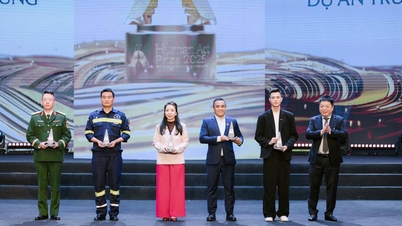
![[Live] 2025 Community Action Awards Gala](/_next/image?url=https%3A%2F%2Fvphoto.vietnam.vn%2Fthumb%2F1200x675%2Fvietnam%2Fresource%2FIMAGE%2F2025%2F12%2F16%2F1765899631650_ndo_tr_z7334013144784-9f9fe10a6d63584c85aff40f2957c250-jpg.webp&w=3840&q=75)

![[Image] Leaked images ahead of the 2025 Community Action Awards gala.](/_next/image?url=https%3A%2F%2Fvphoto.vietnam.vn%2Fthumb%2F1200x675%2Fvietnam%2Fresource%2FIMAGE%2F2025%2F12%2F16%2F1765882828720_ndo_br_thiet-ke-chua-co-ten-45-png.webp&w=3840&q=75)







































































Comment (0)