

More power isn't always better.
The Ministry of Education and Training (MOET) is seeking feedback on a draft Circular promulgating the Regulations for primary, secondary, and high schools, which continues to maintain the Parent-Teacher Association model.
According to the draft, each class and each school will have a Parent-Teacher Association (PTA). The duties, powers, and activities of the PTA will continue to be implemented according to the regulations issued by the Ministry of Education and Training .
The draft also dedicates Chapter VII to regulating the relationship between schools, families, and society, emphasizing the need for regular and close coordination, ensuring democracy, equality, transparency, and accountability.
Notably, compared to the current regulations, the draft expands the scope of parental involvement in school educational activities.
The policy of strengthening cooperation between families and schools has received much debate.
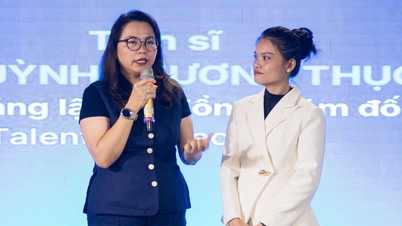
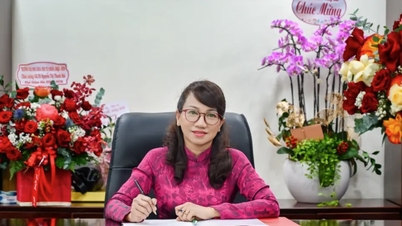
Speaking with a reporter from Vietnam Women's Newspaper, Ms. Tran Thi Huong, Principal of Van Bao Primary School in Ha Dong, Hanoi, stated: "In reality, parents still have the right to participate in the evaluation of students. However, with educational plans and solutions, the role of parents should be limited to monitoring implementation, not participating in the development phase . This is because not all parents are educational professionals capable of comprehensively monitoring and deciding on highly specialized content. Therefore, parents should only offer suggestions and recommendations, not have the right to make decisions on these matters. The decision should rest with the school and the team of educational professionals."
Regarding the content, the parent association participates in providing feedback and monitoring the planning and use of resources to care for and educate students . Ms. Tran Thi Huong stated: "In mobilizing resources to care for education, parents can fully support and contribute voluntarily. However, these are resources contributed by parents, and do not mean that parents have the right to decide or use resources under the school's management. The use of resources within the school must be the responsibility of the school, ensuring transparency and accountability."
Furthermore, when delving into highly specialized issues, clear boundaries are necessary. These matters must be handled by a team of educational professionals. Even those with expertise cannot interfere arbitrarily, because each school has different educational orientations, goals, and implementation conditions, Ms. Huong stated.
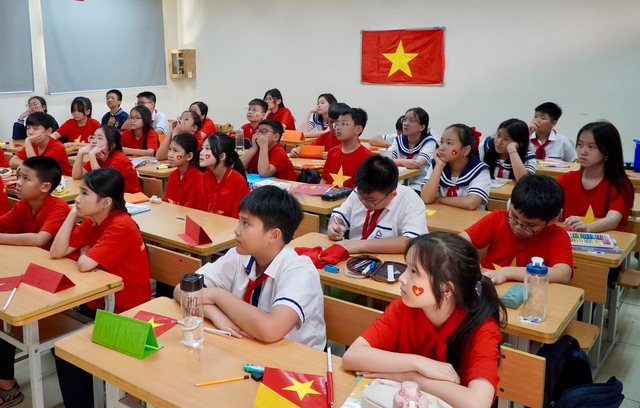
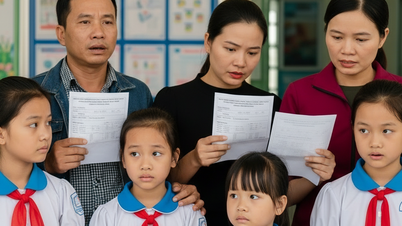
Parental collaboration with the school is essential, but it's crucial to clearly define the line between cooperation and intervention. (Illustrative image)
According to the principal of Van Bao Primary School, when the role and activities of parents are excessively expanded, the autonomy of education risks being narrowed. If this "restriction" persists, it can lead to passivity, as all activities are subject to overlapping supervision and management. In that case, not only will the effectiveness of education be affected, but the professional rights and autonomy of teachers will also gradually erode.
"If parents are too involved in school activities, the question arises as to what direction the school's education will take. Requiring parents to attend classes with their children, or to be deeply involved in training and teaching, is hardly feasible."
"A classroom cannot have 30 students and 30 parents at the same time. When parents become too involved, they inadvertently participate in tasks that should be the responsibility of teachers, putting great pressure on the school. Granting too much power to the parent-teacher association therefore easily leads to problems, affecting educational activities, the school's autonomy, and the rights of the students themselves," emphasized Ms. Tran Thi Huong.
Another drawback is that when soliciting opinions from parents, the voice of reason doesn't always belong to the majority. Therefore, according to Ms. Huong, regardless of the chosen option, parents' opinions should only be considered as a reference. The final decision must rest with the school and educators, and cannot be given to entities that are not directly involved and lack expertise in this field.
Parents need to participate in a constructive and respectful manner.
Sharing the same view, Dr. Vu Thu Huong, an independent education expert , noted that in the past, when parents had less power, excessive fees already existed. If parents are given more power to participate without strict control mechanisms, the risk of excessive fees will increase even more . When parents are both the proposer and the "agreement" party, the line between voluntary and compulsory becomes very thin.
Dr. Thu Huong argues that, in the current context, further promoting the socialization of education is no longer appropriate.
"Socializing education was necessary when the country was facing many difficulties. But now that the State is paying for tuition and meals for students, and people's lives have improved, the question is why continue socializing education in the old way?", Dr. Huong questioned.
From a professional perspective, Dr. Vu Thu Huong believes that if there is a contribution from the family, this amount should be fixed and deposited into the state treasury to ensure transparency and consistency. In that case, the Parent-Teacher Association should focus on providing feedback on educational policies at the school and local levels, rather than interfering deeply in the activities of individual classes.
Furthermore, the draft also allows parents to participate more deeply in experiential activities, extracurricular activities, and career guidance. This content is expected to enrich school life and provide parental support, but according to the expert, it also carries many potential risks.
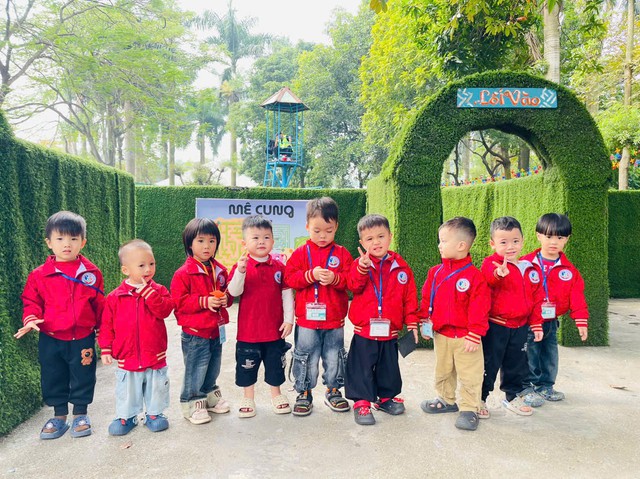
Experiential learning is part of the educational program. Photo: Ngoc Cham
Dr. Thu Huong emphasized that experiential learning is part of the educational program, with different goals and requirements for each age group; simply going on trips, traveling far, or visiting luxurious places does not constitute experiential learning.
"Those without expertise cannot decide on educational content. If parents are allowed to control experiential activities, the curriculum can easily become chaotic," Dr. Thu Huong emphasized.
According to the expert, the deeper problem lies in the distorted perception of some parents regarding educational goals. Despite publicly announced learning objectives, the "achievement-oriented" mentality remains prevalent. Many parents worry about their children "falling behind" even when their grades are already at 7, 8, or 9. "If such parents become deeply involved in the Parent-Teacher Association, the academic pressure on students will only increase," Dr. Huong warned.
She also expressed concern that the school's role in counseling and training parents on child psychology and parenting skills, if not properly organized, could easily become merely a formality, while teachers are already overloaded.
Dr. Vu Thu Huong affirmed that it is necessary to correctly define the role of the Parent-Teacher Association in the new context. Parents can participate in monitoring and providing feedback through appropriate mechanisms such as independent inspections, cross-checking between schools; providing suggestions on facilities, school safety, learning conditions, and boarding school arrangements; and proposing experiential and labor activities suitable for their age group.
"Most importantly, parents need to work together with the school in a constructive spirit, respecting pedagogical expertise, instead of directly interfering with the curriculum," affirmed Dr. Vu Thu Huong.
Source: https://phunuvietnam.vn/trao-them-quyen-phu-huynh-lo-nguy-co-lam-thu-trong-truong-cang-lon-23825121612375421.htm
![[Photo] Prime Minister Pham Minh Chinh receives the Governor of Tochigi Province (Japan)](/_next/image?url=https%3A%2F%2Fvphoto.vietnam.vn%2Fthumb%2F1200x675%2Fvietnam%2Fresource%2FIMAGE%2F2025%2F12%2F16%2F1765892133176_dsc-8082-6425-jpg.webp&w=3840&q=75)

![[Live] 2025 Community Action Awards Gala](/_next/image?url=https%3A%2F%2Fvphoto.vietnam.vn%2Fthumb%2F1200x675%2Fvietnam%2Fresource%2FIMAGE%2F2025%2F12%2F16%2F1765899631650_ndo_tr_z7334013144784-9f9fe10a6d63584c85aff40f2957c250-jpg.webp&w=3840&q=75)
![[Photo] Prime Minister Pham Minh Chinh receives Lao Minister of Education and Sports Thongsalith Mangnormek](/_next/image?url=https%3A%2F%2Fvphoto.vietnam.vn%2Fthumb%2F1200x675%2Fvietnam%2Fresource%2FIMAGE%2F2025%2F12%2F16%2F1765876834721_dsc-7519-jpg.webp&w=3840&q=75)

![[Image] Leaked images ahead of the 2025 Community Action Awards gala.](/_next/image?url=https%3A%2F%2Fvphoto.vietnam.vn%2Fthumb%2F1200x675%2Fvietnam%2Fresource%2FIMAGE%2F2025%2F12%2F16%2F1765882828720_ndo_br_thiet-ke-chua-co-ten-45-png.webp&w=3840&q=75)






























![[Photo] Prime Minister Pham Minh Chinh attends the Vietnam Economic Forum 2025](https://vphoto.vietnam.vn/thumb/402x226/vietnam/resource/IMAGE/2025/12/16/1765893035503_ndo_br_dsc-8043-jpg.webp)














Comment (0)