

The epidemic situation is complicated.
According to Duong Thanh Phuong, Head of the Tan Chau District Agricultural Extension and Service Station, thanks to favorable natural conditions and increasingly improved farming techniques, the total area planted with cassava in the former Tan Chau district has exceeded 18,500 hectares, the largest in the province. Many key varieties, such as KM505 (accounting for 35%) and KM140 (approximately 20%), have good yields and starch content, and are suitable for the local climate and soil conditions. However, these varieties are currently susceptible to cassava mosaic disease and stem canker.
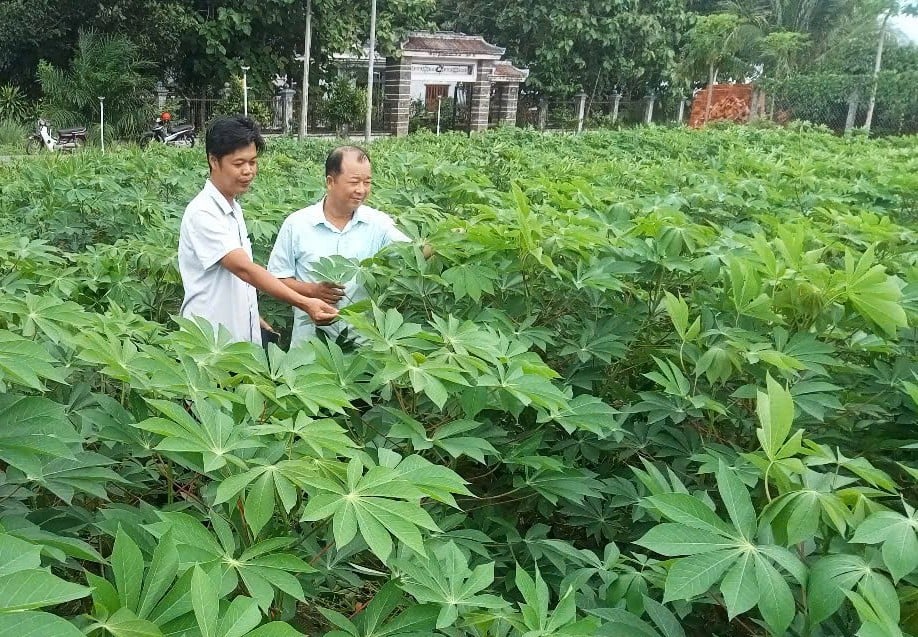
Cassava fields planted with the HL-RS15 variety have fairly good resistance to cassava mosaic disease and tuber rot.
In addition, nearly 33% of the area is planted with the HN1 cassava variety - one of the varieties with very good resistance to cassava mosaic disease and stable yield. However, this variety is very susceptible to root rot (tuber rot), which is extremely dangerous and can cause a loss of 80-100% of the yield.
In addition, many farmers in communes of the former Tan Chau district are also experimenting with growing the HL-S14 cassava variety, while some local and imported varieties are in the testing phase on small areas in certain regions.
HL-RS15: Many outstanding advantages
According to Duong Thanh Phuong, Head of the Tan Chau District Agricultural Extension and Service Station, for the 2025 cassava crop, the Hung Loc Agricultural Experimental Research Center will conduct trials and certify the new cassava variety HL-RS15 in communes of the former Tan Chau district. This variety is highly regarded for its resistance to diseases that often cause significant damage to cassava production.
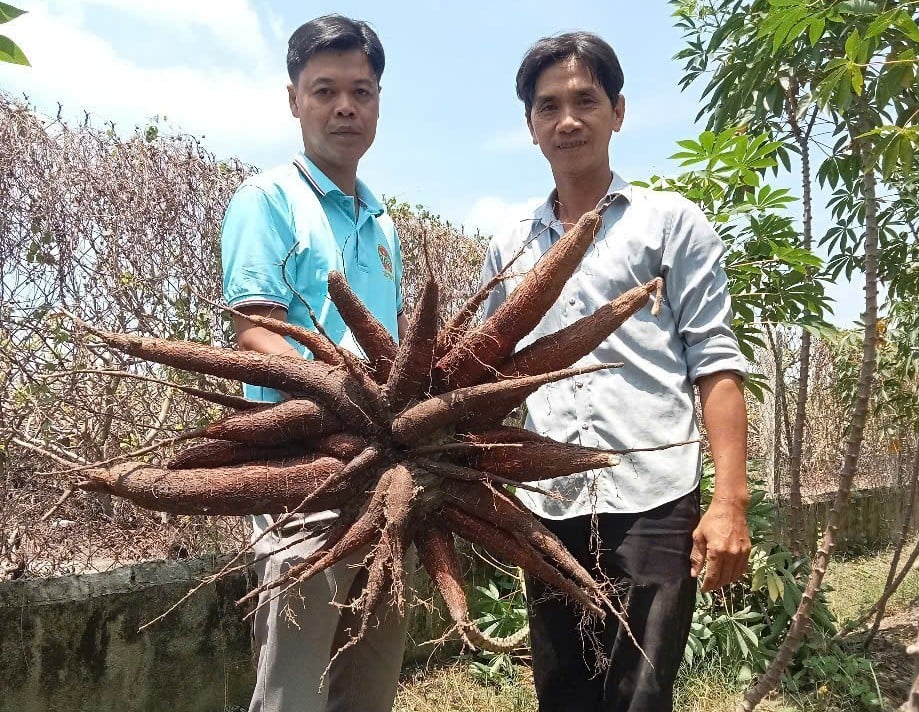
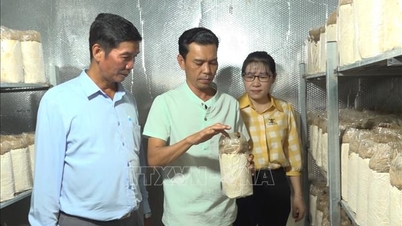
Head of Tan Chau Agricultural Extension and Services Station, Duong Thanh Phuong (left), with a set of tubers of the HL-RS15 cassava variety.
Initial results show that the HL-RS15 variety has a growth period of 8-10 months, a fresh tuber yield of over 30 tons/ha, a starch content of 28-31%, resistance to leaf mosaic disease, good tolerance to witches' broom disease, mealybugs, tuber rot, and is suitable for local farming conditions.
For the 2025 Summer-Autumn crop season, farmers in the area planted 12 hectares of HL-RS15 rice variety. It is expected that by March 2026, the area for seed propagation could reach over 120 hectares, ready to serve mass production in Tan Chau commune and surrounding areas.
"The Tan Chau Regional Agricultural Extension Station is actively coordinating with farmers to expand the planting area, monitor the characteristics of the varieties, and refine the technical procedures for mass transfer in the near future," Mr. Duong Thanh Phuong added.
Introducing the HL-RS15 variety into production not only contributes to diversifying the cassava variety structure but also opens up opportunities to increase economic efficiency, minimize pest and disease risks, ensure yield and quality, and help farmers cultivate with peace of mind.
Nguyen An
Source: https://baolongan.vn/trien-khai-nhan-giong-mi-moi-a203208.html





























































































Comment (0)