

Khánh will never forget that moment. The first parent-teacher meeting at Nà Khêu school, with its flickering oil lamps casting a dim light. As Khánh was talking about the new semester's curriculum, his gaze inadvertently fell on the window, causing him to freeze. Lủ, a thin first-grade girl, was huddled on the porch waiting for her mother. The winter sun shone down on her bare feet, which were bruised, cracked, and covered in dirt.
 |
| Illustration: AI |
At that moment, the image of his father suddenly appeared in Khanh's mind. In the past, Khanh's father was also a teacher in the highlands, wearing old, worn-out black rubber boots, chipped in places from hitting rocks in the forest. Khanh still remembered his father's words when he asked about the boots, seeing that he always wore them.
"Without boots, Dad can't walk the mountain path, son." When Khánh was 12 years old, his father passed away, leaving behind a pair of worn-out boots and a love for teaching. Now, standing before Lủ's bruised feet, Khánh truly understands his father.
The frost arrived early that year, blanketing the entire forest in white. Every morning, Khánh stood at the school gate, counting the students' footsteps. Twenty-eight children. Most were barefoot or wearing makeshift sandals made from cut-up motorcycle tires. Twenty-eight children, twenty-eight different circumstances, but Khánh paid particular attention to Vừ Mí Sơn. Sơn had lost his father at a young age, and his left foot made walking difficult, causing him to limp. Sơn's house was an hour and a half's walk from the school.
Son was very diligent, but one winter morning when Son didn't show up for class, Khanh had a feeling something was wrong with him.
After school, Khanh rushed straight to Son's house, still feeling anxious and worried. Upon arriving, she saw Son's mother bandaging Son's knee, the blood staining the white cloth. Son had fallen on the slippery road, luckily into a shallow ravine. Thankfully, Son survived. Speaking carelessly, if the ravine had been a little deeper…
That night, Khanh couldn't sleep. The image of Son lying at the bottom of the ravine for nearly an hour haunted him. He opened the attendance register and looked at the notes: last month, Lu was bitten by a snake and missed three days of school; Pao fell into the stream; Giang's legs were covered in scratches from thorns; Su had an infection from stepping on a rusty nail. Fifteen out of 28 students had suffered leg injuries in just one semester.
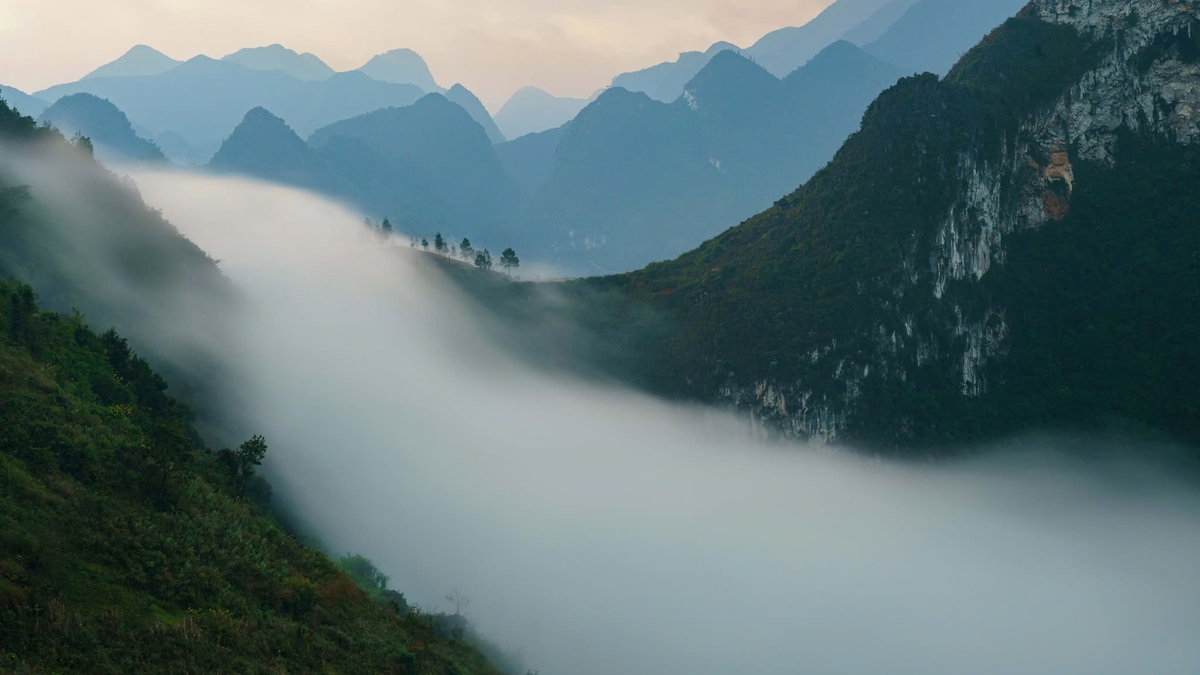
Khanh looked out the window. Frost was beginning to blanket the landscape. Winter in the highlands had just begun, with three long months ahead and dangerous, slippery roads.
For three months, 28 barefoot children trekked the mountains every day. If Sơn nearly lost his life this time, who will it be next time? He remembered his father's words: "Without boots, I can't make it up the mountain road, son." Now he understands that boots aren't just for walking, but for survival, for getting home safely every day.
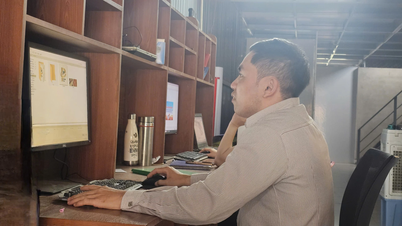
Khanh jumped up and opened his computer. He couldn't sit still any longer. His hands were trembling. Not from the cold, but because he knew that if he didn't do something, another girl would get hurt.
Or worse. He started typing. Word by word, sentence by sentence. About the 28 children. About their bruised, bare feet. About Son—the boy who almost lost his life just for going to school.
Khanh didn't know if anyone would read this, if anyone would care. But he had to try. Because if he did nothing, he wouldn't be able to stand in front of the school gate every morning without trembling as he counted each child leaving.
Khánh started calling for donations. Thanks to friends and selling agricultural products, she finally raised enough money to buy boots for 28 children. On the morning of the boot distribution, Khánh called out each child's name. Páo stepped forward, sat down right in the middle of the dirt yard, and carefully slipped her feet into the pink boots. They fit perfectly.
She looked down at her feet, then up at Khanh, a bright smile spreading across her face. Son walked over and hugged the green boots tightly to her chest. Khanh bent down and slipped Son's tiny feet into the boots. "Now you won't fall anymore when you go to school," Khanh said, trying to hold back tears.
A week later, Khanh stood at the school gate as usual. Twenty-seven pairs of boots in various colors ran up. Only one student was missing. Khanh looked into the distance and saw Son trudging up the slope. Barefoot. Khanh ran down, a mixture of anger and heartbreak in his heart.
Why aren't you wearing your boots? The teacher gave them to you, and you don't appreciate them?
Son stood still, head bowed. Tears fell onto the dusty road.
- I... I already sold it, sir.
"Sell? Why would you sell?" Khanh's voice trembled.
"My mother is very ill, sir. The doctor said we need medicine. I'm selling my boots to buy medicine for her," Son sobbed. "I... I'm sorry, sir!"
Khanh stood frozen. His heart felt like it had stopped beating. It was a desperate situation, a desperate need for money to buy medicine for his mother. Khanh couldn't say anything. He just sat there, watching the 10-year-old boy who had to choose between his own legs and his mother's life. He thought he understood the suffering of these children, but…
That evening, Khanh sat in his room and opened his computer again. This time he wasn't writing about boots anymore. He was writing about Son. About the boy with the limp who walked an hour and a half to school every day.
Regarding the boots that were given and then disappeared. Regarding a choice no one wants to face. He wrote: “She sold the boots to buy medicine for her mother. I was angry, then I cried. Now I just want to help her have both: the boots and her mother's health.”
After posting, Khanh turned off his computer. He didn't dare wait.
The next morning, the phone rang incessantly. Hundreds of messages. People weren't just sending money for boots. They asked for Son's mother's address, the name of her illness, and how much money was needed for treatment. Some were doctors, asking if they could come for a free examination. Others offered to send essential supplies and clothes. In three days, the account received numerous balance change notifications. Khanh sat staring at the numbers, her hands trembling.
A week later, Son's mother was taken to the provincial hospital. Charitable doctors examined her and gave her free medicine. Khanh stayed to take care of her, dozing off on a chair in the hallway. Son sat beside his mother, never leaving her side. When the doctor said Son's mother would be fine, the boy hugged Khanh tightly and sobbed uncontrollably. "Thank you, doctor. Thank you so much!"
Khanh hugged Son.
- It wasn't me, son. Many people helped you.
When Khánh returned to Nà Khêu, he brought three pairs of boots. One pair for Sơn, and two pairs for Sơn's younger sister and brother, who were also studying at the school. The next morning, Khánh stood at the school gate. Twenty-eight children, wearing their boots, ran up. Everyone was there. Sơn ran the fastest, even though he still limped. But this time, he smiled brightly.
Five years have passed. Khanh's "Boots for Children" project has expanded to 12 schools. Nearly 1,000 pairs of boots have been distributed, and dozens of families have received support for medical treatment and home repairs. Khanh has refused all offers to move to the city.
On that Teacher's Day, Sơn, now in 8th grade, stepped up to the podium. In his hands was a carefully wrapped cardboard box. Inside, a pair of simple black rubber boots. Sơn bowed his head:
- Teacher, I sold some firewood and gathered some bamboo shoots from the forest, and it took me five months to save enough money. Your boots are very old now.
Khanh looked down at his worn-out boots, some of which were torn. Then he looked up at Son, the boy from years ago who was now almost as tall as him, his eyes shining brightly.
- My mother is feeling better now, teacher. I told her that I will become a teacher someday, to help other children just like you helped me.
Tears welled up in Khanh's eyes. He remembered his father's boots, the way his father would sit by the fire, mending them over and over again. "Without boots, I can't walk the mountain path, son." Now Khanh understood—they weren't just for protecting his feet, but boots of love, of connection, of hope passed down from generation to generation.
Khanh slipped his feet into his new boots. They fit perfectly. It was clever of Son to have chosen such good boots for his teacher. Outside the window, the fog was thick. Tomorrow morning, 28 pairs of boots would clatter along the road to school. Son would return to his secondary school, while Khanh, with his new boots, would continue walking the path his father had taken. The path of a teacher in the highlands. A long road, but not a lonely one.
MAI THI TRUC
Source: https://baovinhlong.com.vn/van-hoa-giai-tri/tac-gia-tac-pham/202511/truyen-ngan-doi-ung-cua-thay-ed04c44/


























































Comment (0)