

On September 2nd, investment capital continued to flow strongly into the global commodities market. The energy sector led the gains with overwhelming buying pressure.
According to the Vietnam Commodity Exchange (MXV), the two main crude oil commodities reached their highest prices since the beginning of August. Specifically, Brent crude oil prices increased by approximately 1.45%, settling at $69.14 per barrel, while WTI crude oil prices continued to climb to $65.59 per barrel, representing an increase of 2.47%.
According to MXV, energy prices have surged amid the risk of increased global geopolitical tensions. Along with this, the actions of OPEC+ (Organization of Petroleum Exporting Countries and its allies) have also become a focal point for investors. Market speculation is rife that at the meeting scheduled for September 7-9, OPEC+ will maintain current production levels, instead of continuing to increase production as in previous months.
However, on September 3rd, the energy market became the focus when both crude oil prices unexpectedly reversed course and fell by more than 2% amid the risk of OPEC+ increasing production soon.
Expectations that OPEC+ would pause production increases after the peak travel season in the US have been shaken as sources indicate the organization may continue to expand quotas at its meeting on September 7-9. This news immediately caused WTI crude oil prices to fall 2.47% to $63.97 per barrel and Brent crude oil to fall 2.23% to $67.6 per barrel – the lowest levels in a week.
The decline in oil prices continued into September 4th, as prices were pressured by inventory data and concerns about oversupply. According to MXV, both Brent and WTI crude oil prices lost nearly 1%, closing at $66.99/barrel and $63.48/barrel respectively.
A new production increase would mean OPEC+ would begin easing the second round of production cuts, amounting to approximately 1.65 million barrels per day, or about 1.6% of global oil demand, more than a year earlier than expected. This could loosen the global supply-demand balance. This move aims to further regain market share in the oil market for OPEC+, in the face of increasing competition.
However, according to several sources, OPEC+ is still considering various options and has not yet made a final decision on its upcoming production increase plan.
Furthermore, the US economic outlook is not favorable for oil prices in the short term, as both the August services PMI and composite PMI indices declined, with ADP data showing only 54,000 new jobs, nearly half the number from the previous month. Initial jobless claims rose, raising concerns about weakening energy demand.
The biggest pressure comes from the unexpected increase in US crude oil inventories, contrary to previous expectations of a decrease. The latest report from the American Petroleum Institute (API) and the US Energy Information Agency (EIA) shows that commercial reserves increased by more than 2.4 million barrels, as many refineries entered scheduled maintenance, reducing demand for crude oil. This signal overshadowed the supportive impact from falling gasoline inventories, indicating cooling demand.
As of this morning, September 6th, oil prices continued to fall sharply, with Brent crude dropping 2.22% to $65.5 per barrel; while WTI crude lost 2.54%, falling to $61.87 per barrel.
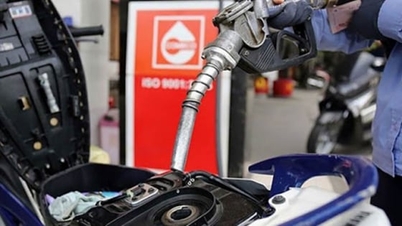
For the week as a whole, according to MarketWatch, WTI crude oil prices fell by approximately 3.2%; the global benchmark Brent crude lost about 2.6%. At this rate, domestic gasoline and diesel prices are forecast to decrease next week.
Source: https://hanoimoi.vn/tuan-di-xuong-cua-gia-dau-715285.html

![[Photo] Prime Minister Pham Minh Chinh receives the Governor of Tochigi Province (Japan)](/_next/image?url=https%3A%2F%2Fvphoto.vietnam.vn%2Fthumb%2F1200x675%2Fvietnam%2Fresource%2FIMAGE%2F2025%2F12%2F16%2F1765892133176_dsc-8082-6425-jpg.webp&w=3840&q=75)
![[Photo] Prime Minister Pham Minh Chinh receives Lao Minister of Education and Sports Thongsalith Mangnormek](/_next/image?url=https%3A%2F%2Fvphoto.vietnam.vn%2Fthumb%2F1200x675%2Fvietnam%2Fresource%2FIMAGE%2F2025%2F12%2F16%2F1765876834721_dsc-7519-jpg.webp&w=3840&q=75)
![[Image] Leaked images ahead of the 2025 Community Action Awards gala.](/_next/image?url=https%3A%2F%2Fvphoto.vietnam.vn%2Fthumb%2F1200x675%2Fvietnam%2Fresource%2FIMAGE%2F2025%2F12%2F16%2F1765882828720_ndo_br_thiet-ke-chua-co-ten-45-png.webp&w=3840&q=75)

![[Live] 2025 Community Action Awards Gala](/_next/image?url=https%3A%2F%2Fvphoto.vietnam.vn%2Fthumb%2F1200x675%2Fvietnam%2Fresource%2FIMAGE%2F2025%2F12%2F16%2F1765899631650_ndo_tr_z7334013144784-9f9fe10a6d63584c85aff40f2957c250-jpg.webp&w=3840&q=75)




















































![[Photo] Prime Minister Pham Minh Chinh attends the Vietnam Economic Forum 2025](https://vphoto.vietnam.vn/thumb/402x226/vietnam/resource/IMAGE/2025/12/16/1765893035503_ndo_br_dsc-8043-jpg.webp)





























Comment (0)