


Finding a job that matches one's abilities, strengths, and expertise, along with a stable income, is the aspiration of many people, especially young workers. In recent years, the strong integration and industrial development in the province have opened up many new job opportunities for workers, but at the same time, it has also posed a challenge for young workers who cannot meet the increasingly stringent requirements of the market.
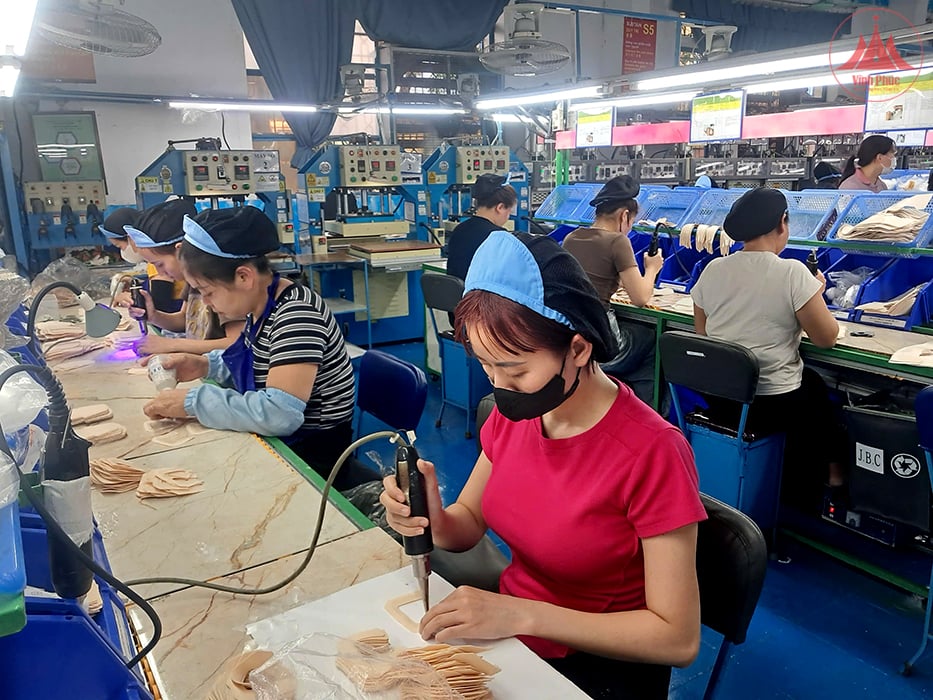
Currently, the province has 17 industrial parks that have been established and granted investment registration certificates; of which, 9 industrial parks and 13 industrial clusters are already in operation. As of May 15, 2025, the province has over 17,000 registered businesses, of which nearly 8,500 are operating regularly, employing over 256,600 workers, including nearly 78,800 workers from other provinces, over 173,500 workers from Vinh Phuc , and over 4,200 foreign workers. Notably, over 144,000 workers are unskilled, accounting for over 56%; while 112,500 workers have received training, accounting for 48.3% of the total workforce.
Currently, the province is continuing to develop 3 industrial parks and is undergoing land clearance for 5 other industrial parks, with a total area of over 3,142.9 hectares. In addition, 24 out of 32 industrial clusters have been established with a total area of 512.56 hectares; an additional 8 industrial clusters with a total area of 177.3 hectares will be added between now and 2030. Currently, 16 out of 32 industrial clusters have been established and assigned to investors for infrastructure construction, of which 11 are operational, attracting more than 510 production and business establishments and creating tens of thousands of new jobs annually.
Among the workers employed in businesses, those from outside the province account for nearly 31% of the total workforce in industrial parks and clusters, an increase of over 3,100 workers compared to 2023. The projected labor demand in industrial parks and clusters is an annual increase of 10,000 to 12,000 people.
However, in reality, some businesses in industrial parks in the province are finding it very difficult to recruit workers, especially those with foreign direct investment (FDI), and those operating in the fields of precision mechanical component manufacturing, electronics, garment manufacturing, footwear, and pharmaceutical production... (many businesses lack 300-500 workers, and some even lack thousands of female workers but cannot recruit them).
At the beginning of 2025, 14 businesses reported to the Provincial People's Committee that they were facing difficulties in recruiting labor, including 3 non-state-owned enterprises, 11 foreign-invested enterprises, 6 electronics enterprises, 3 textile and garment enterprises, 2 packaging manufacturing enterprises, 1 enterprise manufacturing components for automobiles and motorcycles, 1 mechanical engineering enterprise, and 1 food processing enterprise.
The Provincial People's Committee organized a dialogue, inviting businesses facing difficulties and obstacles in labor recruitment to identify the causes and discuss solutions. According to business representatives, the current workforce is both insufficient in number and lacking in professional skills, with quality not being guaranteed due to the large proportion of female workers who are of childbearing age and take many days off each year.
Furthermore, the skill level is limited due to insufficient retraining, and the progress of female workers is slow. Meanwhile, some businesses are unable to retain their employees, even though these workers have received investment in training to improve their skills. Some workers leave their jobs to work at other businesses in the province and neighboring provinces, or even go to the South to seek higher-paying jobs...
Each year, our province has over 10,000 people entering the workforce, including approximately 4,000-5,000 graduates from universities, colleges, and vocational schools (excluding vocational school graduates). However, the employment rate for graduates in their field of study is very low, less than 30%.
Many graduates from social sciences, humanities, and teacher training schools find it difficult to get jobs. Some students majoring in social sciences are hired as teachers or work in public institutions with salaries ranging from 3.5 to 5 million VND per month. However, due to insufficient living expenses, most leave the field to work as factory workers with average salaries of 9 to 11 million VND per month.
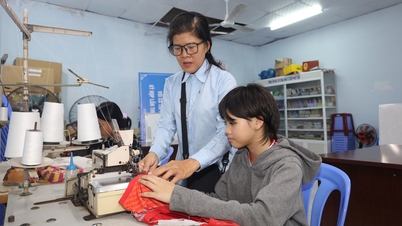
The current difficulty in recruiting workers for businesses in the province is largely due to the lack of technical training among the workforce, which prevents them from meeting job requirements, especially in businesses that demand highly skilled labor such as electronic component manufacturing, precision mechanics, and garment export.
Another reason is that businesses need to employ a large number of female workers, whose incomes are often lower than the average for other professions and even lower than in some neighboring provinces such as Bac Ninh, Bac Giang, Hanoi , Hai Duong, and Hung Yen…
Some business owners are reluctant to employ older female workers who, despite their seniority, are slow, require higher wages, higher social insurance contributions, or whose businesses need to relocate to more distant facilities due to expansion, or who are transferred from one department to another with lower pay, creating difficulties for workers and causing them to quit.
To facilitate employment for young people entering the workforce, over the years, the province has implemented many policies to address labor difficulties for businesses in the province, including supporting vocational training combined with general education, and guiding students after graduating from junior high school.
However, about one-third of junior and senior high school graduates pursue a combination of general education and vocational training. Notably, the Provincial People's Committee recently issued a directive on human resource development in Vinh Phuc province for the period 2025-2030. To meet the job requirements of businesses, in addition to support and encouragement from the State and the province, each individual must independently study to improve their professional qualifications, skills, and industrial work ethic in order to have a chance at stable employment and a decent income.
Text and photos: Hong Nguyen
Source: http://baovinhphuc.com.vn/Multimedia/Images/Id/130016/Viec-lam---co-hoi-va-thach-thuc
























































































Comment (0)