

Which Bac Ha are you referring to?
Upon my first visit to the white plateau of Bac Ha ( Lao Cai province), I was surprised by its very "lowland" name, given that this border region is known by place names derived from the Quan Hoa dialect or the languages of ethnic minorities.
For example, Lao Cai originates from Lao Nhai (in the Quan Hoa dialect, meaning the area of the Ngat Lao people), which was then transliterated by the French as Lao Kay, and is now Lao Cai. Similarly, the mountain town of Sa Pa originates from the Hmong word Sa Pa (sand beach), which was then transliterated by the French as Chapa, and is now Sa Pa.
Or a more famous name, because it is the roof of Indochina, Mount Phan Xi Pang, which was transliterated in the jungle stories of Hoang Ly, Lan Khai, and The Lu as Phan Tay Phan, also originating from the Mandarin Chinese word Hua Xi Pan (Great, towering mountain).
So why the name Bắc Hà, often associated with Thăng Long, the name the Nguyễn dynasty used when they established their capital in Phú Xuân - Huế ? Could it be that Bắc Hà refers to this region located north of Hà Giang (now part of Tuyên Quang province), separated only by the Tây Côn Lĩnh mountain range?
But no, the name Bắc Hà actually originates from the Tay word "Pạc Kha," which the French transliterated as Pakha when creating administrative maps. And the Vietnamese then called Pakha Bắc Hà. However, the etymology of "Pạc Kha" itself holds a story deeply rooted in the lives of the people of this region.
Pac Kha means "100 bundles of thatch grass," referring to the Three Mother and Child Mountain located in the center of Bac Ha town. In the past, this area was home to many bees, and to cross the mountain, people had to braid thatch grass into bundles and burn them to create smoke to drive the bees away. They had to burn about 100 bundles of thatch grass to cross the mountain without being stung.
Why are there so many bees here? This time, the logical sequence of events will lead to Bac Ha's nickname, "The White Plateau," a fascinating feature we'll encounter later in the article, with its vibrant flowers and sweet nectar attracting bees.
So, Bac Ha is Pac Kha, just like Thai Giang Pho (Thai Duong), Hoang Thu Pho (Hoang Tho), Ta Chai, Ta Van Chu, Si Ma Cai… bearing the roots of the land and its indigenous inhabitants. It also brings to mind the coffee shop from the 2000s, located at the corner of the market, proudly displaying its English sign "North Galaxy Cafe"—how cool that was!
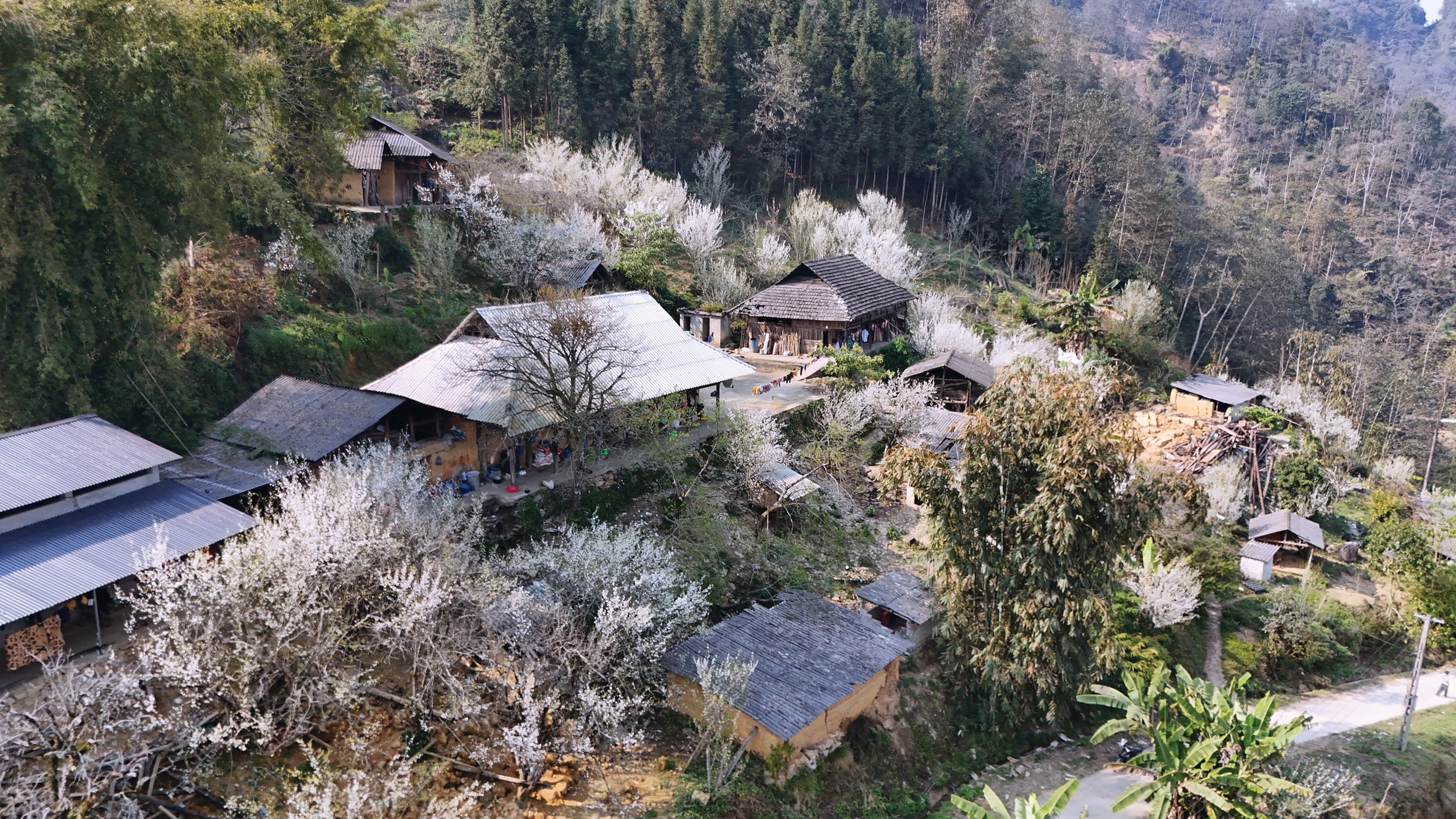
The wind rises, the trees sway, and the plum blossoms fly.
Now, let's return to the name "White Plateau," which creates the dreamy, ethereal springtime atmosphere of Bac Ha. It can be said that both Sapa and Bac Ha possess a charming, delicate beauty, like the sisters Thuy Kieu and Thuy Van, "each with her own unique and perfect beauty."
However, just like the fate of the two sisters of the Vuong family, Thuy Kieu is more well-known than Thuy Van, because people usually prefer to visit Sa Pa rather than Bac Ha. This stems from the time when the French chose Sa Pa as a resort destination, and it has since become a symbol of tourism .
Although it's unfortunate that it plays a supporting role like Thuy Van, this is actually a good thing, because Bac Ha still retains its pristine beauty, unspoiled by the huge influx of tourists. As a result, this less-popular place has become a haven, showcasing unique local qualities, untouched by commercialization or excessive tourism assimilation.
The beauty of Bac Ha is at its most radiant in spring, when the rows of fir trees have just changed from dark green to light green, forming a border for the undulating mountains and forests. Everywhere you look, you'll see the pristine white of plum blossoms in the gardens, on the hills, in the valleys, and along the paths leading to the villages.
The three-flowered plum tree, originally a specialty of Bac Ha, with its clusters of three flowers, and the Ta Van plum, hidden among gnarled, moss-covered branches and twigs, mottled with ferns or parasitic plants, suddenly burst into bloom one day, responding to the call of spring.
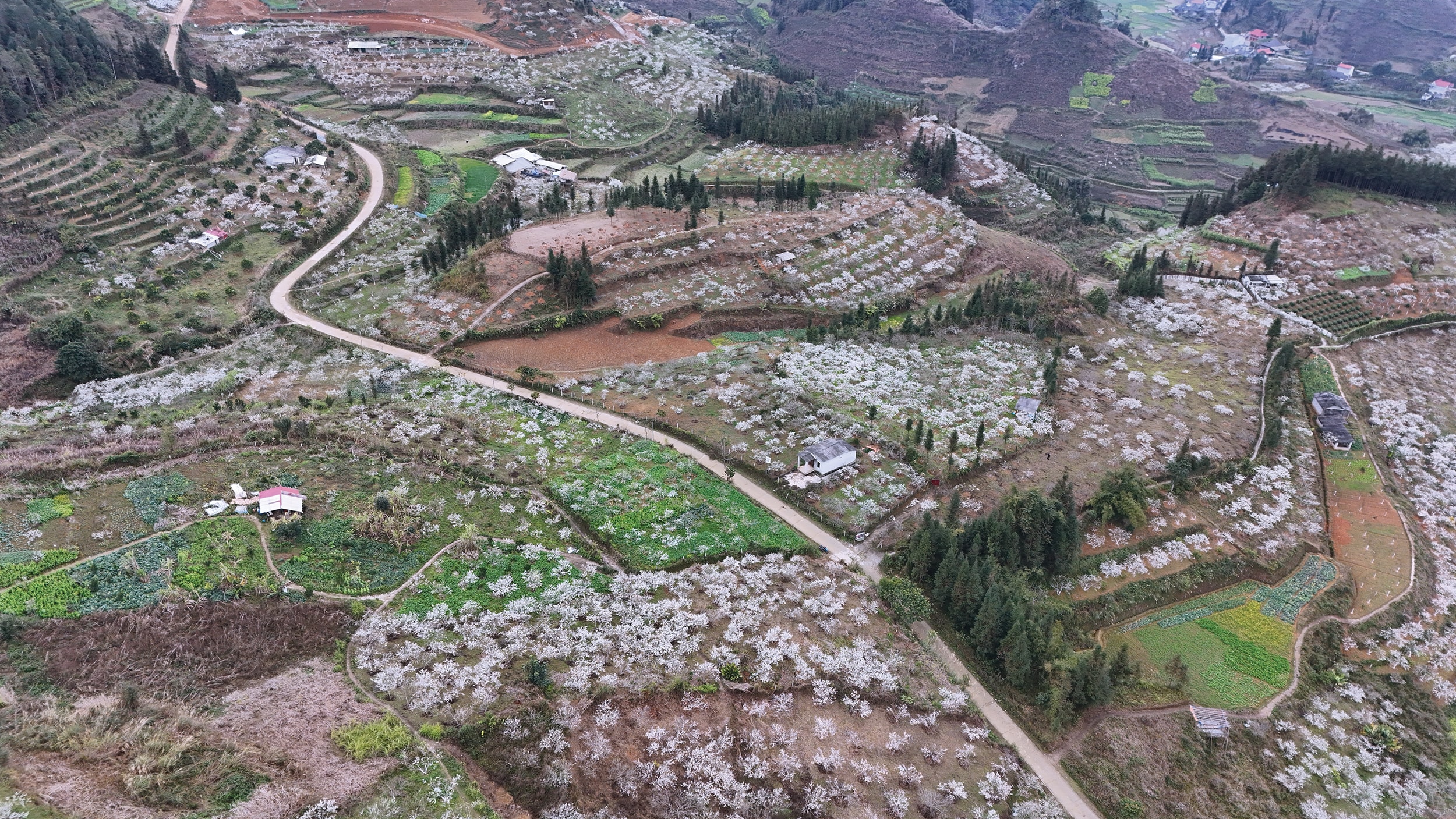
The entire Bắc Hà region then transformed into a "white snow" landscape, thus earning the nickname "White Plateau." Everywhere was enveloped in a pristine white, emitting a sweet and slightly sour fragrance, clinging to the air and perfuming the hair and skin of travelers.
It's difficult to describe the beauty of the white clouds formed by millions of plum blossoms in Lung Phinh, Can Cau, Seng Sui, Ta Van Chu, and Thai Giang Pho. Under a clear, sapphire-blue sky, generously bathed in warm, sweet golden sunlight, the white blossoms seem to transform into crystal, allowing the light to pass through and become shimmering and ethereal.
Human behavior beneath those clouds is also unpredictable. When strolling leisurely, one feels as if they have transformed into an immortal, each step causing a thousand white butterflies to fly, leaving them wondering if they are Zhuang Zhou.
Then, when my legs grew weary, I sat down, my shoulder resting against a plum branch, and saw the snow falling, a dazzling white, gently covering my shoulders. Suddenly, I imagined myself as a heroic traveler discussing swordsmanship on the pristine, snow-covered peak of Mount Hua. Sitting beneath those dense plum blossoms, drinking wine, what a truly delightful experience!
With a cup of wine in hand and eyes captivated by the flowers, a gentle breeze stirs them, causing them to flutter and fall like rain, landing on the head, neck, and all over the body, even into the cup of wine to transform into the nectar of spring. Taking a sip of this "flower-falling" wine, one feels as if they have transcended the mundane world and are in a state of blissful euphoria.
And then, when slightly tipsy, without any embarrassment, they would lie down on the green grass to gaze at the world from below. The gentle spring breeze further enhanced the blissful leisurely scene, letting the plum blossoms caress their faces until they were completely covered, like the "flower burial" scene in Dream of the Red Chamber.
With a cup of wine in hand and eyes captivated by the flowers, a gentle breeze stirs them, causing them to flutter and fall like rain, landing on the head, neck, and all over the body, even into the cup of wine to transform into the nectar of spring. Taking a sip of this "flower-falling" wine, one feels as if they have transcended the mundane world and are in a state of blissful euphoria.
The plum orchards of Bac Ha possess an enchanting beauty that captivates visitors, making them forget their way home. A serene, snow-covered landscape, adorned with rows of blooming yellow mustard flowers or clumps of newly blossoming wild peach trees, along with a traditional house with a dark brown roof, will forever remain a fairytale land for visitors from afar.
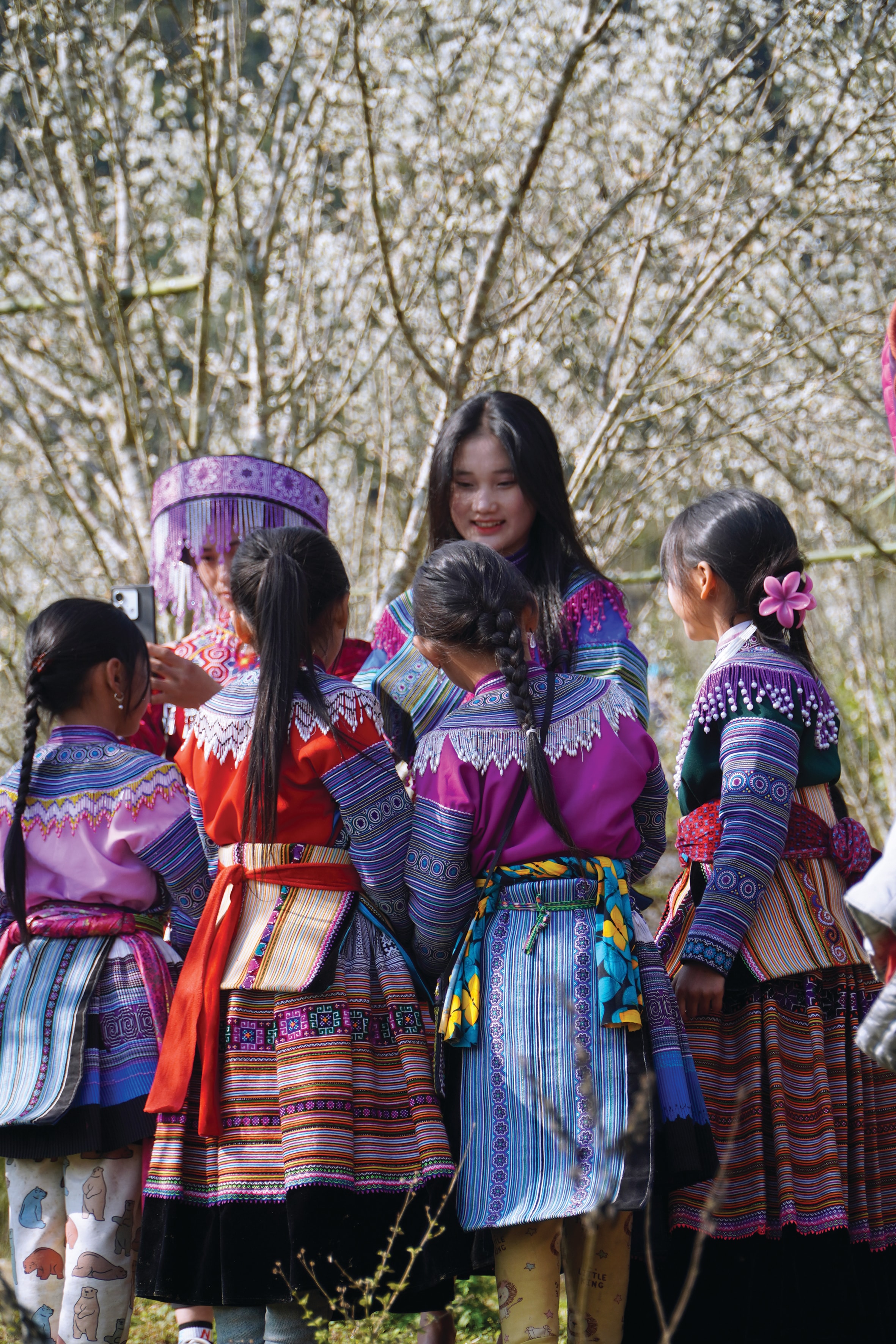
Drunk on wine, joyful on horseback.
Following the path of plum blossoms, I suddenly found myself standing in Ban Pho. Don't laugh at the name Ban Pho, half village, half town, because Ban Pho is a realm of intoxication. Springtime here is filled with the captivating aroma of fermented corn wine, the renowned Ban Pho corn wine.
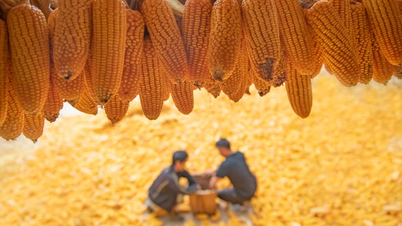
The golden corn kernels harvested in late autumn, dried until sufficiently mature in the sun, are used to make rice wine with spring water brought from the forest. Through this transformation in the wooden pot, fueled by forest firewood, the corn and spring water become a joyful drink that brings happiness to the Hmong people throughout all four seasons and eight festivals.
Even the piping hot wine doesn't shock the palate with its subtle sweetness and herbal notes from the yeast. Smooth and intoxicating, the blood rushes through the veins, yet the steps feel light, as if walking on clouds and wind.
No wonder, on the way to the village, everyone was staggering and unsteady. When asked if they had a big Tet celebration, they would just smile and say, "Oh, why don't you come to my house for a drink?" The girls of Ban Pho village didn't need makeup; their faces were always rosy like the rising sun, and they cheerfully carried 20-liter jugs to the market to sell, so everyone could get drunk together.
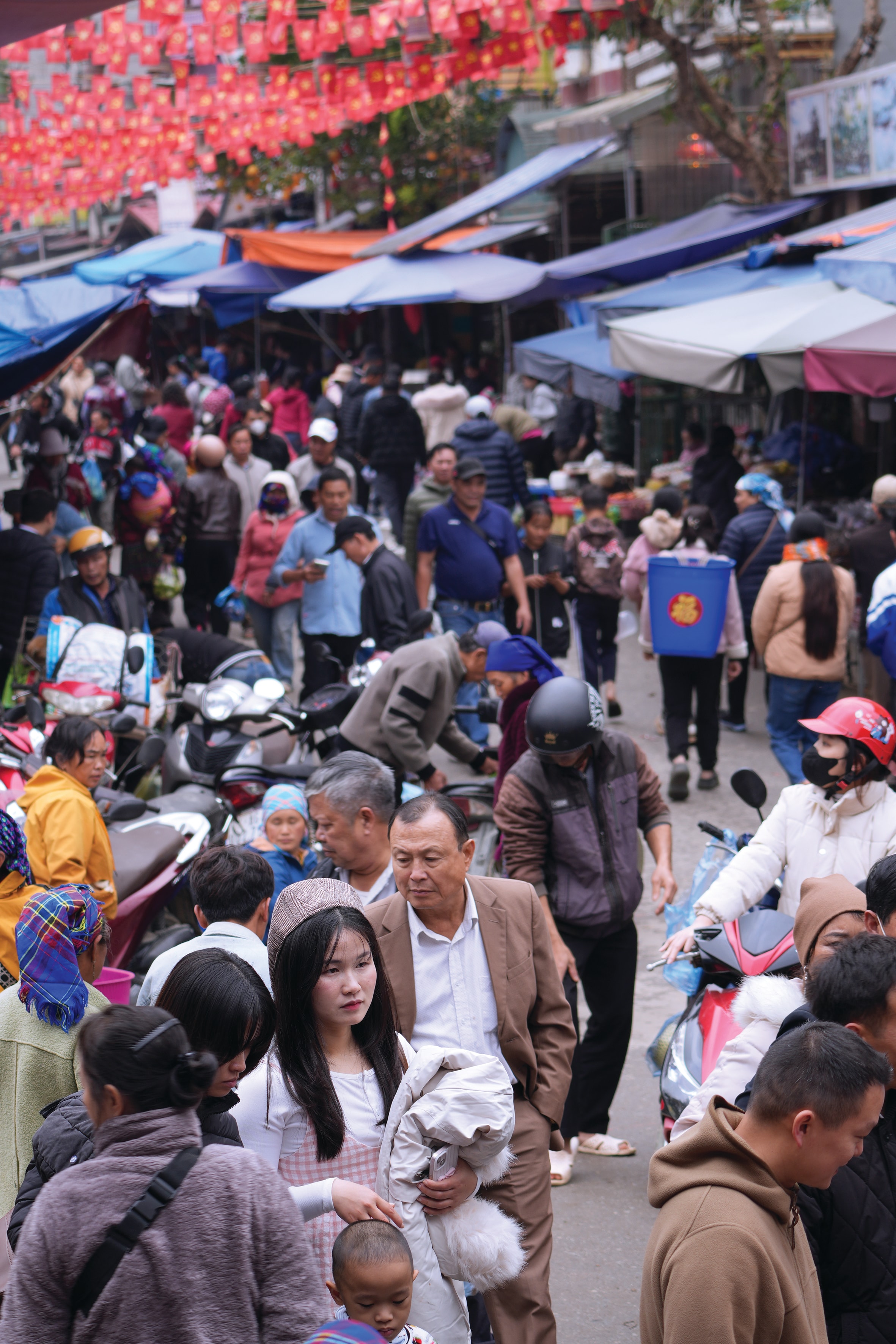
Ban Pho corn wine is a strategic item at the Bac Ha market. Rows of women in brightly colored floral skirts and rows of men in indigo-dyed clothes sit in front of jugs of wine, waving bowls full of the clear liquor to invite guests to taste. If no one else is around, they drink it themselves, enjoying it alone, letting it ferment on its own.
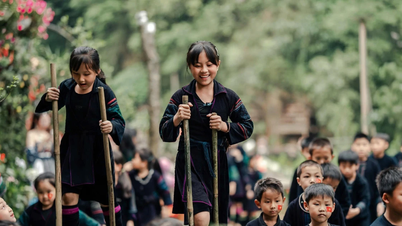
However, this is a mountainous region; as soon as the sun sets, the chill of the mountains and forests seeps into your body. Therefore, you have to drink alcohol to ward off the cold, so that you have enough energy to dance the khene (a type of bamboo flute), play the mouth harp, and throw the ball into the hole.
Under the influence of alcohol, women in floral dresses and indigo blouses would drift aimlessly through plum orchards or head to the stadium to watch horse races. In recent years, horse racing among the H'mong people in Bac Ha has flourished, becoming a unique feature of the White Plateau.
Previously, the traditional Bac Ha horse race only took place in June each year and had become a major cultural event, attracting a large number of tourists. From November 2025, the commune government has implemented a series of weekly horse races, linked to the activities of the Bac Ha Horse Club.
The Hmong horses are small in stature, not tall or large, but possess remarkable endurance. They can climb mountains, cross streams, ascend high peaks, and descend into deep valleys without tiring. Horses are as integral to the lives of the Hmong people in Bac Ha as motorcycles or cars are in the lowlands, serving both as transportation and a means of agricultural work, especially in remote villages with difficult roads.
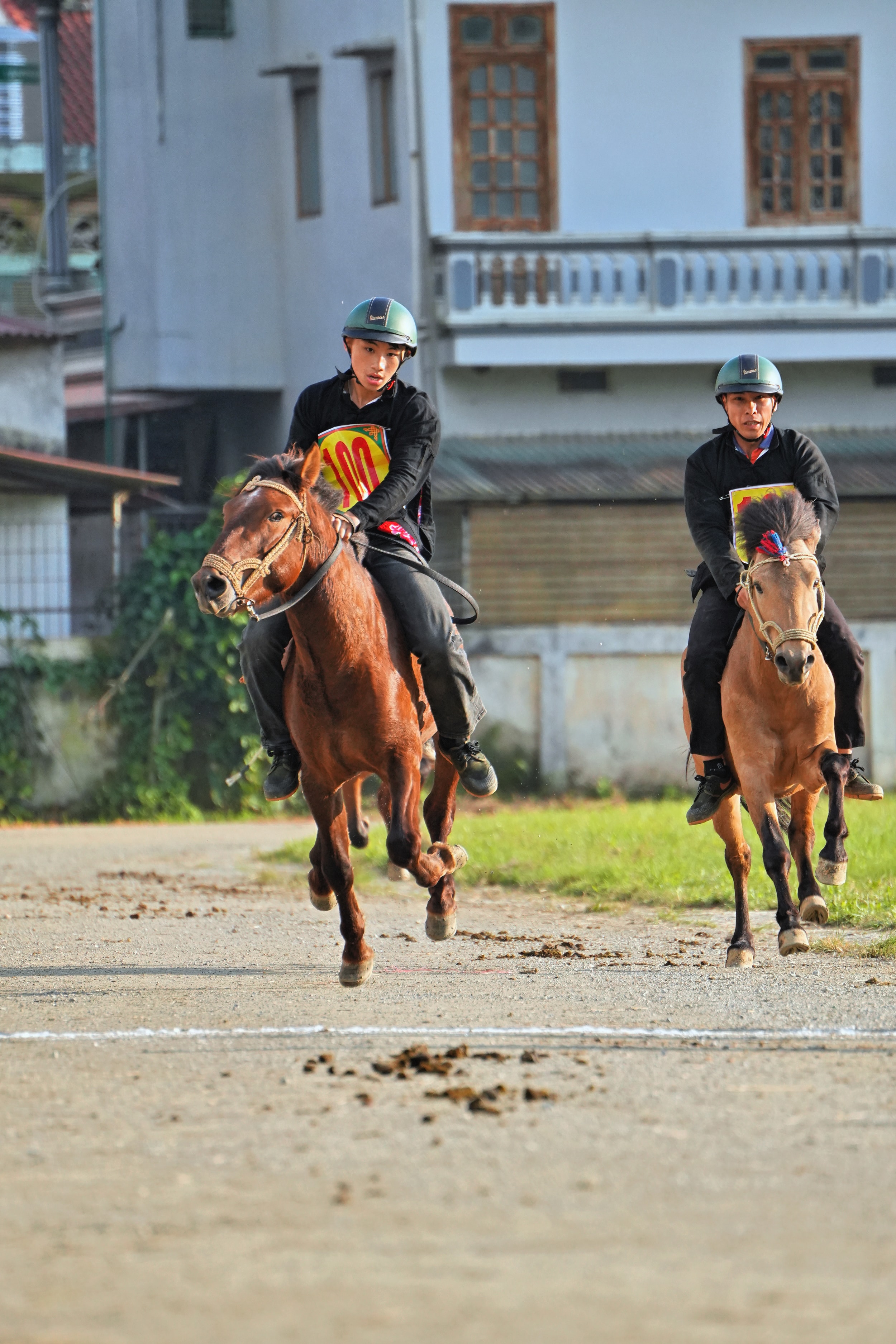
At the Bac Ha and Can Cau markets, horses are sold for all purposes, and now for racing. The defining feature of the race is the 1,900-meter distance, a long course that demands endurance from the highland horses and sound tactical planning from the jockeys.
Horse racing is incredibly fun. The simple grandstands, furnished only with concrete benches for seating, are always filled with cheers and shouts. On the racetrack, the strong horses are ready to start. When the signal is given, all four jockeys gallop away to the enthusiastic applause of the spectators.
Therefore, during this Lunar New Year of the Horse, if you travel to Bac Ha, don't miss the horse races after filling your eyes with the dreamy scenery of the plum blossom forest, softening your lips with bowls of corn wine to celebrate the New Year, and being carried away by the melodies of the mouth harp: "Last night, by the glowing fire, I stayed up all night, playing the mouth harp for my beloved."
Source: https://congluan.vn/vien-du-trong-xuan-mong-bac-ha-10329457.html
![[Photo] General Secretary and President To Lam receives Amazon's Senior Vice President David Zapolsky](https://vphoto.vietnam.vn/thumb/1200x675/vietnam/resource/IMAGE/2026/05/22/1779466547770_a1-bnd-3513-6601-jpg.webp)















































































Comment (0)