

Located on a mountain with a cool climate year-round, Bac Ha has become the homeland of temperate vegetables. Since ancient times, various types of upland vegetables such as cabbage, tomatoes, pumpkins, and cucumbers have been brought here by the people who migrated to establish their villages. Later, chayote, cabbage, kohlrabi, carrots, lettuce, celery, and more recently, kale, imported from Europe and America, have joined the "community" of temperate vegetables and fruits in Bac Ha.
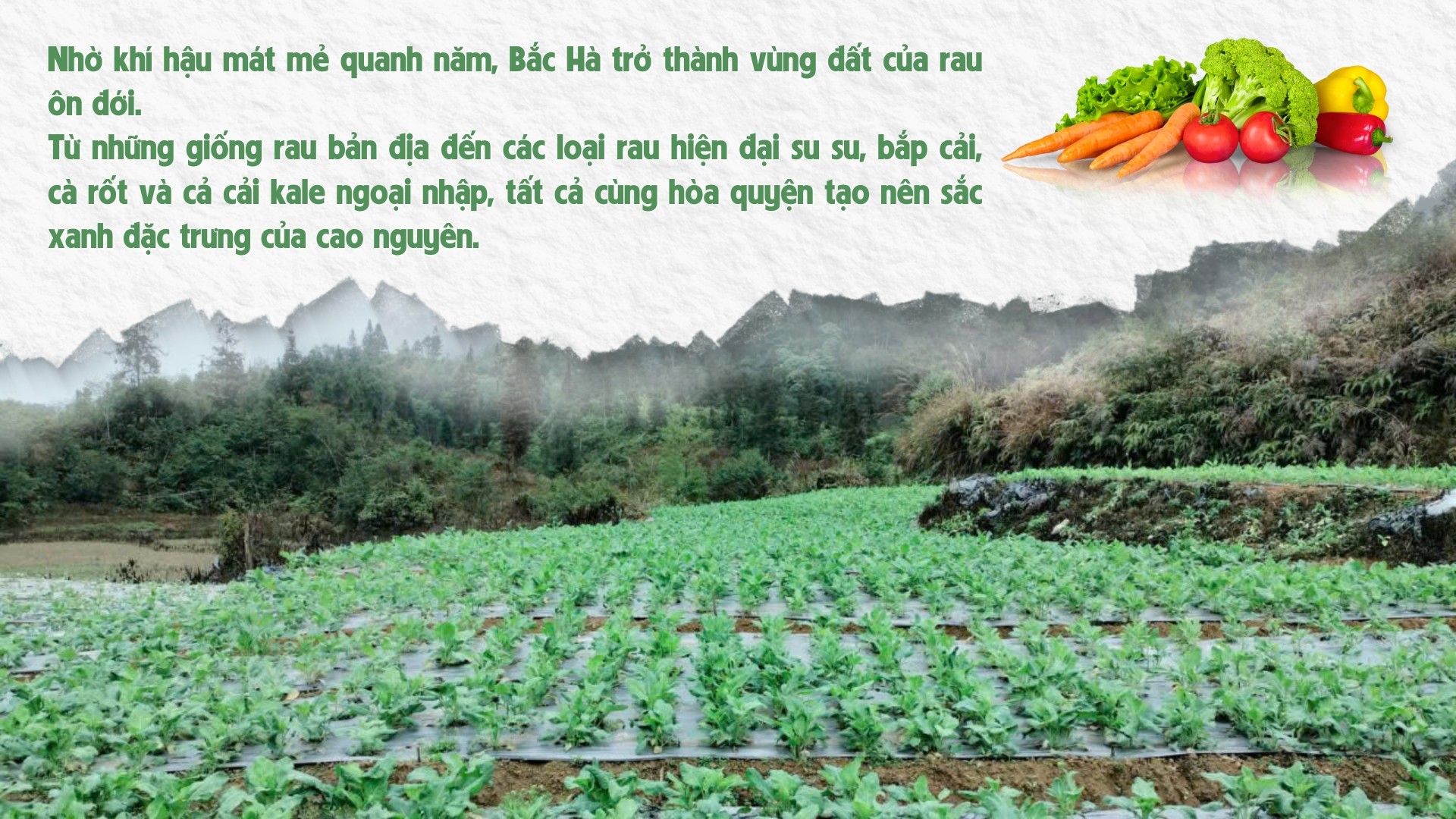
Despite the abundance of vegetables, obtaining a bunch of them or a pumpkin is not easy. The arc-shaped mountain ranges on the plateau, facing north, mean that winter, from October to March, is often harsh with cold winds. During those days, there isn't a single drop of rain, but the clouds descend, soaking the plants and trees. From April to September, the rainy season begins with thunderstorms that threaten to topple everything on the ground. Along with the tornadoes, hailstones, some the size of a fingertip, others the size of a large beetroot, fall in torrents. Fifteen days later, the rains continue, with fewer small drops and fewer large ones, working alongside generations of farmers to cultivate and gradually shape the land. As the earth erodes, rock sprouts awaken and grow, gradually becoming countless stone horse heads and buffalo backs that occupy the fields. The soil of Bac Ha is poor in minerals and porous, and situated on a limestone bed with countless small pits and large caves, so rainwater seeps into the rock itself.
Living amidst the harshness of the sky and earth, plants must scavenge every bit of fertile soil to survive. The people of Bac Ha are as diligent as the plants, gathering everything they can to nourish them, because the plants nourish them. In the baskets of Mong women, there is never a missing pair of tongs made from folded bamboo pieces; if they encounter a piece of animal dung, they must pick it up and put it in the basket, then cover it with a piece of plastic. Forged in the harshness of nature and nurtured by the diligent hands of the people, Bac Ha vegetables and fruits still stand out in specialty stalls. Not only are they a regular part of meals, but Bac Ha vegetables are also a source of income for the ethnic people. Carrying baskets of vegetables to town means returning with enough fish sauce, salt, MSG, and a piece of meat to make the meal fresher. Carrying vegetables to a few markets provides enough new clothes and school supplies for the children.
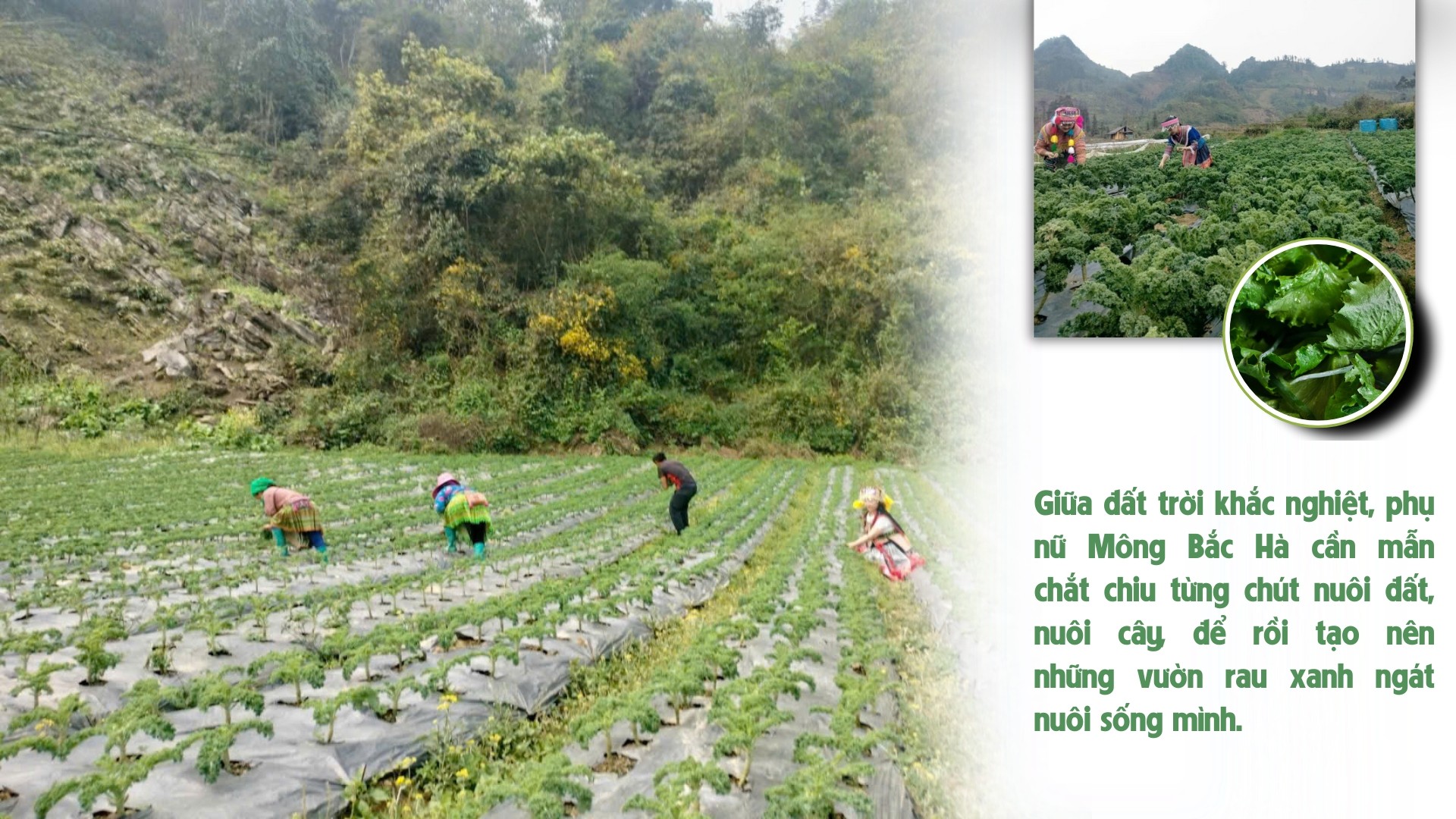
Understanding the people's desire to "overcome all obstacles and develop their potential into strengths to reduce poverty," the Party and State have implemented many policies and investments to help the people of Bac Ha's ethnic groups realize this aspiration. In recent years, with improved transportation and tourism development, and the desire of people from the lowlands, especially those from the plains, to enjoy temperate vegetables (known as off-season vegetables) during the summer months, Bac Ha's vegetable gardens have expanded significantly.
In the temperate vegetable "lineup" of Bac Ha, the most numerous are the cabbage family. The "head of the family" is the Chinese cabbage, with dark green leaves, long, round stems with prominent purple veins, known as "cat cabbage," and brought there by the Hmong people during their migration. This cabbage can live for five or six months, its leaves gradually thinned until it blooms with yellow flowers all over the field, at which point it's considered mature. Most cat cabbage is sown year-round in the fields, requiring no watering, and grows intercropped with other plants. With limited land and abundant rocks, a few baskets of soil mixed with fertilizer are poured into rocky crevices, and after a few dozen days, a dozen bundles of leaves can be harvested for the market. Cat cabbage has become a vegetable deeply connected to the highlanders and Bac Ha people. Besides being eaten fresh daily, it's also a stored vegetable, used for pickling, drying, and preservation. Easy to grow, use, and easy to preserve, it's a widely cultivated vegetable.
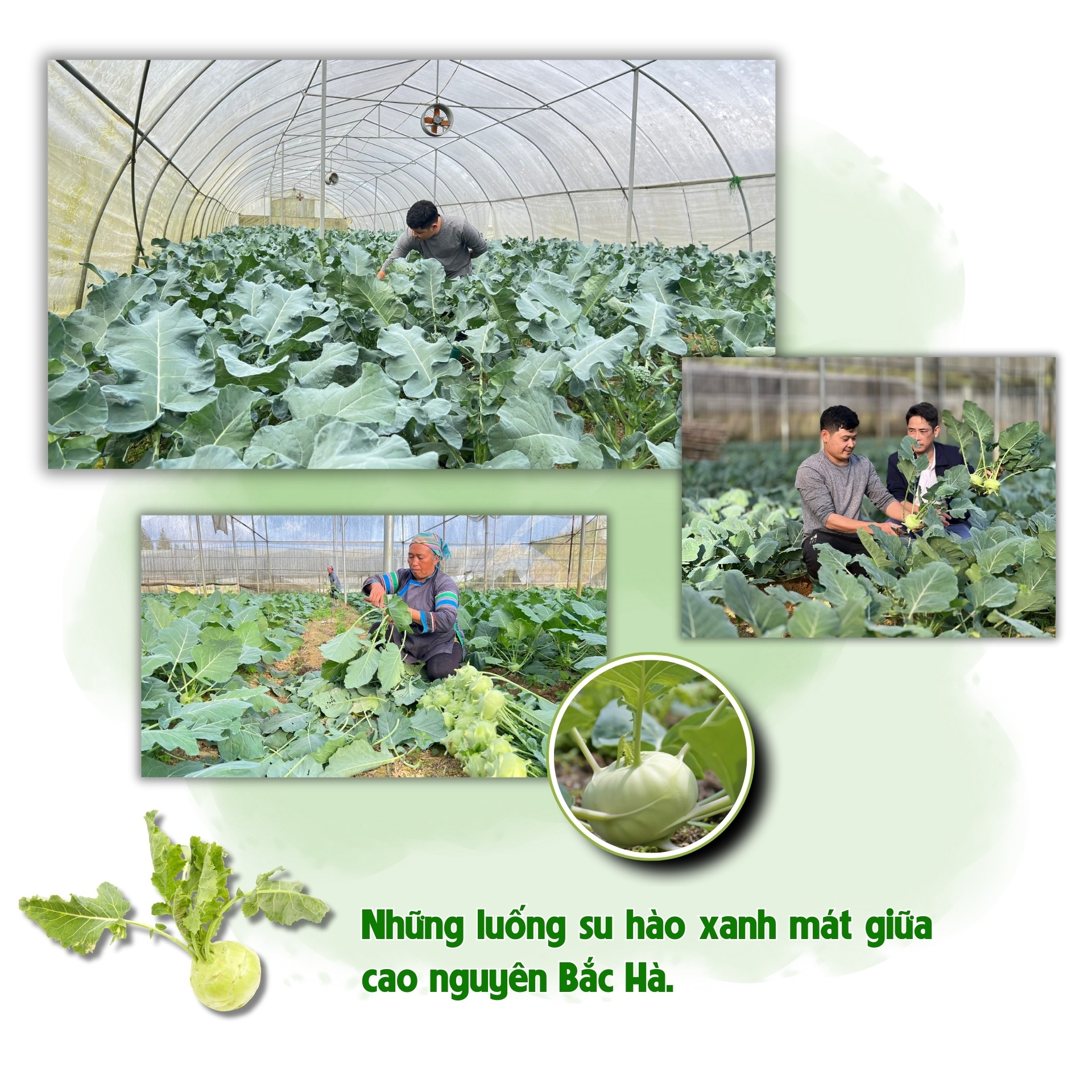
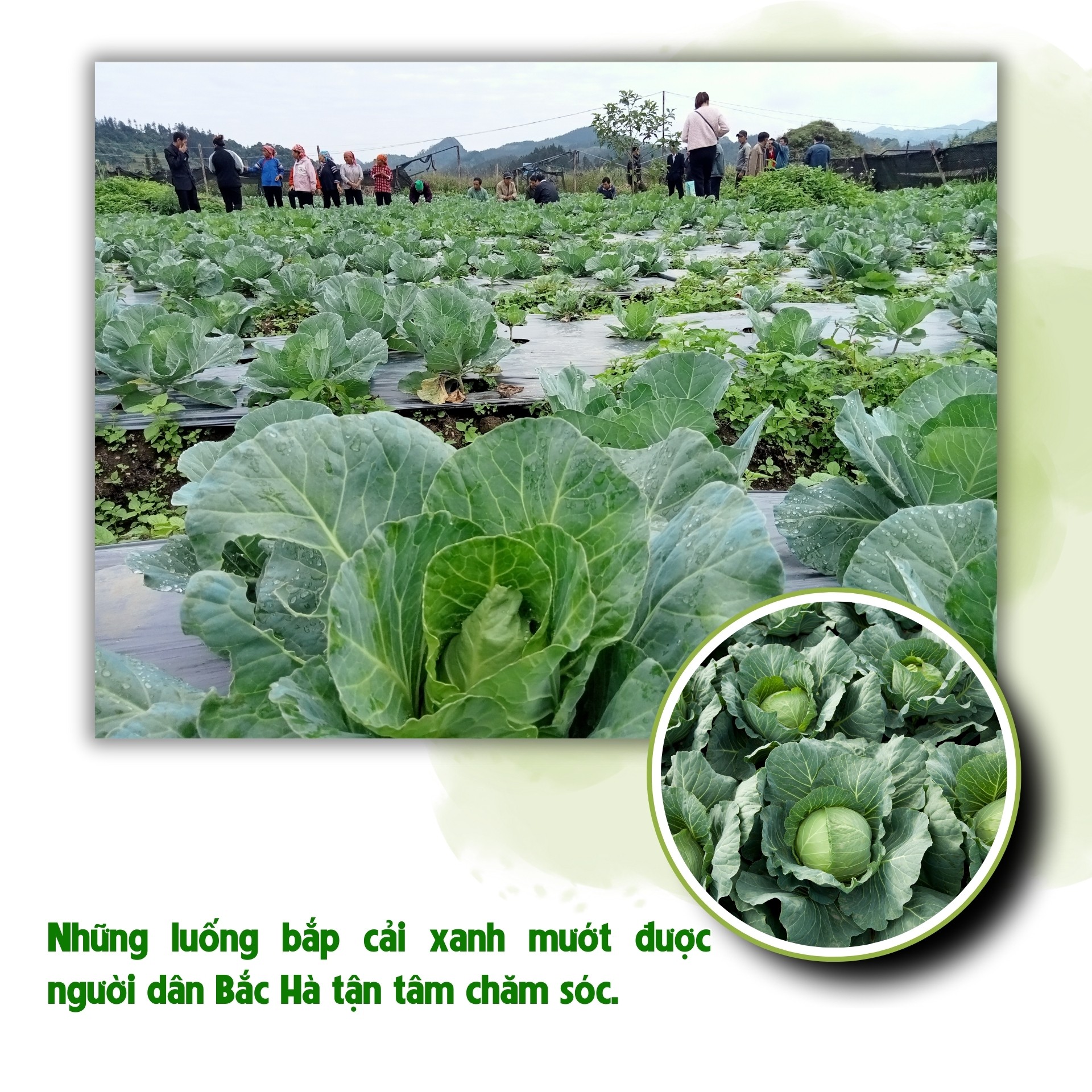
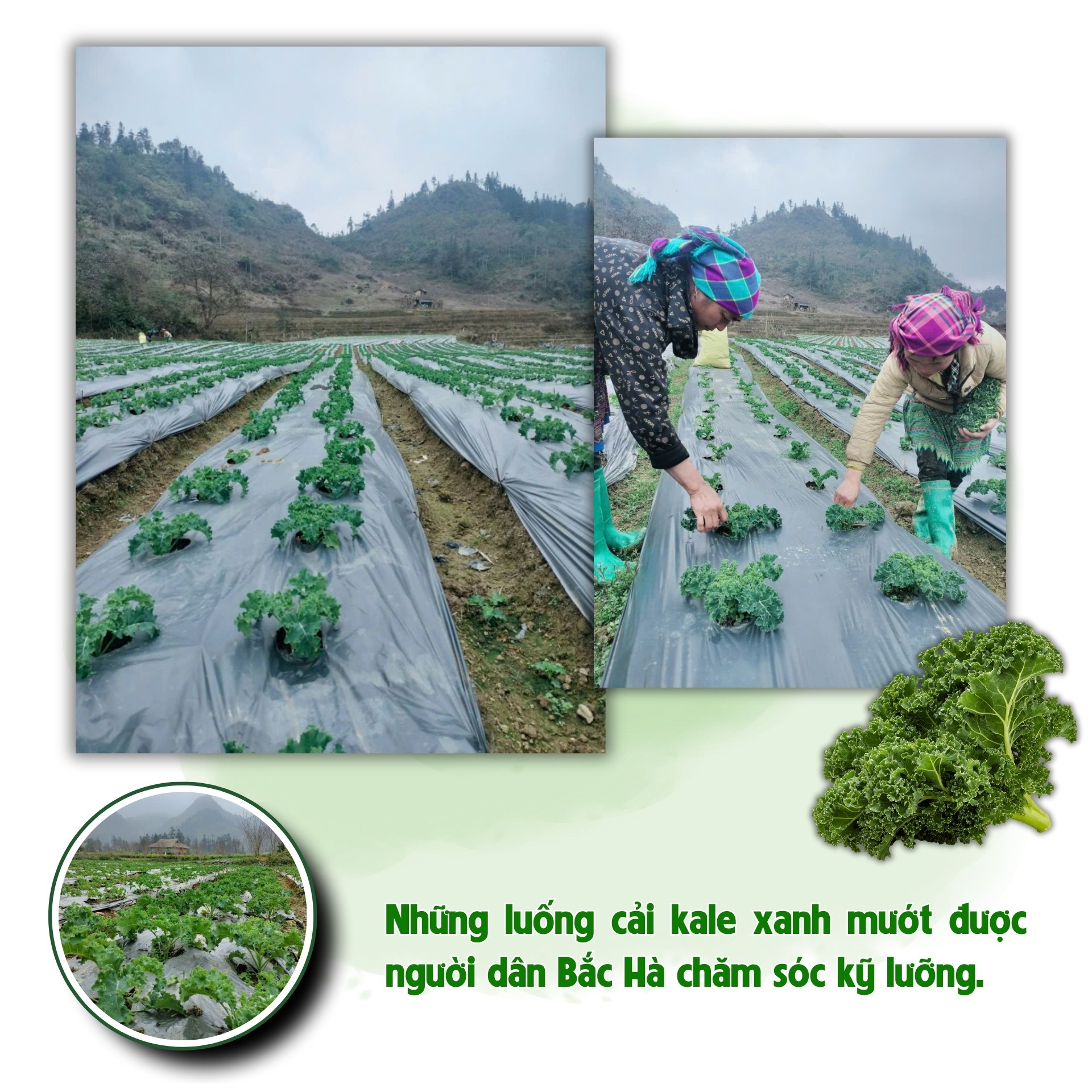
Although considered a foreigner, since acquiring Vietnamese citizenship, there is a type of cabbage with a Vietnamese name: cabbage. Unlike its "male" counterpart, the long-stemmed, purple-veined Chinese cabbage, the "female" cabbage has short, tightly packed leaves, resulting in a round, almost ball-like shape, weighing at least one kilogram.
Purple cabbage, with its high nutritional content, has become popular among growers in Bac Ha in recent years. Cauliflower, also belonging to the cabbage family, has only been in Bac Ha for a few decades. It's not the leaves, but the cauliflower florets that make up the dinner table. Along with its high nutritional value, cauliflower also helps treat certain illnesses, so its price is not cheap.
For the past seven or eight years, kale has been imported from abroad to Vietnam and quickly became popular in the Bac Ha plateau. Considered a premium vegetable because of its delicious taste and significantly higher nutritional content compared to cauliflower, it contributes to the prevention and treatment of many diseases. Kale requires plenty of sunlight, mild weather, loose, moist soil, and ample fertilizer. It is also susceptible to pests and diseases, so it needs careful cultivation. Therefore, kale commands the highest price among vegetables. Currently, kale is processed into dried, canned products for long-distance shipping.
Suitable for the climate and soil of Bac Ha, and able to be grown two or three times a year, various types of cabbage have become the highest-yielding vegetables. Along with the four types mentioned above, there are nearly a dozen other types of cabbage such as Chinese cabbage, chrysanthemum greens, sweet cabbage, etc. Each plant, despite its name, possesses its own unique qualities and characteristics.
There are many other types of plants such as peas, gourds, pumpkins, chayote... traditional plants that have been introduced, enriching the "kingdom" of vegetables in Bac Ha.
Elevating the status of a specialty product to a premium level is no simple feat; it's a mental struggle for each grower. For a long time, the habit of using inorganic fertilizers, spraying chemical pesticides to control pests and diseases, and stimulating growth to increase yields excessively has become ingrained. These practices have become counterproductive, an invisible knife dangerous to consumer health. A bunch of long beans bought from the market, stored in the refrigerator overnight, will visibly enlarge. There have even been cases of vegetable soup turning an unusual green color after cooking… The overuse of harmful chemicals is rampant everywhere, including in the mountainous region of Bắc Hà.
Faced with the threat to consumer health and the impact on farmers' income, the Party Committee and government of Bac Ha directed specialized agencies to guide farmers in maintaining the status of their temperate specialty vegetables and fruits. Although agricultural extension engineers were sometimes locals, the inertia of outdated farming practices deeply ingrained in the minds of the highlanders could not be changed overnight. Along with holding village meetings, posting advertisements at community centers, and distributing leaflets,
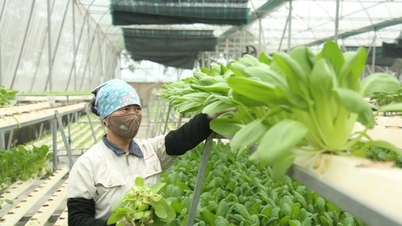
Holding and reading the leaflets distributed by agricultural extension officers, the women of Thai Giang Pho said to each other: "We don't fully understand the meaning of the name VietGAP, which looks like a foreign word, but we know what we need to do for the vegetables listed here. Those things are: choosing good vegetable seeds, not spraying pesticides to make the plants grow faster, and fertilizing with well-rotted manure or bio-fertilizer. If there are pests or diseases, we must ask the agricultural extension officers what kind of pesticide to buy and where to buy it; we shouldn't buy pesticides with foreign labels sold in the market. When harvesting, we shouldn't use preservatives to keep the vegetables fresh. We should only harvest the vegetables when they are mature enough. If they are too young, it's a waste, and if they are too old, no one will buy them." The change in thinking and doing of people in the highlands mainly comes from looking at reality. Therefore, when the families of officials and Party members in the village and commune achieve results, the people will naturally follow suit.
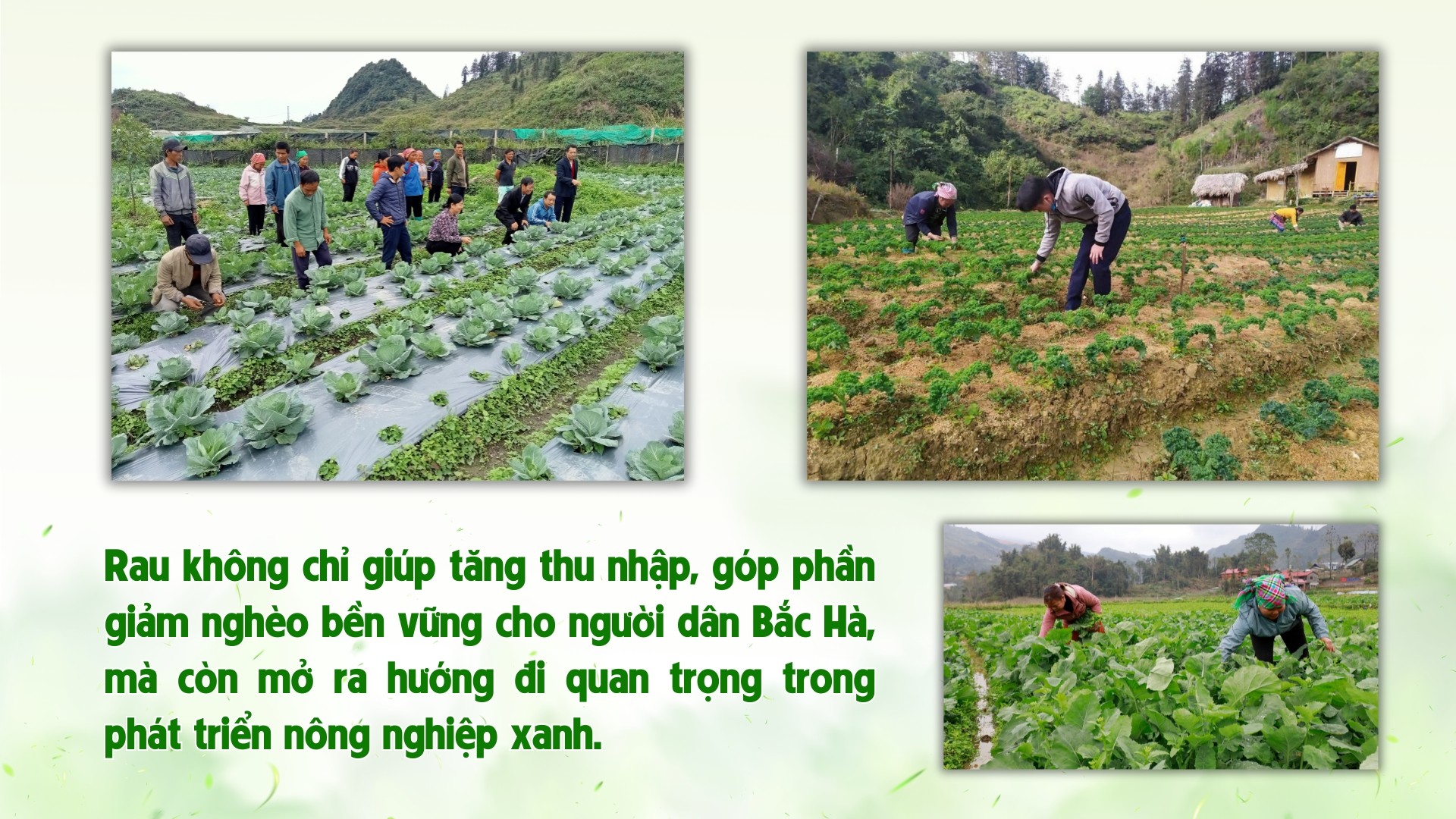
Vegetables not only contribute to increasing income and helping people in Bac Ha commune reduce poverty sustainably, but more importantly, they represent a crucial direction in green agricultural production.
Presented by: Bich Hue
Source: https://baolaocai.vn/xanh-muot-cao-nguyen-post889055.html







































































Comment (0)