


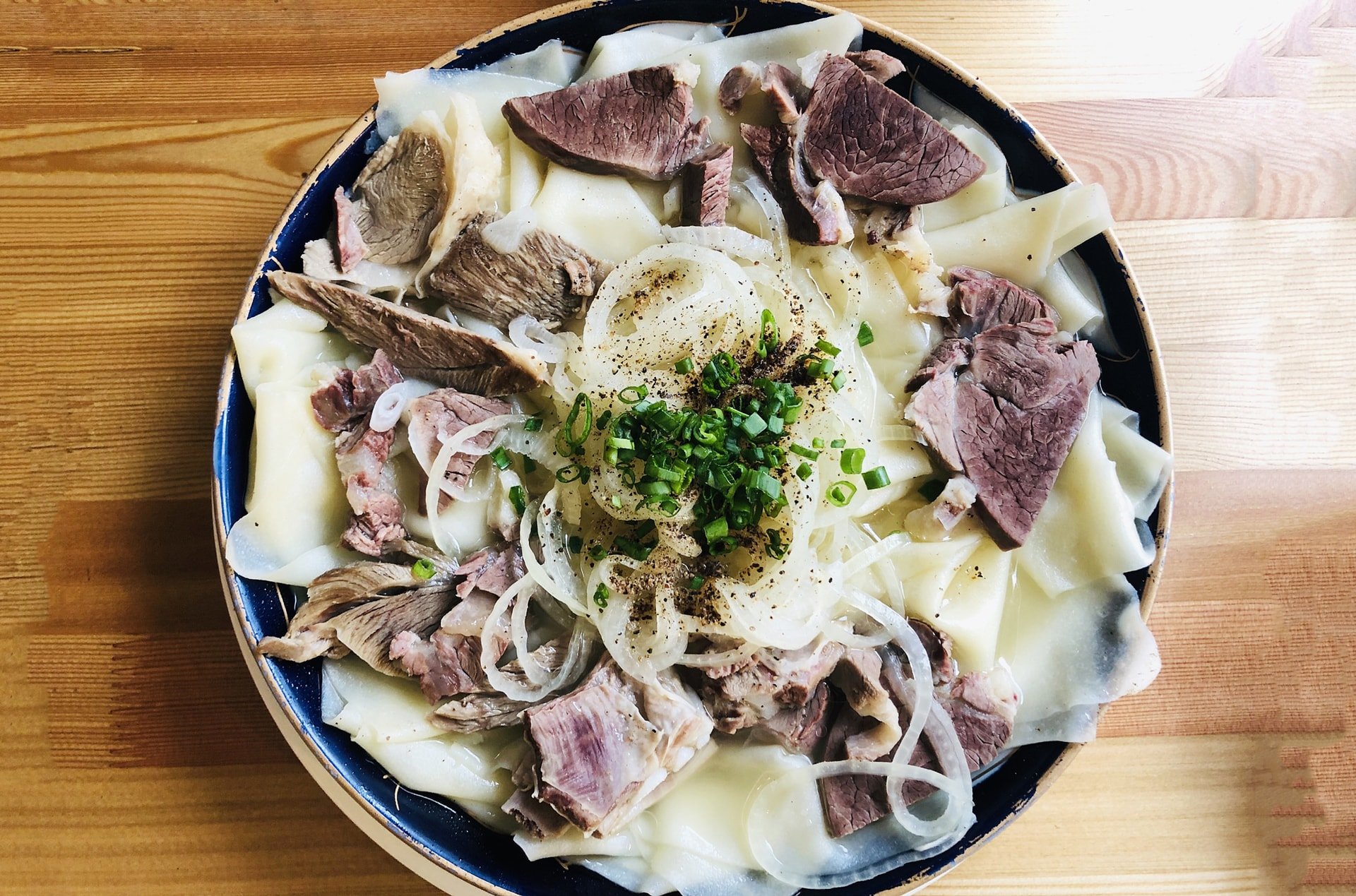
Beefbarmak.
At the heart of Kyrgyz cuisine is beshbarmak – the name of the dish means “five fingers,” due to the tradition of eating it with hands. It's a flat noodle dish served with tender boiled lamb or horse meat, topped with a rich broth called shorpo. At banquets, the honored guest is often presented with a lamb's head – a solemn ritual signifying Kyrgyz hospitality.
From the legacy of the "Silk Road," Kyrgyzstan preserves laghman – a distinctive hand-pulled noodle dish. These long, chewy noodles are stir-fried or stewed with lamb, bell peppers, and tomatoes, creating a rich flavor and an artistic cooking technique. The perfect hand-pulling of the dough into noodles remains a source of pride for local chefs.
Towards Lake Issyk-Kul, the local cuisine takes on its own unique characteristics. Ashlan-fu, a spicy and sour cold noodle dish from the town of Karakol, is considered a refreshing summer treat, combining chewy noodles with vinegar, garlic, eggs, and herbs. From the lake, locals catch chebak fish – a species similar in appearance to red carp – and prepare it simply by grilling it over a fire with salt, preserving its original fresh flavor.
The practicality of nomadic life is evident in samsa – a triangular pastry filled with lamb and onions, baked in an earthen oven. It's a convenient, high-energy food found at every market and rest stop along the mountain roads.
It's impossible not to mention kumis – fermented mare's milk, which has a sour taste, a slight effervescence, and contains beneficial bacteria. For nomadic people, it's a precious source of nutrition that has survived for generations.
To fully explore Kyrgyz cuisine, visitors can visit Faiza restaurant in the capital Bishkek or the traditional Navat space with its lively folk music. At Osh market, stalls are overflowing with spices, meats, bread, and mountain honey.
Kyrgyz cuisine is simple yet rich in character, much like the people themselves – resilient, open-minded, and full of pride. Each meal is a small ritual, a meeting of tradition and present, and a sincere invitation to those who wish to explore the soul of a nomadic people in the heart of Central Asia.
Source: https://hanoimoi.vn/am-thuc-tu-trai-tim-thao-nguyen-707314.html
















































Comment (0)