

The concept of a resident physician in the medical training system.
According to the current regulations of the Ministry of Health on resident physician training, including Decision No. 1524/QD-BYT dated April 15, 2013, issued by the Minister of Health promulgating the Regulations on resident physician training, a resident physician is a physician who has graduated from a general medical doctor program and has been admitted to a resident physician training program at training institutions assigned by competent authorities.
This regulation defines residency training as a specialized form of postgraduate training, primarily organized in teaching hospitals, closely integrating theoretical training, clinical practice, and scientific research.
A resident physician is not a medical intern and is not a practicing physician; rather, they are individuals participating in a prescribed postgraduate training program. Resident physician training can only be conducted at training institutions designated by the Ministry of Health or other competent authorities.
Admission requirements and training duration
According to the regulations for resident physician training, applicants must meet the professional qualification requirements specified by each training institution, be in good health, and pass the entrance examination organized by the training institution as prescribed.
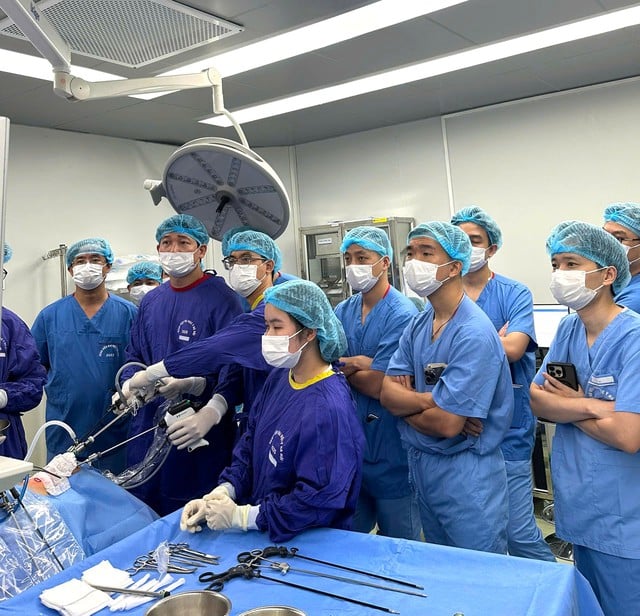
Resident doctors participate in clinical practice training at the teaching hospital, under the guidance and supervision of their supervisors and professional managers as prescribed by the Ministry of Health.
The residency training period for physicians is 36 consecutive months, involving full-time study and work at a teaching hospital. During this time, residents participate in professional activities such as examining and treating patients, emergency duty, consultations, monitoring and managing patients according to their professional assignments and under the supervision of their supervisors, while also carrying out academic and scientific research tasks as per the training program.
Diploma after residency training
Upon successful completion of the program and fulfillment of all prescribed conditions, trainees will be awarded a diploma or certificate of completion for the residency training program in their specialized field, in accordance with the current regulations of the competent authority and the training institution at the time of issuance.
In the current medical training system, residency training is a type of postgraduate training, distinct from specialist doctor degrees (level I, level II), master's degrees, or doctoral degrees in medicine; each type of training is regulated by separate legal documents, with different objectives and output standards. The term "resident physician" is not a rank, grade, or professional title within the healthcare workforce management system, but is associated with the training process.
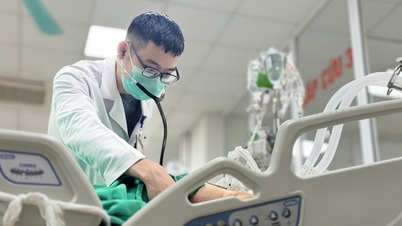
Resident doctors participate in medical examination and treatment.
According to the Law on Medical Examination and Treatment of 2023, medical examination and treatment activities must be carried out by practitioners with professional certificates and within the scope of their licensed specialization.
During their training period, resident doctors participate in medical examination and treatment activities as assigned by the medical facility and within the scope assigned by the competent authority, in accordance with the law on medical examination and treatment and hospital regulations.
In practice, resident physicians are a crucial force in professional activities at teaching hospitals, especially at central and tertiary-level medical facilities, and also serve as a source of future human resources for professional work, research, and medical teaching. Regulations regarding resident physician training are implemented according to the current legal documents in force at each given time.
Source: https://suckhoedoisong.vn/bac-si-noi-tru-va-quy-dinh-hien-hanh-ve-dao-tao-sau-dai-hoc-169251215220927531.htm

![[Photo] Prime Minister Pham Minh Chinh receives Lao Minister of Education and Sports Thongsalith Mangnormek](/_next/image?url=https%3A%2F%2Fvphoto.vietnam.vn%2Fthumb%2F1200x675%2Fvietnam%2Fresource%2FIMAGE%2F2025%2F12%2F16%2F1765876834721_dsc-7519-jpg.webp&w=3840&q=75)
![[Live] 2025 Community Action Awards Gala](/_next/image?url=https%3A%2F%2Fvphoto.vietnam.vn%2Fthumb%2F1200x675%2Fvietnam%2Fresource%2FIMAGE%2F2025%2F12%2F16%2F1765899631650_ndo_tr_z7334013144784-9f9fe10a6d63584c85aff40f2957c250-jpg.webp&w=3840&q=75)
![[Image] Leaked images ahead of the 2025 Community Action Awards gala.](/_next/image?url=https%3A%2F%2Fvphoto.vietnam.vn%2Fthumb%2F1200x675%2Fvietnam%2Fresource%2FIMAGE%2F2025%2F12%2F16%2F1765882828720_ndo_br_thiet-ke-chua-co-ten-45-png.webp&w=3840&q=75)

![[Photo] Prime Minister Pham Minh Chinh receives the Governor of Tochigi Province (Japan)](/_next/image?url=https%3A%2F%2Fvphoto.vietnam.vn%2Fthumb%2F1200x675%2Fvietnam%2Fresource%2FIMAGE%2F2025%2F12%2F16%2F1765892133176_dsc-8082-6425-jpg.webp&w=3840&q=75)


























![[Photo] Prime Minister Pham Minh Chinh attends the Vietnam Economic Forum 2025](https://vphoto.vietnam.vn/thumb/402x226/vietnam/resource/IMAGE/2025/12/16/1765893035503_ndo_br_dsc-8043-jpg.webp)
















Comment (0)