

Resident doctors: Eligible to take the entrance exam immediately after graduating from university and must not be over 27 years old.
According to Decision No. 16 (2006) on the promulgation of the Regulations on the training of resident physicians by the Minister of Health , resident physician training is a specialized postgraduate training program in the health sector, aiming to train specialist physicians with a solid foundation in basic scientific knowledge, systematic specialized knowledge, high practical skills, and the ability to proactively and proficiently solve basic professional problems within their field of study.

New doctor Vu Ngoc Duy, top scorer in the K50 residency entrance exam at Hanoi Medical University, chose obstetrics and gynecology as his specialty.
PHOTO: HUU LINH
Residency training is one of the methods for training skilled professionals and young talents in the healthcare sector, applied to clinical, paraclinical, and preventive medicine specialties.
Residency training is only for doctors who have recently graduated from a regular medical program at a medical university, medical-pharmaceutical university, or other training institution in Vietnam, who wish to pursue residency training, voluntarily apply to take the entrance exam, and are only allowed to take the exam once immediately after graduating from university.
Eligibility requirements: Applicants must possess a university degree in a field relevant to the chosen specialization and achieve a GPA of "good" or higher; have not received any disciplinary action (from a warning or higher) during their university studies, and have not had any suspensions from studies (except for health reasons); be no older than 27 years of age; and be in good health to serve long-term in the healthcare sector.
Specialist doctors: Must have a practicing license or years of experience.
Meanwhile, the regulations issued with Decision No. 4306 (2023) of the Minister of Health stipulate that Specialist Doctor I and Specialist Doctor II are titles applied to doctors who have graduated with postgraduate specialization in the medical field.
Circular No. 622 from the Ministry of Health, guiding the recruitment and training of specialists in Level I and Level II medical fields, and resident physicians, states that: to take the Level I specialist doctor examination, candidates may only register for a major/specialization corresponding to their undergraduate training program.
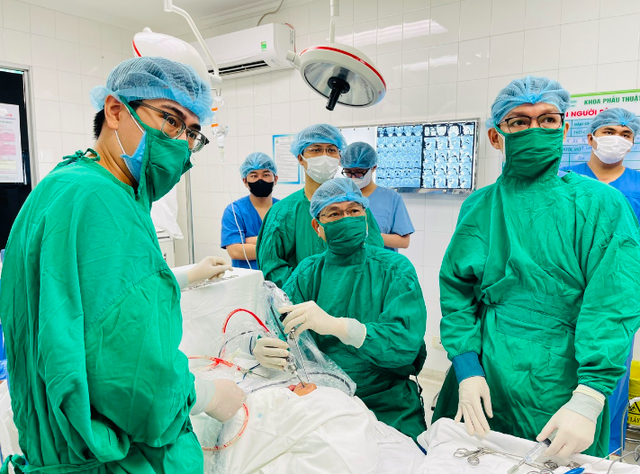
Both resident doctors and specialists are the elite force of the medical field.
PHOTO: DUY TINH
For fields requiring a professional license under the Law on Medical Examination and Treatment, candidates are only allowed to take the exam after obtaining the license. If registering for an exam in a field different from the scope of practice stated in the license, they must have confirmation from the head of the medical examination and treatment facility regarding a minimum of 12 months of work experience in the registered field.
To be admitted to the Specialist Doctor Level II program, candidates must have a Specialist Doctor Level I diploma or a Master's degree in the same field/specialization as their Specialist Doctor Level I or Master's degree.
Candidates with a Specialist Level I degree can take the exam immediately. Candidates with a Master's degree must have completed their Master's program 36 months prior to graduation and possess a medical practice license (for fields requiring such a license).
Thus, both residency and specialist programs are postgraduate studies. However, residency programs begin immediately after university graduation and have an age limit (not exceeding 27). Specialist programs, on the other hand, have no age limit and are divided into Specialist Level I and Specialist Level II stages, requiring a professional license or years of experience.
Source: https://thanhnien.vn/bac-si-noi-tru-khac-bac-si-chuyen-khoa-nhu-the-nao-185251214180006461.htm
























































































Comment (0)