

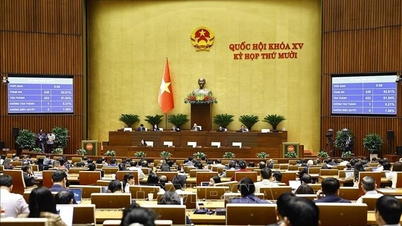
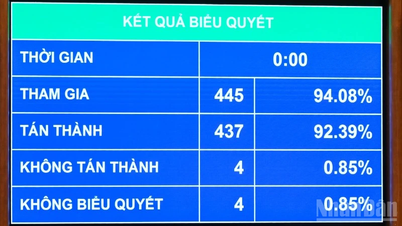
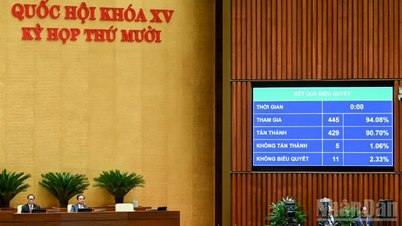
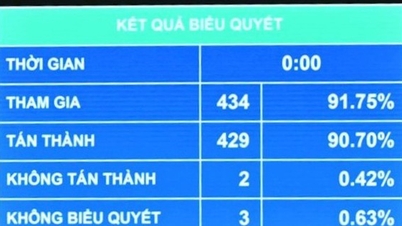
On the morning of December 10th, the National Assembly voted to pass the amended Law on Higher Education .
According to the law, degree-granting training programs include: undergraduate programs awarding bachelor's degrees; master's degree programs awarding master's degrees or a combination of undergraduate and master's degrees, with degrees corresponding to the completed level; and doctoral degree programs awarding doctoral degrees or a combination of master's and doctoral degrees, with degrees corresponding to the completed level.
Specifically, postgraduate training programs in the health sector leading to residency and specialist doctor degrees are guided, organized, and managed by the Ministry of Health . This was a topic that had previously been the subject of much discussion.
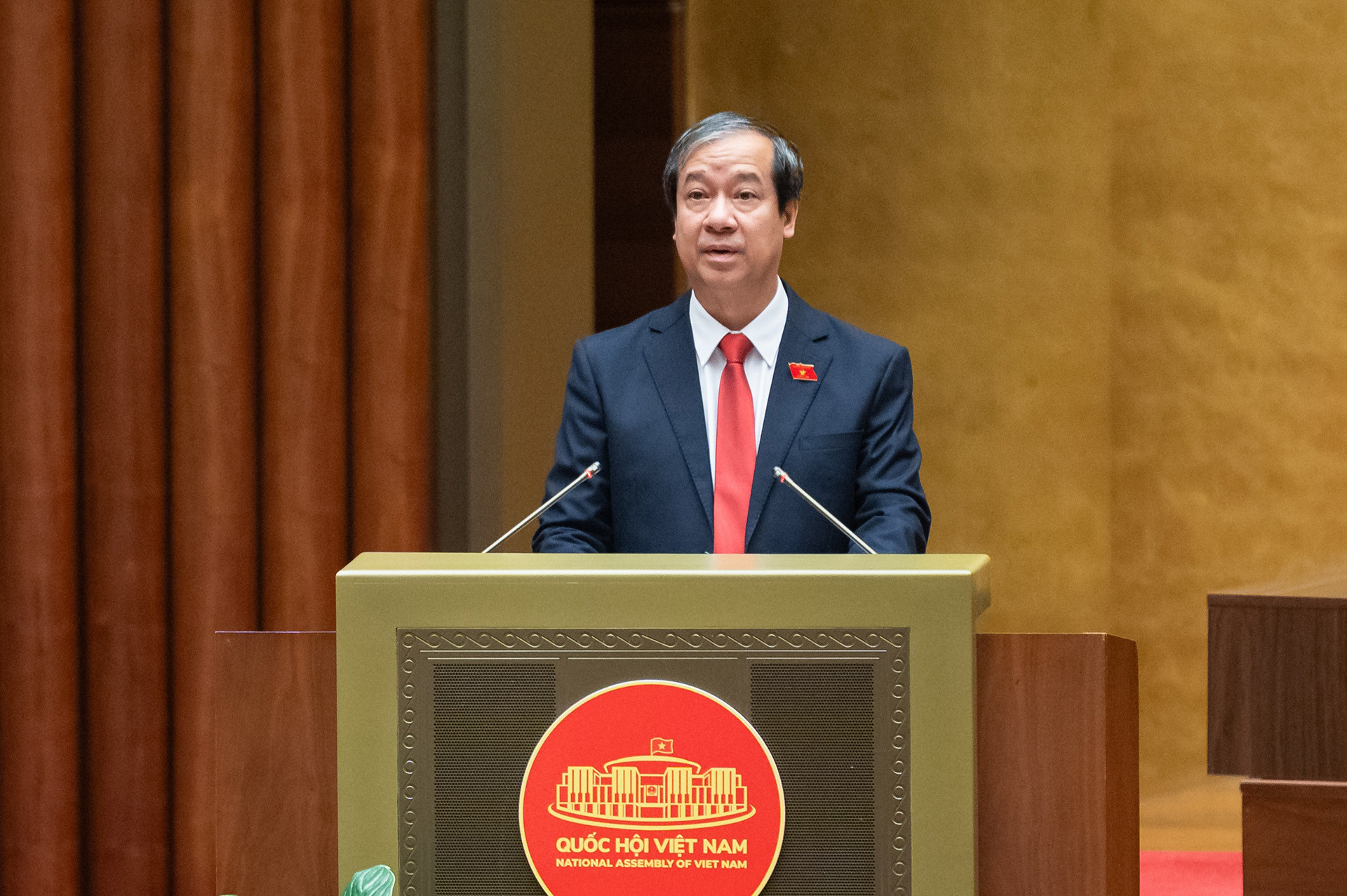
Before the National Assembly passed the resolution, Minister of Education and Training Nguyen Kim Son explained that the government's view is that specialist doctors and resident doctors are highly capable individuals who make significant contributions to the care and protection of people's health, and therefore deserve to be honored and receive appropriate treatment.
However, the recognition of equivalence between residency and specialist degrees with master's or doctoral degrees currently has no scientific basis and no international precedent.
Practice in countries shows that the education system clearly distinguishes between academic training (master's, doctorate) and specific practical training.
Master's and doctoral degrees belong to the academic training system with their own programs, learning outcomes, and regulations; while residency programs, specialist training (level I and level II) are recognized as intensive practical training, specific to the medical field, but do not belong to the postgraduate degree system.
The medical field continues to train master's and doctoral students and appoint academic titles such as associate professor and professor in accordance with current regulations.
Therefore, the Government has agreed that "postgraduate intensive training programs in the health sector leading to residency and specialist doctor degrees will be guided, organized, and managed by the Ministry of Health."
This regulation aims to strengthen the responsibility of the Ministry of Health in managing postgraduate training specializing in the health field.
Regarding higher education institutions and other educational institutions engaged in higher education activities, the Law on Higher Education (amended) clearly states that "a higher education institution is an educational institution belonging to the national education system, possessing legal personality, and organized and operating in accordance with the provisions of this law and other relevant laws."
Higher education institutions include: universities, universities also known as academies, offering multi-disciplinary training at various levels of higher education; multi-disciplinary universities at all levels of higher education; national universities and regional universities offering multi-disciplinary training at all levels of higher education, also belonging to the higher education institution system.
With this regulation, the National Assembly has decided to retain regional universities instead of proposing to abolish them, as some National Assembly deputies had suggested during the discussions.
The amended Law on Higher Education clearly states that regional universities fulfill the mission and function of training high-level human resources, developing talents, conducting scientific research, developing technology, innovating, transferring knowledge, and serving society, the country, and humanity.
Regional universities also pool resources, promote regional linkages, support regional socio-economic development; and contribute to implementing the national development strategy.
According to the Government's explanation, regional universities still have the mission of carrying out strategic tasks, regional linkages and developing the science - technology and innovation ecosystem.
The Government identified the need to improve the effectiveness of governance within each regional university, clarify the strategic coordination function of regional universities and the academic, organizational and financial autonomy of member universities; perfect the decentralization mechanism, accountability mechanism, personnel standards, operating methods and responsibilities of each level.
Tuition fees are made public. The amended Law on Higher Education stipulates that training institutions have the right to determine tuition fees on the principle of ensuring cost recovery and reasonable accumulation to improve the quality of training; however, public institutions must comply with the framework and regulations issued by the Government. The law also requires universities to fully disclose training costs, tuition fees, admission fees, and other service charges for each level, academic year, and the entire course of study. At the same time, educational institutions must allocate a portion of their revenue to waive, reduce, and support tuition fees for students from disadvantaged backgrounds or those eligible for government assistance programs, in accordance with state regulations and the specific policies of each school. The fees for admissions services and other support services are determined based on the principle of covering reasonable and actual costs incurred, and must ensure transparency and proper use of funds. The government will issue detailed regulations on tuition fees and service fees in higher education to create a unified management framework across the entire system. |
Source: https://vietnamnet.vn/chuyen-dao-tao-bac-si-noi-tru-chuyen-khoa-sang-bo-y-te-quan-ly-2471167.html

![[Photo] The captivating scenery of the fragrant maple forest in Quang Tri](/_next/image?url=https%3A%2F%2Fvphoto.vietnam.vn%2Fthumb%2F1200x675%2Fvietnam%2Fresource%2FIMAGE%2F2025%2F12%2F10%2F1765353233198_lan09046-jpg.webp&w=3840&q=75)
![[Photo] Explore the US Navy's USS Robert Smalls warship](/_next/image?url=https%3A%2F%2Fvphoto.vietnam.vn%2Fthumb%2F1200x675%2Fvietnam%2Fresource%2FIMAGE%2F2025%2F12%2F10%2F1765341533272_11212121-8303-jpg.webp&w=3840&q=75)





















![[Video] The craft of making Dong Ho folk paintings has been inscribed by UNESCO on the List of Crafts in Need of Urgent Safeguarding.](https://vphoto.vietnam.vn/thumb/402x226/vietnam/resource/IMAGE/2025/12/10/1765350246533_tranh-dong-ho-734-jpg.webp)































































Comment (0)