

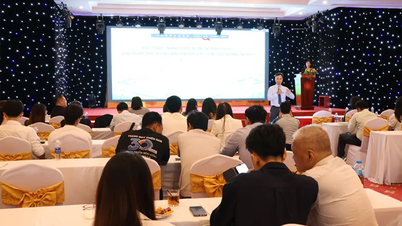
On the morning of June 6th, the 19-8 Hospital ( Ministry of Public Security ) organized an international seminar titled "Updating Advanced Technologies in Cancer Diagnosis and Treatment: Breakthroughs in Personalized Medicine".
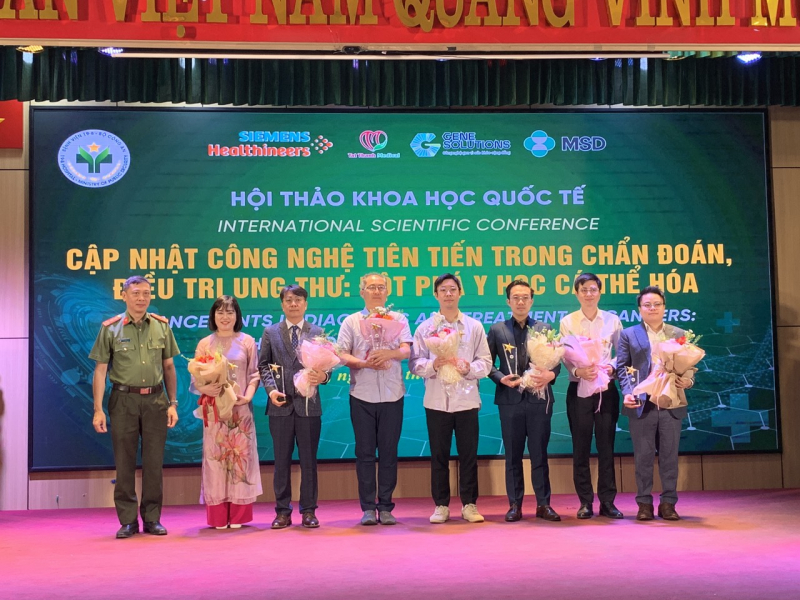
The workshop was attended by leading cancer experts; speakers included professors from the Daegu Gyeongbuk Institute of Science and Technology, Seoul National University; Bertis Biotechnology Company, South Korea; and representatives from hospitals within the People's Public Security Force and police clinics in several localities.
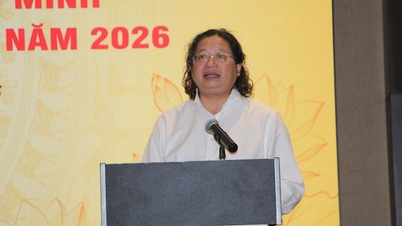
In his opening remarks, Colonel, Associate Professor, Dr. Hoang Thanh Tuyen, Director of the 19-8 Hospital, stated that cancer is a topical issue, and therefore, personalized treatment methods are receiving increasing attention. Immunotherapy has been considered a breakthrough in cancer treatment. This method designs treatment protocols based on the genetic and molecular biological characteristics of each individual's tumor, significantly improving survival rates and quality of life.
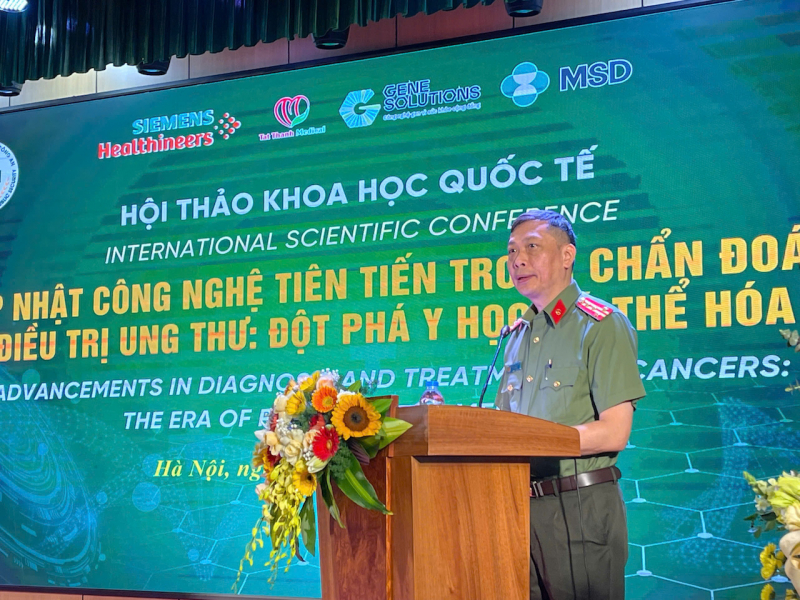
Individualized treatment involves many factors such as genes, environmental influences in daily life, and other contributing factors. When examining a patient, doctors must comprehensively understand these factors and risk factors in order to develop the most appropriate treatment plan for each individual.
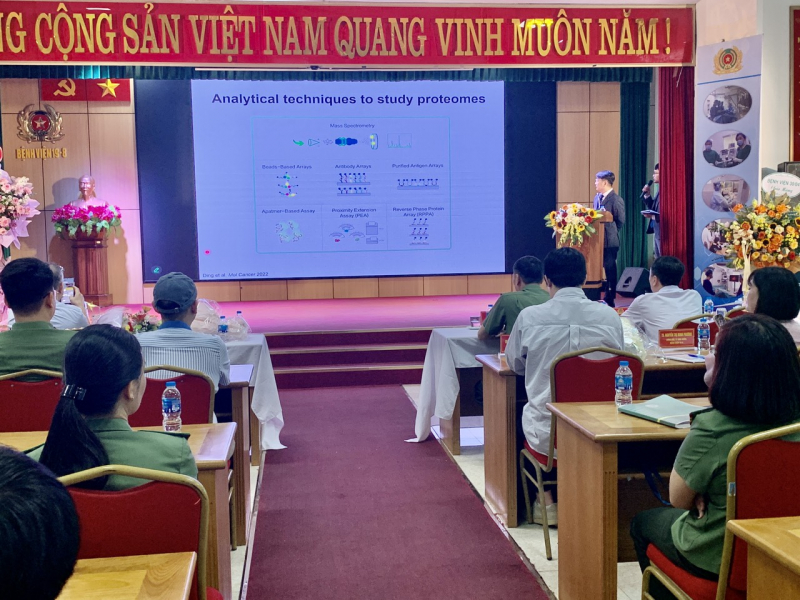
From the 2010s to the present, the remarkable development of protein research technology using high-resolution mass spectrometry and next-generation DNA and RNA gene sequencing technologies has revolutionized the fields of molecular biology and medicine, allowing for the detection and quantification of tens of thousands of genes or proteins in a single tissue sample. This provides a basis for finding markers for earlier and more accurate disease diagnosis and treatment.
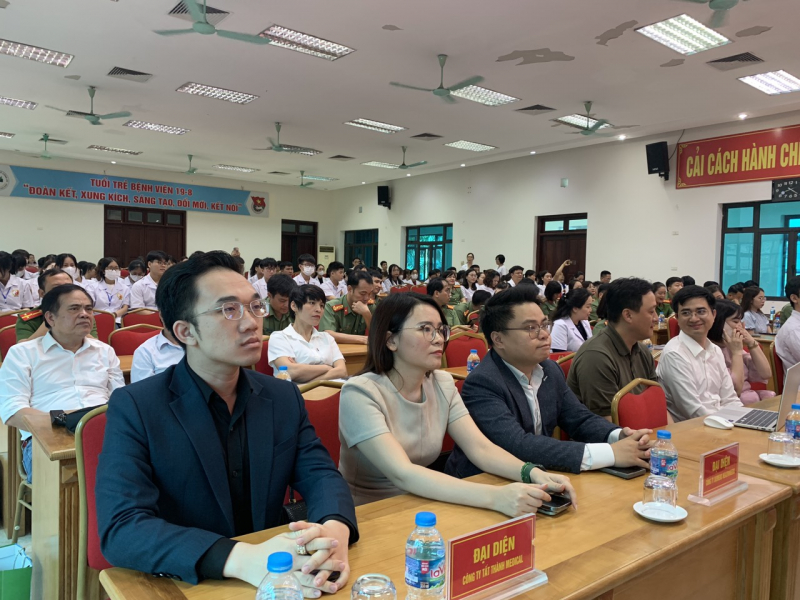
As an inevitable consequence, revolutionary advancements have also created a large database, requiring analytical, processing, and evaluation skills different from traditional methods. Currently, in developed countries, the development of artificial intelligence (AI) technology helps process and simplify large, individual-specific biological data systems, enabling us to better understand disease mechanisms and manifestations, and supporting clinicians in making objective, scientific, and accurate decisions based on highly quantitative laboratory evidence.
"We organized this workshop with the aim of providing medical staff and doctors at the Public Security Medical Center with access to advanced knowledge on personalized treatment, especially in cancer. The workshop aimed at three major goals: helping medical staff better understand the role of gene and protein research in modern medicine, thereby promoting its application in clinical practice; creating a bridge for cooperation between researchers, scientists, and clinical doctors to promote the transfer of technology and research results into practical treatment; and affirming the hospital's development direction to become a prestigious center for research, training, and international cooperation in the field of personalized medicine and cancer treatment," shared the Director of Hospital 19-8.
Currently, 19-8 Hospital is collaborating with SETA Vietnam Joint Stock Company and several Japanese medical facilities with leading experts to conduct in-depth research on immunotherapy in cancer. Research results show that this therapy is very effective in treating several types of cancer, such as lung cancer and colorectal cancer.
"At our hospital, we have patients with stage 3 colon cancer that has metastasized, but thanks to a combination of treatment methods, especially immunotherapy, the patients still have a very good quality of life. The same applies to lung cancer patients, especially those in the late stages, thanks to a combination of traditional and immunotherapy treatments, with promising results," said the Director of Hospital 19-8.
According to the Director of Hospital 19-8, in coordination with Japanese partners, patients treated there will have their cells sent to Japan for filtration, culture, and activation of the ability to identify diseased cells, then brought back to Vietnam for treatment. Japanese partners will partially subsidize the treatment costs using this method, thus reducing the cost per treatment compared to conventional methods, making it more accessible to a wider range of patients.
Source: https://cand.com.vn/y-te/benh-vien-19-8-ung-dung-cong-nghe-tien-tien-trong-dieu-tri-ung-thu--i770770/


![[Photo] Prime Minister Pham Minh Chinh presides over the conference announcing the establishment of the International Finance Centre in Vietnam.](/_next/image?url=https%3A%2F%2Fvphoto.vietnam.vn%2Fthumb%2F1200x675%2Fvietnam%2Fresource%2FIMAGE%2F2025%2F12%2F21%2F1766309817714_ndo_br_dsc-3400-jpg.webp&w=3840&q=75)
![[Photo] Prime Minister Pham Minh Chinh presides over a meeting on private sector economic development.](/_next/image?url=https%3A%2F%2Fvphoto.vietnam.vn%2Fthumb%2F1200x675%2Fvietnam%2Fresource%2FIMAGE%2F2025%2F12%2F20%2F1766237501876_thiet-ke-chua-co-ten-40-png.webp&w=3840&q=75)





























































Comment (0)