

Adapt to find outlets for the product.
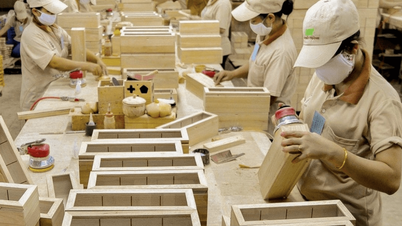
While many household wooden products have been virtually "frozen" and difficult to sell recently, in the woodworking village of Da Son commune, Do Luong district, craftspeople have adapted and created wooden products that meet market demand.
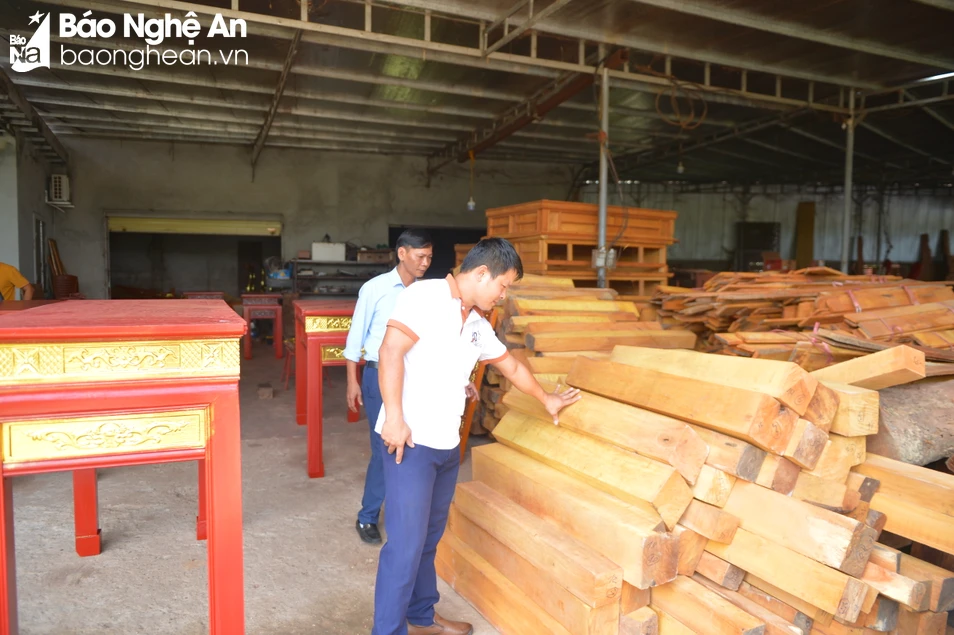
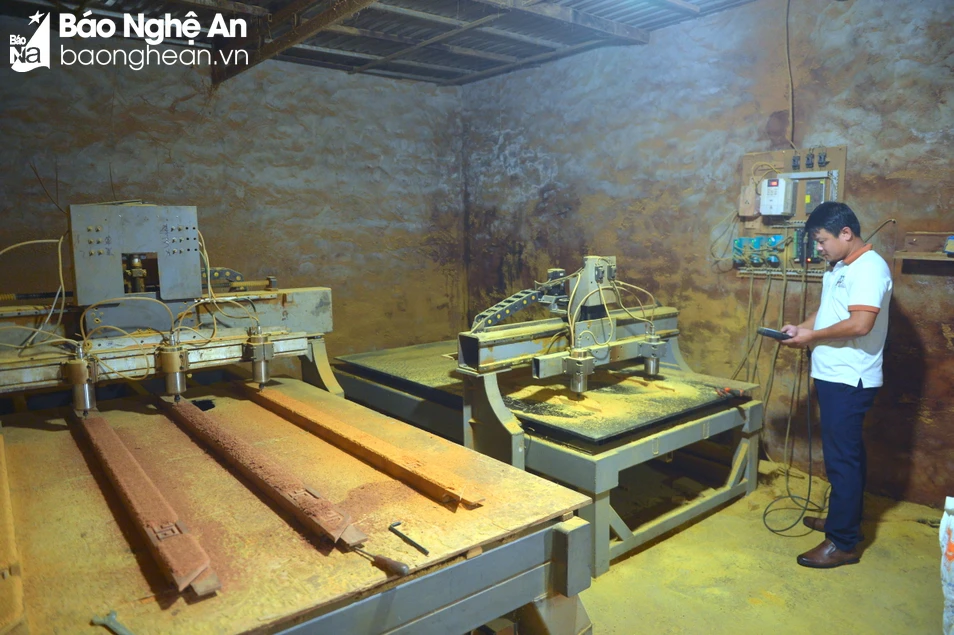
Visiting the woodworking workshop of Mr. Tran Manh Dung's family, we found it quite bustling. Mr. Dung shared: "Recognizing the high demand for furniture for ancestral temples in recent years, such as altars, horizontal plaques, and couplets, while Nghe An province has few specialized woodworking workshops, most of which have to be purchased from northern provinces at very high costs, my family has switched from making household furniture to investing in machinery. Specifically, we have produced 12 CNC wood carving machines to serve the work of making religious furniture; we recruit skilled craftsmen; and we purchase jackfruit wood from various places to make ancestral temple furniture. Thanks to the good quality of our products, coupled with reasonable prices, and customers having the opportunity to inspect the quality of the raw wood at the workshop, we have great trust in our customers. The workshop continuously receives orders and has more work than we can handle. Each month, the workshop generates revenue of 500-670 million VND from product sales."
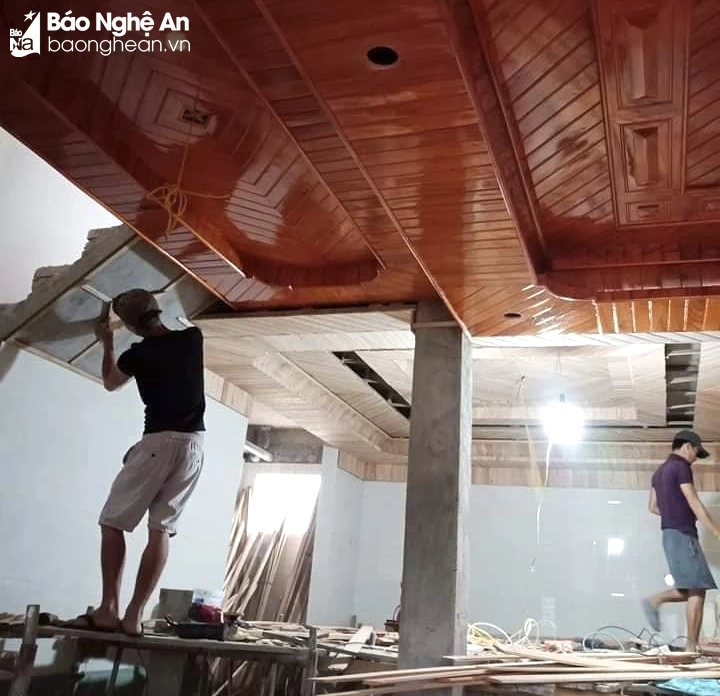
At Mr. Tran Quoc Hung's carpentry workshop, products like cabinets, beds, tables, and chairs have long been difficult to sell. Therefore, in recent years, he has researched the market and switched to constructing wall and ceiling panels. Mr. Hung maintains a team of 5-7 ceiling installers throughout Nghe An province and neighboring provinces.
He shared: "Building ceilings has the advantage of requiring little investment in machinery, the materials (such as mahogany wood) are easy to find, and the work is lighter than building other things. Especially, there's always work to be done. Currently, our team is working on two ceiling projects in Hue , generating monthly revenue of 150-200 million VND."
Mr. Tran Quoc Toan, Vice Chairman of the People's Committee of Da Son commune, added: "Carpentry is a traditional craft that has been closely associated with the people here for a long time. Currently, nearly 100 households are engaged in this craft, creating jobs for 300-350 workers. In recent years, due to difficulties in the market for wooden products, many households in the craft village have adapted to find markets on their own. For example, they have reduced the production of tables, chairs, beds, and cabinets and are now specializing in the production of interior wooden furniture for ancestral temples, wall panels, ceilings, and partitions..."
According to It is estimated that the village's woodworking revenue this year reached over 50 billion VND, a decrease of about 20% compared to last year, but given the difficult circumstances, it is still considered a success.
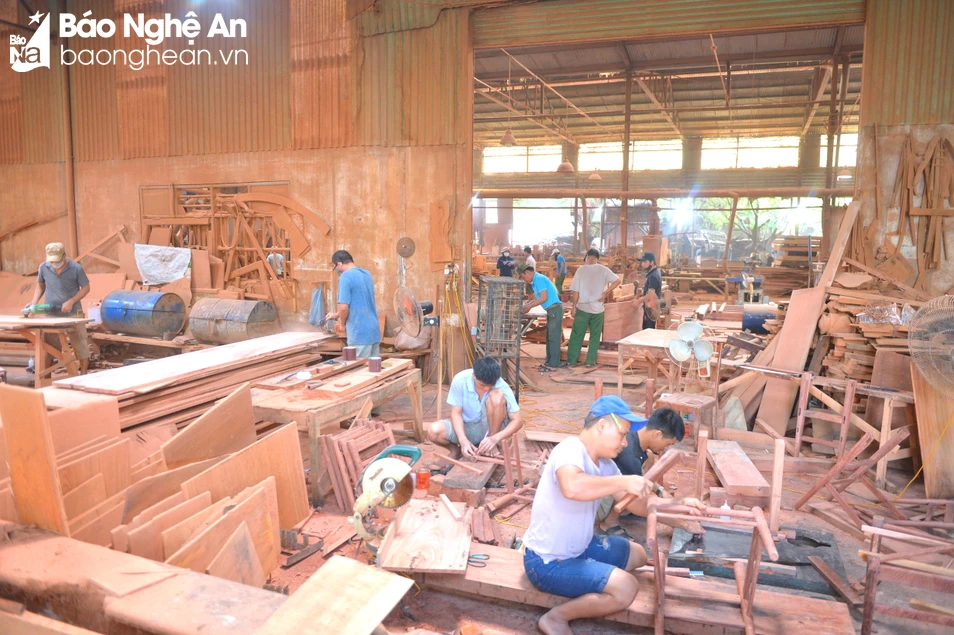
Adjacent to Da Son commune is Nguyen Nghia carpentry workshop in Do Luong town, which is currently operating quite busily. According to the owner, since the beginning of 2023, the market for wooden furniture has been struggling, with many items remaining unsold. To adapt to these difficult conditions, the workshop is currently limiting the production of display items and mainly producing wooden furniture products based on orders.
In particular, they have been exploring new markets such as constructing wooden furniture for villas; building wooden houses throughout the provinces and cities; and manufacturing window and door frames. Currently, the company is receiving orders to produce and install interior furnishings for villas in Phu Quoc. Thanks to finding outlets for their products, Nguyen Nghia Woodworking Workshop continues to provide employment for over 200 workers, with total revenue exceeding 2 billion VND per month.
Learn and innovate to overcome difficulties.
Due to difficulties in finding markets, the woodworking villages in Quang Phong ward, Thai Hoa town, are currently having to find their own solutions for their products. Several woodworking business owners in Quang Phong ward stated: “Currently, the civil and artistic woodworking industry faces intense competition from craft villages in the northern provinces. Therefore, I have proactively sent my workers to learn new techniques, especially the use of wood carving machines. Afterward, I invested in purchasing machines for production. Applying technology to the craft has made the wood products more sophisticated, increased labor productivity, and thus helped lower production costs to compete with products from craft villages in the North.”
Discussing the issue of finding solutions for developing the woodworking craft village, Mr. Nguyen Canh Kieu, Chairman of the Quang Phong Ward People's Committee, added: The Quang Phong Ward woodworking and timber processing craft village was recognized as a craft village by the Nghe An Provincial People's Committee on December 30, 2002. To date, the craft village has over 180 participating households, mainly engaged in production and business activities including: tables, chairs, cabinets, beds, and other household wooden items.
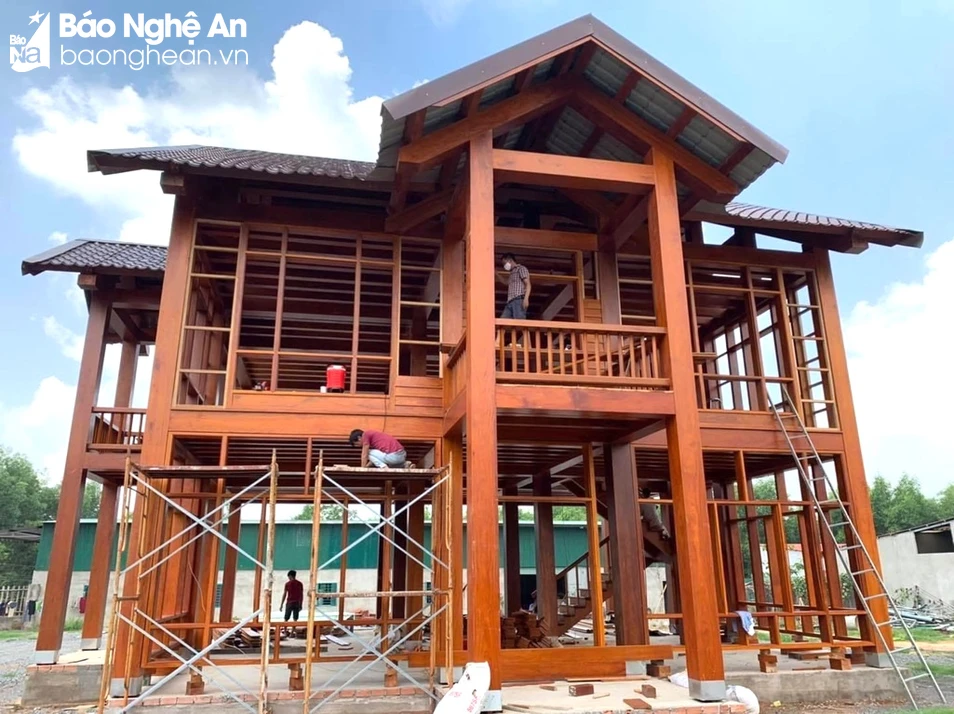
Currently, facing difficulties in sales, about 35% of households have switched to producing other goods suitable for the market, such as taking orders for flooring, processing plywood for walls, etc. The remaining households are producing household wood products that are selling slowly and have a significant amount of unsold inventory.
The traditional carpentry village in Quynh Hung commune (Quynh Luu district) has long been experiencing sluggish sales. Currently, the village has a large surplus of goods, and at this time, carpentry workshops are intensifying their product promotion on social media. In particular, customers who come to buy household carpentry products are offered free delivery to their doorstep…
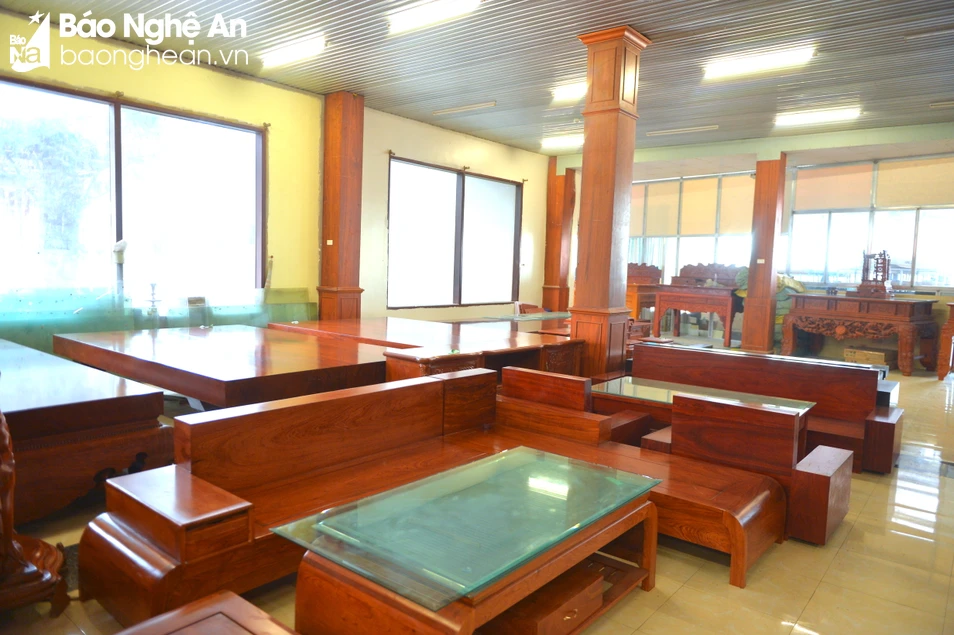
Nghe An province has many woodworking villages in the districts of Do Luong, Thanh Chuong, Quynh Luu, and Nam Dan, providing jobs for thousands of local workers. However, due to difficulties in finding markets, the woodworking industry has been stagnating since the beginning of 2023.
According to experts, for the carpentry industry to develop stably, local authorities in areas with carpentry villages must work alongside businesses, establishments, and households involved in production, promoting solutions to find markets for their products. They should guide these villages to survey, analyze, and understand market demand, avoiding the mass production of difficult-to-sell household wooden products, and creating products that meet customer requirements.
Traditional craft villages maintain production, create jobs for workers, and coordinate with organizations to hold trade fairs. Simultaneously, they encourage businesses and production facilities to participate in displaying, selling, and introducing woodworking products at fairs inside and outside the province. They invest in skills, machinery, and equipment to create woodworking products with attractive designs and affordable prices, gradually overcoming difficulties.
Source

![[Photo] Prime Minister Pham Minh Chinh receives Lao Minister of Education and Sports Thongsalith Mangnormek](/_next/image?url=https%3A%2F%2Fvphoto.vietnam.vn%2Fthumb%2F1200x675%2Fvietnam%2Fresource%2FIMAGE%2F2025%2F12%2F16%2F1765876834721_dsc-7519-jpg.webp&w=3840&q=75)
![[Photo] Prime Minister Pham Minh Chinh receives the Governor of Tochigi Province (Japan)](/_next/image?url=https%3A%2F%2Fvphoto.vietnam.vn%2Fthumb%2F1200x675%2Fvietnam%2Fresource%2FIMAGE%2F2025%2F12%2F16%2F1765892133176_dsc-8082-6425-jpg.webp&w=3840&q=75)
![[Live] 2025 Community Action Awards Gala](/_next/image?url=https%3A%2F%2Fvphoto.vietnam.vn%2Fthumb%2F1200x675%2Fvietnam%2Fresource%2FIMAGE%2F2025%2F12%2F16%2F1765899631650_ndo_tr_z7334013144784-9f9fe10a6d63584c85aff40f2957c250-jpg.webp&w=3840&q=75)
![[Image] Leaked images ahead of the 2025 Community Action Awards gala.](/_next/image?url=https%3A%2F%2Fvphoto.vietnam.vn%2Fthumb%2F1200x675%2Fvietnam%2Fresource%2FIMAGE%2F2025%2F12%2F16%2F1765882828720_ndo_br_thiet-ke-chua-co-ten-45-png.webp&w=3840&q=75)

































































![[Live] Closing Ceremony and Award Presentation for the "Impressive Vietnam Tourism" Video/Clip Creation Contest 2025](https://vphoto.vietnam.vn/thumb/402x226/vietnam/resource/IMAGE/2025/12/17/1765974650260_z7273498850699-00d2fd6b0972cb39494cfa2559bf85ac-1765959338756946072104-627-0-1338-1138-crop-1765959347256801551121.jpeg)























Comment (0)