

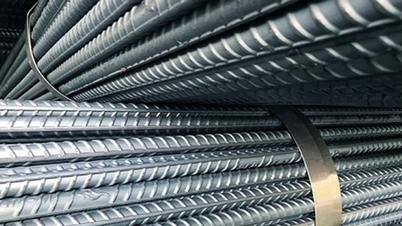
The decree imposing a 25% tariff on imported steel and aluminum may not have a major impact on Vietnamese steel businesses in the short term, but more time is needed to assess the effects.
Pressure from US tariffs on imported steel and aluminum: More time needed to measure the impact.
The decree imposing a 25% tariff on imported steel and aluminum may not have a major impact on Vietnamese steel businesses in the short term, but more time is needed to assess the effects.
 |
| For the time being, the US tax policy on imported steel and aluminum does not have a very serious impact on Vietnamese businesses. |
Don't worry too much, but don't forget to be cautious.
To protect domestic steel producers, on February 11, 2025, US President Donald Trump signed an executive order imposing a 25% tariff on imported steel and aluminum, without exception or exemption, effective March 4.
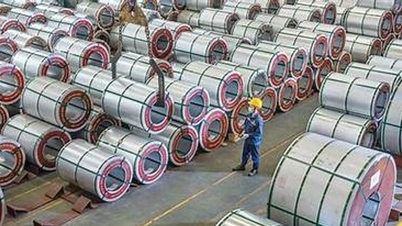
As of the end of 2024, the US was Vietnam's third largest steel export partner, accounting for approximately 13% of exports, behind ASEAN and the EU. Therefore, with the imposition of these tariffs, Vietnamese steel businesses may be impacted in the production of galvanized steel sheets, HRC, and CRC products. However, the extent of the impact will depend on the specific circumstances of each business.
Currently, steel companies with a high proportion of exports to the US include Hoa Sen Group Joint Stock Company, Nam Kim Steel Joint Stock Company, and Ton Dong A Joint Stock Company. In an interview with a reporter from Investment Newspaper regarding this issue, Mr. Truong Hien Phuong, Senior Director of KIS Vietnam Securities Company, stated that the policy does affect steel companies, but the impact is not significant, and more time is needed to measure its effects.
For now, this policy does not have a very serious impact on Vietnamese businesses. Even large, well-known companies in the industry such as Hoa Phat Group, Hoa Sen Group, or Nam Kim Steel, do not have a large proportion of their total export sales to the US. Therefore, while there may be an impact, it will not significantly affect the businesses' revenue structure.
Secondly, this policy of President Trump is not aimed at Vietnam. Recently, the US Ambassador to Vietnam, Marc E. Knapper, also confirmed this. The Ambassador stated that 2025 marks the 30th anniversary of the establishment of diplomatic relations between Vietnam and the United States. The US hopes this year will be a pivotal year to further promote cooperation between the two countries to a new level, realizing the commitments and substance of the Comprehensive Strategic Partnership. In particular, economic and trade cooperation will play a key role in driving the overall bilateral relationship.
 The tariffs imposed by the US recently were not aimed at Vietnam. The US wants to maintain bilateral relations and ensure that economic and trade cooperation with Vietnam continues to develop in a positive direction.
- Ambassador Marc E. Knapper
Thirdly, Trump's style remains negotiable. For example, his decision to impose a 25% tariff on all aluminum and steel imports into the US significantly impacted India. Just hours after Trump announced his roadmap for applying reciprocal tariffs to all countries that tax imports from the US, Indian Prime Minister Narendra Modi proposed negotiations on easing tariffs, purchasing more oil, gas, and fighter jets... The leaders of both countries also agreed to work towards an agreement to address trade concerns.
Currently, Vietnam is one of the countries that the US pays attention to and is located within the Asia-Pacific axis that the US wants to support and connect with. Previously, President Trump visited Vietnam twice, demonstrating his strong positive feelings towards our country. Recently, before his re-election, Trump's personal corporation also launched an investment project in Hung Yen province.
The senior director of KIS Vietnam affirmed: "Given the above factors, I believe that this policy of Mr. Trump will not push Vietnamese businesses into a state of excessive stress and anxiety."
However, Vietnamese steel businesses need to be cautious from another perspective. The most important point to note currently is the potential impact on the Chinese steel industry. The Chinese steel market will also be affected as it becomes more difficult to sell to the US market, forcing them to seek other markets, including Vietnam. China is one of the leading steel producers with competitive costs, so there is a high possibility that China will flood the Vietnamese market with its steel, impacting prices and the supply and demand situation domestically.
“When the US-China trade war broke out in 2008, there was a situation where Chinese steel companies invested heavily in Vietnam to push their inventory through Vietnam, changing the names and labels to export to the US market. Therefore, we need to be cautious about the situation of Chinese steel ‘disguised’ as Vietnamese steel to continue entering the US market. This will affect the reputation and brand of Vietnamese businesses,” Mr. Truong Hien Phuong warned.
Strengthen your inner strength in the face of unpredictable uncertainties.
Given the unpredictable variables affecting not only the steel industry but also other export businesses, Mr. Truong Hien Phuong believes that the most important thing is for Vietnamese businesses to strengthen their internal capabilities.
"Businesses need to diversify their markets to avoid becoming dependent on a single market for their import and export activities. Even if we have made efforts in many areas—economic, political, and diplomatic—but cannot change tax policies, businesses still have other markets to support and ensure export revenue," Mr. Phuong stated.
Furthermore, the current US President places great emphasis on anti-dumping measures, therefore businesses need to be extremely cautious in their input processes, ensuring that imported raw materials and production costs are reasonable and legitimate according to regulations.
Another indirect point that Vietnamese businesses need to consider is improving business restructuring. It's not just about price; Vietnamese businesses need to further improve product quality so that even when facing tax disadvantages compared to products from other countries at the same price, their superior quality products will still sell," suggested Mr. Truong Hien Phuong.
Source: https://baodautu.vn/suc-ep-tu-chinh-sach-thue-cua-my-len-thep-va-nhom-nhap-khau-can-them-thoi-gian-de-do-luong-d246921.html


![[Photo] General Secretary and President To Lam presides over the meeting to approve the draft report on the results of the second inspection by the Politburo of the Standing Committee of the Hanoi City Party Committee.](https://vphoto.vietnam.vn/thumb/1200x675/vietnam/resource/IMAGE/2026/05/26/1779789811432_a2-bnd-4430-9620-jpg.webp)























































Comment (0)