

According to the Department of Fisheries, Livestock and Veterinary Medicine of Hai Phong City, after the merger, the city has sufficient foundation to build a sustainable, modern, highly competitive, environmentally friendly livestock industry that is in line with the new urban planning.
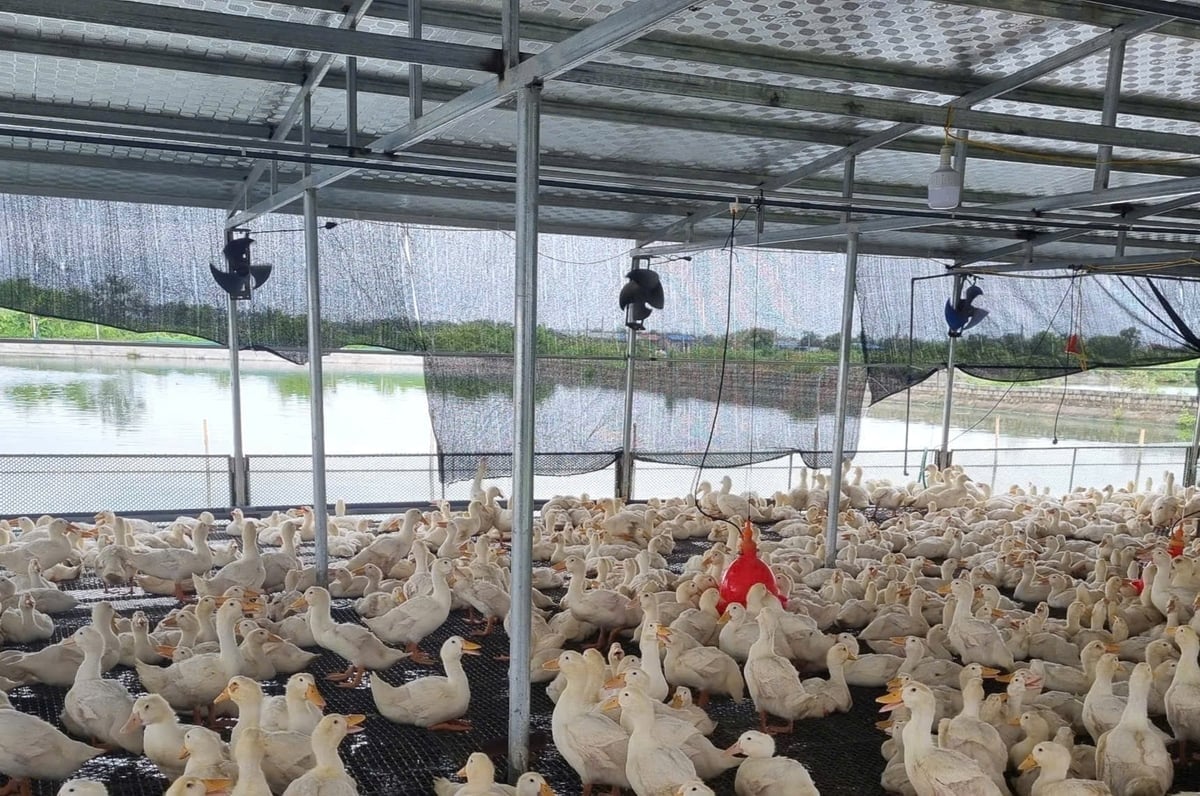
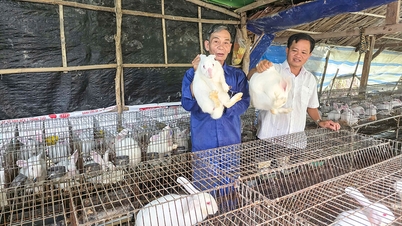
Livestock farming in suburban areas of Hai Phong is undergoing positive transformation. Photo: Dinh Muoi.
This strategy is expected to be implemented on two fronts. Firstly, for areas that have been and are currently implementing bans on livestock farming within the city limits according to Resolution 20 of the former Hai Phong and Hai Duong provinces , rigorous monitoring will continue to ensure complete cessation. Despite facing considerable difficulties in changing the livelihoods of hundreds of households, initial results on both sides have been very positive. Many livestock facilities have ceased operations, and the farm areas have been repurposed, contributing to the improvement of the urban living environment.
Currently, Hai Phong City is considered one of the largest livestock and aquaculture centers in Northern Vietnam, with a total poultry population of 17.45 million, a pig population of over 457,900, and a buffalo and cattle population of nearly 20,000.
Secondly, for suburban areas, especially those not subject to a complete livestock ban, the development of livestock farming should be oriented towards modern, bio-secure practices with high added economic value. The goal is to gradually reduce small-scale, scattered farming and replace it with concentrated farm models that apply high technology.
“We encourage farms to invest in advanced waste treatment systems (biogas, biological bedding), apply closed-loop farming processes, and strictly control biosecurity. We persistently promote and require farmers to strictly adhere to the ‘four no’ principles – no concealing outbreaks, no selling sick pigs, no transporting sick pigs, and no indiscriminately discarding pig carcasses into the environment. These principles have proven effective in disease prevention and control,” said a leader of the Hai Phong Fisheries, Livestock and Veterinary Department.
To achieve this vision, according to the Hai Phong Department of Fisheries, Livestock and Veterinary Medicine, localities need to shift their investment mindset among small-scale farmers, allocate resources for disease prevention and control, and manage small-scale slaughtering. The merger has created a vast area with diverse customs, practices, and levels of development, requiring a unified yet flexible legal framework.
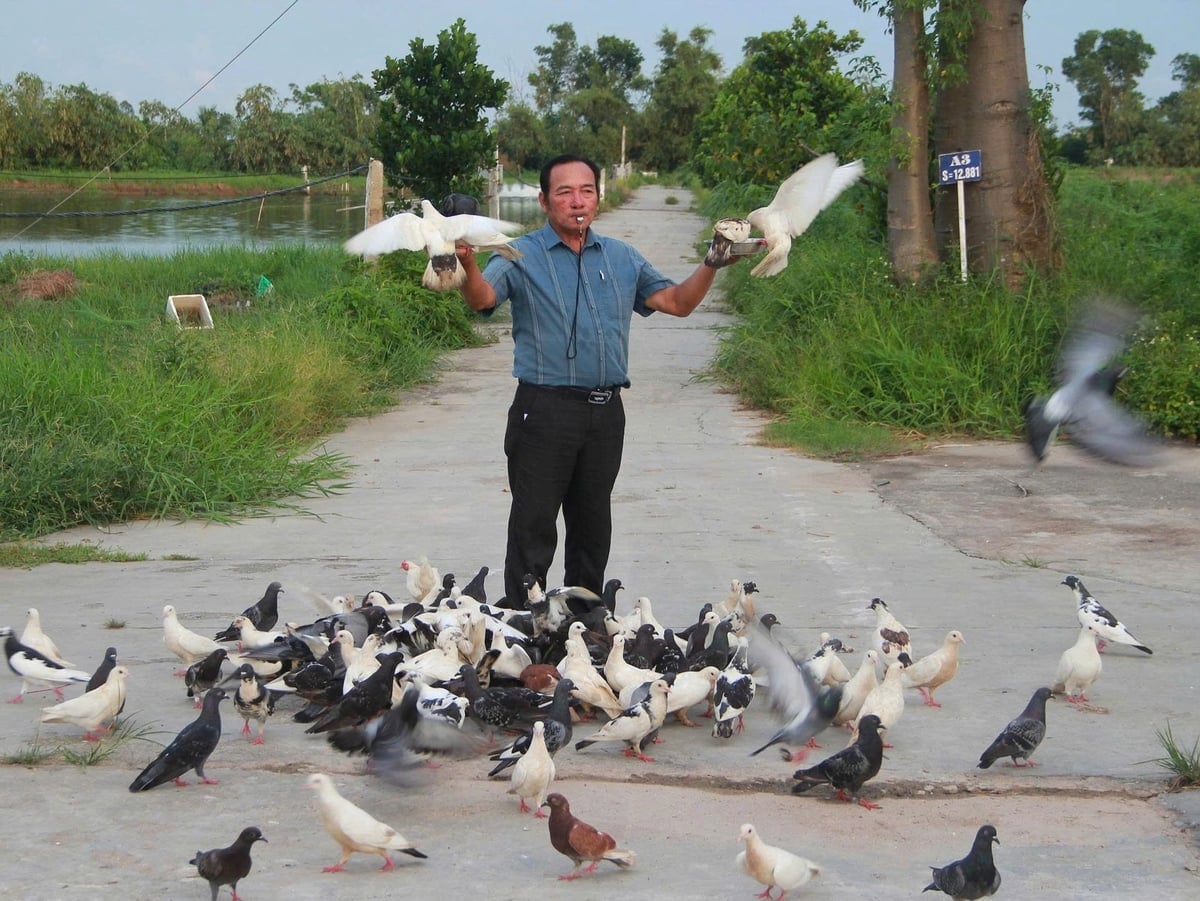
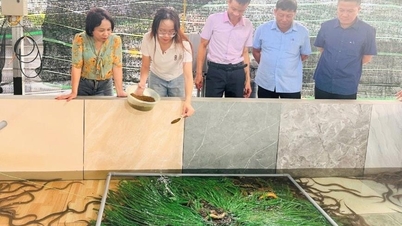
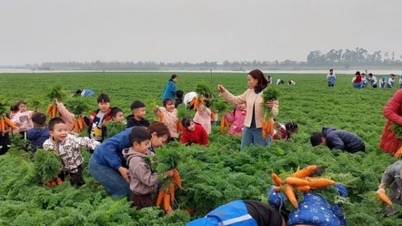
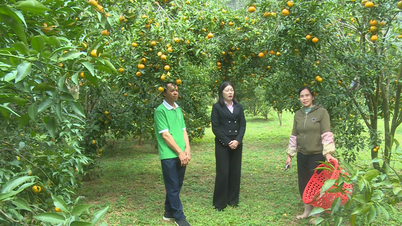
Livestock farming combined with ecotourism in An Khanh commune, a suburban area of Kien An. Photo: Dinh Muoi.
To address this, three main groups of solutions are needed. Firstly, institutional and resource consolidation is necessary. It is crucial to promptly review and advise the Hai Phong City People's Committee to submit to the City People's Council a decision on areas where livestock farming is prohibited after the merger, in line with new development requirements.
In addition, central ministries and agencies should promptly issue decrees on policies to support the prevention and control of animal diseases, enabling localities to be more proactive. Simultaneously, it is necessary to increase allowances for veterinary staff at the commune and village levels to support the frontline, considering this a strategic investment in health security in livestock farming. Allocating sufficient funds for sanitation, disinfection, and sterilization is also a top priority.
Secondly, we need to strengthen the application of science and technology and training. We will promote in-depth training and workshops on biosafety in livestock farming techniques, waste treatment, and modern farming models for residents and ward officials. We need to build a traceability system using QR codes, connecting information from farms to retail outlets, helping consumers choose safe products and creating a transparent and effective monitoring mechanism.
Finally, it is crucial to enhance inter-agency coordination and strict control. The inter-agency coordination regulations should be strengthened to establish mobile task forces at transportation hubs and hotspots, with veterinary expertise taking the lead. In particular, the control of small-scale slaughtering needs to be addressed decisively and comprehensively, strictly enforcing the planning of a centralized slaughterhouse network. Breakthrough mechanisms such as land lease fee exemptions and interest rate subsidies should be promptly implemented to attract businesses to invest in centralized slaughterhouses, while a roadmap and appropriate support policies should be in place to help small-scale slaughterhouse operators transition to other professions.
Source: https://nongnghiepmoitruong.vn/chien-strateg-kep-cho-chan-nuoi-do-thi-va-ven-do-hai-phong-d789539.html

![[Live] 2025 Community Action Awards Gala](/_next/image?url=https%3A%2F%2Fvphoto.vietnam.vn%2Fthumb%2F1200x675%2Fvietnam%2Fresource%2FIMAGE%2F2025%2F12%2F16%2F1765899631650_ndo_tr_z7334013144784-9f9fe10a6d63584c85aff40f2957c250-jpg.webp&w=3840&q=75)
![[Photo] Prime Minister Pham Minh Chinh receives Lao Minister of Education and Sports Thongsalith Mangnormek](/_next/image?url=https%3A%2F%2Fvphoto.vietnam.vn%2Fthumb%2F1200x675%2Fvietnam%2Fresource%2FIMAGE%2F2025%2F12%2F16%2F1765876834721_dsc-7519-jpg.webp&w=3840&q=75)
![[Photo] Prime Minister Pham Minh Chinh receives the Governor of Tochigi Province (Japan)](/_next/image?url=https%3A%2F%2Fvphoto.vietnam.vn%2Fthumb%2F1200x675%2Fvietnam%2Fresource%2FIMAGE%2F2025%2F12%2F16%2F1765892133176_dsc-8082-6425-jpg.webp&w=3840&q=75)

![[Image] Leaked images ahead of the 2025 Community Action Awards gala.](/_next/image?url=https%3A%2F%2Fvphoto.vietnam.vn%2Fthumb%2F1200x675%2Fvietnam%2Fresource%2FIMAGE%2F2025%2F12%2F16%2F1765882828720_ndo_br_thiet-ke-chua-co-ten-45-png.webp&w=3840&q=75)












































































Comment (0)