

In previous collections, Trang Thanh's poetry was rich in femininity and musicality; in this collection, however, the contemplative, social, and suggestive elements are explored more extensively.
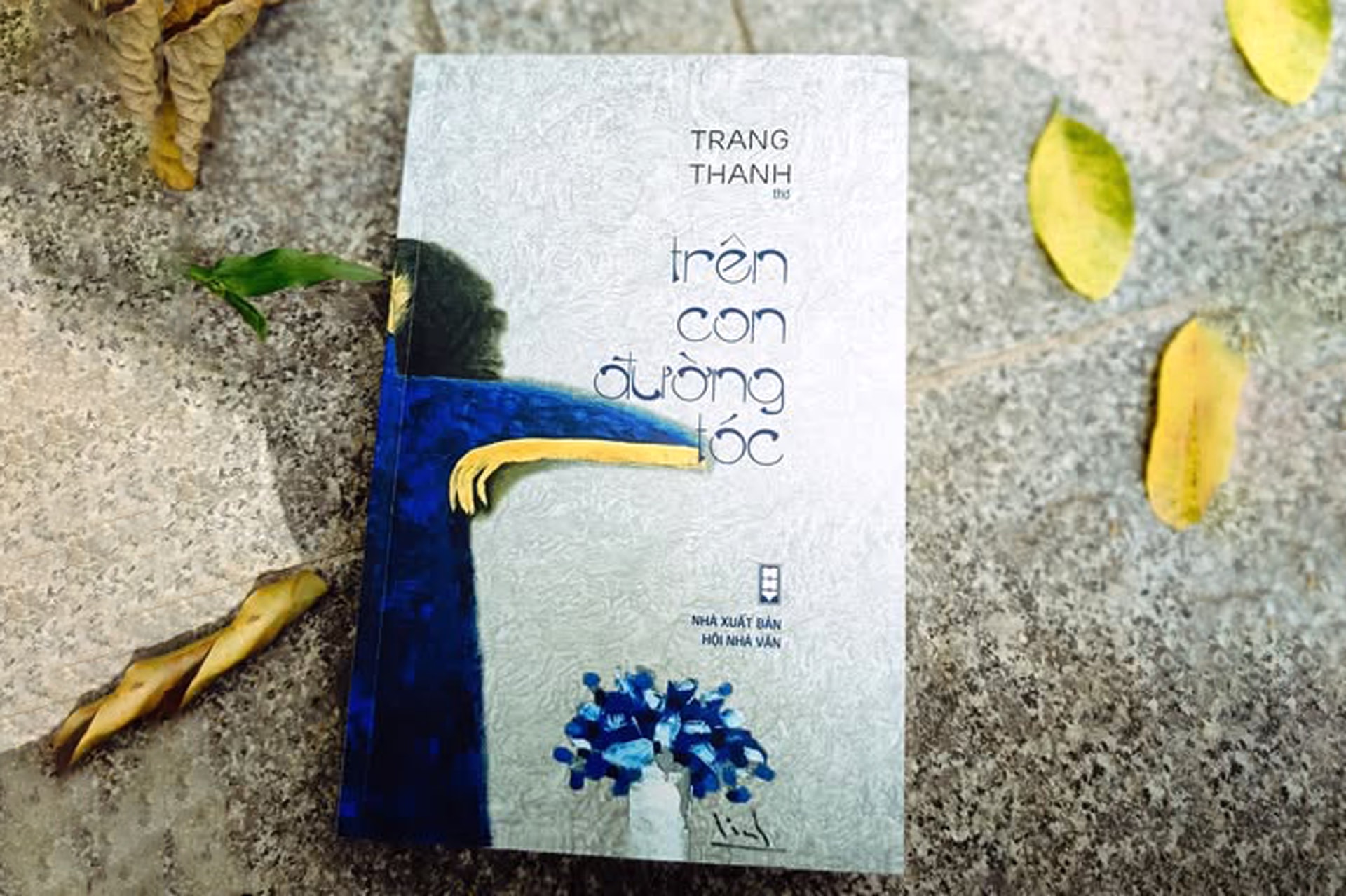
In the section "Returning to the Human World," readers encounter a sincere Trang Thanh, sensitive to small, familiar things like the shadows of birds, fish, fields, flowers, and grass, and sensitive to time such as winter, October, and night... This is also how she returns to her village, where her grandmother, father, and mother reside, with countless vivid memories. Her homeland in Trang Thanh's poetry appears not only through the green of rice paddies, the white of evening smoke, and the blue of the river, but also through the quiet beauty of calloused, hardworking hands. Trang Thanh identifies herself as a country girl, of the fields and the river; all these images become the aesthetic source in her poetry. The collection contains very evocative lines: "We grow up and learn to love plants and trees / every cell in us is soaked with the sweat of our mother's clothes / the land offers sweet fruits and flowers" ("Writing from Mother's Field"); "but time is small / demanding to look in the mirror and count hairs / not beckoning anyone back to the dream harbor" ("Looking in the Mirror"). Or “The village, a zigzag of joys and sorrows / bustling about with dilapidated thatched roofs / people's eyes welling up with tears / waiting for spring's eyes to glisten with drops” (“Late Winter”).
In the section "Pain Spreads Fragrance on Thorny Branches," hidden beneath the richly symbolic language is pain, anguish, regret intertwined with love and passion. The author does not shy away from pain and emotional breakdown, but chooses to confront it, so that the pain does not create a sense of misery, but is elevated into a source of creativity, longing, and hope. Readers can easily find beautifully melancholic verses: "Hair sheds its tattered clothes in the changing seasons / You leave resplendent in the sad night" ; "Keep crying while your heart still trembles / On the face of life, a radiant jade" ("Tears"). Her poetry affirms that humans have the ability to transform sorrow into beauty, misfortune into hope. Many of Trang Thanh's poems evoke exhaustion before storms, but contain a yearning to anchor and take refuge in love and human connection: "Lotus begins its season of cultivation / The fleeting life begins to let go / The pure white lotus stems are pulsating with breath" ("Pain Spreads Fragrance on Thorny Branches").
In the section "My Hair Writes on the Clouds," Trang Thanh's poetry raises many questions, confronting the past, the present, and her own heart. The poem "On the Path of Hair" raises a unique feminist voice. The woman doesn't choose the grand, concrete, stone-paved road, but chooses to walk on the path of her hair, on something fragile and small. "The woman walks in the pitch-black night on her hair / on an endless road braided from countless fallen strands of hair / from her tiny head." Perhaps it is precisely these small, fragile things that possess hidden strength and resilience?
The poetry collection "On the Path of Hair" is rich in symbolism and metaphorical imagery, awakening the reader's imagination while leading them into a world of dialogue and contemplation on the human condition. Through this collection, the author reaffirms that there are truly beautiful pains and sorrows. Otherwise, how could there be so many sad yet beautiful poems in the world?
Source: https://hanoimoi.vn/co-nhung-noi-buon-rat-dep-730936.html


![[Photo] General Secretary and President To Lam presides over a working session with the Central Policy and Strategy Committee on the development of the materials industry.](https://vphoto.vietnam.vn/thumb/1200x675/vietnam/resource/IMAGE/2026/05/21/1779359935432_a3-bnd-3129-1412-jpg.webp)






































































Comment (0)