

The Stephania root has a distinctive shape, half submerged and half exposed in the soil, so it is grown as a bonsai and ornamental plant, in addition to being used as a medicine to treat insomnia and some other ailments.
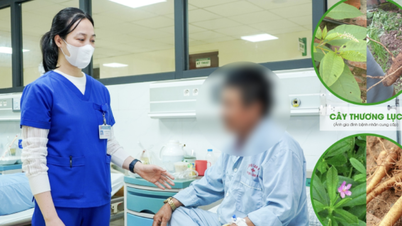
According to Dr. Nguyen Tran Nhu Thuy, Specialist Level 1, University of Medicine and Pharmacy Hospital of Ho Chi Minh City - Branch 3, Stephania tetrandra is a climbing plant with heart-shaped leaves and a slender stem that is very small compared to the tuber; the plant is usually about 10-20 meters long.
The base of the stem swells into a tuber, usually spherical, lying half-submerged in rock crevices or buried in the soil. The size of the tuber varies and can weigh up to several tens of kilograms, depending on the species. Because of its large tuber, the plant is also called elephant mugwort.
The medicinal part of the Stephania tetrandra plant is the tuber. The tuber is the swollen base of the stem. The tubers are harvested year-round, but harvesting them in the autumn or winter months results in higher quality active ingredients.
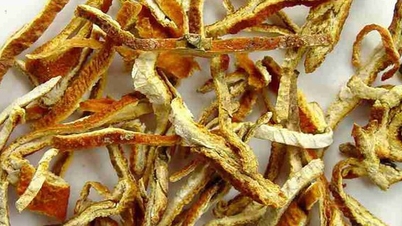
The Stephania root needs to undergo a processing step before it can be used, usually by scraping off the black outer skin or slicing it into pieces before pressing to extract the essence, soaking it in alcohol, drying it, or grinding it into powder.
According to modern medicine, the chemical composition of Stephania tetrandra tubers mainly contains alkaloids such as rotundin, cycleanin, stepharin, and roemerin. Rotundin has a significant sedative, hypnotic, and analgesic effect; cycleanin helps reduce inflammation; roemerin causes local anesthesia; and stepharin inhibits cholinesterase. Therefore, medicinal preparations from Stephania tetrandra tubers are effective in maintaining a relaxed state, providing sedation, and treating insomnia.
In traditional medicine, the Stephania tetrandra plant has a bitter-sweet taste and is used to calm the nerves, nourish the lungs, and relieve spasms. It is believed to alleviate weakness, insomnia, bone pain, dizziness, and asthma. It is often combined with other herbs in doses of 4-12g, in the form of decoctions or powders.
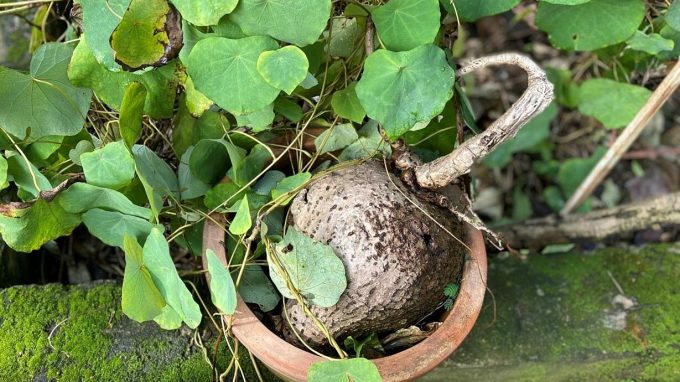
Stephania root. Photo: Ho Chi Minh City University of Medicine and Pharmacy.
A remedy for insomnia using lime.
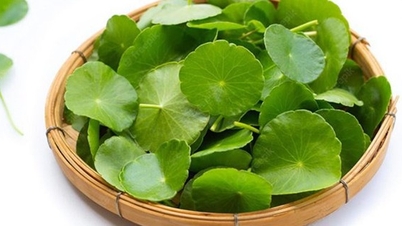
Recipe 1: Stephania root, Passiflora incarnata, Vitex negundo leaves, 12 g each; Nelumbo nucifera seed 6 g; Glycyrrhiza glabra 6 g. Decoction to be taken once a day.
Recipe 2: Lotus seeds, longan, and sour apple kernels (roasted), 10-15 g each; Stephania root 8 g; and Vitex negundo leaves 12 g. Boil and drink one dose per day, throughout the day and 30 minutes before bedtime.
Recipe 3: Mix dried Stephania root and 40% white wine in a ratio of 1:5 (1 kg of dried root and 5 liters of wine). Soak for about 4 weeks before use. Drink 2-3 times a day, about 20-30 ml each time.
Due to its sedative and sleep-inducing properties, caution should be exercised when driving, working at heights, or performing tasks involving machinery that require alertness.
The active ingredient roemerin found in Stephania tetrandra tubers, if used in excessive amounts, can numb the mucous membranes and reduce heart rate. Patients with a history of cardiovascular events or arrhythmias should exercise extreme caution. Stephania tetrandra tubers also contain small amounts of toxins; patients should not use them without a professional's prescription.
Only 30g of Stephania tetrandra should be used per day; more than 30g can cause poisoning and affect health. Elderly people with chronic insomnia, pregnant women, or breastfeeding mothers should also exercise caution.
Dr. Thuy stated that currently, many products on the market contain ingredients extracted from Stephania tetrandra root. The usual dosage is 30-60 mg in tablet form. Overdosing on these preparations can cause poisoning. Mild symptoms may include drowsiness, nausea, vomiting, dizziness, while severe symptoms can include agitation, restlessness, chest tightness, palpitations, weakness in the limbs, and coma. Therefore, patients should carefully read the instructions or consult with a healthcare professional before use.
America and Italy
Source link

![[Image] National Assembly discusses the implementation of the socio-economic development plan.](https://vphoto.vietnam.vn/thumb/1200x675/vietnam/resource/IMAGE/2026/04/20/1776696707422_ndo_br_img-20260420-185419-jpg.webp)

![[Photo] General Secretary and President To Lam meets with National Assembly delegates from ethnic minorities.](https://vphoto.vietnam.vn/thumb/1200x675/vietnam/resource/IMAGE/2026/04/20/1776696701056_a1-bnd-8331-3342-jpg.webp)













































































Comment (0)