

Is pho noodle soup derived from rice rolls?
Considered the "foundation" of pho, pho noodles offer unique and surprising insights into their ancient origins. Writer and researcher Nguyen Ngoc Tien once shared that one theory about the origin of pho is that it originated from a dish of buffalo noodle soup for porters in the ferry terminals and riverside areas of the Red River ( Hanoi ). Later, noodle vendors replaced the buffalo meat with thinly sliced Thanh Tri rice rolls and beef to make it cheaper.
The Thanh Tri rice rolls used in pho were later cut thicker to better accommodate the hot broth and to be eaten with tender yet chewy beef.
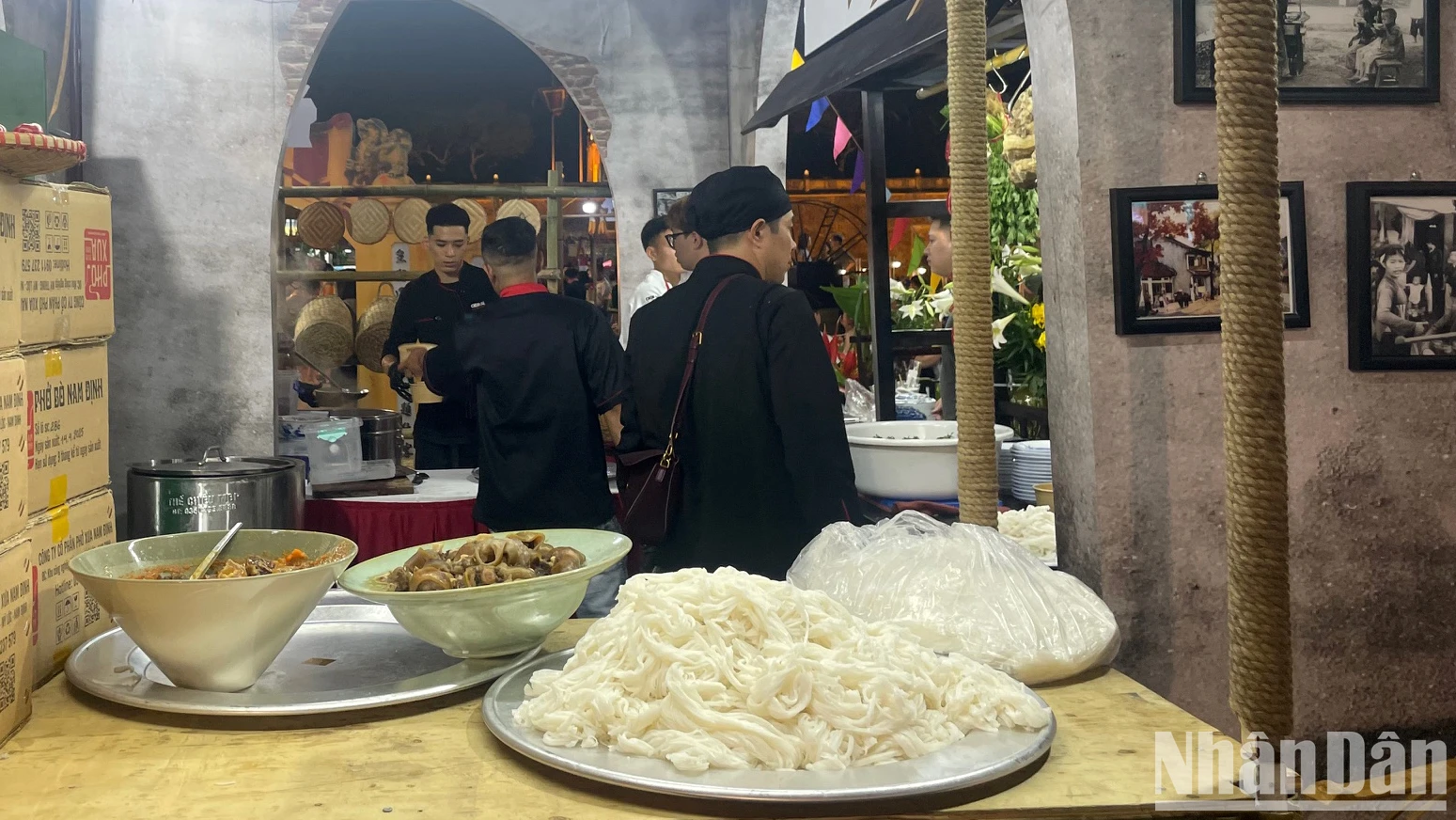 |
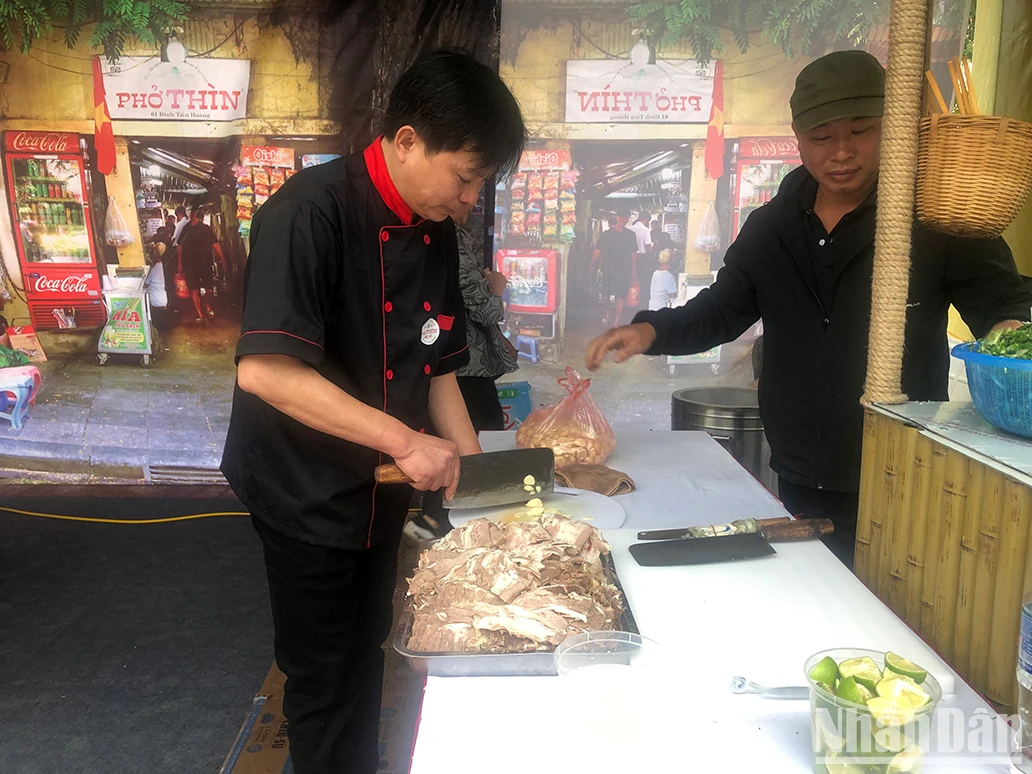
Preparing pho noodles to serve customers at the Pho Festival 2025. |
Culinary researcher Vu The Long shared at a pho conference that the rice flour used to make pho noodles must be ground using a stone mill to achieve the best taste. The craftsman must continuously pour water into the mill while turning the millstone, allowing the soaked rice inside to mix with the flowing water to form a thin paste.
An essential secret in making pho noodles is that when grinding the rice flour, a quantity of cooked, cooled rice must be added to the flour. This cooled rice makes the pho noodles chewy, giving them a slightly firm texture when eaten.
In the old days, there were people with very particular tastes who would order a dizzying amount of pho at a restaurant: clear broth, unsliced onions, large noodles, meat spread all over the bowl… But those were people from the old generation, so the pho restaurants understood them all.
Writer and researcher Nguyen Ngoc Tien
In the old days, rice noodles were made manually using a cloth mold stretched over the mouth of a large pot. The ladle used to scoop the noodles was made from a bamboo stick tied to a flat piece of coconut shell. The lid covering the cooked noodles was also made from woven bamboo. When cooked, the noodles were lifted out using a bamboo tube, hung on a bamboo pole to cool, and then sliced.
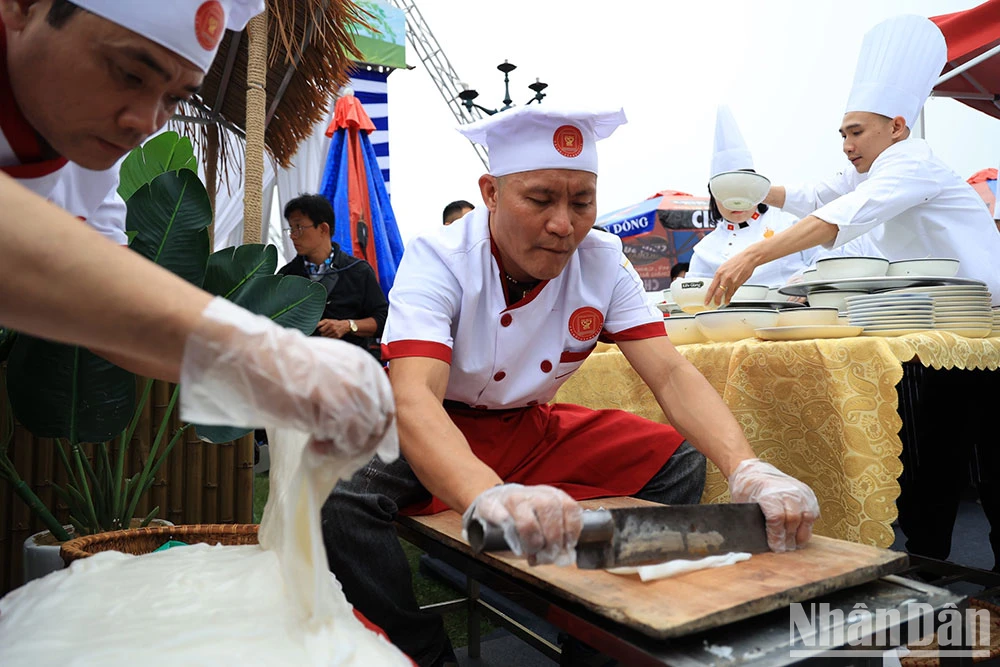 |
Slicing rice noodles. (Photo: HA NAM) |
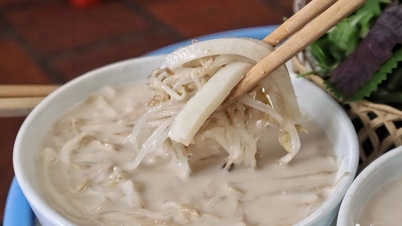
The rice noodles are sliced using a special knife with two handles at each end. The person slicing rolls up the sheet of rice noodles and then rhythmically slices them into strands about half the width of a little finger.
In the past, the noodles were sliced only when customers ordered them. Nowadays, pho noodles are industrially made and sliced, resulting in thin, uniform strands, but they no longer retain their crispness. However, many pho restaurants still maintain the tradition of making their own noodles to create a unique flavor.
Also regarding the story of pho noodles, writer and researcher Nguyen Ngoc Tien said that when he was a child, his family lived next to a Chinese family who specialized in making pho noodles, so he understood the essence of pho noodles and how to make them suitable for a bowl of pho.
Rice noodles used to be handmade and cut into large pieces so that when broth was added, the spices, seasonings, and richness would cling to the surface of the noodles, creating a richer, more flavorful taste. Nowadays, rice noodles are industrially cut into small, thin pieces, which look nice and seem delicious, but they don't retain the spices and richness as well as the large-cut noodles. Those with discerning palates will notice the blandness of the smaller-cut noodles.
Interestingly, according to writer Nguyen Ngoc Tien, the older the rice used to make pho noodles, the better. Older rice has less starch, resulting in crispier noodles that aren't as sticky as those made with newer rice, and therefore, the seasonings and broth adhere better to the noodles.
Broth – The soul of a bowl of pho
The soul of a bowl of pho is the broth. The broth has weathered the ups and downs of history, reflecting different eating habits and tastes depending on the conditions of each era, but what is essential to its essence remains unchanged to this day.
In theory, any part of the beef can be used to make pho, but the best is the marrow bone, because the marrow releases a rich, sweet flavor along with the aroma of beef. The bones must be very fresh; frozen bones can never produce the authentic pho broth.
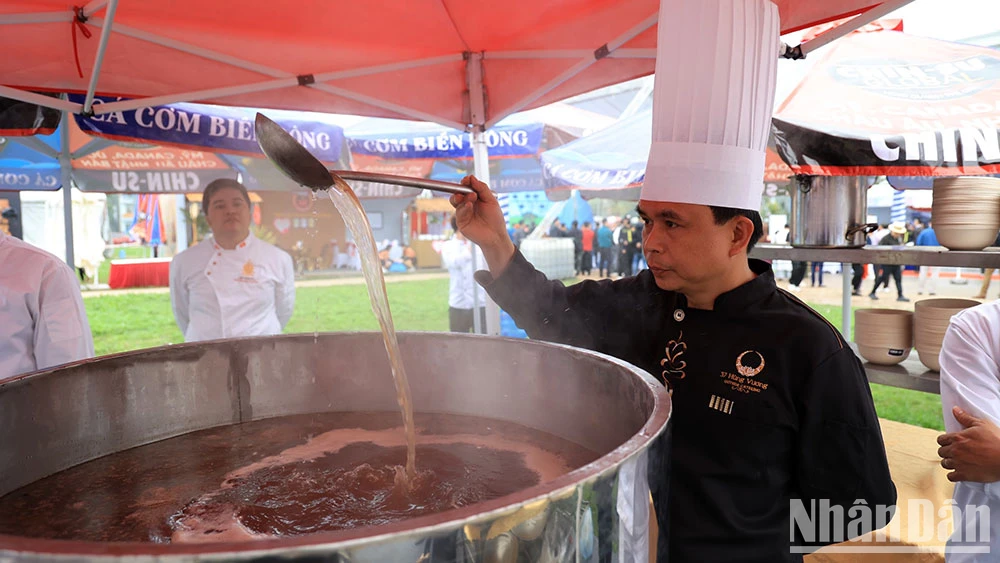 |
The pho broth contains many different spices. (Photo: HA NAM) |
According to researcher Vu The Long, beef and pork bones are split, washed, blanched in boiling water to remove the odor, then placed in a large pot and cooked over a charcoal fire. The bones must be simmered overnight so that the pho is ready for customers in the morning. Once the bones are removed from the pot, they can be easily broken by hand like a piece of chalk because all the collagen and bone marrow have dissolved into the broth.
The way the bones are cleaned is very important. Thoroughly cleaning the bones will result in a clear, fragrant broth; otherwise, the broth will have a strong, unpleasant beefy smell. Bones are usually cleaned by boiling them with salt and ginger, then discarding the first batch of water. After that, the bones must be thoroughly washed, and all remaining meat must be removed. Even a tiny bit left behind will make the broth cloudy.
For pho makers, experience in boiling the broth is crucial. How long to boil it, to what temperature, all depend on practice. Someone must always be watching the pot, ensuring it simmers gently, never boiling over – a sudden boil would ruin the entire pot of pho. Simmering bones over charcoal produces the best broth, but nowadays, electric heating is both convenient and cleaner, so few people still use charcoal.
When the pho broth starts boiling, you must constantly skim off all the foam. Simmer the bones for over 10 hours, without letting the stove go out, letting it simmer until the next morning, and continue cooking until all the broth is sold.
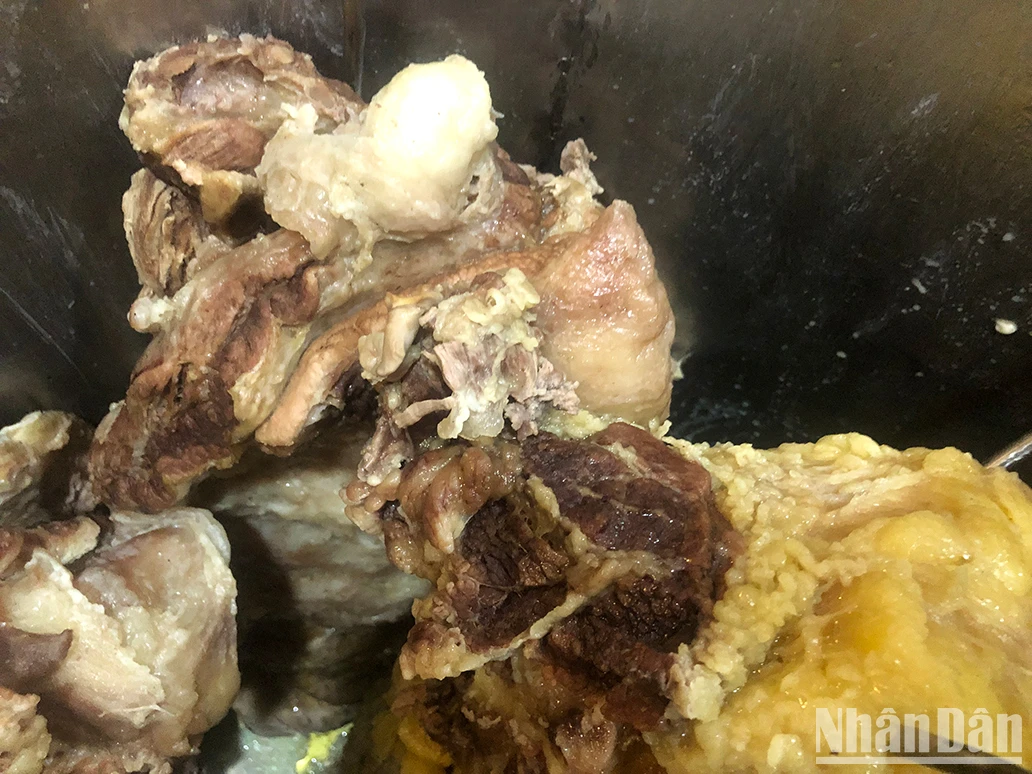 |
These are the favorite cuts of meat for diners in pho. |
Besides beef and pork bones, which are the basic components of the broth, fish sauce is also an indispensable ingredient. Writer and researcher Nguyen Ngoc Tien says that a skilled pho cook must know how to choose the right fish sauce and season it just right to create the unique flavor that only Vietnamese pho possesses. It must be natural fish sauce to create the distinctive aroma and taste. Fish sauce made from fish has a slightly unpleasant smell, but it makes for a fantastic pho dish.
In addition, the pho broth also contains many different spices that create its distinctive flavor. According to researcher Vu The Long, the spices added to the broth vary in proportions, such as star anise, cinnamon, cardamom, roasted shallots, ginger, etc. Some restaurants even add shrimp heads, sea worms, or squid tentacles... The pho broth is a restaurant's secret recipe.
In the old days, there were people with very particular tastes who would order a dizzying amount of pho at a restaurant: clear broth, unsliced onions, large noodles, meat spread all over the bowl… But those were people from the old generation, so the pho restaurants understood them all.
Writer and researcher Nguyen Ngoc Tien
Writer Nguyen Ngoc Tien revealed the secret to making traditional Hanoi pho broth: The broth is made with sea worms, grilled snakehead fish, crushed grilled onions, and a touch of cinnamon and star anise. This traditional Hanoi pho broth is very sweet. The bones are simmered, skimming off the foam, over wood fire instead of charcoal. Simmering bones over charcoal results in cloudy broth, but using wood fire makes it very clear. The bones are simmered over a moderate heat, and left to simmer.
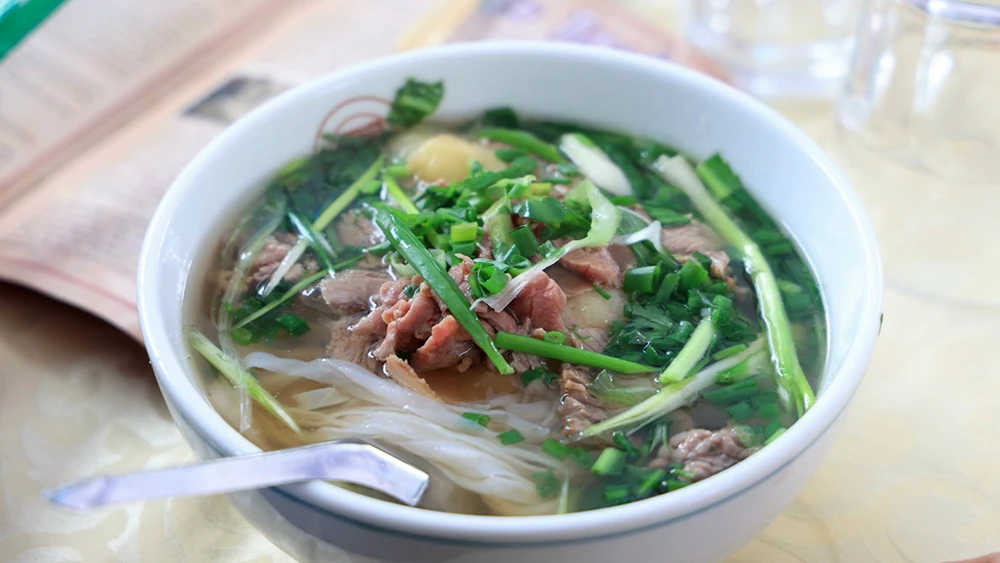
Meat, spices, and a bowl of pho.
The types of meat added to a bowl of pho vary widely. Beef pho basically comes in a few varieties: rare beef pho, primarily thinly sliced and pounded beef blanched in hot broth; rare brisket pho, with added pieces of fatty beef (yellowish and crispy), offering a unique, savory flavor from the cooked brisket fat; rare flank pho, with added pieces of beef tendon, giving it a chewy texture; and cooked beef, which is lean beef boiled until tender and sliced very thinly.
Besides the above types, people also eat pho with wine sauce. It's beef cooked in French-style wine, but when mixed with pho noodles, it becomes a French-Vietnamese dish with a distinct Vietnamese identity.
 |
Regarding beef specifically, writer Nguyen Ngoc Tien describes a very meticulous and authentic way of preparing it by the descendants of "Thin Bo Ho": "The beef is pounded into small pieces, spread on a cutting board, and the cook uses the flat side of a knife to make a smooth cut across the meat before placing it in a bowl and pouring a ladle of boiling broth over it. You can see the meat turning a distinct pink color," he recounted.
Researcher Vu The Long also noted that the herbs and spices added to pho vary greatly. In the past in Hanoi, pho was typically only scallions and chopped mint. In winter, coriander was added. Later in Hai Phong , pho cooks added sawtooth coriander. Modern beef pho also includes a few slices of onion for a distinctive, pleasantly pungent flavor.
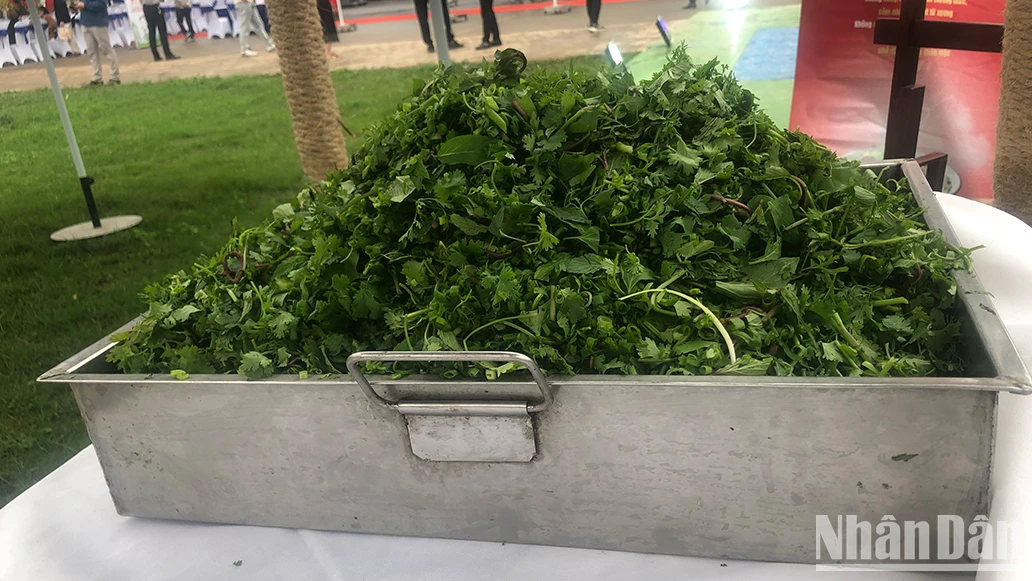 |
Herbs and spices for pho. |
When eating pho, some people like to squeeze in some lime wedges, while others eat it with garlic vinegar. Limes from Hanoi have a different flavor than those from Saigon, and the way they are cut also differs. Those who don't like lime can add garlic-infused vinegar for sourness. Pho is usually served with chili peppers. There are many types of chili peppers. Some people like to add chili sauce to their pho, others prefer fresh chili peppers or chili peppers pickled in vinegar. Besides chili peppers, sprinkling a little black pepper into a bowl of pho will bring out a special aroma.
Regarding pho bowls, according to writer and researcher Nguyen Ngoc Tien, there are certain rules. The bowl must be thick enough to retain heat and prevent the person holding it from burning their hands. Nguyen Ngoc Tien explains that pho bowls in the past were narrow-bottomed, not too large, because pho was a treat, meant to be eaten in moderation, not until you were full. The narrow bottom of the bowl allowed for just the right amount of broth and noodles, ensuring the pho remained hot until finished. Today, pho bowls have changed due to individual needs and appetites.
 |
According to researcher Trinh Quang Dung, a delicious bowl of pho is about appreciating its aroma, its taste, its appearance, and its spirit. Appreciating the aroma means savoring the fragrance of the pho, as the heat of the broth brings out the scent of the pho noodles, onions, cilantro, chili sauce, and so on.
"Tri kỳ vị" means appreciating the sweetness of the broth, the meat, and all the ingredients in a bowl of pho. "Tri kỳ hình" means appreciating the visual appeal of a bowl of pho, with the translucent white of the noodles, the red of the chili peppers, the deep pink of the perfectly cooked beef, and the green of the scallions and herbs… "Tri kỳ hình" also comes from the pho stalls with their distinctive "tools of the trade," imbued with the aroma of the craft or the patina of time…
Pho, the simplest yet most elaborate dish, has all sorts of rules, yet none at all; it's all based on the "practice" of the cook and the diner... it has evolved over time and never relinquished its "throne" in the culinary "kingdom."
Source: https://nhandan.vn/di-tim-chuan-muc-pho-ngon-post873753.html


![[Image] A brilliant symphony and explosive power in the skies of Da Nang.](https://vphoto.vietnam.vn/thumb/1200x675/vietnam/resource/IMAGE/2026/05/31/1780196945787_anh-man-hinh-2026-05-31-luc-10-08-51.png)














![[Video] Sunset at Lap An Lagoon – Where the sun sets over the fishing nets](https://vphoto.vietnam.vn/thumb/340x192/vietnam/resource/IMAGE/2026/05/31/1780192137701_beach-landscape-sea-water-nature-grass-745871-pxhere-com.jpeg)







![[Image] A brilliant symphony and explosive power in the skies of Da Nang.](https://vphoto.vietnam.vn/thumb/402x226/vietnam/resource/IMAGE/2026/05/31/1780196945787_anh-man-hinh-2026-05-31-luc-10-08-51.png)

































































Comment (0)