


For Hanoi , effectively implementing the spirit of Resolution 79-NQ/TW will improve public resource management, enhance public services, combat waste and loss, and create a "lever" for the development of a modern city.
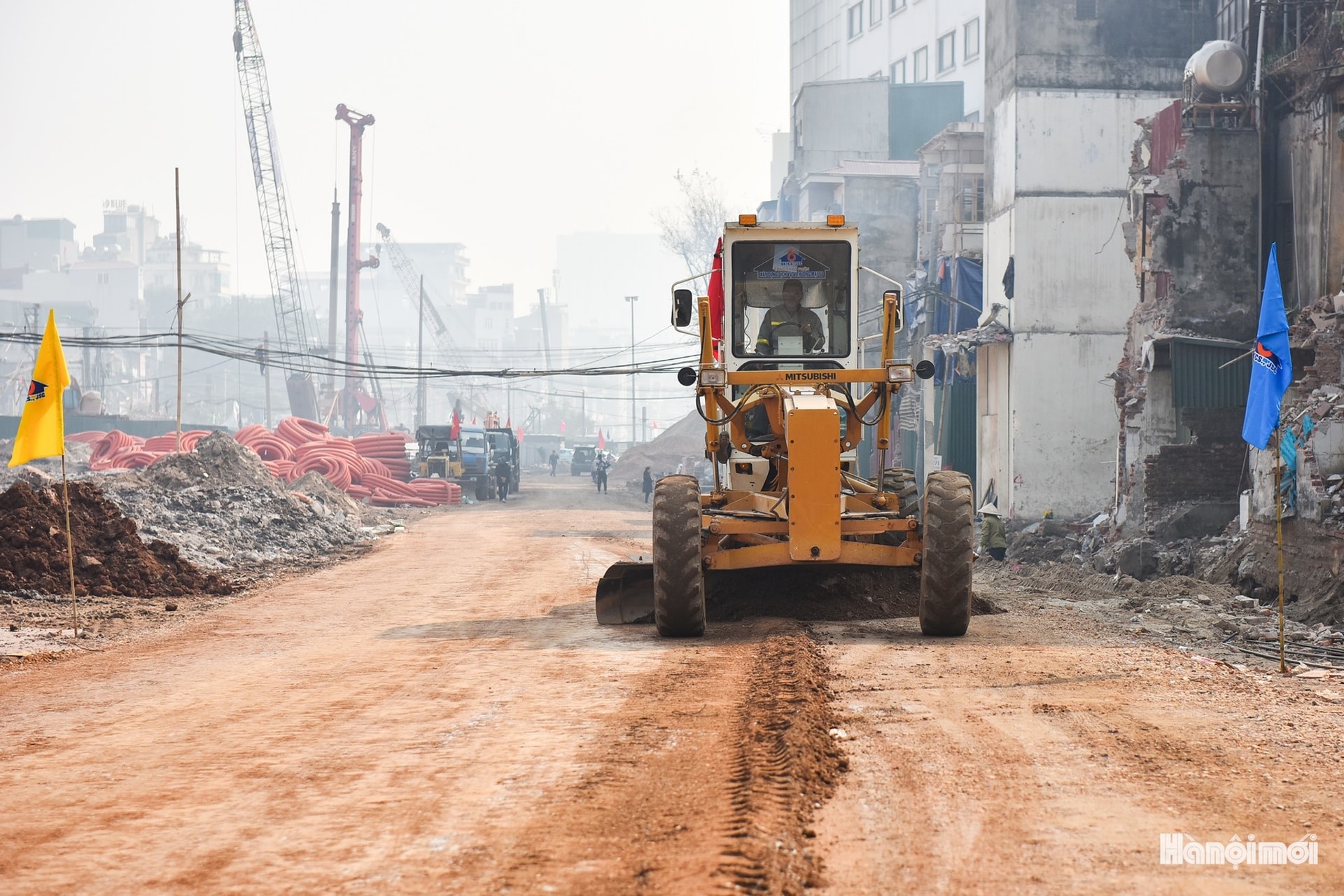
Mainstream but not "privileged"
A key point of Resolution 79-NQ/TW is the expansion and clarification of the scope of the state economy . The foundation of the state economy includes resources held, managed, and controlled by the State: land; natural resources; infrastructure invested by the State; budget; national reserves; state-owned financial funds outside the budget; state-owned enterprises; state-owned credit institutions; state capital in enterprises; public service units, etc.
This "positioning" is very accurate to the reality of Hanoi – where the greatest value lies in land, infrastructure, and the quality of public services. When considering all these components as the "state economy," the central question is no longer "how many enterprises are there," but rather: Are public resources being fully accounted for? Are public assets managed according to market principles and transparency? Is the social effectiveness of public spending and investment being measured according to international standards? The resolution calls for a thorough review, statistical analysis, evaluation, and accounting according to market principles, linked to development goals; effective management, prevention of loss and waste; and emphasizes resolving the relationship between the State, the market, and society effectively.
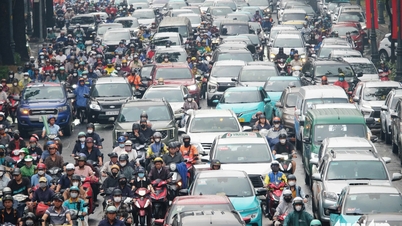
While reaffirming the leading role of the state-owned economy in ensuring macroeconomic stability, balance, national defense and security, and as a resource for timely intervention when sudden and urgent needs arise, Resolution 79-NQ/TW emphasizes a principle that represents a "renewal of thinking." This principle states that the state-owned economy is equal before the law with other sectors, engaging in healthy cooperation and competition; and has fair, open, and transparent access to resources and development opportunities. This implies "leading role" but does not mean "prioritization by command," much less "privilege." Leading role must be demonstrated through risk management capabilities, the ability to maintain stability, and the capacity to pave the way for technology, infrastructure, and markets. In Hanoi, a major urban hub with numerous bottlenecks (traffic, environment, clean water, waste management, housing, healthcare, education , etc.), this spirit has led to a new standard: Public services must not only be available, but also "good," "of fair value," and "reliable."
Affirming the leading and developmental role
The spirit of Resolution 79-NQ/TW, if translated into action in the capital, could converge into five priority programs that are "concise, measurable, and monitorable."
Firstly, a comprehensive inventory and accounting of public assets according to market standards, linked to combating waste, is crucial. The resolution emphasizes reviewing, compiling, evaluating, and fully accounting for assets, and preventing losses and waste. For Hanoi, the biggest "bottleneck" often lies in public land, office buildings, infrastructure assets, housing and land funds, and the efficiency of their exploitation. By doing this well, Hanoi can "free up" a huge amount of resources without increasing debt or increasing revenue at all costs.
Secondly, restructure state-owned enterprises/enterprises with state capital according to modern governance standards, with efficiency as the benchmark. Hanoi needs to standardize urban enterprise governance from transparent reporting, risk management, service KPIs, to mechanisms for selecting and rewarding personnel based on competence, separating public service tasks from business activities.
Thirdly, improving the quality of public services should follow the logic of "accuracy, completeness - with a roadmap - and support for vulnerable groups." Resolution 79-NQ/TW requires separating political tasks from business activities, while reforming the financial mechanisms of public service units, aiming for accuracy and completeness of costs with a suitable roadmap and transparency. For a special urban area like Hanoi, this is the "key" to both improving quality and avoiding price shocks, ensuring social welfare.
Fourth, use the state-owned economy to "pave the way" for digital transformation and green transformation in the capital city. When the state-owned economy acts as the "driving force," the private sector will participate more strongly through standardized public-private partnership models.
Fifth, establish a strong oversight and accountability mechanism, transforming "transparency" into discipline. Resolution 79-NQ/TW emphasizes openness, transparency, autonomy, and accountability, and promotes the prevention and fight against corruption and waste. For Hanoi, this needs to be concretized through the periodic publication of the efficiency of public asset exploitation; KPIs for public services; progress of infrastructure projects; and an "independent oversight" mechanism in large capital/asset transfer transactions.
Resolution 79-NQ/TW stipulates that the state-owned economy must serve as both a stable foundation and a pioneering spearhead. To achieve this, innovation is needed in thinking, institutions, governance, and implementation discipline. For Hanoi, "putting the Resolution into practice" is not just about implementation within the state-owned enterprise sector, but about upgrading the entire system of public resource management – ensuring full and transparent accounting, allocating capital according to categories, providing public services according to quality standards, and monitoring according to accountability standards. By doing so, Hanoi will not only fulfill the spirit of Resolution 79-NQ/TW but also create a modern urban governance model: a strong state in its capacity for innovation, a strong market in its efficient allocation, and a strong society in its oversight and consensus – meeting the requirements of a cultured, civilized, and modern capital city in this new stage of development.
Source: https://hanoimoi.vn/don-bay-phat-develop-modern-urban-city-731952.html


![[Photo] General Secretary To Lam works and extends New Year greetings to the Party Committee, government and people of Dak Lak province.](https://vphoto.vietnam.vn/thumb/1200x675/vietnam/resource/IMAGE/2026/02/11/1770808701306_ndo_tl_img-4099-5201-jpg.webp)





































































Comment (0)