

(CLO) Newsrooms are facing a digital revolution, where search algorithms are constantly changing and user behavior is ever-evolving. In this context, outdated news is just a click away, making journalistic SEO no longer an option, but a continuous innovation.
Challenges from algorithms and user behavior
" The world of search engines and user behavior is changing at a dizzying pace, meaning that methods that were effective yesterday may become obsolete today," commented Ms. Nguyen Nhu Mai, Director of Thinh Vuong Artificial Intelligence Company, who previously worked as the Head of SEO at Lao Dong Newspaper for many years.
In reality, Google's algorithms are constantly being updated, and Google increasingly prioritizes user experience. While people are familiar with the phrase 'Google SEO,' Google is actually based on user behavior. Google needs to provide the best, most reputable, data-driven, or expert-backed results that accurately reflect users' search intent.

Ms. Nguyen Nhu Mai - Director of Thinh Vuong Artificial Intelligence Company.
This requires SEO professionals to understand what users want when searching for a specific keyword, and then organize content accordingly. The pressure on writers is not only to write from a personal perspective, but also to put the reader at the center and meet their search needs. When content is relevant to the reader, the newspaper will attract attention and improve its ranking on Google, thereby increasing traffic.
"Journalists need to perform two tasks: research users (through a dedicated SEO department) to understand their needs and organize engaging content that resonates with readers' emotions. In a competitive information environment, unique, valuable content that is relevant to the target audience will succeed and be widely shared," Ms. Mai emphasized.
However, advanced search features display information directly on the search results page, reducing the number of clicks on links. Is this a cause for concern? Currently, there are two forms of search visibility: Google Ads (paid advertising) and SEO (organic optimization). SEO incurs personnel costs, but the display time is slower than advertising.
"However, the information displayed on search results pages is often incomplete, and users still need to click on the link to read the full text. Therefore, this is not the main factor causing the decline in traffic. The trend of watching videos on social media is the primary reason. The newspaper needs to diversify its content and be present on platforms like TikTok, Facebook, and YouTube to attract readers and increase viewership," Ms. Mai analyzed.
Using AI - A double-edged sword.
Previously, optimizing SEO for online newspapers was a major challenge for those without specialized knowledge. Newsrooms faced fierce competition, forcing reporters to race against time, quantity, and quality of articles. Ensuring articles were SEO-friendly and met Google's criteria required significant effort and time.
However, with the development of artificial intelligence, this process has become easier. Thanks to AI plugins like Yoast SEO or Rank Math, optimizing articles for SEO now only takes a few minutes instead of the 10-20 minutes it used to. AI helps journalists save time, improve efficiency and quality of work, and increase the likelihood of articles ranking well on search engines.
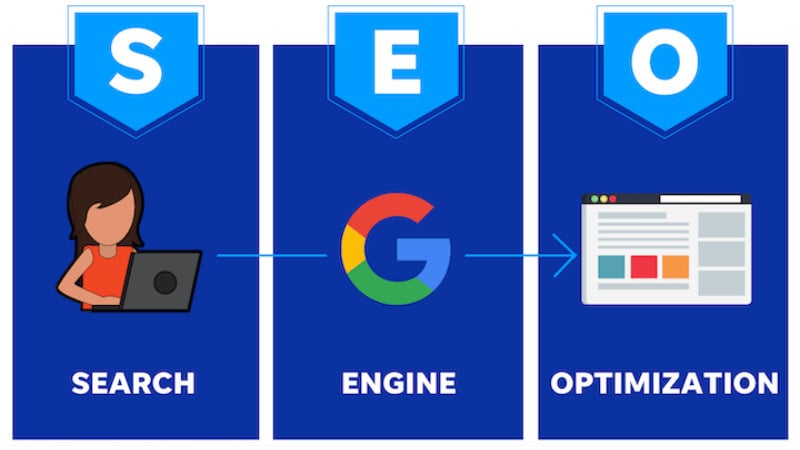
SEO professionals must understand what users want when searching for a specific keyword, and then organize content accordingly.
"To optimize SEO more effectively, AI plays a powerful supporting role. However, this technology also carries many risks," Ms. Mai warned. "For example, AI can create 'deepfake' videos from personal images and videos, causing serious consequences. Although this technology saves time and creates diverse content, it also creates a major security vulnerability."
The use of individuals' images and voices to train AI can be misused, leading to the creation of fake videos that damage a person's honor and reputation. Even facial recognition technology in financial transactions could be exploited. This is particularly concerning given that many reporters and journalists use AI to create virtual presenters or build personal brands.
"Furthermore, AI can generate unverified information, or even fabricate data. If newspapers rely entirely on AI for writing articles without thorough verification, their reputation and brand will be severely damaged," Ms. Mai further analyzed.
Unique content is the key to success.
SEO, or Search Engine Optimization, is the process of optimizing articles to rank well in search engines. To achieve this, it is necessary to adhere to the criteria set by Google.
First, the article title needs to be SEO-friendly, usually limited to around 60 characters. Next, the summary (sapo) should concisely summarize the main content and include keywords, limited to 160 characters. The article content needs to be clearly structured with heading tags (H1, H2, H3...).
Additionally, it's necessary to build internal links to related landing pages and articles. Keyword density should also be distributed appropriately within the article to signal to Google robots that they understand the topic.
After gathering information, Google evaluates and ranks articles based on the quality, depth, and authority of the content compared to similar articles. If an article is well-optimized and meets users' search needs, Google will prioritize displaying that result.
"Many news articles from different news outlets have duplicate content. To address this, we need to change the perspective and viewpoint on the articles. If Google displays identical results, they will prioritize the result that was crawled first, based on brand reputation and traffic. Google cannot display 100 identical results, as this would reduce the value of the search engine, as is the case with Yahoo and Ask.J.E.K.," Ms. Mai said.
To meet user needs, every piece of information needs to be diverse. The best way is to create unique, engaging content that offers your own perspective and viewpoint. Simply copying will not make the article stand out.

Original content is what wins over the algorithm.
Ms. Nguyen Nhu Mai shared that, regarding experience in evaluating the effectiveness of SEO campaigns, we can use Google Analytics to measure traffic volume, traffic sources, search keywords, and most viewed pages. For journalists' SEO skills, it's necessary to research the reader profile, understand their needs and desires, and then develop appropriate topics.
"The difference between reporters lies in their research on topics, readers, and competitors. Copying information devalues the newspaper and causes readers to leave," Ms. Mai stated.
According to Ms. Nguyen Nhu Mai, a strong newsroom can achieve 4-5 million visits per day. Direct visits typically account for 60-70%. The success of an SEO project depends on the efforts of the reporters and the newsroom's regulations. Newsrooms that hold daily topic briefings and have professional work processes often achieve a large readership.
Lessons from world journalism
The challenges and opportunities facing Vietnamese journalism are similar to those experienced by newsrooms around the world. Speaking at the Emerging Tech Network event, Carly Steven, global SEO director of MailOnline, shared that in her two decades in the industry, she had never witnessed such instability and disruption. This stems from users searching for and accessing news in entirely new ways, thanks to the development of artificial intelligence, chatbots, and advanced search features.
This forces publishers to reconsider content quality in a "frank and rigorous" manner, focusing on value and meeting readers' needs, rather than simply optimizing algorithms.
In the context of a dynamic digital landscape, news organizations are proactively innovating and building strong relationships with their readers. Steven emphasized that AI is still very new, and publishers should focus on adapting and building relationships with readers, rather than optimizing for the unstable new technology.
"Previously, The Sun attracted billions of clicks, but the results weren't what we expected," shared Thomas Mackie, SEO director at The Sun. They were facing declining traffic and difficulties in generating commercial opportunities. However, they changed their mindset, building a comprehensive experience that delivers added value to readers.
Technology presents both opportunities and challenges. Ms. Steven emphasized the dizzying pace of technological change, making it difficult to build tools from scratch. News organizations often opt to purchase solutions from external sources, requiring high levels of flexibility and strategic thinking.
Publishers are gradually changing their perspective, realizing that success lies not in the quantity of articles published, but in creating truly valuable and high-quality content that meets the needs of readers. Ms. Steven emphasized that maintaining a loyal audience is already a great success.
Phan Anh
Source: https://www.congluan.vn/seo-trong-bao-chi-thach-thuc-tu-thuat-toan-va-hanh-vi-nguoi-dung-post337292.html
![[Photo] Prime Minister Pham Minh Chinh receives the Governor of Tochigi Province (Japan)](/_next/image?url=https%3A%2F%2Fvphoto.vietnam.vn%2Fthumb%2F1200x675%2Fvietnam%2Fresource%2FIMAGE%2F2025%2F12%2F16%2F1765892133176_dsc-8082-6425-jpg.webp&w=3840&q=75)

![[Photo] Prime Minister Pham Minh Chinh receives Lao Minister of Education and Sports Thongsalith Mangnormek](/_next/image?url=https%3A%2F%2Fvphoto.vietnam.vn%2Fthumb%2F1200x675%2Fvietnam%2Fresource%2FIMAGE%2F2025%2F12%2F16%2F1765876834721_dsc-7519-jpg.webp&w=3840&q=75)

![[Image] Leaked images ahead of the 2025 Community Action Awards gala.](/_next/image?url=https%3A%2F%2Fvphoto.vietnam.vn%2Fthumb%2F1200x675%2Fvietnam%2Fresource%2FIMAGE%2F2025%2F12%2F16%2F1765882828720_ndo_br_thiet-ke-chua-co-ten-45-png.webp&w=3840&q=75)
![[Live] 2025 Community Action Awards Gala](/_next/image?url=https%3A%2F%2Fvphoto.vietnam.vn%2Fthumb%2F1200x675%2Fvietnam%2Fresource%2FIMAGE%2F2025%2F12%2F16%2F1765899631650_ndo_tr_z7334013144784-9f9fe10a6d63584c85aff40f2957c250-jpg.webp&w=3840&q=75)






















































![[Photo] Prime Minister Pham Minh Chinh attends the Vietnam Economic Forum 2025](https://vphoto.vietnam.vn/thumb/402x226/vietnam/resource/IMAGE/2025/12/16/1765893035503_ndo_br_dsc-8043-jpg.webp)

























Comment (0)