

Ea Na commune was established by merging the entire area and population of three communes: Ea Bông, Ea Na, and Dray Sáp (formerly Krông Ana district). It covers an area of over 134 km² and has a population of over 42,000 people, making it one of the largest commune-level administrative units in the province. Its vast territory, scattered and uneven population distribution, and the fact that ethnic minorities account for nearly 35% of the total population, coupled with numerous economic , infrastructure, and access to basic services challenges, not only create pressure in management but also pose significant obstacles in maintaining and improving the quality of new rural development criteria. Therefore, immediately after stabilizing its organizational structure, Ea Na commune quickly reviewed all the criteria for new rural development, built a specific roadmap, flexibly mobilized support resources, and launched a widespread emulation movement for new rural development among the entire population, using consensus as the driving force and effectiveness as the measure.
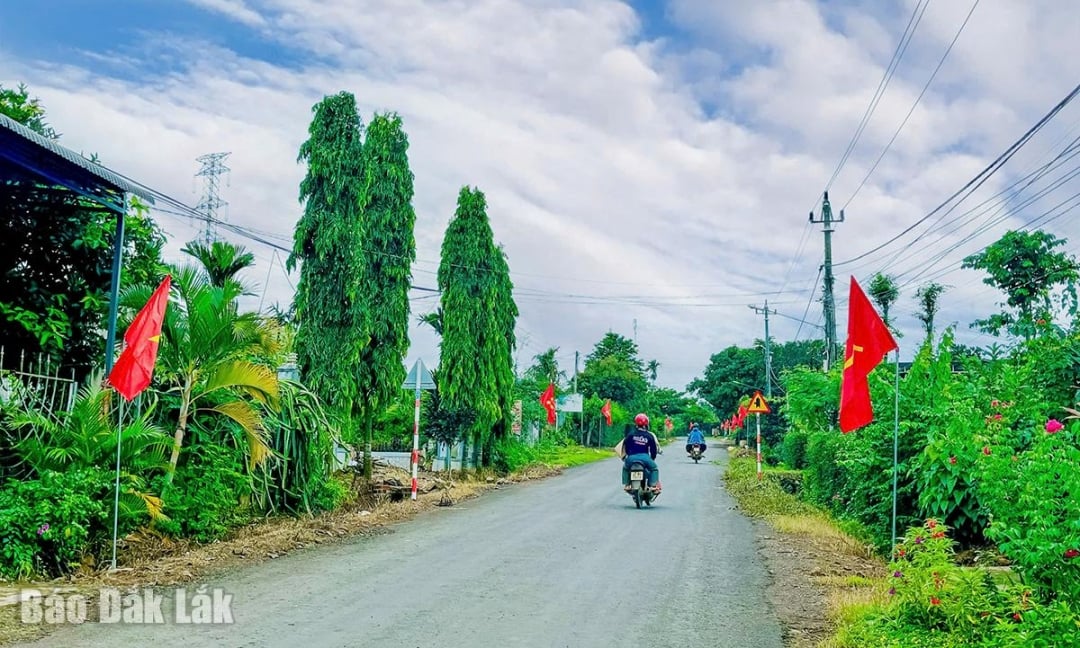 |
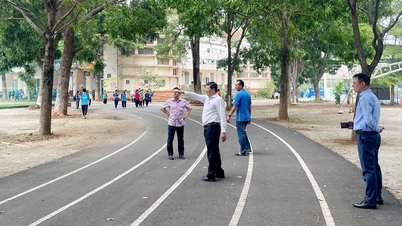
| The road leading to the center of Ea Na commune. |
Mr. Nguyen Minh Dong, Deputy Secretary of the Party Committee and Chairman of the People's Committee of Ea Na commune, said that currently there are no specific guidelines on the new rural development criteria to be applied to the commune after the merger. However, with a proactive spirit, the commune has conducted a comprehensive review of the criteria already met. In particular, the locality pays great attention to criteria related to the percentage of poor and near-poor households, which are fundamental factors directly impacting the quality of life of the people. Simultaneously, the commune has also proposed many appropriate policies to promote economic development in ethnic minority areas, gradually narrowing the gap. The review and reorganization of the school system is also being implemented to ensure the best learning conditions for students in the area.
Prior to the merger, all three communes of Ea Bông, Ea Na, and Dray Sáp had already been recognized as meeting the standards of the new rural development program. Building on that foundation, Ea Na commune continued to inherit, develop, and proactively improve the criteria according to practical requirements. The locality developed a specific plan and focused investment on essential public infrastructure such as roads, irrigation systems, electricity grids, schools, and health stations, ensuring they were in line with the newly expanded administrative scale.
Along with infrastructure investment, the commune places special emphasis on developing agriculture along the value chain, improving production efficiency and raising people's incomes, especially in ethnic minority areas. Many policies supporting livelihoods, developing key crops, and eliminating temporary and dilapidated houses have also been implemented, aiming to improve the quality of life and ensure social security.
The programs to eliminate temporary and dilapidated houses have been basically implemented by the commune, meeting the progress requirements according to the plan. For cases that do not yet meet the conditions for construction due to land-related procedures, the local authorities are actively reviewing them to propose appropriate support policies, ensuring that in the coming period, the locality will no longer have temporary or dilapidated houses, helping people stabilize their lives.
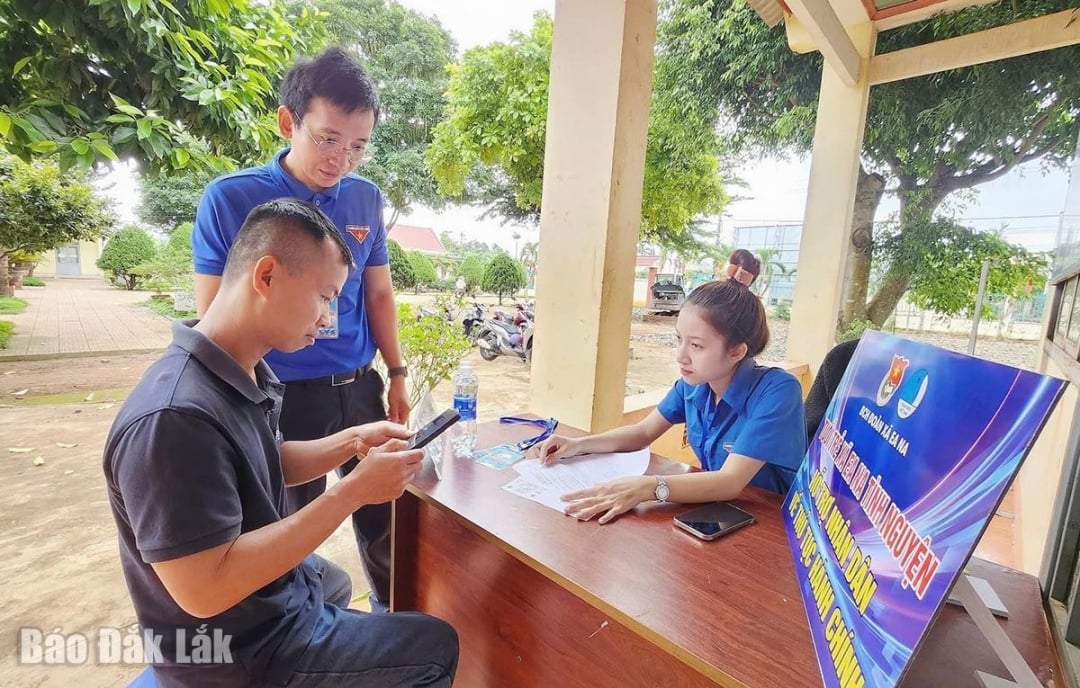 |
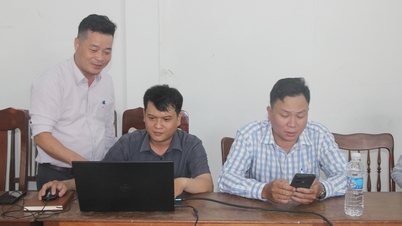
| The Youth Union of the commune assists people in completing administrative procedures. |
The establishment of the Commune Public Administration Center has facilitated citizens' access to public administrative services in a quick, transparent, and modern manner. It has also created a "gateway" connecting the government and the people.
Mr. Tran Van Hung, Deputy Director of the Ea Na Commune Public Administration Center, said: “The merger of administrative units has significantly increased the number of administrative procedures. To meet the requirements, the Center has allocated sufficient personnel, improved the process of receiving and returning results; civil servants have also been trained to adapt to the two-tiered local government model, creating a positive change in accessing and resolving administrative procedures.”
The Fatherland Front Committee of the commune and other organizations have also proactively developed specific action plans, focusing on key tasks such as consolidating national unity, promoting traditional culture, and improving the quality of life in residential areas. Ms. Nay H'Úy, Vice Chairman of the Vietnam Fatherland Front Committee of the commune, shared: “We recognize that the people are the center and the main actors in building new rural areas. Therefore, all movements are linked to practical life, ensuring practicality, effectiveness, and spreading the spirit of solidarity and community responsibility.”
Source: https://baodaklak.vn/xa-hoi/202507/ea-na-vung-buoc-tren-hanh-trinh-nong-thon-moi-c0217eb/

![[Image] Pleasant weather helps students enter the 10th grade entrance exam with confidence.](https://vphoto.vietnam.vn/thumb/1200x675/vietnam/resource/IMAGE/2026/05/29/1780034401612_ngay-1-thi-lop-10-minh-duy-8-5009-jpg.webp)
![[Photo] Ba Lang An Lighthouse - the "eye of the sea" amidst the "rock museum" of Quang Ngai province.](https://vphoto.vietnam.vn/thumb/1200x675/vietnam/resource/IMAGE/2026/05/29/1780038698840_anh-man-hinh-2026-05-29-luc-14-10-42.png)






















































































Comment (0)