

 |
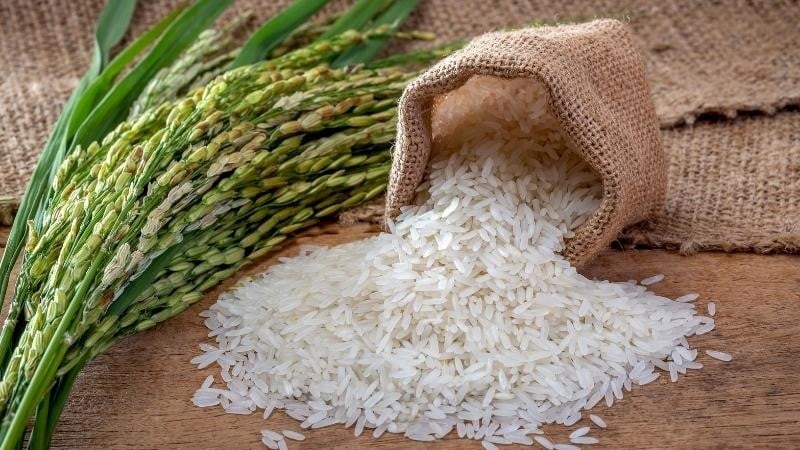
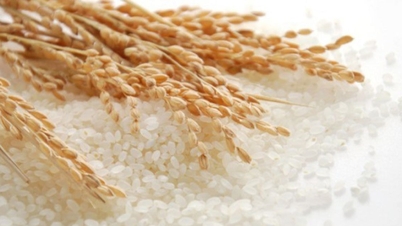
| Organic rice sells for a much higher price than conventional rice. |
Recognizing that organic rice farming is a sustainable path, the Nam Cuong Cooperative in Tien Hai, Thai Binh province, has boldly adopted this new model. Besides utilizing agricultural by-products and taking advantage of the convenient fishing industry to compost microbial fertilizers, completely replacing urea or chemical fertilizers, this model not only contributes to environmental protection and has a market for its produce but also doubles the selling price compared to conventional production. Mr. Do Duc Thien, Director of the Nam Cuong Cooperative, said that in the 2022 crop season (summer-autumn crop), with an area of nearly 1.3 hectares, the cooperative harvested 4 tons of paddy rice (2.7 tons of milled rice). Customers praised the rice's quality as being much more fragrant and delicious than other rice varieties on the market. The fact that organic rice sells for twice the price of other rice varieties has brought joy, encouragement, and motivation to the members of the Nam Cuong Cooperative.
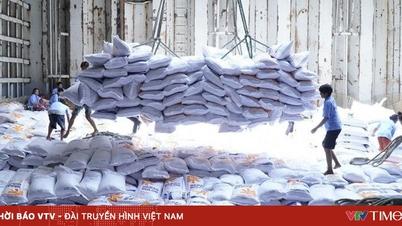
Organic rice has wide export opportunities to international markets.
For the European market, export rice quality standards must also ensure factors such as moisture content, milling yield, and size, specifically: High-quality rice, odorless, with a maximum moisture content of 13%, a milling yield of 63% whole grains by weight (with a 3% percentage of empty grains), along with criteria for food safety, pesticide residue, and genetically modified organisms (GMOs).
Sharing his views on Vietnam's rice export opportunities, Mr. Nguyen Thai Binh, Chairman of the Management Board of the Institute of Applied AI Technology and Digital Commerce, said: Currently, Vietnam has many rice brands chosen by global consumers, and many local businesses and cooperatives are gradually transitioning to organic rice production models according to USDA/EU standards from the US and Europe. However, the expansion, development of the model, and promotion of product consumption at many businesses and cooperatives have not been truly effective. This is because achieving the expected economic efficiency requires the partnership of collaborating businesses, providing input materials, technical processes, and product consumption support.
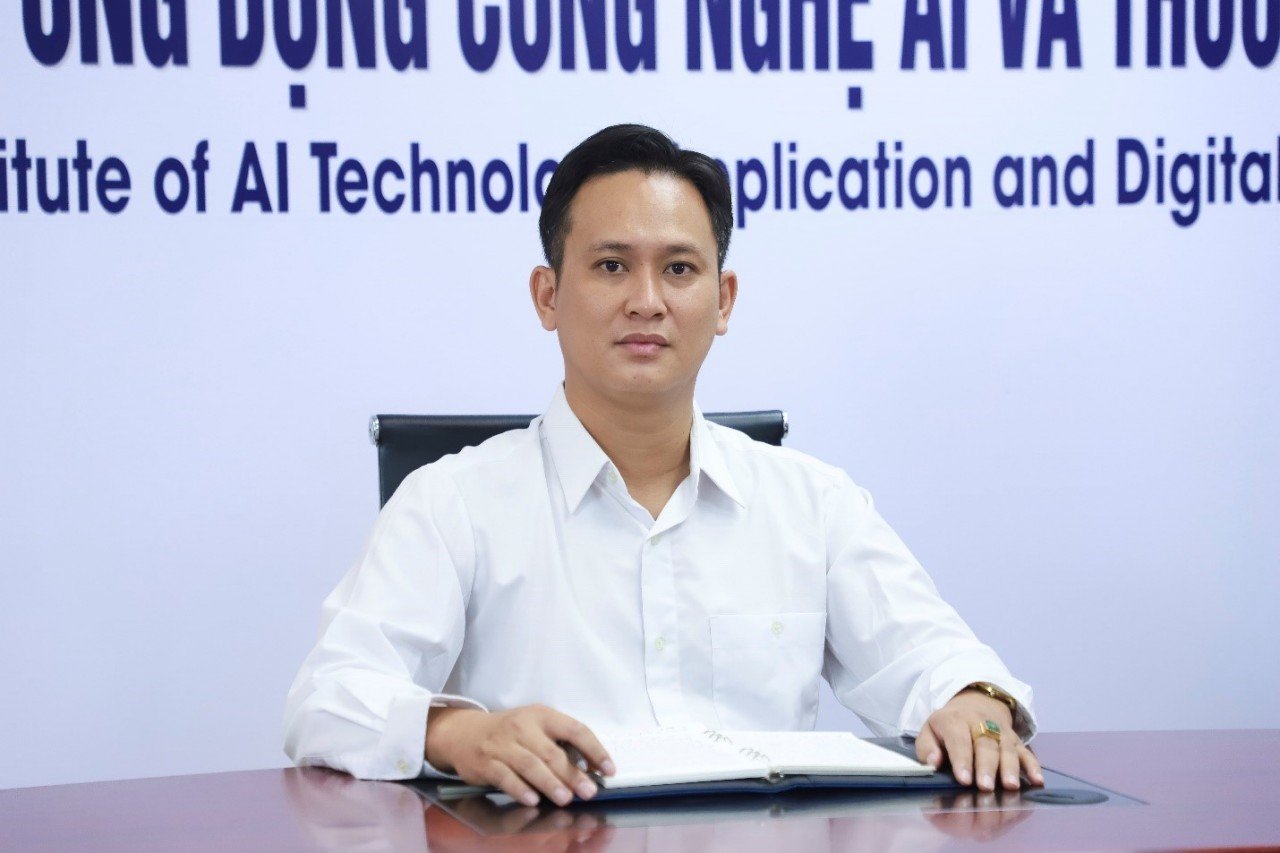 |
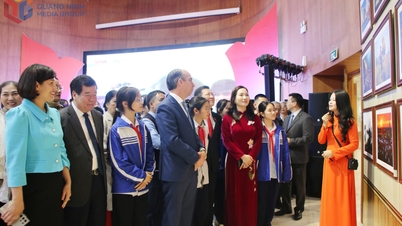
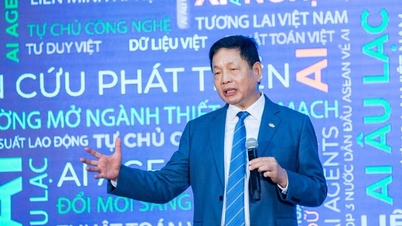
| Mr. Nguyen Thai Binh, Chairman of the Board of Directors of the Institute for Applied AI Technology and Digital Commerce. |
The Chairman of the Board of Directors of the Institute of Applied AI Technology and Digital Commerce emphasized: Basically, organic rice is not much different from regular rice. However, hidden behind those healthy organic rice grains, full of nutrients and beneficial to the body, lies a completely standardized and specialized cultivation and care process, from the soil, water sources, fertilizers, and even the harvesting process.
For organic rice, the rice plants must be grown on certified, treated, unpolluted land, far from industrial areas, hospitals, and waste disposal sites, and free from chemical residues or heavy metals. If the fields previously used chemical fertilizers, they need to be treated with organic microbial fertilizers for at least three consecutive seasons. Simultaneously, the soil must be rich in nutrients to ensure optimal growth and development of the rice plants. Areas with favorable climatic conditions will produce organic rice that is not only safe but also highly nutritious.
Not only is there a difference in the quality of the soil, but even the irrigation water source presents a stark contrast between the water pumped from rivers, streams, ponds, and lakes in conventional rice fields and the clean, treated, and unpolluted water supplied to organic rice fields.
To ensure this, both the land and water sources will be inspected before and during the cultivation process by leading organic organizations such as the USDA in the US and the EU in Europe.
Organic rice prioritizes product quality; each organic rice field must adhere to a process that avoids pesticides, growth stimulants, genetically modified organisms, and chemical fertilizers. Instead, organic rice growers apply natural farming methods, using organic and microbial fertilizers to ensure safety. The entire process is monitored regularly to prevent errors.
In particular, some organic rice fields also apply a natural shrimp farming model, with 6 months of rice cultivation and 6 months of shrimp farming. They utilize tidal water to control pests and diseases. When the rice is harvested, the rice stalks are used to feed the shrimp, and conversely, the shrimp waste provides nutrients for rice cultivation. Organic rice prioritizes quality and aroma, and offers higher nutritional content.
Organic rice is harvested in season, twice a year, without off-season cultivation. The finished rice is not treated with bleaching agents, artificial colors, flavors, or preservatives. The rice undergoes a rigorous inspection and certification process to ensure it meets all organic standards before reaching consumers. This not only guarantees safety but also helps the rice retain its abundant nutrients and delicious flavor in every bowl of cooked rice.
Table distinguishing between clean rice and organic rice:
Criteria | Organic rice | Clean rice |
Safety | Safe | Safe |
Scale | Small businesses | Large-scale, centralized production |
Productivity | Low prices, unsuitable for industrial-scale production, and inconsistent quality. | Tall, providing a consistent supply of products. |
Standard | Certified organic by the US Department of Agriculture (USDA) and the EU. | A prime example is VietGap. |
Fertilizer | Grown using natural methods, with the use of organic and microbial fertilizers, and absolutely no pesticides. | Chemical fertilizers are used, within permitted limits, and pesticides are regularly applied according to regulations. |
Harvesting process | Strict supervision | Usually, it's really clear-cut. |
Price | High | Fit |
Convenience | They are usually harder to buy. | Available for sale at supermarkets and stores selling clean rice. |
The Institute of Applied AI Technology and Digital Commerce prioritizes supporting clean production.
With the desire to contribute to promoting clean production and enhancing the brand value of Vietnamese rice, in the coming time, the Institute of Applied AI Technology and Digital Commerce will cooperate with Vietnam Life Group Joint Stock Company (VIET NAM LIFE GROUP.,JSC) to support resources and accompany localities in applying science and technology to agricultural production; support consumption promotion; and guide local businesses and cooperatives in planning raw material areas towards green and safe production. This includes applying Israeli green agriculture models such as wastewater treatment technology for reuse in agricultural irrigation, water reuse systems, technology for creating moisture in arid farming areas, and genetic modification technology. Through this, businesses and cooperatives will gain more knowledge and modern technology to produce clean rice and organic-certified rice; form output linkages, expand exports to demanding markets such as the US, EU, Australia, Japan, and Korea... and increase the price of Vietnamese rice on the world rice map.
Source
![[Photo] Prime Minister Pham Minh Chinh receives Lao Minister of Education and Sports Thongsalith Mangnormek](/_next/image?url=https%3A%2F%2Fvphoto.vietnam.vn%2Fthumb%2F1200x675%2Fvietnam%2Fresource%2FIMAGE%2F2025%2F12%2F16%2F1765876834721_dsc-7519-jpg.webp&w=3840&q=75)
![[Image] Leaked images ahead of the 2025 Community Action Awards gala.](/_next/image?url=https%3A%2F%2Fvphoto.vietnam.vn%2Fthumb%2F1200x675%2Fvietnam%2Fresource%2FIMAGE%2F2025%2F12%2F16%2F1765882828720_ndo_br_thiet-ke-chua-co-ten-45-png.webp&w=3840&q=75)
![[Photo] Prime Minister Pham Minh Chinh receives the Governor of Tochigi Province (Japan)](/_next/image?url=https%3A%2F%2Fvphoto.vietnam.vn%2Fthumb%2F1200x675%2Fvietnam%2Fresource%2FIMAGE%2F2025%2F12%2F16%2F1765892133176_dsc-8082-6425-jpg.webp&w=3840&q=75)


![[Live] 2025 Community Action Awards Gala](/_next/image?url=https%3A%2F%2Fvphoto.vietnam.vn%2Fthumb%2F1200x675%2Fvietnam%2Fresource%2FIMAGE%2F2025%2F12%2F16%2F1765899631650_ndo_tr_z7334013144784-9f9fe10a6d63584c85aff40f2957c250-jpg.webp&w=3840&q=75)




































![[Photo] Prime Minister Pham Minh Chinh attends the Vietnam Economic Forum 2025](https://vphoto.vietnam.vn/thumb/402x226/vietnam/resource/IMAGE/2025/12/16/1765893035503_ndo_br_dsc-8043-jpg.webp)



















Comment (0)