

Gia Lai currently has 13 industrial clusters established and meticulously planned on an area of nearly 467 hectares, playing a significant role in attracting investment and developing the local economy and society.
Of these, 8 industrial clusters have completed land compensation and clearance, attracting 72 investment projects with a total area of nearly 120 hectares and an investment capital of over 2,280 billion VND. Notably, 54 projects have become operational, generating a total capital of over 1,630 billion VND and creating jobs for nearly 1,200 local workers.
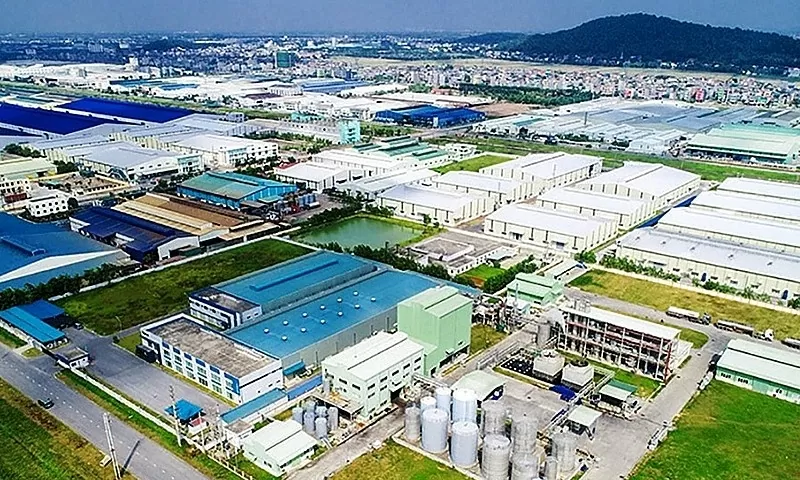 |
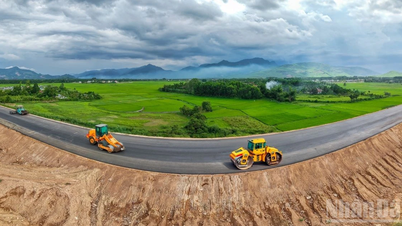
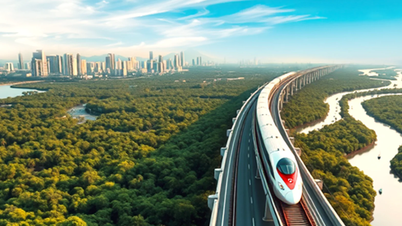
| Gia Lai implements various solutions to increase investment attraction and develop industrial clusters (Illustrative image) |
According to representatives from the Gia Lai Department of Industry and Trade, industrial clusters have provided production space for businesses and effectively exploited the potential and advantages of raw materials, contributing significantly to the local budget. The province is continuing to invite and prioritize the selection of capable investors who apply modern, environmentally friendly technologies to promote the development of industrial clusters.
Local authorities have also actively and proactively developed and promulgated policies and mechanisms to promote development and effectively implement the policy of attracting investment in industrial cluster infrastructure. Currently, four clusters have been selected by the Council for the construction of technical infrastructure by the evaluation committee, including: Industrial Cluster No. 2 in Dak Doa district; Ia Grai in Ia Grai district; the small-scale handicraft cluster in Mang Yang district; and the industrial cluster in Dak Po district. These clusters have a total registered investment capital of 1,541 billion VND.
Notably, this is the first time the policy of socializing investors in industrial cluster infrastructure has been implemented in Gia Lai, and this serves as a basis for implementation in other clusters throughout the province in the future.
On the other hand, the planning of highly interconnected industrial clusters, especially with national highways, has facilitated the transportation of goods and promoted cooperation in production and business. Most industrial clusters are located along major national highways such as National Highway 19 (including Dak Doa, Mang Yang, An Khe), National Highway 14 (including Chu Pah, Chu Puh), and National Highway 25 (including Chu Se, Ia Sao - Ayun Pa town).
However, according to representatives from the Gia Lai Department of Industry and Trade, the current industrial cluster policy faces several obstacles that hinder local implementation. Specifically, Gia Lai is currently undergoing a dual investment approval process: the procedure for approving the investment policy as stipulated by the Investment Law, and the procedure for establishing the industrial cluster as stipulated by Government Decree 32/2024/ND-CP on the management and development of industrial clusters.
On the other hand, some clusters lack synchronized infrastructure investment and have not attracted many secondary investment projects. Furthermore, the time it takes for investors to complete land, construction, and environmental procedures after the Provincial People's Committee decides to assign the project to the investor for construction is prolonged, affecting the attraction of secondary investment.
To overcome these difficulties and simultaneously achieve the goals of the Provincial Planning for the period 2021-2030, with a vision to 2050, Gia Lai has 31 industrial clusters with a total area of approximately 1,942 hectares. The locality will focus on effectively implementing state management and planning management of these clusters. It will also guide localities with a need to establish or expand industrial clusters on the selection of investors for infrastructure construction and cluster establishment and expansion.
Prioritize the selection of industrial park infrastructure investors/secondary investors with strong financial capacity and experience. Innovate and diversify investment promotion methods, focusing on key areas that are the province's strengths.
Simultaneously, implement comprehensive solutions regarding leadership, direction, and management; investment attraction; the development of sound policies and mechanisms; solutions for capital support and infrastructure investment; and solutions related to science and technology, human resource development, and environmental protection.




![[Photo] Two flights successfully landed and took off at Long Thanh Airport.](/_next/image?url=https%3A%2F%2Fvphoto.vietnam.vn%2Fthumb%2F1200x675%2Fvietnam%2Fresource%2FIMAGE%2F2025%2F12%2F15%2F1765808718882_ndo_br_img-8897-resize-5807-jpg.webp&w=3840&q=75)


























































Comment (0)