


When talking about ecological/organic shrimp, we're referring to tiger shrimp, with specific farming models such as shrimp-mangrove, shrimp-rice, and extensive shrimp farming. These shrimp farming models are very environmentally friendly, highly sustainable, and produce products that align with the green consumption trend, thus possessing high value and competitiveness. However, according to Mr. Ho Quoc Luc, Chairman of the Board of Directors of Sao Ta Food Joint Stock Company, to sell at a high price, in addition to ensuring quality, food safety, and meeting international standards, tiger shrimp need to be raised to a large size because the larger the shrimp, the higher the selling price and the greater the profit. Meanwhile, according to Mr. Le Van Quang, Chairman of Minh Phu Seafood Group, Naturland-certified ecological shrimp fetch a price 15-20% higher than non-certified shrimp.
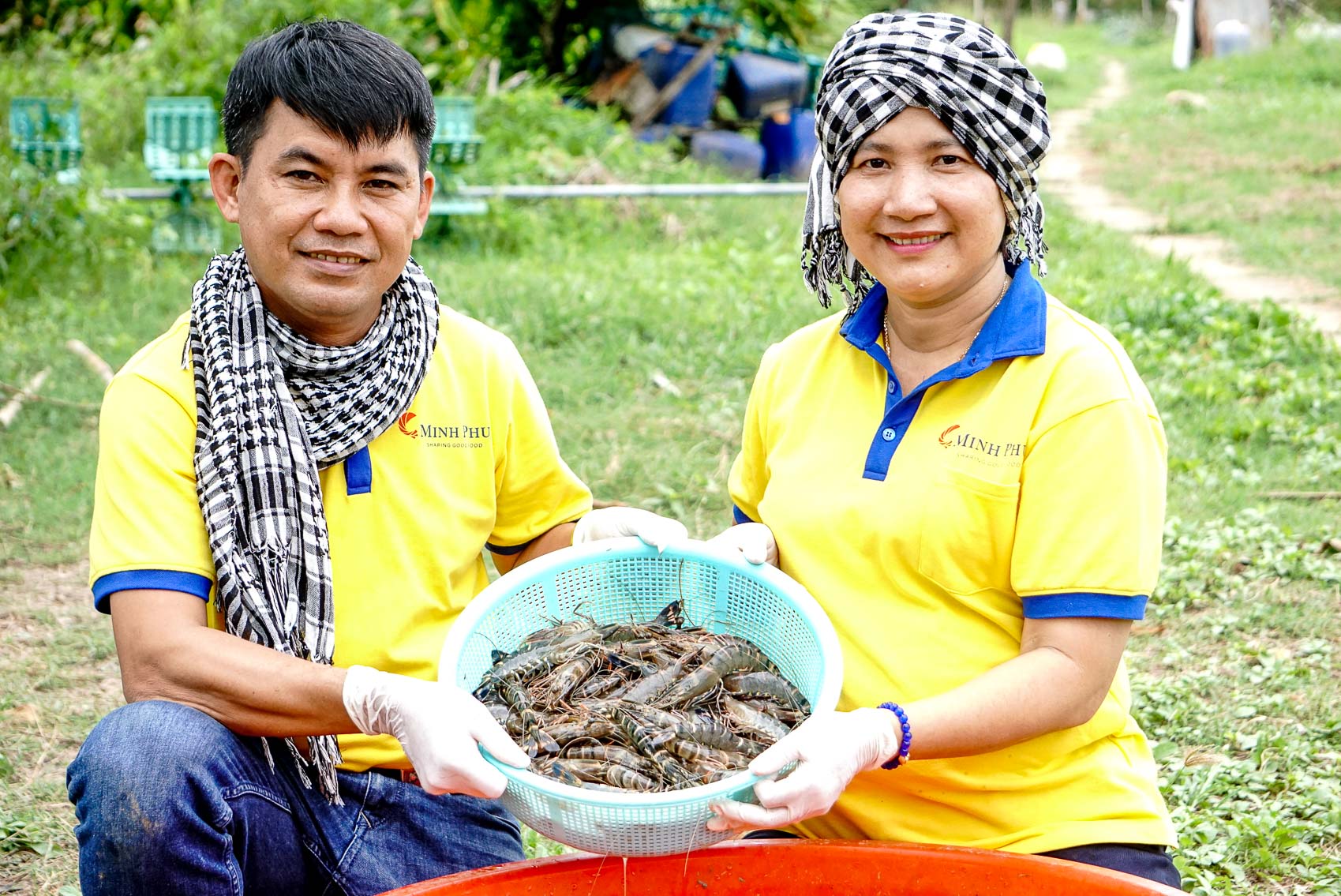 |
| Black tiger shrimp raised using a completely microbial process in Soc Trang have yielded good results and high quality. Photo: TICH CHU |
For over 20 years, Vietnam has led the world in the production of eco-friendly/organic shrimp, but the development of eco-friendly/organic shrimp farming models in Vietnam remains limited, mainly concentrated in Ca Mau with two main certified models: shrimp-mangrove and shrimp-rice. Most of these models employ farming methods that are close to nature, so according to Mr. Quang, simply organizing production well makes it easy to obtain international certifications, including eco-friendly/organic certifications. This helps address the increasingly stringent international requirements for environmentally friendly shrimp farming methods, along with concerns about food safety, leading to higher market prices for the product.
Organic/ecologically farmed tiger prawns are a special commodity developed by businesses and localities, and are the first in the world to receive international certification. Currently, although the global consumer trend is shifting towards whiteleg shrimp due to their lower price, the limited supply of tiger prawns means that consumption remains relatively stable compared to whiteleg shrimp. However, despite the relatively stable selling price, the low shrimp yield means that profits are not yet truly attractive to farmers.
Another advantage is that tiger prawns can be raised to large sizes and have a taste similar to lobster, making them a product for the high-end market. However, they are also very suitable for medium-to-low-scale farming models, such as improved extensive farming, shrimp-rice farming, shrimp-mangrove farming, etc., and the product is highly favored by the market, especially in some major markets such as China, Japan, the US, Australia, Dubai, and Singapore.
According to Mr. Dinh Xuan Lap, Deputy Director of the International Cooperation Center for Sustainable Aquaculture and Fisheries (ICAFIS), due to the characteristics of shrimp farming in the Mekong Delta, which is mainly on a household scale, when building a supply chain, the important issue is how to enhance the capacity and role of cooperatives/cooperative groups in signing contracts for input materials and product consumption to reduce costs while still ensuring the quality of input materials; reduce intermediaries thereby increasing the added value of farmed shrimp products; strengthen certified farming practices, and improve the capacity and participation of traders. For businesses participating in the chain, it is necessary to regularly inform cooperatives/cooperative groups about the requirements and standards of raw shrimp materials of each importing market and select cooperatives/cooperative groups that meet the business's requirements for investment. According to Dr. [Name of expert/expert],... According to Hoang Tung from the University of Tasmania, sustainable development of ecological/organic tiger shrimp farming requires evaluating practical effectiveness to build a specific development strategy; followed by focusing on quality, brand building, improving productivity, and reducing costs.
In the strategic development orientation, improvements are needed in productivity, production organization methods, product consumption, and market development to maintain Vietnam's leading position in shrimp farming worldwide. Based on this, attention should be paid to the production value index or profit margin, how well the supply-demand balance is maintained, and the competitiveness of the industry, in order to select appropriate technical solutions and implementation roadmaps. Specifically, management and research agencies need to conduct more projects to improve the productivity and quality of tiger shrimp; and implement organic and ecological shrimp production programs so that farms can be more proactive in securing their own broodstock.
PROTEIN
Source: https://baosoctrang.org.vn/kinh-te/202504/gia-tri-tu-su-khac-biet-c3d1989/















































































Comment (0)